
Disease · Bacterium
 Bacterial Fruit Blotch
At a glance
| Type | Bacterium |
| Main cause | Acidovorax citrulli, usually brought in on infected seed or transplants |
| Worst conditions | Hot, humid weather with rain or overhead watering |
From the community
Recent community discussions
No one has talked about Bacterial Fruit Blotch yet. Be the first.
Signs
- Seedlings get dark, water-soaked spots on the seed leaves and may collapse.
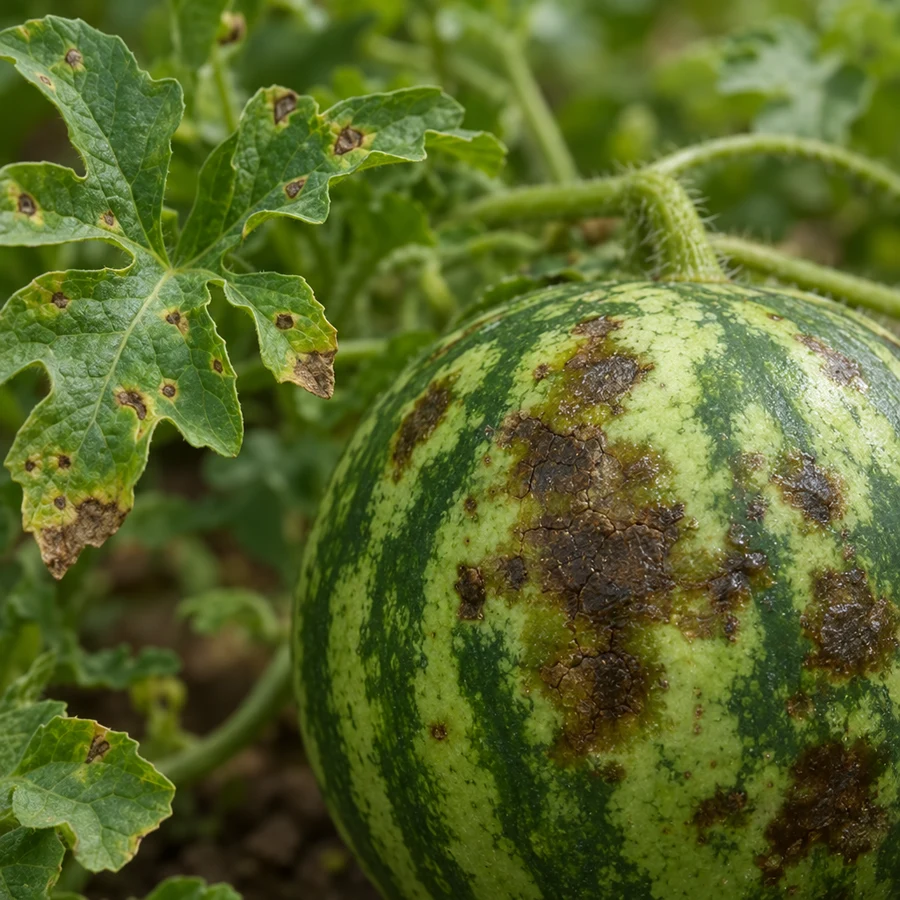
- Leaves show small rust-brown spots that often run along the veins; they're easy to miss or mistake for a fungal spot.
- On the fruit, small dark green, water-soaked patches appear on the top side and spread quickly.
- Fruit patches later turn brown, crack open and ooze, and the fruit can rot from there.
- Light green or striped melons tend to show it worst, on the lighter parts of the rind.
Cause and Spread
The bacteria live in and on seed, so the disease usually arrives with the seed or a transplant. In the garden it splashes from plant to plant in rain and overhead watering, especially in hot, humid spells. It can also hang on in volunteer watermelons and in leftover plant debris from last year.
Prevention
- Buy seed and transplants from a source that tests for this disease, and don't save seed from a patch that had it.
- Don't plant any seedling that shows spots.
- Water at the soil with drip or a soaker hose, not overhead; mulch helps keep splash down.
- Rotate: keep melons, squash and cucumbers out of that bed for at least two years (a three-year rotation).
- Pull up volunteer watermelons and clear away vines and fruit at the end of the season.
- Stay out of the patch while the leaves are wet so you don't carry the bacteria on hands and tools.
Organic Treatment
- There's no cure for infected fruit.
- Copper sprays may help slow the spread to new leaves and fruit (PNW Handbook). Texas A&M suggests starting them on a regular schedule around flowering, or a little earlier. They won't fix plants that are already badly hit. Always follow the label.
- No current variety is reliably resistant; dark green rinds tend to fare a little better than light green ones.
When to Pull the Plant
Pull and bag infected seedlings right away. On older vines, remove spotted fruit as soon as you see it, and if most of the fruit is affected, pull the whole plant. Don't compost any of it, and don't save its seed.
Sources
Plants it affects 1
From the community
Recent community discussions
No one has talked about Bacterial Fruit Blotch yet. Be the first.
Products that take care of Bacterial Fruit Blotch
 Copper FungicideOrganic spray that protects leaves from blights, leaf spots and bacterial diseases.See it →
 Biofungicide (Bacillus subtilis)Friendly bacteria that crowd out mildews, gray mold and leaf spots.See it →
 Soaker HoseWaters the roots slowly, not the leaves: less disease, less water, less work.See it →
Products that take care of Bacterial Fruit Blotch
Affiliate links. Evening Vines may earn a commission. Always follow the label.Products that take care of Bacterial Fruit Blotch
Affiliate links. Evening Vines may earn a commission. Always follow the label.Products that take care of Bacterial Fruit Blotch
Affiliate links. Evening Vines may earn a commission. Always follow the label.Evening VinesNovember 2026
