
Peach
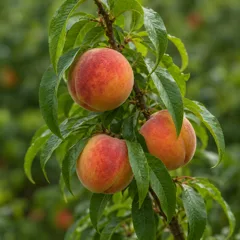
A tree-ripe peach is soft, dripping and fragrant in a way store peaches almost never are, because fruit picked for shipping has to be firm. Peaches are self-fertile, so one tree is enough. The trees grow fast, start cropping young, and stay a size you can pick from if you prune each winter.
The catch is that peaches are fussy about winter. Each variety needs a set amount of winter cold to flower well, yet the blossom opens early and is easily caught by frost. Picking the right variety for your climate matters more with peaches than with almost any other fruit tree. Nectarines are the same species with smooth skin, and they grow exactly the same way.
Recent community discussions
No one has talked about Peach yet. Be the first.
At a glance
| Plant type | Fruit tree |
| Botanical name | Prunus persica |
| Annual or perennial | Deciduous perennial |
| Sun | Full sun, 8 hours or more |
| Water | About 1 inch per week, more in pots and while fruit swells |
| Spacing | Standard trees 15 to 20 feet apart; dwarf trees 8 to 12 feet; genetic dwarfs fit in a large pot |
| Planting depth | Same depth as in the nursery, with the graft union about 2 inches above the soil |
| Days to germinate | Not grown from seed for fruit; buy a grafted nursery tree (pits need about 3 months of cold, moist chilling to sprout) |
| Days to maturity | 2 to 4 years to first fruit (low-chill trees in warm zones can crop sooner) |
| Best USDA zones | 5 to 8 (4 with a bud-hardy variety and a sheltered spot; 9 to 10 with low-chill varieties) |
| Soil pH | 6.0 to 6.5 |
Is it peach weather where you are? See everything to plant this month or read your zone notes.
Pests to watch for

Diseases
A little history
Peaches were domesticated in China. A 2014 study of ancient peach stones from the lower Yangtze valley found the stones growing steadily larger over thousands of years, which points to people selecting better trees from at least 7,500 years ago. The fruit later traveled west to Persia and on to Greece and Rome, which is why its botanical name, persica, means Persian. Spanish explorers brought peaches to the Americas in the 1500s, and the trees spread so quickly that later settlers sometimes took them for a native fruit.
When to sow in your zone
Peaches go in as young grafted trees, not seeds. Plant while the tree is dormant.
Late winter to early spring (zones 4 to 8): Plant bare-root trees as soon as the ground can be worked, before the buds swell. In cold zones this is the only good window, because a tree planted in fall may not root in before the ground freezes.
Late fall through winter (zones 7 to 10): Where winters are mild, dormant trees can go in from late fall to late winter. Across the Southeast, December through February is the usual window. In Britain and Ireland, bare-root trees go in from November to March, with late autumn, while the soil is still warm and damp, the best time. The mild coast of British Columbia can plant in late fall or in late winter. Potted trees can go in later, but avoid planting in hot, dry weather.
November in the garden: In zones 7 to 10 this is the start of bare-root season, so it's a good time to order trees and get the hole ready. In colder zones, wrap young trunks against rabbits and sunscald and wait for spring.
Growing it, step by step
Choosing a Tree
Buy a named, grafted variety suited to your winters. Nurseries list each peach by its chill hours, the number of winter hours between 32°F and 45°F it needs before it will flower and leaf out properly. Northern gardens usually need 800 hours or more; the Gulf Coast and the warm parts of Australia need low-chill trees of 150 to 400 hours. A tree that gets too little chill flowers late and patchily. A low-chill tree planted in a cold area flowers too early and loses its blossom to frost. Your local extension service or nursery can tell you what your area usually gets.
Picking the Spot
Give the tree full sun, at least 8 hours. Good drainage matters a great deal: peach roots suffer if water sits near the surface for long after rain. A spot partway up a slope is ideal, because cold air drains downhill on frosty spring nights. In cool, wet summers like those of Britain and Ireland, train the tree flat against a south- or southwest-facing wall, where the warmth ripens fruit and the shelter helps the early blossom.
Planting
Dig a hole about twice as wide as the roots and no deeper. Set the tree at the depth it grew in the nursery, keeping the graft union (the knobbly bend near the base) about 2 inches above the soil. Backfill with the soil you dug out, water well, and cut a young unbranched tree back to about 24 to 30 inches to start a low, open framework.
Growing in a Pot
Genetic dwarf peaches stay around 5 or 6 feet tall and do well in a 15- to 20-gallon pot of free-draining mix. A pot is also how many gardeners in cold or wet climates grow peaches: you can wheel it under cover in late winter to keep frost off the blossom and rain off the new leaves.
Water
Water deeply the first summer, about an inch a week. Grown trees need steady water most while the fruit is swelling in the weeks before harvest. Potted peaches can need water every day in hot weather.
Mulch
A few inches of mulch over the root zone keeps the soil cool and moist and keeps grass from competing. Keep it a hand's width from the trunk.
Feeding
Wait until the tree has started to grow before feeding. A balanced fertilizer in early spring, and a light second feeding in early summer, is usually enough for a young tree. Base later feeding on growth: a bearing tree that puts on 12 to 18 inches of new shoots a year is doing well. Stop feeding by midsummer so growth can firm up before winter.
Keeping it happy
Pruning: Peaches fruit on shoots that grew the summer before, so they need pruning every year to keep new wood coming. Most growers keep an open center, or vase shape, with three or four main limbs and the middle left open to sun and air. In the US this is done in late winter, close to bloom time. In Britain and Ireland, prune in spring or summer on a dry day to lower the risk of silver leaf and bacterial canker getting into the cuts.
Thinning: Peach trees set far more fruit than they can size up. When the fruit is about the size of a quarter, pull off the extras so one peach is left every 6 to 8 inches along the branch. It feels wasteful, but you get bigger, sweeter peaches and fewer broken limbs.
Frost: Blossom opens early. On frosty nights, throw fleece or an old sheet over small or wall-trained trees, held off the flowers with canes, and uncover in the morning. Where few bees fly that early, dab each open flower with a soft paintbrush on dry, sunny days. Trees under glass always need this.
Winter cold: Most varieties lose their flower buds in winters that drop much below about -10°F. In zone 4 and cold parts of zone 5, choose the most bud-hardy varieties and expect to miss a crop some years.
Trouble in the bed
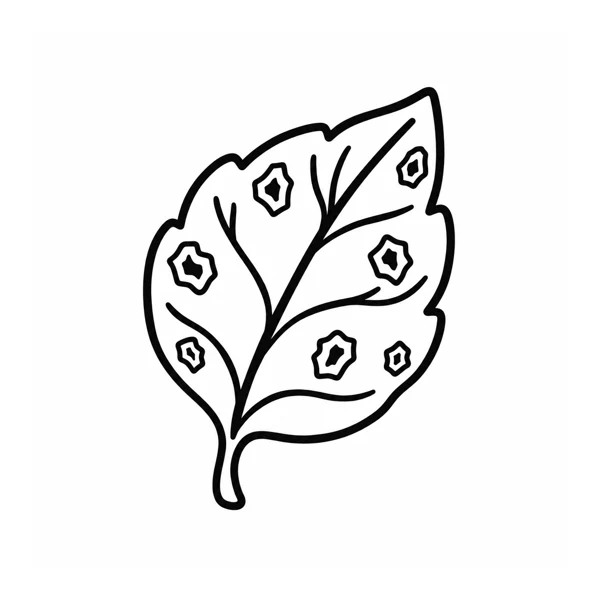
- Peach leaf curl: Red, puckered, blistered leaves in spring that later drop. The fungus gets in as buds open in cool, wet weather. Spray a copper fungicide in late winter before buds swell, or keep rain off the tree with a clear plastic cover from midwinter to late spring, as British growers do with wall-trained trees. A few varieties, such as Avalon Pride, show good resistance.
- Brown rot: Ripening fruit turns brown and fuzzy, then dries into mummies. Thin fruit so it doesn't touch, and pick up and throw away rotten fruit and mummies.
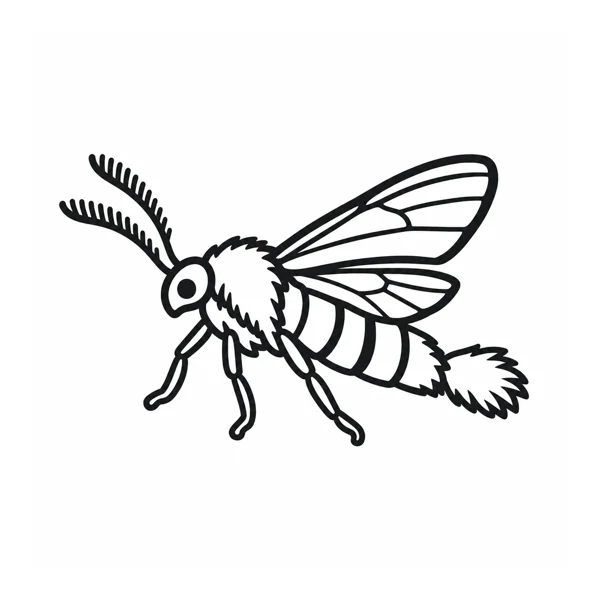
- Peachtree borers: Larvae tunnel under the bark at the base of the trunk, and gummy sap mixed with sawdust is the sign. Avoid nicking the trunk with mowers and trimmers.
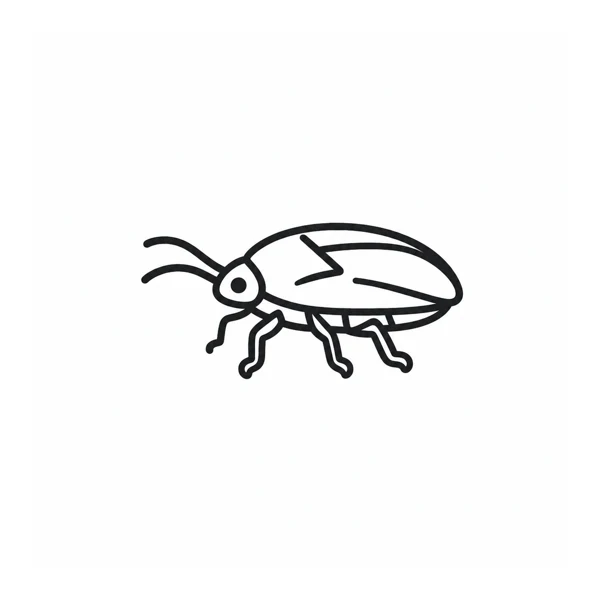
- Plum curculio: A small snout beetle that leaves crescent-shaped scars and causes fruit to drop in eastern North America. Pick up fallen fruit quickly.
- Bacterial spot: Small dark spots on leaves that fall out to leave holes, plus pitted fruit. It is worst in sandy soils and warm, wet springs. Less susceptible varieties such as Redhaven and Contender help.
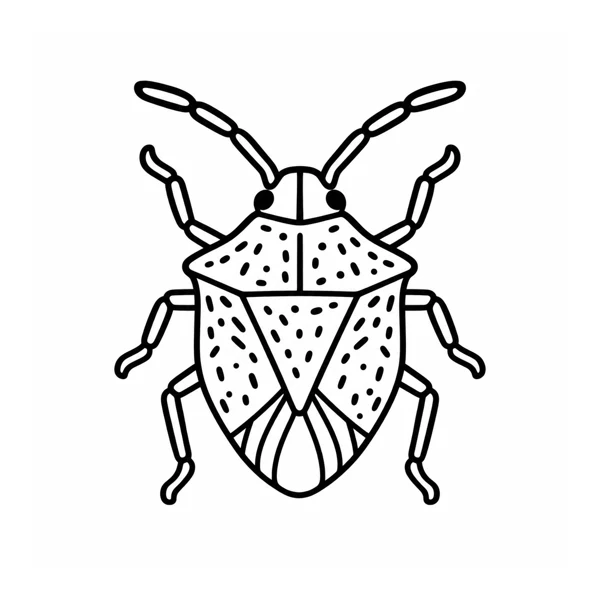
- Stink bugs, plant bugs and aphids: Stink bugs and tarnished plant bugs leave dimpled, scarred "catfaced" fruit. Aphids curl the new shoots in spring.
- Fruit fly (Australia): Queensland fruit fly lays eggs in ripening fruit in warmer parts of Australia. Net the tree, which also keeps off birds and possums, and set traps to watch fly numbers.
- Peach rust: Rusty spots under the leaves in humid, rainy summers, common in Florida. Rake up fallen leaves.
Good neighbors




Good: Low flowers and herbs around the edge of the root zone that bring in hoverflies and other helpful insects, like sweet alyssum, dill and calendula. Gardeners often edge fruit trees with garlic and chives, which take little water and don't crowd the trunk.
Avoid: Grass and thirsty plants right up to the trunk, which compete for water and hide borer damage. Don't plant where other stone fruit trees have just been removed, as old roots can leave behind problems that hold back a new tree.
Seeds that grow well in your area in November
Affiliate links — shopping through these helps keep Evening Vines free. Smooth Blue Aster
 Polka Dot Mix
 Black-Eyed SusanSeeds
 ColumbineSeeds
Varieties worth growing
Cold winters and short seasons (zones 4 to 6, Canada):
- Reliance: Widely regarded as the most cold-hardy peach, bred in New Hampshire. Soft yellow freestone fruit; quality is good rather than great.
- Contender: Very bud-hardy and better flavored than Reliance, with sweet yellow freestone fruit. Has some resistance to bacterial spot. Needs a long, cold winter.
- Harrow Diamond: An early yellow peach bred by Agriculture Canada at Harrow, Ontario, and grown widely in southern Ontario.
- Redhaven: The standard backyard peach in much of the northern US and Ontario. Reliable, heavy crops of red-blushed yellow freestones in midsummer.
Cool maritime summers (UK and Ireland, wall-trained or in pots):
- Avalon Pride: A good choice where leaf curl is a problem, thanks to its strong resistance; fine as a bush in milder areas or fanned on a south wall.
- Peregrine: An old British favorite with white flesh, usually ripening in August.
- Rochester: A dependable yellow-fleshed peach for walls and sheltered gardens.
- Duke of York: Early, with white flesh and a crimson flush.
Hot summers and mild winters (southern US, warm Australia):
- Elberta: The classic yellow canning peach of the Southeast, for areas with a fairly cold winter. Trees
- Flordacrest: Florida's top melting-flesh peach for the north of that state, needing about 350 chill hours.
- UFGold: A low-chill (about 200 hours) clingstone that crops heavily and ripens early.
- Flordaprince: Needs only about 150 chill hours; grown in subtropical Queensland and northern New South Wales.
- Tropic Snow: A low-chill white peach popular with home gardeners in warm parts of Australia.
For a pot or small yard: Genetic dwarfs like Bonanza, Garden Lady and Crimson Bonfire stay about 5 to 6 feet tall.
Peach trees to buy
Affiliate links — shopping through these helps keep Evening Vines free. Elberta
Picking notes
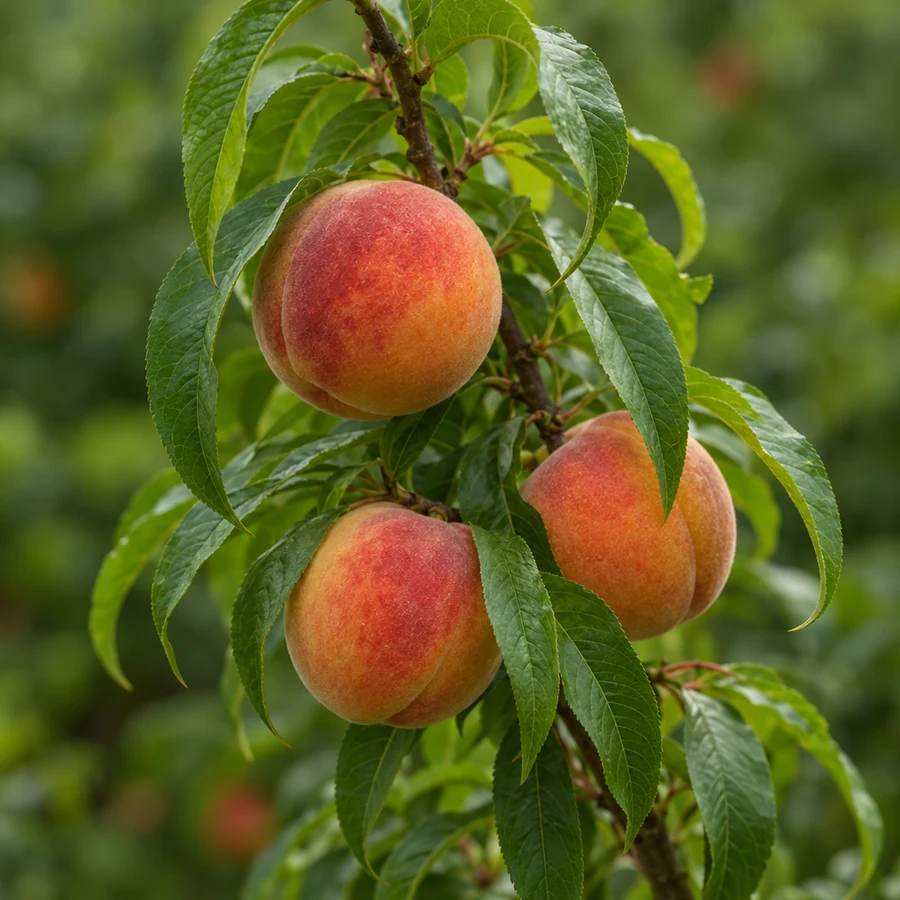
Depending on variety and climate, peaches ripen from early summer into early fall. Judge ripeness by the background color, not the red blush: the skin behind the blush should turn from green to deep yellow (or creamy white in white peaches), and the flesh near the stalk gives slightly. Cup the fruit in your palm and lift with a gentle twist. Peaches picked too green shrivel instead of ripening. Ripe fruit bruises easily and keeps only a few days, longer in the fridge.
Saving seed for next year
Not practical for keeping a variety. Seedlings from a pit may give decent peaches, but they won't match the parent, and they take years to fruit. To grow a seedling for fun, chill the cleaned pit in damp sand in the fridge for about three months, then plant it in spring. Caution: peach kernels, leaves and twigs contain amygdalin, which can release cyanide. Wilted leaves after a storm or frost are of most concern for grazing animals. Keep pits away from children and pets, and remember a swallowed pit can also block a small dog's gut.
From garden to table
A raw peach is mostly water and low in calories, about 39 per 100 grams in USDA figures, with some fiber, vitamin C and potassium. Eat them warm off the tree, slice them over cereal, grill halves with honey, or bake them into cobblers and pies. For winter, can, freeze or dry them, or cook them into jam. Clingstone peaches hold their shape in canning; freestones are easier to slice.
Questions from the potting bench
Do I need two peach trees? No. Peaches are self-fertile, so one tree will crop on its own. Hand-pollinate with a soft brush if few bees are about when it flowers.
Why does my peach tree flower but not fruit? Usually spring frost killed the blossom, or winter cold killed the flower buds. A variety with the wrong chill hours for your area is another common cause.
Why are my peach leaves red and curled? That's peach leaf curl. It can't be fixed once the leaves are affected, so spray copper in late winter next year before the buds swell, or cover the tree against rain.
Can I grow peaches in Florida or warm Australia? Yes, with low-chill varieties of about 150 to 350 chill hours, such as Flordaprince, UFGold or Tropic Snow. Regular peaches won't flower properly without a cold winter.
Can I grow peaches in Britain, Ireland or Canada? Yes. In Britain and Ireland, train the tree on a sunny wall or grow a dwarf in a pot you can move under cover in spring. In Canada, plant a bud-hardy variety like Reliance, Contender or Harrow Diamond in the warmest, most sheltered spot you have.
Grower reports
How did Peach do in your garden? Members rate it and say which zone and month they planted, so everyone can see what works near them.
Recent community discussions
No one has talked about Peach yet. Be the first.
Trees to try
Affiliate links — shopping through these helps keep Evening Vines free.Essentials for Growing Peach
 Grow Bags
Breathable fabric pots: grow almost anything on a patio, balcony or driveway, and roots never circle.
See it →
 Organic Fertilizer
Slow-release organic plant food for vegetable beds and containers.
See it →
 Pruning Shears
Sharp bypass pruners for harvesting, deadheading and tidying.
See it →
 Insect Netting
Fine mesh that keeps cabbage worms, flea beetles and birds off your crops, no sprays needed.
See it →
 Soaker Hose
Waters the roots slowly, not the leaves: less disease, less water, less work.
See it →
 Garden Hand Tools
Trowel, transplanter and cultivator: the three tools you reach for most.
See it →
