
Banana
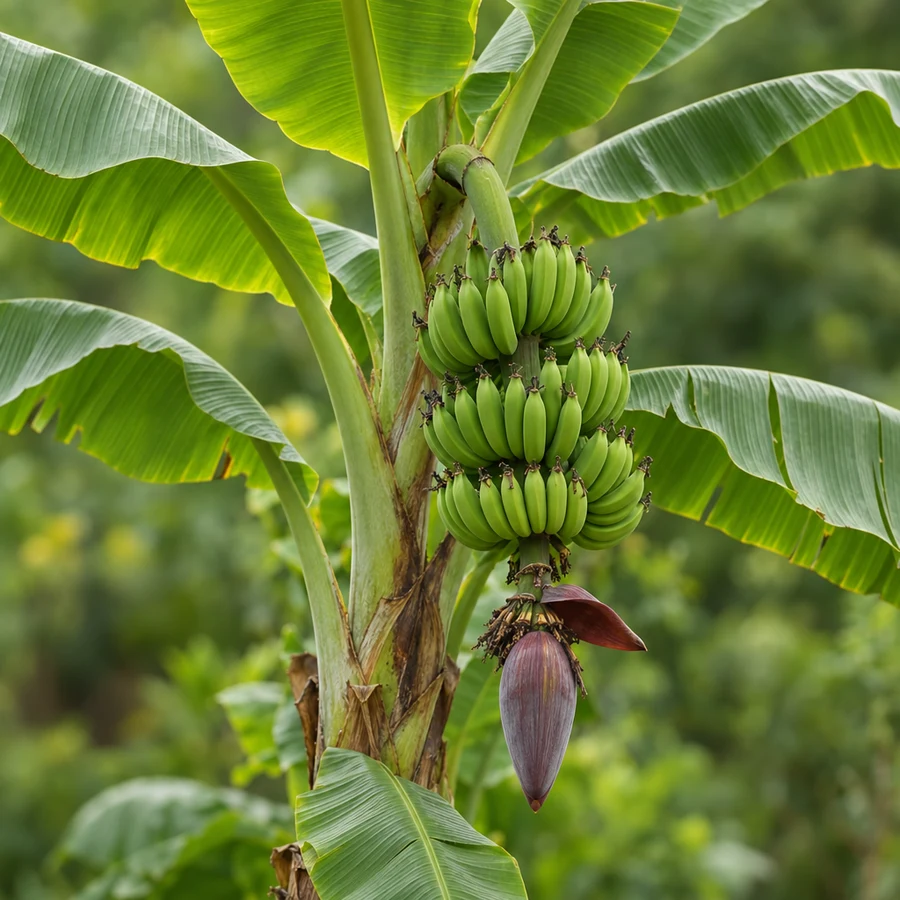
Bananas give a lush tropical look fast. In warm zones they produce fruit; in cooler zones dwarf types grow in big pots, and hardy Musa basjoo regrows from its roots each spring, though it won't fruit.
Recent community discussions
No one has talked about Banana yet. Be the first.
At a glance
| Plant type | Tropical fruiting herb (not a tree) |
| Botanical name | Musa acuminata, Musa × paradisiaca; hardy ornamental Musa basjoo |
| Annual or perennial | Perennial |
| Sun | Full sun to light shade |
| Water | Heavy; keep soil consistently moist |
| Spacing | 8 to 12 feet for full-size; 4 to 6 feet for dwarf types |
| Planting depth | Same depth as the pot or slightly deeper for pups |
| Months to fruit | 9 to 18 in warm climates |
| Best USDA zones | Fruit in 9b to 11; Musa basjoo survives to zone 5 as a foliage plant |
| Soil pH | 5.5 to 7.0 |
Is it banana weather where you are? See everything to plant this month or read your zone notes.
Pests to watch for
Diseases
Mateo is researching the diseases that affect this plant.
A little history
Bananas were first domesticated in Southeast Asia and New Guinea at least 7,000 years ago. They spread to Africa and later to the Americas with Portuguese and Spanish traders.
When to Plant
Spring: Plant after the last frost, once the soil is above 60°F.
Growing it, step by step
Planting
Plant a pup (sucker) or a nursery plant in rich, well-drained soil out of strong wind.
In Hawaii, banana bunchy top virus has spread on several islands, and the state restricts moving banana plants and suckers between islands. Check with the Hawaii Department of Agriculture before you carry one, and start with clean, tissue-cultured plants from a local nursery rather than a neighbor's sucker.
Water
Water deeply and often in summer. Leaves droop and split when dry.
Mulch
Mulch thickly; bananas love organic matter.
Feeding
Heavy feeders. Give compost and a high-potassium fertilizer monthly in the growing season.
Keeping it happy
Keep one main stem and one or two pups. After a stem fruits, cut it down; it won't fruit again. In cool zones, cut back hardy types after frost and mulch the crown, or bring potted plants indoors.
Trouble in the bed
- Banana weevil: Keep the base clean and remove old stems.
- Spider mites and aphids: Rinse leaves, especially indoors.
- Root rot: Caused by cold, wet soil.
Good neighbors
Good: Ginger, turmeric, sweet potatoes, and other heat-lovers.
Avoid: Windy, exposed spots.
Seeds that grow well in your area in November
Affiliate links — shopping through these helps keep Evening Vines free. Wild Lupine
 Common Milkweed
 PansySeeds
 PhloxSeeds
Varieties worth growing
- Dwarf Cavendish: Classic fruit on a 6 to 8 foot plant.
- Super Dwarf Cavendish: Good for containers.
- Ice Cream (Blue Java): Creamy, vanilla-like fruit, fairly cold tolerant.
- Musa basjoo: Cold-hardy foliage banana.
Picking notes
Cut the whole bunch when the fruit is plump and the ridges round out, while still green. Hang it to ripen in the shade.
Propagation
Dig and replant pups once they're 2 to 3 feet tall with their own roots.
From garden to table
Bananas are rich in potassium, vitamin B6, and fiber. Eat them fresh or use them for baking and smoothies. The leaves wrap food for steaming.
Questions from the potting bench
Will my banana fruit in a cold climate? Rarely outdoors. Indoors or in a greenhouse, dwarf types can.
Why are the leaves shredded? Wind. It's normal and doesn't harm the plant.
How long until it fruits? About 9 to 18 months of warm growing time.
Grower reports
How did Banana do in your garden? Members rate it and say which zone and month they planted, so everyone can see what works near them.
Recent community discussions
No one has talked about Banana yet. Be the first.
Essentials for Growing Banana
 Grow Bags
Breathable fabric pots: grow almost anything on a patio, balcony or driveway, and roots never circle.
See it →
 Seed Starting Tray
Reusable tray with a clear dome to give seeds a warm, humid start indoors.
See it →
 Garden Hand Tools
Trowel, transplanter and cultivator: the three tools you reach for most.
See it →
 Organic Fertilizer
Slow-release organic plant food for vegetable beds and containers.
See it →
 Watering Can
Long-spout can for gentle watering of seedlings and pots.
See it →
 Pruning Shears
Sharp bypass pruners for harvesting, deadheading and tidying.
See it →
