
Forget-Me-Nots
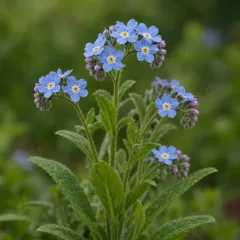
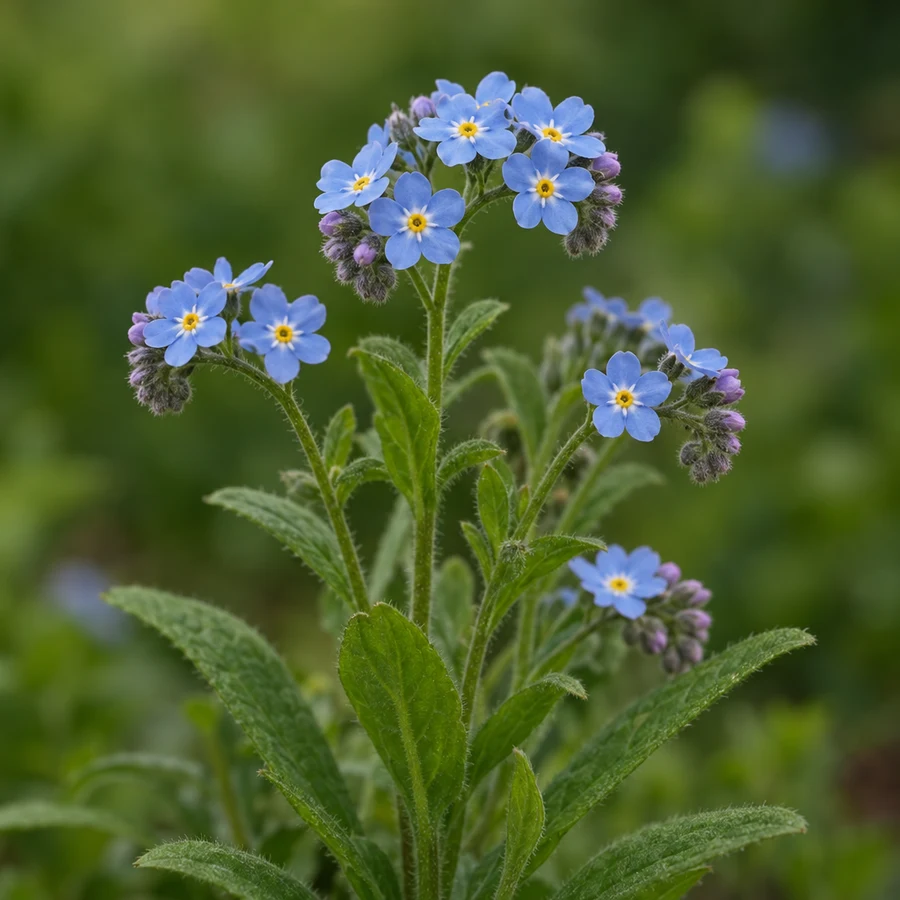
Forget-me-nots carpet shady spots in spring with tiny sky-blue flowers with yellow eyes. They pair beautifully with tulips and self-seed to come back year after year, sometimes more eagerly than you'd like, so it pays to keep an eye on them.
Recent community discussions
No one has talked about Forget-Me-Nots yet. Be the first.
At a glance
| Plant type | Flower |
| Botanical name | Myosotis sylvatica |
| Annual or perennial | Short-lived perennial, usually grown as a biennial or annual |
| Sun | Part shade (full sun is fine where summers are cool) |
| Water | Keep moist |
| Spacing | 6 to 12 inches |
| Planting depth | Barely covered, about 1/8 inch |
| Days to germinate | About 1 to 3 weeks (slower in cool soil) |
| Days to maturity | Sown outdoors by midsummer: blooms next spring. Started indoors 8 to 10 weeks before last frost: can bloom the same season |
| Best USDA zones | 3 to 8 |
| Soil pH | Not fussy: acid, neutral or slightly alkaline, as long as the soil stays moist |
Is it forget-me-nots weather where you are? See everything to plant this month or read your zone notes.

Direct sow in fall for blooms the following spring, or sow in early spring after frost danger has passed. Self-seeds readily once established.

Germinates in 7–14 days; 90–120 days to bloom; self-seeds.

Zones 3–9, April?July; in mild zones March?June; indoors year-round with light.

Moist, fertile silty loam, pH 6.0–7.0. Thrives in consistently moist, cool soils.
Pests to watch for




Diseases


A little history
Forget-me-nots are native to Europe and Asia. Legends about their name go back centuries, and the flower has long stood for remembrance and true love. Alaska made a forget-me-not its state flower in 1949, but it chose a close cousin: the alpine forget-me-not (Myosotis asiatica, often listed as M. alpestris), not the garden wood forget-me-not on this page.
When to sow in your zone
Main sowing, all zones (3 to 8): Sow outdoors from late spring to midsummer for flowers next spring. The young plants grow a leafy rosette through late summer, sit out the winter, and bloom in April or May.
Cold zones (3 to 5): Get seed in no later than midsummer, so the plants are big enough to get through winter.
Mild zones (7 and 8): You can also sow in late summer or early fall for next spring's flowers. Fall sowing is for mild zones only.
Same-year flowers: Start seed indoors 8 to 10 weeks before your last frost (see count back from last frost) and plant out after hardening off. Seed sown outdoors in early spring can also give a short show that same year, later than overwintered plants.
In November: In zones 7 and 8 you can still scatter seed on bare soil; it may sit quietly over winter and come up in spring. In colder zones, wait and sow in late spring, or start seed indoors in late winter.
Growing it, step by step
From seed
Cover the seed very lightly, about 1/8 inch, and keep it moist until it sprouts. Seed guides disagree on whether it wants light or dark, so a thin sprinkle of soil is the safe middle ground. Expect sprouts in about 1 to 3 weeks; cool soil is slower.
Moving it outside
Plant out 6 to 12 inches apart in early fall or early spring, while the weather is cool.
Water
Keep the soil moist. Forget-me-nots sulk fast in dry soil.
Mulch
Mulch to keep roots cool and the soil damp.
Feeding
Not needed in moist soil with some compost or leaf mold in it.
Keeping it happy
Deadhead spent flowers right after bloom to stretch the show and stop seed from spreading (more in deadhead flowers for more blooms). If you want a patch next year, leave a few plants to drop seed, then pull them once they turn tired and gray. Thin self-sown seedlings so they have room to breathe.
Trouble in the bed
Pests
- Slugs and snails: Love the damp shade forget-me-nots like. Hand-pick in the evening.
- Aphids: Spray off with a strong jet of water.
- Flea beetles: Leave small shot holes in leaves. Usually cosmetic on established plants; row cover helps young seedlings.
Insect trouble is uncommon overall.
Diseases
- Powdery mildew: Common after flowering, especially in dry spells. Pull spent plants. See powdery mildew in late summer.
- Rust: Orange or brown spots on leaves. Remove affected plants and give the rest more air.
Good neighbors




Good: Tulips, daffodils, hostas, ferns and bleeding hearts, plus columbine, pansies and violas. Forget-me-nots are a classic carpet under spring bulbs; plant the bulbs in fall (see plant spring bulbs in fall) and sow or set the forget-me-nots around them.
Avoid: Hot, dry beds.
Seeds that grow well in your area in November
Affiliate links — shopping through these helps keep Evening Vines free. Smooth Blue Aster
 Polka Dot Mix
 Black-Eyed SusanSeeds
 ColumbineSeeds
Varieties worth growing
- Victoria Blue: Compact, deep blue.
- Ultramarine: Low and dark blue.
- Victoria Rose: Soft pink.
- Rosylva: Pink.
- Snowsylva: White, compact.
- Roi des Carmins: Carmine pink, usually sold under its French name.
Skip water forget-me-not (M. scorpioides) for pond edges: it spreads into wetlands and is regulated as invasive in some states.
Picking notes
Forget-me-nots bloom from about April to June, earlier in mild zones. Cut stems for small posies when the first flowers open.
Saving seed for next year
Plants self-seed generously. To save seed, shake ripe seed heads into a paper bag; to grow a patch in place, shake them over the bed.
From garden to table
Grown for spring color, bulb plantings and woodland gardens. Not for eating: forget-me-nots belong to the borage family, some members of which contain pyrrolizidine alkaloids that can harm the liver, and some plant guides list forget-me-nots as toxic. Keep them in the vase, not on the cake.
Questions from the potting bench
Are forget-me-nots invasive? They can be. Wood forget-me-not (M. sylvatica, the one on this page) is listed as a noxious weed in at least one Midwestern state, and Wisconsin regulates both it and water forget-me-not as invasive. Check your state's list before planting near woods or streams, and deadhead after bloom so seed doesn't spread beyond your garden. Self-sown seedlings are shallow-rooted and easy to pull.
Why do mine look moldy in summer? Powdery mildew after bloom. Pull them; the seed they dropped will carry on.
Do they grow in sun? In cool climates, yes. Elsewhere give them shade, at least in the afternoon.
Will they flower the first year? Only if you start them early, indoors 8 to 10 weeks before last frost. Sown outdoors in summer, they flower the following spring.
Grower reports
How did Forget-Me-Nots do in your garden? Members rate it and say which zone and month they planted, so everyone can see what works near them.
Recent community discussions
No one has talked about Forget-Me-Nots yet. Be the first.
Essentials for Growing Forget-Me-Nots
 Grow Bags
Breathable fabric pots: grow almost anything on a patio, balcony or driveway, and roots never circle.
See it →
 Pruning Shears
Sharp bypass pruners for harvesting, deadheading and tidying.
See it →
 Seed Starting Tray
Reusable tray with a clear dome to give seeds a warm, humid start indoors.
See it →
 Garden Kneeler
A kneeling pad that flips into a seat: easier on knees and back.
See it →
 Plant Labels
Waterproof markers so you know what's coming up where.
See it →
 Organic Fertilizer
Slow-release organic plant food for vegetable beds and containers.
See it →
