
Swiss Chard
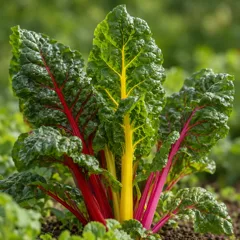
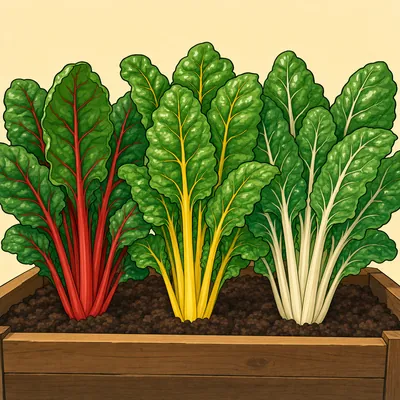
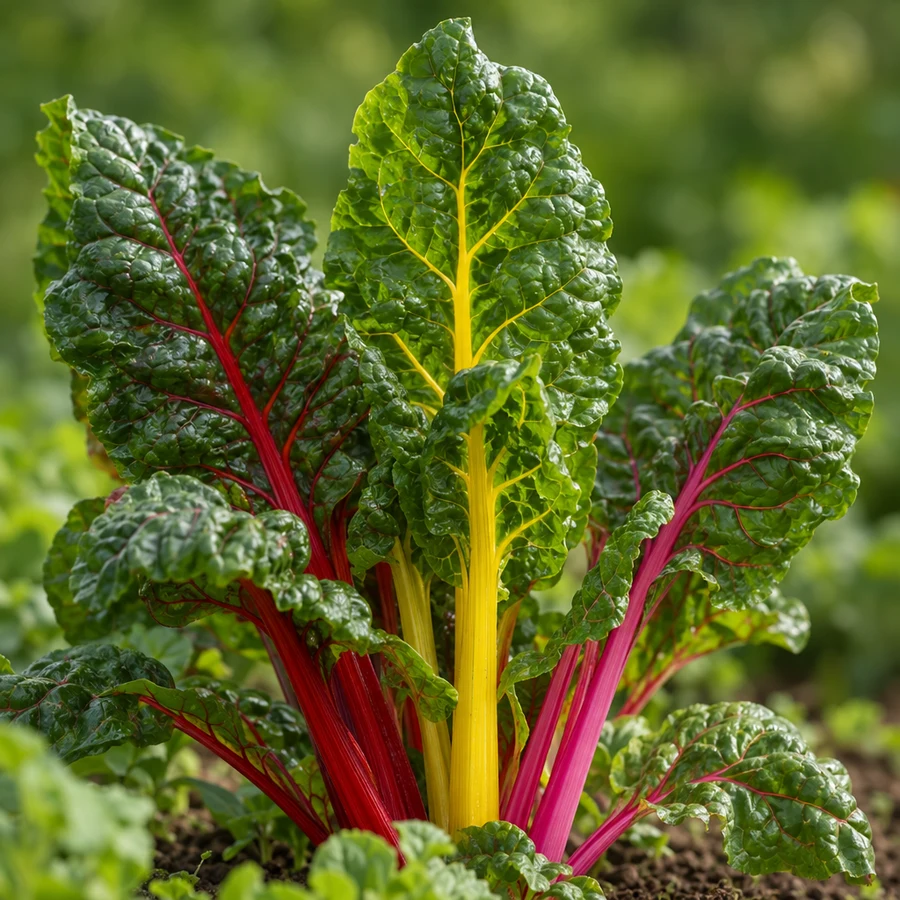
Swiss chard is a tough, beautiful leafy green with crinkled leaves and thick stems in white, yellow, pink, orange, or ruby red. Plants reach 18 to 24 inches tall and keep giving leaves for months. It's a cool-season crop at heart and grows best in mild weather, but it puts up with summer heat far better than spinach, which bolts as soon as the days turn hot.
Chard is a biennial. Plants usually come through winter in zones 8 to 10 and start growing again in spring. In zone 7 they can make it with a heavy mulch over the crown and a sheltered spot, and in colder zones they're grown from spring until a hard freeze. It's one of the easiest greens to start with.
Recent community discussions
No one has talked about Swiss Chard yet. Be the first.
At a glance
| Plant type | Leafy green vegetable |
| Botanical name | Beta vulgaris subsp. vulgaris (Cicla Group) |
| Annual or perennial | Biennial, grown as an annual |
| Sun | 6 hours of full sun; tolerates partial shade |
| Water | About 1 inch per week, kept even |
| Spacing | 6 to 12 inches |
| Planting depth | 1/2 inch |
| Days to germinate | 5 to 14 days |
| Days to maturity | 50 to 60 days (baby leaves in 25 to 30 days) |
| Best USDA zones | Overwinters in zones 8 to 10 (zone 7 with heavy mulch and a sheltered spot); grown as a spring-to-fall annual in nearly any zone |
| Soil pH | 6.0 to 7.0 |
From planting to harvest
Is it swiss chard weather where you are? See everything to plant this month or read your zone notes.

Direct sow 2–3 weeks before last frost, continue sowing every 2–3 weeks for succession. In Zones 8–10, can sow fall through winter.

50–60 days.

Zones 3–10, June?July for spring sowing; Oct?Nov for fall crops; harvest leaves 4–6 weeks after sowing.

Prefers rich silty loam, pH 6.0–7.5. High organic matter supports large leaves.
Pests to watch for



Diseases

A little history
Chard is a relative of beets, bred for its leaves instead of its roots. It has been grown around the Mediterranean since ancient times. Despite the name, it isn't from Switzerland.
When to sow in your zone
Spring: Sow seed straight into the bed 2 to 3 weeks before your last frost, once the soil has warmed to about 50°F. Not sure of your date? Count back from your last frost first. A second sowing in midsummer gives you fresh plants for fall.
Fall: Sow about 8 to 10 weeks before your first fall frost. In zones 8 to 10, a fall sowing gives leaves to pick right through winter. See sowing fall greens in August for the timing.
When to plant Swiss chard in your zone:
- When to plant Swiss chard in zones 3 to 5: sow in spring, 2 to 3 weeks before the last frost, and pick until a hard freeze. See zone 3, zone 4 and zone 5.
- When to plant Swiss chard in zones 6 and 7: sow in spring, then again in mid to late summer for a fall crop. In zone 7, mulch the crowns heavily and some plants may carry on into spring. See zone 6 and zone 7.
- When to plant Swiss chard in zones 8 to 10: sow in late summer and fall for leaves all winter, and again in late winter for spring. See zone 8, zone 9 and zone 10.
- When to plant Swiss chard in zone 11: sow in the cooler months, fall through early spring, and give it afternoon shade if it carries on into summer. See zone 11.
For everything else that goes in this month, see all zones.
Growing it, step by step
From seed
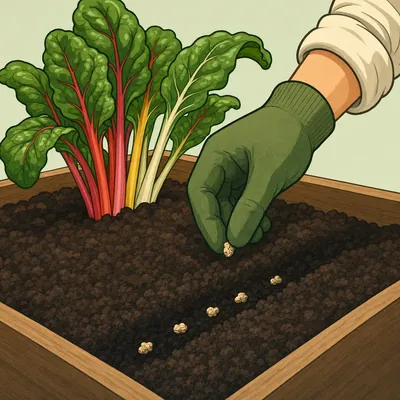
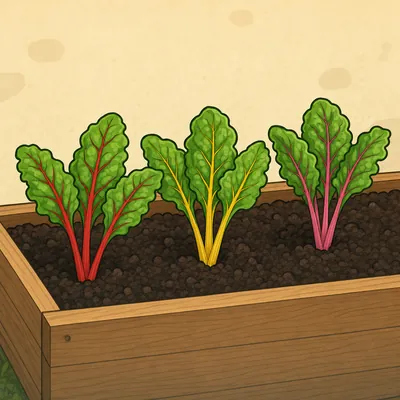
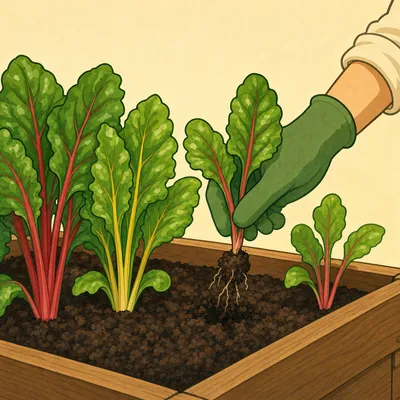
A chard "seed" is really a little cluster of seeds, so each one can send up several seedlings. Sow 1/2 inch deep, 2 to 3 inches apart, in rows 12 to 18 inches apart. An overnight soak helps them along. Seedlings come up in 5 to 14 days. Once they have a few true leaves, thin them to 6 to 12 inches apart and toss the thinnings into a salad. If you only want baby leaves, you can leave them closer and cut them young.
Moving it outside
Direct sowing works best, but transplants can go out at the same depth they grew in the pot, 6 to 12 inches apart. Give them a week of hardening off first.
Water
Water evenly, about 1 inch per week. Steady moisture keeps the leaves tender and helps delay bolting. Dry spells can push a plant to flower early, but the main trigger is a cold spell followed by lengthening days, which is why chard usually bolts in its second spring.
Mulch
Spread 2 inches of straw or shredded leaves to hold moisture and keep the roots cool. In colder zones, pile on a thick mulch in fall to stretch the harvest, and in zone 7 heap it over the crowns to help plants through winter.
Feeding
Chard likes rich soil. Mix in compost before planting, then side-dress with compost or a nitrogen-rich fertilizer midseason to keep the leaves coming.
Keeping it happy
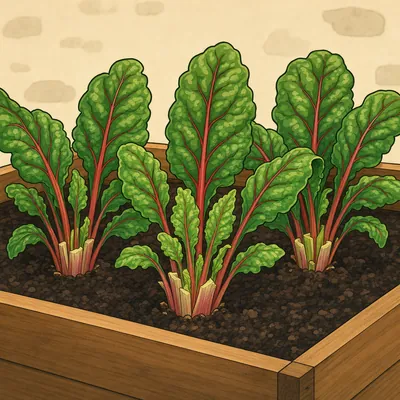
Cut leaves regularly and the plant will keep sending up new ones. Weed gently, since the roots are shallow. Pull off damaged or yellow leaves. In hot summers a little afternoon shade helps. Move chard to a new bed each year, and skip spots where beets or spinach grew recently; there's more on that in our crop rotation plan.
Trouble in the bed
- Slugs and snails: Leave ragged holes and slime trails, and can wipe out young seedlings overnight. Go out with a flashlight after dark and pick them off, lay boards down as traps and clear them each morning, or use an iron phosphate bait. Watering at the base in the morning, or using drip lines, keeps the bed less inviting.
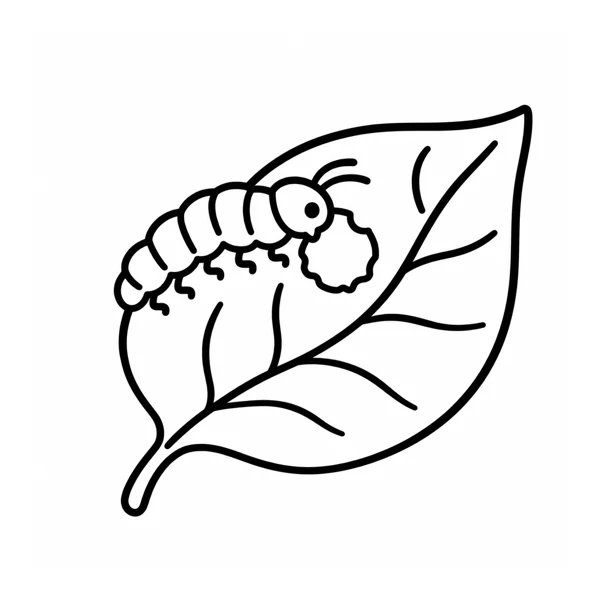
- Leaf miners: Tiny larvae that tunnel between the leaf surfaces and leave pale, winding trails. Pick off marked leaves and keep row cover over young plants.
- Flea beetles: Pepper small leaves with tiny holes. Row cover keeps them off.
- Aphids: Gather on the undersides of leaves. Rinse them off with a hose or use insecticidal soap.
- Root-knot nematodes (mostly in the South and in sandy soil): Microscopic soil worms that make knots and swellings on the roots. Plants look stunted and wilt in hot weather. Pull badly hit plants, rotate beds, work in compost, and try a mustard cover crop between plantings.
- Cercospora leaf spot: Small round spots with pale centers in warm, humid weather. Space plants for air and water at the base.
Good neighbors





Good: Bush beans, onions, cabbage family crops, celery, and lettuce. Keep apart: Beets, because they share pests and diseases with chard, and the two cross if you're saving seed. Old garden lore: Some gardeners keep chard away from pole beans, cucumbers, and melons. That's tradition rather than tested advice, so treat it as optional.
Seeds that grow well in your area in November
Affiliate links — shopping through these helps keep Evening Vines free. Smooth Blue Aster
 Polka Dot Mix
 Black-Eyed SusanSeeds
 ColumbineSeeds
Varieties worth growing
- Fordhook Giant: Big, deeply crinkled dark green leaves on wide white stems. Seeds
- Orange Fantasia: Glowing golden-orange stems against dark green, slightly crinkled leaves.
- Pink Passion: Wide, bright pink stems with smooth dark green leaves.
- Lucullus: Light green, crinkled leaves with a mild flavor.
- Bright Lights: A rainbow mix of stem colors, pretty in the bed and productive.
- Peppermint: Pink and white striped stems.
- Ruby Red (Rhubarb): Deep red stems and green leaves. Seeds
Swiss Chard seeds to buy
Affiliate links — shopping through these helps keep Evening Vines free.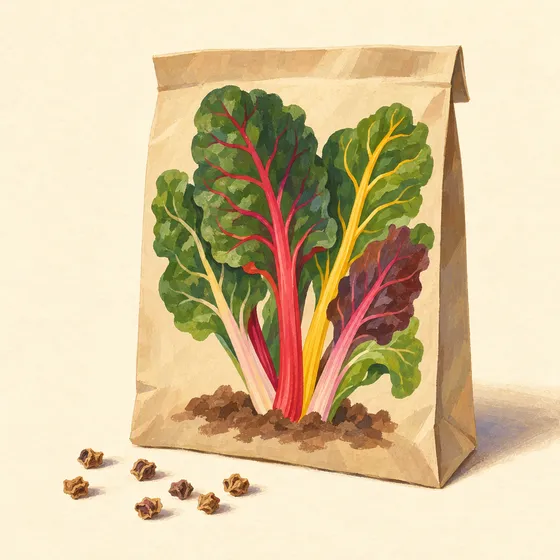 Ruby Red
Picking notes
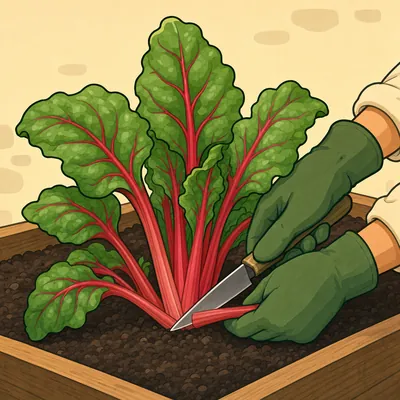
Pick outer leaves when they're 6 to 8 inches long, cutting about an inch above the base and leaving the center to keep growing. Baby leaves can be cut at 4 inches. Plants keep producing until a hard freeze. Store leaves unwashed in the fridge for up to a week.
Saving seed for next year
Chard is a biennial and flowers in its second year. Mulch plants over winter, or lift and store the roots and replant them in spring. Let the seed stalks ripen and dry on the plant. Chard and beets cross by wind, so grow only one variety in flower at a time, or keep them well apart. Seed stays good for up to 4 years. More on the basics in saving seeds from your garden.
From garden to table
Chard is rich in vitamins K, A, and C, plus magnesium and iron. Sauté the leaves, stir them into soups, eggs, and pasta, or eat baby leaves raw. Cook the stems like celery or asparagus. Safety: Chard is high in oxalates, so people prone to kidney stones may want to limit it.
Questions from the potting bench
Does chard come back every year? It's a biennial. In zones 8 to 10 (and zone 7 with heavy mulch) it often lives through winter and gives a second flush in spring before it flowers, but most gardeners sow fresh each year.
Why is my chard bitter? Usually heat, drought, or old leaves. Keep it watered and pick the younger leaves.
Can I eat the stems? Yes. They're delicious cooked.
Grower reports
How did Swiss Chard do in your garden? Members rate it and say which zone and month they planted, so everyone can see what works near them.
Recent community discussions
No one has talked about Swiss Chard yet. Be the first.
Seeds to try
Affiliate links — shopping through these helps keep Evening Vines free.Essentials for Growing Swiss Chard
 Grow Bags
Breathable fabric pots: grow almost anything on a patio, balcony or driveway, and roots never circle.
See it →
 Frost Cloth
Throw it over young plants on cold spring and fall nights.
See it →
 Seed Starting Tray
Reusable tray with a clear dome to give seeds a warm, humid start indoors.
See it →
 Watering Can
Long-spout can for gentle watering of seedlings and pots.
See it →
 Plant Labels
Waterproof markers so you know what's coming up where.
See it →
 Organic Fertilizer
Slow-release organic plant food for vegetable beds and containers.
See it →
