
Potatoes
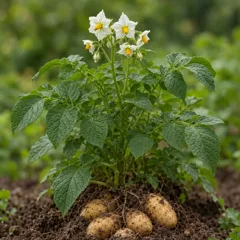
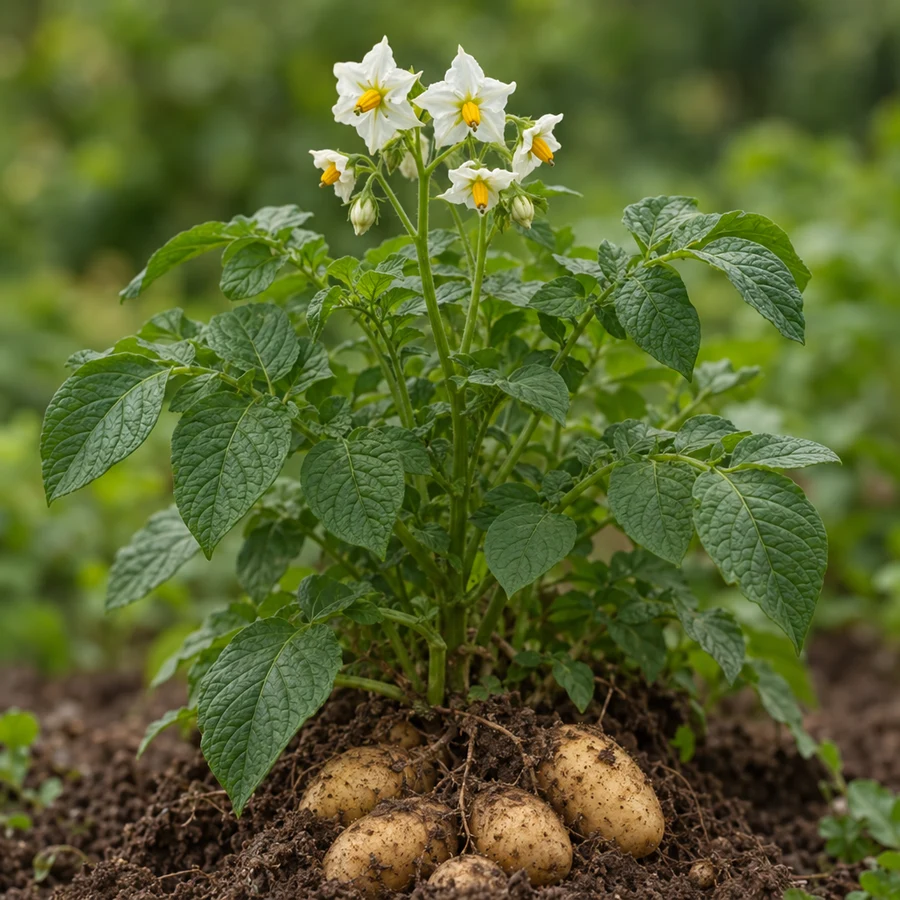
Potatoes are a hearty staple grown from seed potatoes (tubers), not true seeds. They love cool weather and loose, slightly acidic soil.
Early, mid, and late-season types spread out the harvest, from tender new potatoes in early summer to storage potatoes in fall. They also grow well in deep containers and grow bags.
Recent community discussions
No one has talked about Potatoes yet. Be the first.
At a glance
| Plant type | Root vegetable (tuber) |
| Botanical name | Solanum tuberosum |
| Annual or perennial | Grown as an annual |
| Sun | Full sun |
| Water | About 1 inch per week, more on sandy soil |
| Spacing | 10 to 12 inches, rows 3 feet apart |
| Planting depth | 4 inches |
| Days to germinate | 14 to 28 for sprouts to emerge |
| Days to maturity | 70 to 120 |
| Best USDA zones | 3 to 10 |
| Soil pH | 6.0 to 6.5 is ideal; grows down to 5.0 (see scab note below) |
From planting to harvest
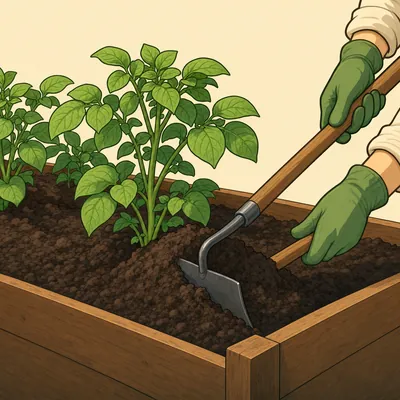
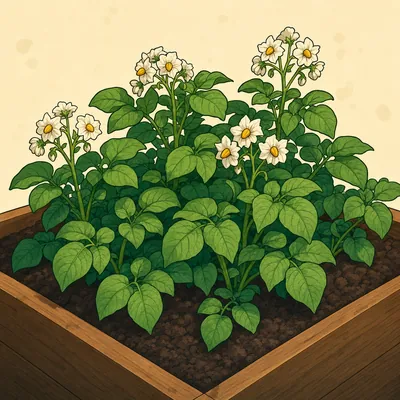
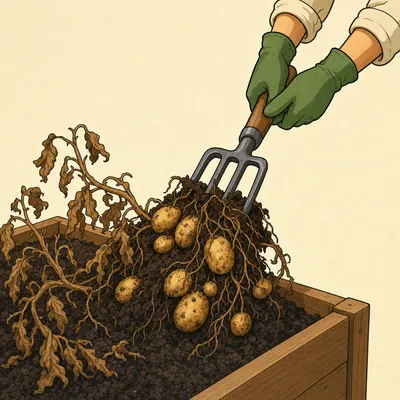
Is it potatoes weather where you are? See everything to plant this month or read your zone notes.

Plant seed potatoes 2–4 weeks before last frost once soil reaches 45°F (7°C). In mild zones, sow in late summer to fall for winter harvest.

70–120 days; early types in ~70, late in ~120.

Zones 3–10, late summer?early fall when vines yellow; early types July?Aug, late types Sept?Oct.

Loose, well-drained sandy loam, pH 5.0–6.5. Slightly acidic soil reduces scab.
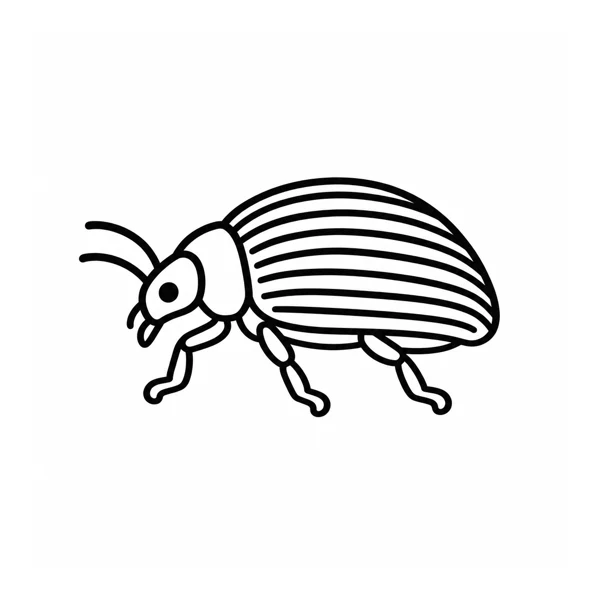
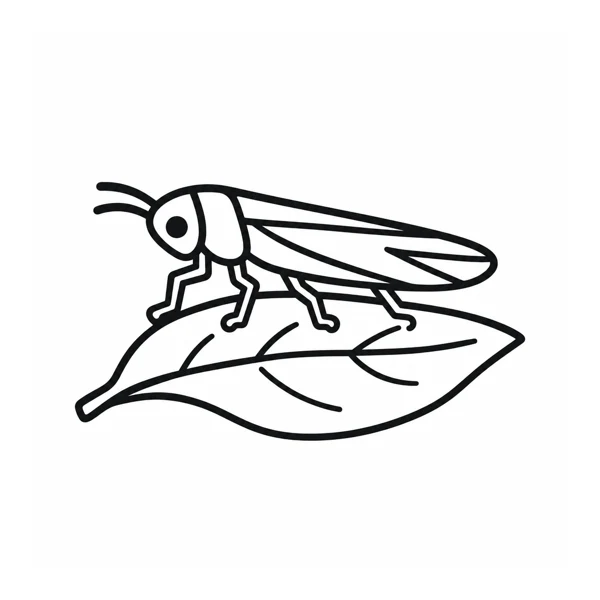
Pests to watch for




A little history
Potatoes were first grown in the Andes of South America some 7,000 to 8,000 years ago. They reached Europe in the late 1500s and spread around the world from there. The longer tale is in the story of the potato.
When to sow in your zone
Spring (zones 3 to 8, and anywhere with cold winters): Plant seed potatoes 2 to 4 weeks before your last frost, once the soil has warmed to about 45°F. Count back from your last frost to find the week, and chit your seed potatoes a couple of weeks ahead. The full spring routine is in plant seed potatoes in spring.
Fall and winter (zones 9 and 10): Here potatoes go in from about September to February, while the weather is cool, and the crop is dug in late winter or spring. If you garden in these zones and it's late fall, you're in the planting window right now. Colder zones wait for spring.
Potato timing changes a lot from zone to zone. See when potatoes go in where you live on the zone pages, for example zone 5, zone 9 or zone 10.
Growing it, step by step
Starting from Seed Potatoes
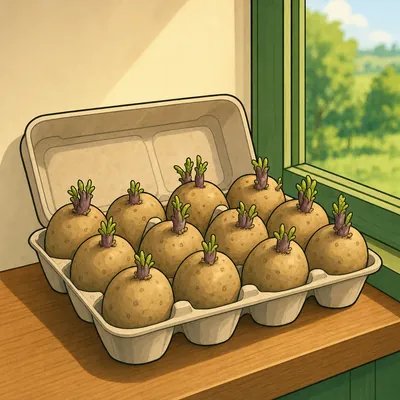
Use certified seed potatoes, not grocery potatoes. Sprout them in light for about 2 weeks. Cut large ones into pieces with 2 or 3 eyes each, then spread the pieces out at room temperature (60 to 70°F) for 1 to 3 days, until the cut faces have dried and sealed over. Small seed potatoes can go in whole.
Planting
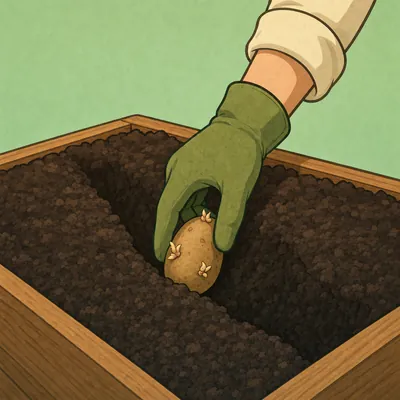
Plant pieces 4 inches deep, eyes up, 10 to 12 inches apart.
Water
Give about 1 inch of water a week, more on sandy soil, and keep it even. Dry spells followed by a soaking give cracked, knobby or hollow tubers. Steady moisture matters most once the plants start to flower and tubers are forming.
Mulch
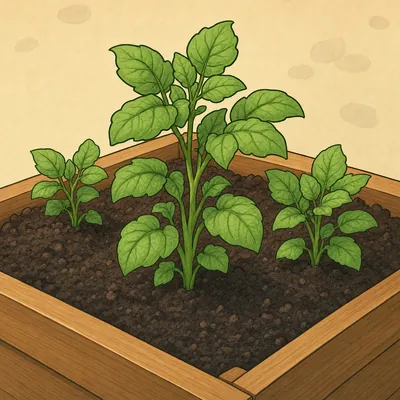
Hill soil or straw around the stems as they grow. Hill potatoes for a bigger crop walks through it.
Feeding
Mix compost in before planting. Skip fresh manure and lime in the potato bed (both can make scab worse), and go easy on nitrogen, or you'll grow leaves instead of tubers.
Keeping it happy
Hill plants 2 or 3 times once stems reach 6 to 8 inches, so no tubers see light. Rotate: keep potatoes, tomatoes, peppers, eggplant and tomatillos out of the same spot for 3 to 4 years. A simple plan for that is in crop rotation against disease.
Trouble in the bed
- Colorado potato beetle: Hand-pick beetles, larvae, and the orange egg clusters under leaves, or cover young plants with row cover.
- Late blight: Plant certified seed, pull and bag infected plants, and dig no tubers from blighted plants for storage. More on the late blight page.
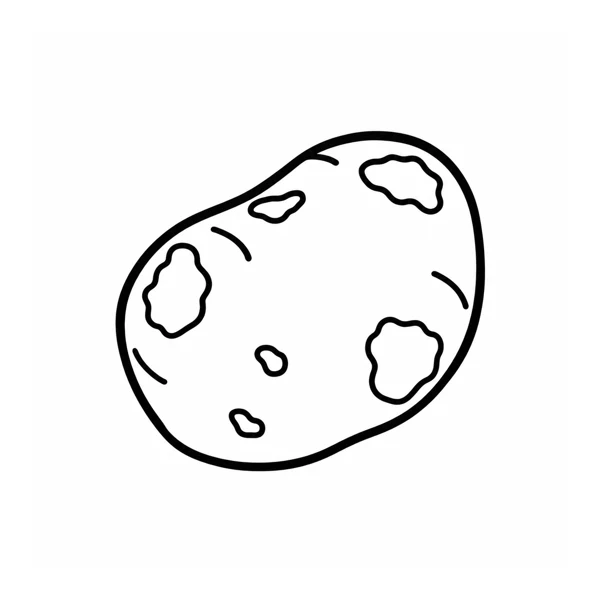
- Common scab: Scab is held back in soil at about pH 5.0 to 5.2 and gets worse quickly above that, so if your beds have a scab history, don't lime them and lean toward the low end. Even watering while tubers form helps too. See common scab.
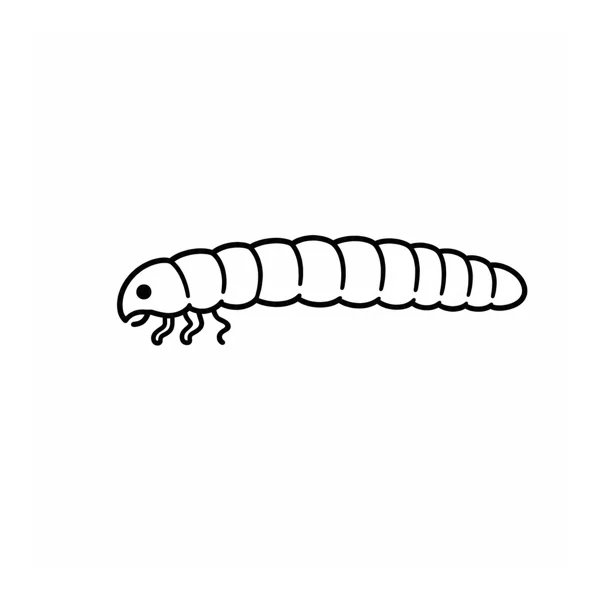
- Wireworms: Avoid planting right after lawn or sod, and rotate crops.
Good neighbors






Good: In our beds, potatoes share space best with plants that don't fight them for root room or shade them out. Peas go in at the same cool time of year and climb a trellis at the bed's edge. Bush beans stay low and are happy beside the rows once the soil warms. Lettuce and spinach make a quick crop between rows and are picked before the potatoes need the room for hilling. Marigolds and nasturtiums along the ends add color and bring in hoverflies and other helpful insects.
Avoid: Tomatoes, peppers, and eggplant are all in the potato's nightshade family. Tomatoes and eggplant share early blight and the Colorado potato beetle, tomatoes also share late blight, and peppers and eggplant share Verticillium wilt. Keep them apart, and rotate all of them with potatoes on a 3 to 4 year cycle.
Seeds that grow well in your area in November
Affiliate links — shopping through these helps keep Evening Vines free. Black-Eyed SusanSeeds
 ColumbineSeeds
 Moonbeam
 Foxglove Mix
Varieties worth growing
- Yukon Gold: Yellow flesh, buttery flavor.
- Russet Burbank: Classic baking potato.
- Kennebec: White all-purpose potato.
- Red Pontiac: Red skin, good for boiling.
Picking notes
New potatoes: Start feeling around the edges of the hill once the plants flower, or about 7 to 8 weeks after planting. Take a few and leave the plant to keep growing.
Storage potatoes: Wait until the vines yellow and die back, then leave the tubers in the ground about 2 more weeks so the skins toughen. Dig on a dry day. Cure them somewhere dark at 45 to 60°F with high humidity for about 2 weeks, then store at 40 to 45°F. Store squash and potatoes for winter has the details.
When that is, by zone: In zones 3 to 8, spring-planted potatoes are dug from early summer (new potatoes) through early fall, roughly July to October. In zones 9 and 10, fall- and winter-planted potatoes are dug in late winter and spring.
Saving seed for next year
Extension services advise buying fresh certified seed potatoes every year. Saved tubers can carry viruses and other diseases you can't see, and these build up from one season to the next. If you do keep a few of your own, take them only from plants that stayed healthy all season, store them cool and dark, and plan to start over with certified seed if the plants look weaker. The small green berries some plants make hold true seed, but it won't grow the same variety, and the berries are poisonous.
From garden to table
Potatoes provide potassium, vitamin C, and fiber. Green skin, sprouts, leaves, and berries contain solanine and are toxic: cut away green parts and throw out green or bitter potatoes.
Questions from the potting bench
Some of my spuds came out of the ground with green patches. Can we still eat them? Green means the tuber saw daylight, and the green parts carry solanine. Peel or cut the green away well, and throw out any that are green all through or taste bitter. Hilling deeper next year keeps them covered.
How early can I sneak a few new potatoes? Once the plants flower, or about 7 to 8 weeks after planting. Storage potatoes wait until the vines have died back.
The potatoes in my kitchen are sprouting. Can I plant those? Better not. Store potatoes may carry disease and are sometimes treated to stop sprouting. Certified seed potatoes are checked for disease and grow a more reliable crop.
Grower reports
How did Potatoes do in your garden? Members rate it and say which zone and month they planted, so everyone can see what works near them.
Recent community discussions
No one has talked about Potatoes yet. Be the first.
Essentials for Growing Potatoes
 Grow Bags
Breathable fabric pots: grow almost anything on a patio, balcony or driveway, and roots never circle.
See it →
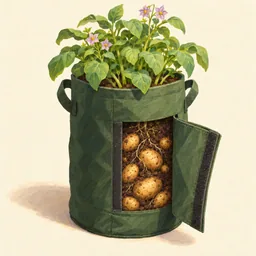 Potato Grow Bags
Tall bags with a side flap: lift the flap and pick new potatoes without digging.
See it →
 Organic Fertilizer
Slow-release organic plant food for vegetable beds and containers.
See it →
 Garden Hand Tools
Trowel, transplanter and cultivator: the three tools you reach for most.
See it →
 Soaker Hose
Waters the roots slowly, not the leaves: less disease, less water, less work.
See it →
 Watering Can
Long-spout can for gentle watering of seedlings and pots.
See it →
