
Runner Beans
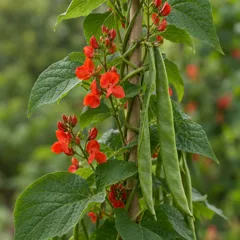
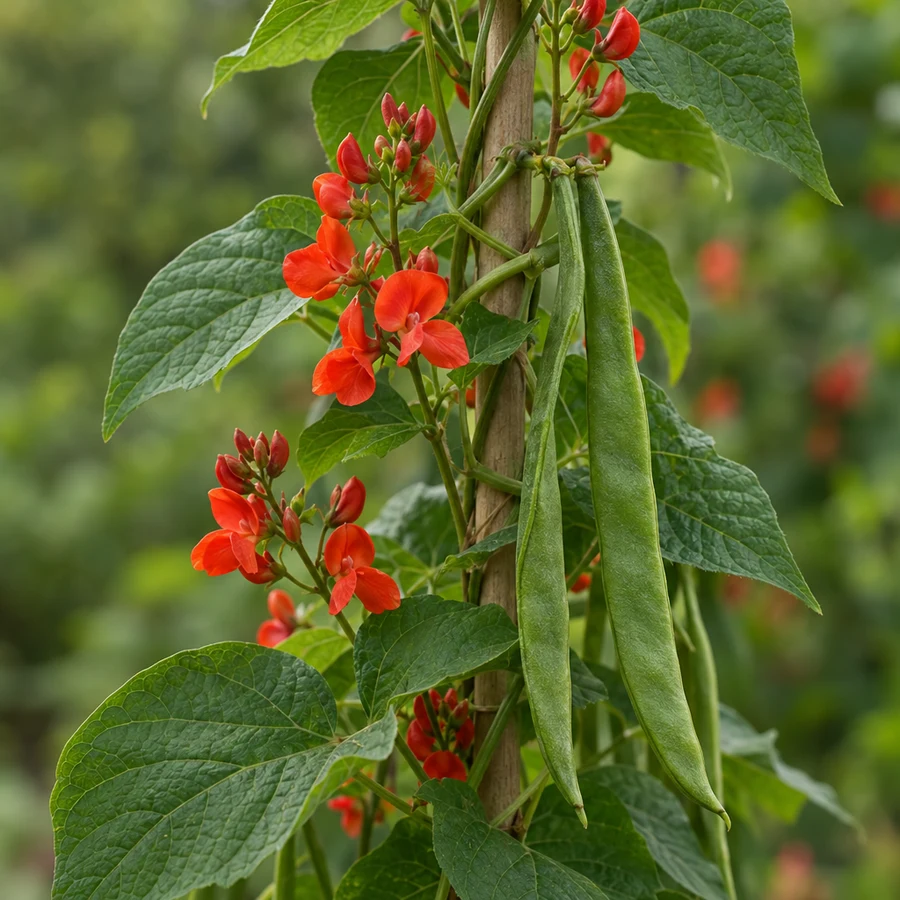
A row of runner beans is half vegetable patch and half flower border. The vines climb 8 feet or more in a single summer, covered in sprays of scarlet, white, pink or two-tone flowers that bees and hummingbirds visit all day. Then come the pods: long, flat and rough-skinned, picked young and sliced for the pot. One well-watered row will keep a family in beans from midsummer until frost.
Runner beans are a different species from ordinary green beans. They are tougher in cool weather, sprout in colder soil, and keep cropping for longer. The catch is heat. In a hot, dry summer the flowers often fall off without making pods, which is why runner beans are a mainstay of gardens in Britain, Ireland and other cool places, and more of an ornamental vine in the hot South.
Recent community discussions
No one has talked about Runner Beans yet. Be the first.
At a glance
| Plant type | Climbing vegetable (bean) |
| Botanical name | Phaseolus coccineus |
| Annual or perennial | Tender perennial with tuberous roots, grown as an annual; the roots can come back where the ground doesn't freeze |
| Sun | Full sun; light afternoon shade helps in hot summers |
| Water | Plenty, about 1 inch or more a week, most of all once flowers open |
| Spacing | 6 inches apart in a double row, rows 2 feet apart |
| Planting depth | 2 inches |
| Days to germinate | 7 to 14 |
| Days to maturity | About 65 to 90 days from seed to the first picking, depending on variety |
| Best USDA zones | Any zone as a summer crop; crops best where summers are mild |
| Soil pH | 6.0 to 7.0 |
Is it runner beans weather where you are? See everything to plant this month or read your zone notes.
Pests to watch for


Diseases

A little history
Runner beans come from the mountains of Mexico and Central America, where they grow wild at higher, cooler elevations than the common bean. People there have grown them for thousands of years for their pods and beans. Europeans brought them home in the 1600s, and at first the English grew them for their flowers rather than their pods. Before long gardeners began eating them too, and runner beans became one of the best-loved crops in British allotments. In North America they are still grown mainly as a pretty climber, under the name scarlet runner bean.
When to sow in your zone
Spring: Runner beans can't take frost, but they will sprout in cooler soil than green beans. Sow outdoors once your last frost has passed and the soil is at least 50°F, and better 54°F. In most gardens that is 1 to 4 weeks after the last frost date. In Britain and Ireland it usually means mid-May in the south to early June in the north, and in Canada late May to early June in most areas.
A head start indoors: In short-season areas, sow single seeds in deep pots indoors about 3 to 4 weeks before your last frost. Plant them out 1 to 3 weeks after the last frost, once they are hardened off. Bean roots dislike disturbance, so use deep pots and plant out before the roots circle.
Hot climates: Where summers are long and hot (USDA zones 9 and 10, and warm parts of Australia), midsummer sowings tend to drop their flowers. A late-summer sowing in August (August or September in zone 10) that flowers in cooler fall weather often does better.
Australia: The seasons are six months on. In the temperate south, sow from about mid-October once frost is past and the soil has warmed, through to December. In the frost-free subtropics, sow in late winter (August) or in late summer (February and March) so the vines flower in cooler weather. Runner beans need cool nights to set pods and seldom do well in the tropical north.
Growing it, step by step
Picking the spot
Choose a sunny spot sheltered from strong wind, which can topple a laden row and keep bees away from the flowers. In hot areas, a place that gets some afternoon shade helps the plants set pods. The vines grow tall, so put them on the north side of the garden where they won't shade other crops.
Preparing the soil
Runner beans are hungry and thirsty. Dig plenty of compost or well-rotted manure into the bed a few weeks before sowing. Rich, moisture-holding soil is the single best way to get flowers to turn into pods. Go easy on high-nitrogen fertilizer, though: it gives you a wall of leaves and few beans.
Putting up supports
Set the supports before you sow. The classic way is a double row of 8-foot poles or canes, about 6 to 12 inches apart along the row, with the two rows 2 feet apart, tied together where they cross near the top. A wigwam of 6 to 8 poles suits a small garden or a big pot. The vines twine counterclockwise and need no tying once they get going, though you may need to guide the first shoots onto the poles.
Sowing
Push one or two seeds in 2 inches deep at the foot of each pole. If both come up, keep the stronger one. Seedlings usually show in 1 to 2 weeks. The seed leaves stay below ground, so the first thing you see is a true shoot.
Growing in a pot
Use a large container about 30 inches across and 18 inches deep, filled with good potting mix, and a wigwam of canes. Dwarf varieties like Hestia stay about 18 inches tall, need little support and manage in a pot 12 to 18 inches wide. Potted beans dry out fast and may need water every day in summer.
Water
Water deeply, especially once the flowers open. Dry roots are the main reason flowers drop without setting pods. A thick mulch of compost or straw keeps the soil cool and damp. Some gardeners mist the flowers on hot evenings, but a good soak at the roots matters far more.
Keeping it happy
- Pinching out: When the vines reach the top of their poles, pinch out the growing tips. This stops them tangling into a heavy mop and pushes energy into side shoots and pods.
- Picking: Pick every 2 or 3 days. If pods are left to swell and ripen their seeds, the plant slows down and stops flowering.
- Flowers but no pods: Common early in the season and in hot, dry spells. Keep the soil moist, mulch well, and wait for cooler nights. White-flowered and self-fertile varieties tend to set more reliably.
- End of season: Frost kills the vines. Cut the tops off and compost them, but leave the roots in the ground; like other legumes, they add nitrogen to the soil.
- Keeping the roots: In mild zones the tuberous roots may sprout again next spring. In colder areas, some gardeners dig them in fall and store them in barely damp sand somewhere cool and frost-free, then replant in spring for earlier flowers.
Trouble in the bed
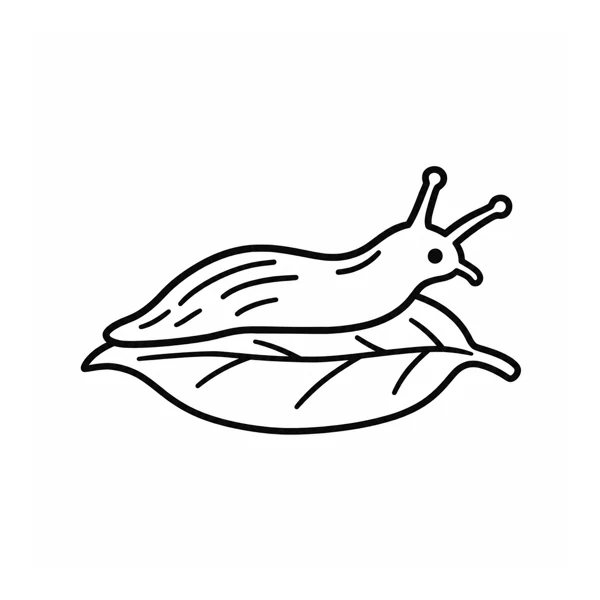
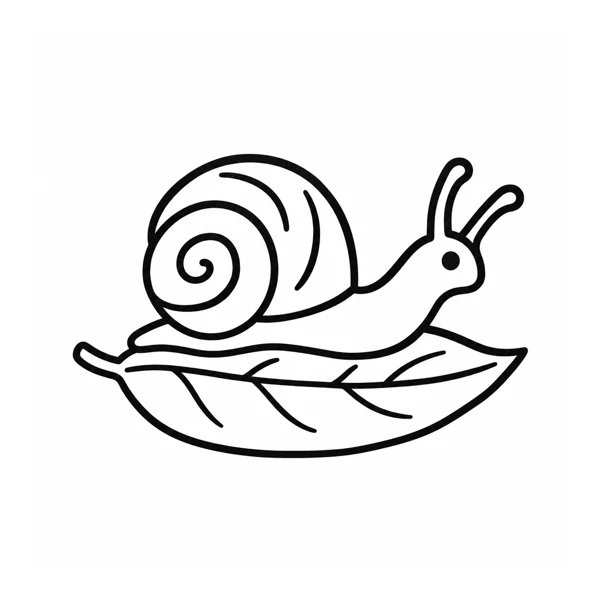
- Slugs and snails: The biggest threat to young seedlings, which they can eat overnight. Raising plants in pots until they are a few inches tall helps, as does hand-picking at dusk.
- Aphids: Black bean aphids cluster on shoot tips and flower stems. Rub them off or knock them away with a hard spray of water; pinching out the tips also removes many of them.
- Spider mites: Fine speckling on the leaves in hot, dry weather. Watering well and misting the leaves helps keep them down.
- Rust: Small rusty-brown spots on the leaves, worse in humid weather. Give the plants air, clear up old vines in fall, and don't grow beans in the same spot every year.
- Halo blight: A seed-borne bacterial disease that leaves dark spots ringed with yellow. Buy clean seed and don't save seed from affected plants.
Good neighbors





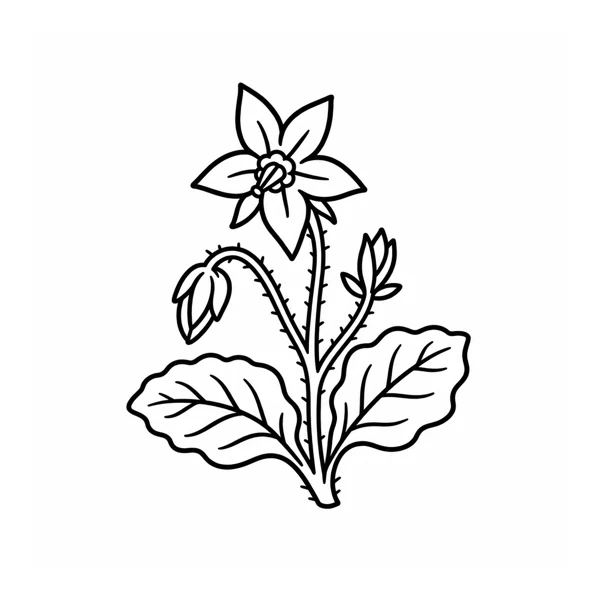

Good: Low leafy crops like lettuce and spinach do well in the cool shade on the north side of a bean row in summer. Nasturtiums, marigolds, calendula and borage bring in bees and other pollinators, which runner beans need to set pods. Sweet peas can share the same supports for a cottage-garden look.
Avoid: Onions, garlic and their relatives, which beans tend to grow poorly beside. Also keep tall vines from shading sun lovers like tomatoes and peppers.
Seeds that grow well in your area in November
Affiliate links — shopping through these helps keep Evening Vines free. Smooth Blue Aster
 Polka Dot Mix
 Black-Eyed SusanSeeds
 ColumbineSeeds
Varieties worth growing
Classic red-flowered beans:
- Scarlet Emperor: An old favorite with bright red flowers and long, well-flavored pods. Often sold as plain scarlet runner bean. Seeds
- Enorma: Very long, slim, smooth pods with good flavor. An RHS award winner and a show-bench standard in the UK.
- Painted Lady: A heritage bean with red and white flowers, as pretty as any flower vine.
For hot summers and poor pod set:
- White Lady: White flowers that set pods better in heat than most red types, followed by smooth, stringless pods. An RHS award winner.
- Moonlight: A white-flowered runner and French bean cross that is self-fertile, so it sets pods even when bees are scarce or the weather turns hot.
- Stardust: A self-fertile, white-flowered runner and French bean cross with long, smooth pods and heavy crops.
- Firelight: Red flowers and some French bean parentage, which makes it almost self-fertile and good in hot summers.
For short seasons and small spaces:
- Sunset: Pale pink flowers and one of the earliest to crop, a good choice for short summers in Canada and the northern US.
- Black Coat: Scarlet flowers, black seeds and an early crop.
- Hestia: A dwarf bean about 18 inches tall with red and white flowers, made for pots and windy plots.
Runner Beans seeds to buy
Affiliate links — shopping through these helps keep Evening Vines free.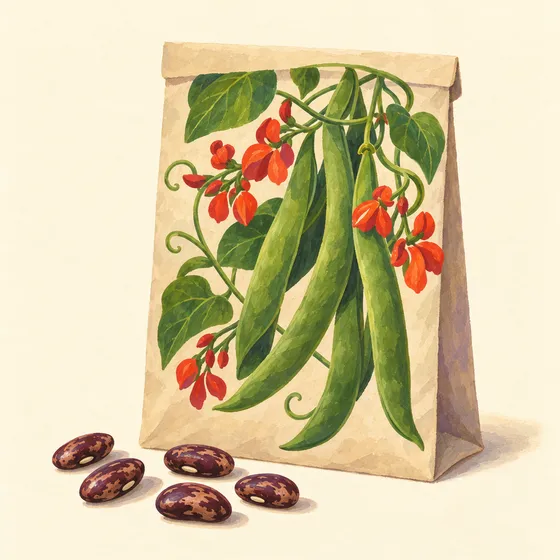 Scarlet Emperor
Picking notes
Picking usually starts in midsummer and carries on for 8 weeks or more, until frost. Pick pods when they are about 8 to 10 inches long, still smooth and flat, and snap cleanly, before the beans inside make bumps along the pod. Older pods turn stringy and tough. Pick at least every 2 or 3 days, and the vines keep flowering. Any pods you miss can be left to swell for shelling beans.
Saving seed for next year
Leave a few of the best pods on the vine until they turn dry and papery, then pick them, finish drying them indoors, and shell out the seeds. Unlike green beans, runner beans are cross-pollinated by bees, so different runner varieties grown near each other will mix. Grow one variety if you want seed that comes true, or keep varieties well apart. Store dry seed somewhere cool and dark; it keeps for about 3 years.
From garden to table
Young pods are the main crop. Top and tail them, remove any string down the sides, then slice them thinly on the slant and steam or boil them for a few minutes. They freeze well after a quick blanch. Half-ripe beans can be shelled and cooked like lima beans, and fully dried beans can be cooked like any dried bean. The flowers are edible too, with a mild bean flavor, and look good scattered over a salad.
Like other beans, the seeds contain a natural lectin that can cause stomach upset if eaten raw or undercooked. Always boil dried beans hard before eating, and don't eat raw pods in quantity.
Questions from the potting bench
Why are my runner beans flowering but not making pods? Usually dry soil, hot weather, or too few bees. Water deeply, mulch, and wait for cooler nights; pod set often picks up later in summer. A white-flowered or self-fertile variety helps next year.
Can I eat scarlet runner beans or are they just ornamental? They are fully edible. The young pods, the shelled beans and the flowers can all be eaten, as long as the beans are cooked.
Do runner beans come back every year? The roots are perennial, so in mild zones a plant may regrow in spring. In cold areas frost kills them, but you can dig and store the roots over winter, or simply sow fresh seed.
What's the difference between runner beans and green beans? They are separate species. Runner beans have bigger, showier flowers, rougher and longer pods, and cope better with cool weather, while green beans handle heat better and are often stringless.
Grower reports
How did Runner Beans do in your garden? Members rate it and say which zone and month they planted, so everyone can see what works near them.
Recent community discussions
No one has talked about Runner Beans yet. Be the first.
Seeds to try
Affiliate links — shopping through these helps keep Evening Vines free.Essentials for Growing Runner Beans
 Grow Bags
Breathable fabric pots: grow almost anything on a patio, balcony or driveway, and roots never circle.
See it →
 Seed Starting Tray
Reusable tray with a clear dome to give seeds a warm, humid start indoors.
See it →
 Garden Hand Tools
Trowel, transplanter and cultivator: the three tools you reach for most.
See it →
 Organic Fertilizer
Slow-release organic plant food for vegetable beds and containers.
See it →
 Watering Can
Long-spout can for gentle watering of seedlings and pots.
See it →
 Pruning Shears
Sharp bypass pruners for harvesting, deadheading and tidying.
See it →
