
Macadamia
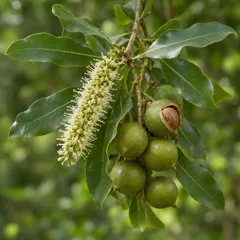
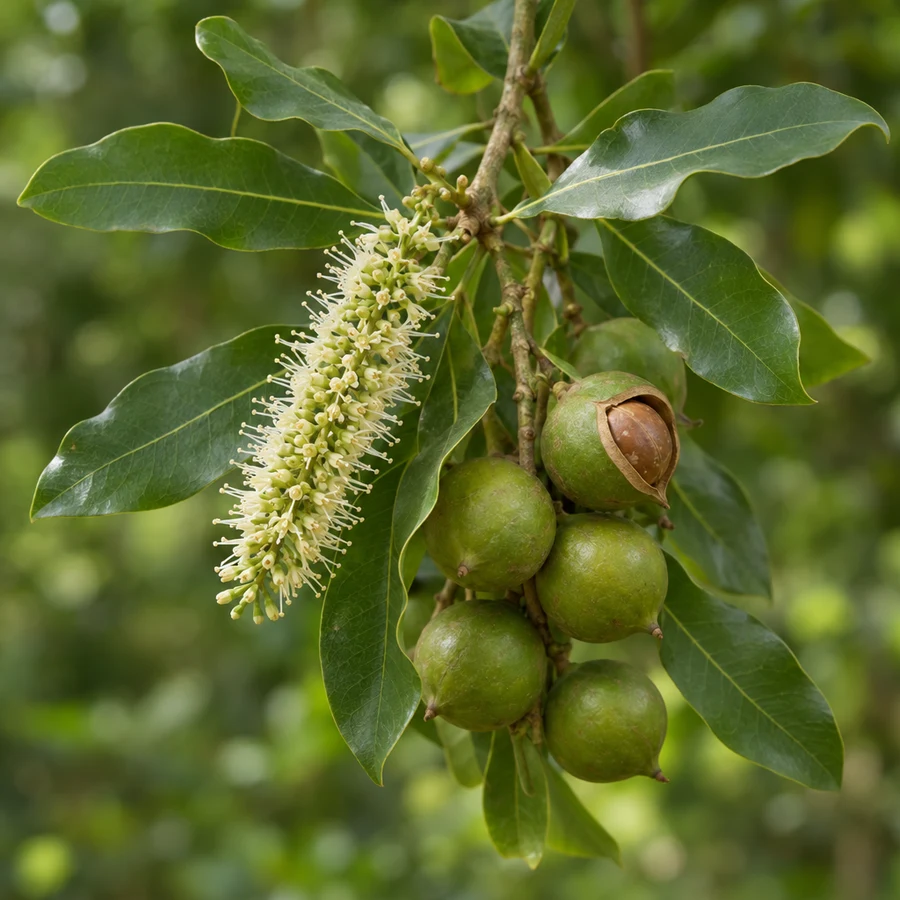
The macadamia is a handsome evergreen tree with glossy, holly-like leaves and long, dangling strings of cream or pink flowers. In time it gives you buttery, rich nuts that cost a small fortune in the store. It's the only well-known nut crop that comes from Australia.
Be honest about climate before you buy one. Macadamias like it mild and frost-free, with steady rain. A grown tree can take a brief dip to about 24°F, but flowers are usually killed at 28°F, and a light frost can kill a young tree. Long spells over 90°F cut the crop too.
In the US, macadamias grow outside in Hawaii, coastal Southern California, and central and south Florida. In Australia they're native to the subtropical forests of southeast Queensland and northern New South Wales, and they do best along the east coast from there north. Trees in cooler southern gardens often flower well but crop lightly. In the UK, Ireland, Canada and most of the US, a macadamia is a conservatory or big-pot plant. It makes a fine foliage tree under glass, but nuts there are a long shot.
Recent community discussions
No one has talked about Macadamia yet. Be the first.
At a glance
| Plant type | Nut tree (evergreen, subtropical) |
| Botanical name | Macadamia integrifolia (smooth-shell), Macadamia tetraphylla (rough-shell), and hybrids of the two |
| Annual or perennial | Evergreen perennial |
| Sun | Full sun, with shelter from strong wind |
| Water | About 1 inch per week, deep and steady, most of all while nuts set and fill; never waterlogged |
| Spacing | 25 to 35 feet from buildings and other trees (grown trees often reach 30 to 40 feet tall, sometimes 60) |
| Planting depth | Level with the soil it grew in at the nursery, never deeper; seeds about 1 inch deep |
| Days to germinate | Not grown from seed for nuts; start with a grafted tree (fresh seed sprouts slowly and unevenly, often over 1 to 3 months) |
| Days to maturity | 4 to 7 years to first nuts on a grafted tree; seedlings 8 to 12 years; full crops at about 10 to 12 years |
| Best USDA zones | 10 to 11 outdoors (9b in the mildest coastal spots, with frost protection for young trees); anywhere colder only in a big pot or conservatory |
| Soil pH | 5.5 to 6.5 |
Is it macadamia weather where you are? See everything to plant this month or read your zone notes.
Pests to watch for

Diseases

A little history
Aboriginal peoples in southeast Queensland and northern New South Wales gathered and ate the nuts for thousands of years. In 1857 the botanist Ferdinand von Mueller collected specimens with Walter Hill, the curator of the Brisbane Botanic Gardens, and named the genus after his friend John Macadam, a Melbourne scientist. Hill planted a tree in the Brisbane gardens in 1858. That tree, thought to be the first macadamia ever planted on purpose, is still alive.
William Purvis brought macadamia seed to Hawaii in the early 1880s, and one of his trees still stands on the Big Island. The University of Hawaii named its first varieties in 1948, which started the Hawaiian nut industry. California got its first trees at about the same time as Hawaii. Two seedlings planted in the 1880s still grow on the UC Berkeley campus.
When to sow in your zone
Macadamias go in as young grafted trees. Seed works, but it's slow and you can't be sure what nuts you'll get.
Spring to early summer (zones 10 to 12, and 9b with protection): This is the main planting time. Set trees out about a month after your last frost date, once nights stay mild, so roots have a long warm season to settle in before winter. In Florida, planting at the start of the summer rainy season works well.
Early fall (zone 10b and warmer): Where frost is rare, early fall planting also works, while the soil is still warm. Water reliably through any dry months.
Seed: Sow fresh nuts soon after they fall. Plant them in deep pots and keep them warm. Expect slow, patchy sprouting.
Colder zones: Keep the tree in a large pot in a conservatory or heated greenhouse. Put it out on a sunny patio only in the warmest weeks of summer, and bring it back in before nights drop below about 50°F.
November in the garden: In zones 10 and 11, this is harvest season. Pick up fallen nuts every couple of weeks. Watch the forecast and be ready to cover young trees if frost threatens. In cold climates, a potted tree should already be indoors in the brightest spot you have.
Growing it, step by step
Starting a New Tree
Buy a grafted tree of a named variety. Grafted trees bear years sooner than seedlings and give nuts you can count on. Pick a healthy tree that isn't crammed in its pot. If you grow one from seed for fun, treat it as a foliage tree first and a nut tree later.
Picking the Spot
Give it the sunniest spot you have, with room to grow wide. Macadamias have brittle wood and shallow roots, so shelter from strong wind matters. A spot behind a building or a row of other trees helps. Most soils do fine, from sand to clay, as long as water drains away. Don't plant where puddles sit after rain. Macadamias also dislike salty soil or water, so keep them back from salt spray.
Planting
Dig a hole two to three times as wide as the pot, but no deeper. Set the tree so the top of its soil sits level with the ground, firm the soil back in, and water well. Stake it loosely for the first year or two if your site is windy. Don't add fertilizer to the planting hole.
Growing in a Pot
This is the only way to grow a macadamia in cold climates. Start with a 10- to 15-gallon pot and move up to 20 gallons or more as it grows. Use a free-draining potting mix and water when the top inch is dry. Give it as much light as you can, and keep it above about 40°F in winter. Hand-pollinating with a soft brush helps if it does flower indoors.
Water
Water young trees deeply and regularly. Grown trees survive dry spells, but the crop and the nut quality suffer. Steady water matters most from flowering through nut fill in summer. Don't run a lawn sprinkler on a timer at the trunk, since soggy soil leads to root rot.
Mulch
Spread 2 to 4 inches of wood chips or leaf mulch over the root zone, keeping it a hand's width from the trunk. Macadamia roots run close to the surface, so mulch keeps them cool and moist and means less digging around the tree.
Feeding
Feed young trees lightly every few months through the warm season with a balanced fertilizer, like a citrus food. Go easy on phosphorus. Macadamias are in the protea family, which as a group is sensitive to too much of it. Once trees are established in good soil, they need little feeding. A potted tree needs light, regular feeding in spring and summer.
Keeping it happy
Prune young trees to one strong central trunk with side branches spread out around it, starting about 3 feet off the ground. That makes a sturdier tree in wind. After that, just take out dead, crossing, or damaged branches, and thin crowded growth so light and air get in. Prune after the main harvest.
Keep grass and weeds back from the trunk, and keep mowers and string trimmers away from the bark. In zone 9b and cold pockets of zone 10, cover young trees with frost cloth on cold nights for the first few winters. Rake up or bag the fallen husks after harvest, since rats and pests like to hide in them.
Trouble in the bed
- Rats and squirrels: The biggest thief in many gardens. They eat ripe and green nuts on the tree and on the ground. Gather nuts often and keep the ground clean.
- Birds: In Australia, cockatoos and galahs crack the nuts. Big trees are hard to net.
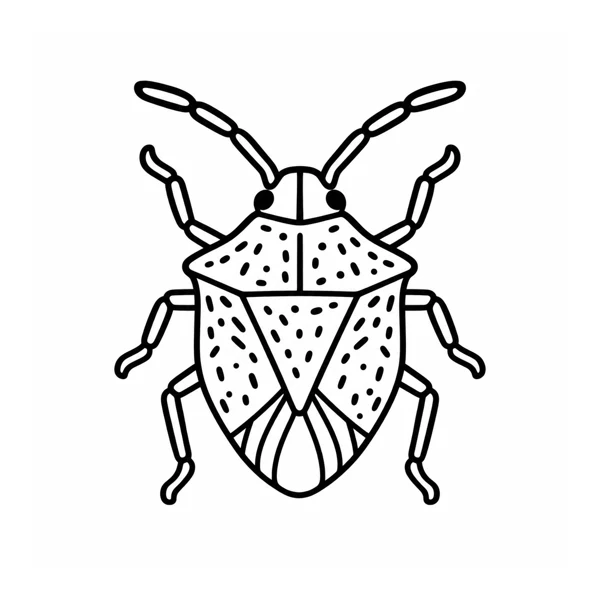
- Stink bugs and fruit spotting bugs: They feed on young nuts and leave spots on the kernel or make nuts drop early.
- Nut borers: Moth larvae tunnel into young nuts and cause early drop. Picking up and binning fallen nuts helps break the cycle.
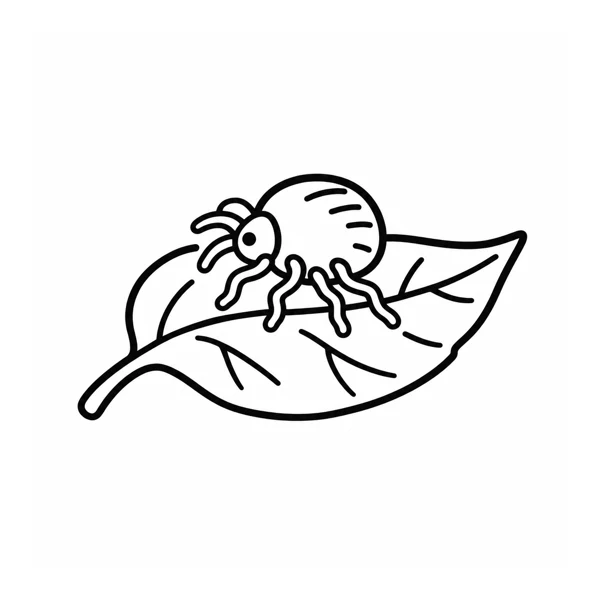
- Thrips, mites and aphids: Often found on new leaves, flowers and husks. Home trees usually shrug them off.
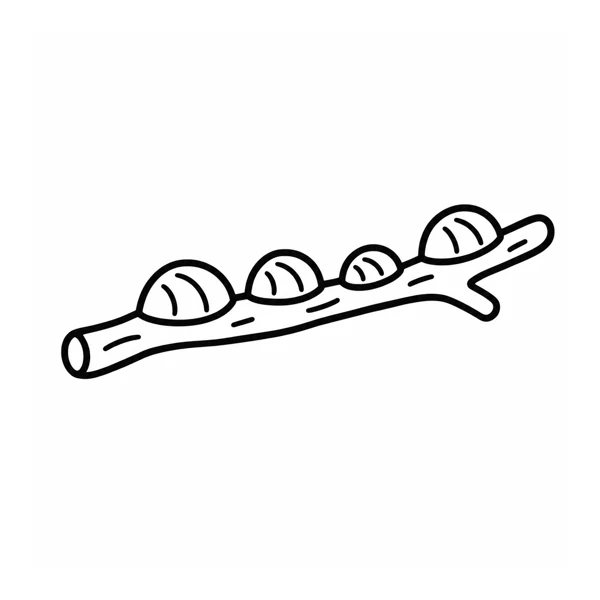
- Scale insects: Crusty bumps on twigs and leaves. Prune out badly crusted shoots; a horticultural oil works on young scale.
- Anthracnose: A fungus that darkens husks in humid, wet weather, so nuts hang on the tree instead of falling. Pick off and bin blackened nuts, and let air move through the canopy.
- Root rot and trunk canker: Phytophthora can attack in wet, poorly drained soil, or where the trunk is wounded. Plant in good drainage and protect the bark.
Good neighbors
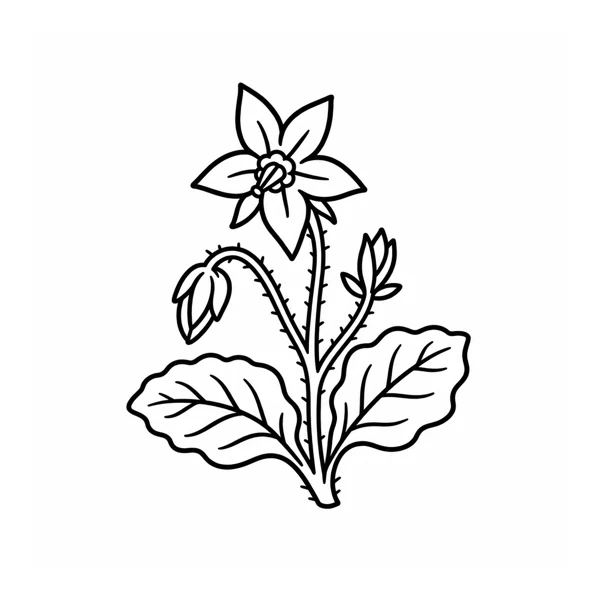
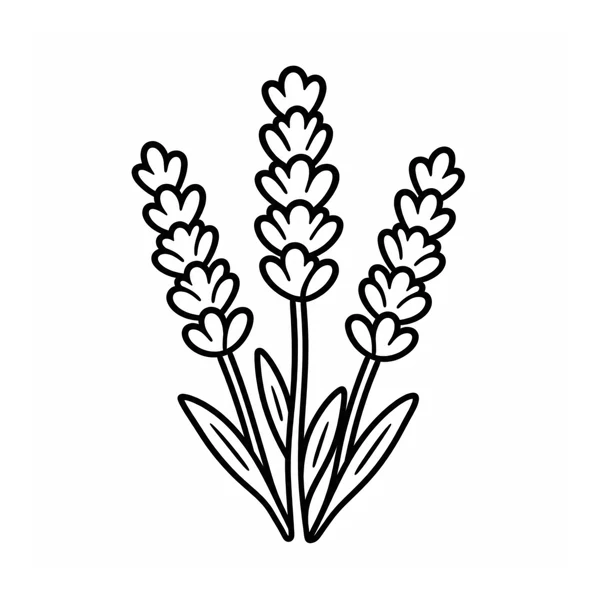


Good: Bees do most of the pollinating, so low flowers that bring them in help, like borage, alyssum, lavender, calendula and nasturtiums, planted near the edge of the root zone. A second macadamia of a different variety is the best companion of all for a bigger crop.
Avoid: Lawn grass and thirsty vegetable beds right up to the trunk. The shallow roots don't like being dug around. Keep rough-shell types away from paths and play areas, since their leaves are spiny.
Seeds that grow well in your area in November
Affiliate links — shopping through these helps keep Evening Vines free. Smooth Blue Aster
 Polka Dot Mix
 Black-Eyed SusanSeeds
 ColumbineSeeds
Varieties worth growing
Hardiest picks for the cool edge (zone 9b, coastal California, cooler parts of Australia):
- Cate: A rough-shell type from Malibu, California. Hardy and early bearing, with crisp kernels that ripen in late fall. A long-time favorite in California.
- Beaumont: An Australian hybrid with pretty pink flowers and an upright shape. A favorite backyard tree in both Australia and California. Ripe nuts often cling to the branches instead of falling, so pick them off the tree.
- Dorado: A smooth-shell type noted for cold resistance and heavy crops.
- Waimanalo: Grows well in cooler coastal areas and inland, and carries nuts in big clusters.
Good for home gardens in warm, mild areas:
- Vista: A hybrid from Southern California with very thin shells you can crack in a hand cracker. Starts bearing young.
- James: A tall, narrow tree from Southern California with high-quality kernels and big crops.
Hawaiian varieties (warm, humid areas such as Hawaii and Florida):
- Purvis (294), Kau (344), Kakea (508) and Keaau (660): University of Hawaii selections with good kernels. Kau is also widely planted in Australia.
- Makai (800): Better suited to low elevations and warmer sites than most.
- Keauhou (246): One of the first varieties the University of Hawaii named, in 1948. A broad, spreading tree for gardens with room.
Australian selections: Nurseries in Queensland and New South Wales also sell newer Australian-bred numbered varieties, such as A4 and A16. Ask a local nursery which ones suit your area.
For a pot or conservatory: Any grafted tree will do. Pick a compact or upright variety, since you'll be pruning to keep it in bounds.
Picking notes
Macadamias tell you when they're ready: ripe nuts fall to the ground. In the US the main harvest runs from late summer or fall into winter, with some nuts dropping most of the year in Hawaii. In Australia the season runs through autumn and winter. Don't shake the tree, which knocks down unripe nuts.
Pick up fallen nuts every 2 to 3 weeks in wet weather, and at least once a month when it's dry. Strip off the green husks within a day. Then dry the nuts in their shells in a shady, airy spot for 2 to 3 weeks. They're ready when the kernel rattles loose in the shell.
The shells are some of the hardest of any nut. A hammer tends to smash the kernel, so a vise or a cracker made for macadamias works best. Store cracked kernels in the fridge or freezer, since the oil turns rancid at room temperature.
Saving seed for next year
Possible, but not for keeping a variety. Seedlings vary and take 8 to 12 years to bear. Plant fresh nuts, still in the shell, soon after they fall if you want to try. To keep a tree you love, buy another grafted tree of the same variety.
From garden to table
Macadamias are rich in fat, most of it the monounsaturated kind, and they bring fiber, thiamin and a lot of manganese. USDA figures for raw macadamias are about 76 grams of fat, 9 grams of fiber and 8 grams of protein per 100 grams. Eat them raw or lightly roasted, chop them into cookies and granola, or blend them into nut butter.
Keep them away from dogs. Macadamia nuts can make dogs weak, wobbly, feverish and sick to the stomach, usually within about 12 hours. Most dogs recover in a day or two, but call your vet if your dog eats them. Pick up fallen nuts if your dog shares the yard.
Questions from the potting bench
Why isn't my macadamia making nuts? Usually it's still too young. Grafted trees take 4 to 7 years and seedlings much longer. Frost at flowering time, a dry spell while nuts are setting, or a single tree of a fussy variety can also mean few nuts.
Do I need two macadamia trees? Not always. Many trees set some nuts on their own, but varieties range from fully self-fertile to nearly self-sterile. Two different varieties nearby, with plenty of bees, give a bigger crop.
Can I grow a macadamia in a pot? Yes, as a handsome foliage tree in a big pot, moved indoors for winter in cold climates. It may flower in a bright conservatory, but don't count on nuts.
Why are nuts stuck on my tree? Nuts that blacken and hang on long after the rest have fallen are usually anthracnose, a fungus that thrives in wet, humid weather. Pick them off and throw them away, and thin the canopy so it dries faster after rain.
Are macadamia nuts bad for dogs? Yes. They can make dogs sick for a day or two. Gather fallen nuts and keep bowls of them out of reach.
Grower reports
How did Macadamia do in your garden? Members rate it and say which zone and month they planted, so everyone can see what works near them.
Recent community discussions
No one has talked about Macadamia yet. Be the first.
Essentials for Growing Macadamia
 Grow Bags
Breathable fabric pots: grow almost anything on a patio, balcony or driveway, and roots never circle.
See it →
 Organic Fertilizer
Slow-release organic plant food for vegetable beds and containers.
See it →
 Pruning Shears
Sharp bypass pruners for harvesting, deadheading and tidying.
See it →
 Insect Netting
Fine mesh that keeps cabbage worms, flea beetles and birds off your crops, no sprays needed.
See it →
 Soaker Hose
Waters the roots slowly, not the leaves: less disease, less water, less work.
See it →
 Garden Hand Tools
Trowel, transplanter and cultivator: the three tools you reach for most.
See it →
