
Camu Camu
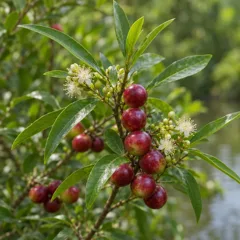
A note before anything else: camu camu is a plant for very few gardens. It is a riverbank shrub from the Amazon, and it wants three things all year: warmth, sun and water at its feet. If you garden in frost-free south Florida, Hawaii, Puerto Rico or the warmest corners of southern California (zones 10b to 12), you can try it outdoors. Everyone else needs a heated greenhouse or a large tub that comes indoors well before the nights turn cool.
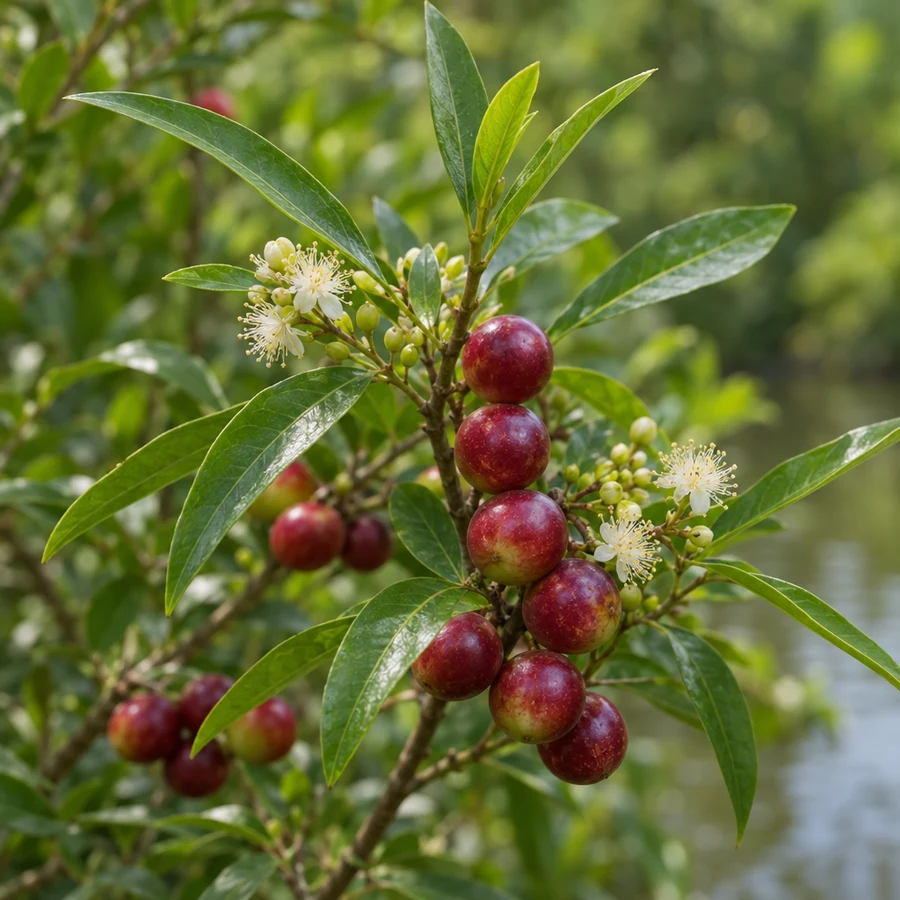
If you can give it that, it's a lovely odd thing to grow. The bush has slim, shiny evergreen leaves and small white flowers, followed by round fruits about the size of a big cherry. They start green, blush red and finish a deep maroon to purple-black. Inside is a juicy pulp so sour that hardly anyone eats it straight off the bush. It is grown for juice, frozen treats and its remarkable vitamin C content.
In the wild it lines the rivers, lakes and swamps of the Amazon and Orinoco basins, where the lower stems often stand under floodwater for months at a time. That one fact explains most of how to look after it.
If you're in zone 10 or 11, the zone 10 and zone 11 pages show what else suits your garden month by month, and all the zones are there if you're not sure of yours. For other tropical fruit on the site, see Guava (a cousin in the same family), Lucuma and Guanábana (Soursop).
Recent community discussions
No one has talked about Camu Camu yet. Be the first.
At a glance
| Category | Fruits |
| Botanical name | Myrciaria dubia |
| Family | Myrtaceae (the guava and myrtle family) |
| Plant type | Evergreen shrub or small tree |
| Outdoors | Frost-free gardens only, zones 10b to 12; a heated greenhouse or big tub anywhere else |
| Size | 10 to 15 feet tall, sometimes taller; smaller in a pot |
| Spacing | About 10 to 13 feet between plants in the ground |
| Sun | Full sun, or bright part shade in the hottest spots |
| Soil | Moist, acidic, about pH 5 to 6 |
| Water | Never let it dry out; it handles standing water for months |
| Cold | Survives down to about 32°F; growth slows below about 50°F; frost kills |
| First fruit | About 3 years from seed, often longer |
| Flower to ripe fruit | About 3 months |
| Fruit color | Green, then red, then maroon to purple-black when fully ripe |
Is it camu camu weather where you are? See everything to plant this month or read your zone notes.

Best propagated from seed in warm, humid conditions. Sow indoors in tropical Zones (10–12) year-round; outdoors only where frost-free.

3–5 years to fruit; 4–6 months from flower to ripe.

Zones 10–12, late summer?early fall in wet season; fruits ready when purple/red and soft; indoors greenhouse in cooler zones.

Prefers moist clay loam or silty soils, pH 4.5–6.5. Found naturally along riverbanks.
Pests to watch for


Diseases
Mateo is researching the diseases that affect this plant.
A little history
Camu camu grows wild in the lowland Amazon of Peru, Brazil, Colombia, Ecuador, Bolivia and Venezuela, where it also follows the upper and middle Orinoco River and the Casiquiare canal that links the two river systems. People along those rivers have gathered the fruit for a very long time. The name camu camu comes from Peru; in Brazil it also goes by names such as caçari and araçá-d'água ("water guava").
For most of its history it was a local fruit, picked from wild stands that flower as the dry season ends and ripen as the rivers rise. In recent decades interest from abroad, mostly for its vitamin C, led researchers in Brazil and Peru to start studying it as a crop: how to raise seedlings, how to grow it on land that doesn't flood, and which wild plants give the best fruit. Much of what we know about growing it comes from that work, not from home gardens.
When to sow in your zone
Sow seed the moment you have it. Camu camu seed doesn't keep once it dries, so there is no "best month" to wait for: fresh seed from ripe fruit goes straight into a pot.
- Indoors or in a greenhouse: any time of year, as long as the pot stays warm (think 70s°F and up) and damp.
- Outdoors in zones 10b to 12: raise seedlings in pots first, then plant them out once they're sturdy. In south Florida, planting at the start of the summer rainy season (roughly June) lets the rain help settle them in. Where you water by hand, any warm month works.
Growing it, step by step
From seed. Clean the pulp off fresh seeds and sow them right away in a moist, acidic potting mix. Press each seed in and cover it with about its own depth of mix. Keep the pot warm and evenly wet. Sprouting can be slow and uneven, so be patient and don't let the pot dry out while you wait. Seed is hard to buy (most suppliers don't carry it, and it wouldn't survive the post dry anyway), so a young plant from a tropical fruit nursery is often the easier start.
Picking a spot. Give it the sunniest, wettest spot you have: beside a pond, at the low end of the garden where water collects, or by a downspout. Unlike most fruit, it doesn't mind wet feet. Keep taller trees from shading it.
In the ground (zones 10b to 12). Leave about 10 to 13 feet between plants. That's about how far apart the research plantings are set, and the bushes fill it. Dig in plenty of organic matter and mulch well.
In a container. Choose a big tub, at least the size of a half barrel as it grows. Use an acidic mix that holds water. Because this plant shrugs off flooding, you can stand the pot in a deep saucer that stays topped up, which is the opposite of what most potted plants want. Read watering containers in summer for the warm months; this one wants even more water than the post suggests.
Coming indoors. It survives a dip to about 32°F, but it sulks and stops growing once nights fall below about 50°F, and frost kills it. Bring potted plants in before nights get that cool. Bring tender plants indoors walks through the move, and winter care for houseplants helps with the dry indoor air. A bright, humid spot is best.
Bringing it in from abroad: seeds, cuttings and plants from another country are regulated by the USDA (APHIS). Most live plants need a permit and inspection, small seed lots usually need paperwork too, and fruit or seeds carried home in a suitcase are often seized at the border. Buy plants or seed from a US nursery instead. Hawaii and Puerto Rico add rules of their own.
Keeping it happy
- Water: keep the soil wet all the time. A dry spell is far more harmful than too much water. In a heatwave, check pots daily; helping plants through a heatwave has more.
- Soil and pH: aim for about pH 5 to 6, the range of its native riverbank soils. If a soil test shows you're higher, use a soil sulfur product or an acid-loving plant mix rather than counting on compost to bring the pH down; compost adds goodness but isn't a reliable way to lower pH. See test your soil before spring.
- Feeding: even the researchers haven't settled on a feeding plan for camu camu grown away from the floodplains. Our approach is gentle: a yearly layer of compost and mulch in the ground, and a light, slow-release feed for potted plants in the warm months, the way you'd treat other potted tropical fruit.
- Mulch: a thick mulch keeps the roots cool and damp.
- Pruning: little needed. Take out dead, broken or crossing stems, and trim potted plants to keep them a manageable size.
Trouble in the bed
There's no US extension guide for this plant, so these notes come from research plantings in Brazil.
Pests
- Scale insects: the most often recorded pest on the branches and leaves of cultivated plants. Check the stems and leaf undersides for small, stuck-on bumps and scrape or prune them off early.
- Leaf beetles (chrysomelids): chew holes in the leaves; they were the most common insects in trial plots in Roraima, Brazil.
- Stink bugs: a Brazilian bulletin lists a stink bug that feeds on the shoots and fruit.
- Fruit weevil: in parts of Peru and Brazil a weevil that attacks the fruit is a serious pest of crops; it's unlikely to turn up in a US garden.
Diseases
- Anthracnose: brown, dead patches on the leaves, caused by Colletotrichum fungi. Researchers in Brazil found it on 30 to 40 percent of plants in one trial field and call it the main disease of the crop. Pick off spotted leaves, clear fallen ones, and keep the bush open so the leaves dry after rain.
- Leaf spots: other spotting on the leaves is also seen often in plantings; the same cleanup helps.
Good neighbors



We don't have tested companions for camu camu, and the usual vegetable lists don't apply to a tropical shrub growing in wet ground. What we do know: it grows best with shorter neighbors that don't steal its sun. Low, moisture-loving plants around its feet are fine; tall trees or vigorous climbers nearby are not.
Seeds that grow well in your area in November
Affiliate links — shopping through these helps keep Evening Vines free. Smooth Blue Aster
 Polka Dot Mix
 Black-Eyed SusanSeeds
 ColumbineSeeds
Varieties worth growing
There are no named camu camu varieties sold to home gardeners in the US. Research programs in Brazil and Peru are testing selected wild plants (clones) for yield and fruit quality, but those aren't in nurseries here. What you'll find is an unnamed seedling, and seedlings vary in fruit size and flavor. If you can, buy from a nursery that knows where its plants came from.
Picking notes
In the Amazon the bushes flower as the dry season ends and the fruit ripens at the peak of the rainy season, while the rivers are high. Expect about 3 months from flower to ripe fruit, and about 3 years or more before a seedling fruits at all.
What that means where you grow it:
- South Florida: the rainy season runs roughly June to September, so look for flowers after a dry spell and fruit in the wet, hot months that follow.
- Hawaii: the wetter season is the cooler half of the year in many places, but much depends on your rainfall and how you water. Watch the plant rather than the calendar.
- Greenhouse or tub: you control the water, so the timing is less fixed. Plants kept evenly wet may flower in small flushes instead of one big crop.
Pick the fruit when it has colored up from green to red or purple. Studies disagree on whether vitamin C peaks at the red stage or the fully dark stage, so pick whenever the flavor suits you. Handle the fruit gently; it bruises easily and spoils within days. Use it quickly or freeze it. Freeze your summer harvest has the basics.
Saving seed for next year
This is where camu camu breaks the usual rules. Its seed is recalcitrant: once it dries, it dies. So ignore the dry-and-store advice in our saving seeds post for this plant.
- Take seeds from fully ripe fruit and rinse off the pulp.
- Never dry them. Sow them fresh, within days if you can.
- If you must hold them, keep them wet. Brazilian studies kept seed alive for months stored in clean water, or packed while still moist, and germination stayed high. The studies don't agree on fridge versus room temperature, so sowing fresh is the safest bet.
- Seedlings won't be exact copies of the parent, so save from your best-tasting bush.
From garden to table
Camu camu is famous for one thing: vitamin C. Lab tests put the fresh pulp at roughly 2 to 3 grams of vitamin C per 100 grams of fruit, compared with about 50 milligrams in the same weight of orange. That's on the order of 40 to 60 times as much. Compare Orange, Lemon and Lime if you grow citrus too.
The fruit is far too sour for most people to enjoy raw. In the kitchen:
- Blend the pulp with water and sweeten it for a pink, tangy drink.
- Use it in sorbet, ice cream, ice pops and jams.
- Add a spoonful to fruit punch, the way you'd use lime juice.
Vitamin C fades with heat and storage, so freeze fruit or pulp quickly and cook it as little as possible.
Questions from the potting bench
Can I grow camu camu in zone 9 or colder? Not outdoors year-round. A frost will kill it, and it stops growing in cool weather. Grow it in a large tub and bring it into a warm, bright, humid place for the cool months, or keep it in a heated greenhouse.
Does it really like wet soil? Yes. In the wild it stands in floodwater for months. Dry soil is the bigger danger, especially in pots.
Why didn't my camu camu seeds sprout? Most likely they dried out. Dried seed doesn't recover. Sow seed straight from the fruit, or keep it in water until you can.
How long until I get fruit? About 3 years from seed at the earliest, and often longer in a pot or a cooler greenhouse.
Is camu camu the same as acerola? No. Acerola (Barbados cherry) is a different plant, though it's also known for vitamin C. Camu camu belongs to the guava and myrtle family.
Can I eat it fresh? You can, but it's very sour. Most growers juice it or use it in frozen treats.
Grower reports
How did Camu Camu do in your garden? Members rate it and say which zone and month they planted, so everyone can see what works near them.
Recent community discussions
No one has talked about Camu Camu yet. Be the first.
Essentials for Growing Camu Camu
 Grow Bags
Breathable fabric pots: grow almost anything on a patio, balcony or driveway, and roots never circle.
See it →
 Organic Fertilizer
Slow-release organic plant food for vegetable beds and containers.
See it →
 Pruning Shears
Sharp bypass pruners for harvesting, deadheading and tidying.
See it →
 Insect Netting
Fine mesh that keeps cabbage worms, flea beetles and birds off your crops, no sprays needed.
See it →
 Soaker Hose
Waters the roots slowly, not the leaves: less disease, less water, less work.
See it →
 Garden Hand Tools
Trowel, transplanter and cultivator: the three tools you reach for most.
See it →
