
Lemon
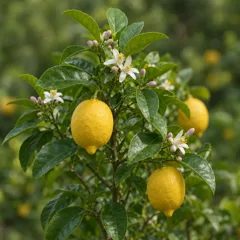
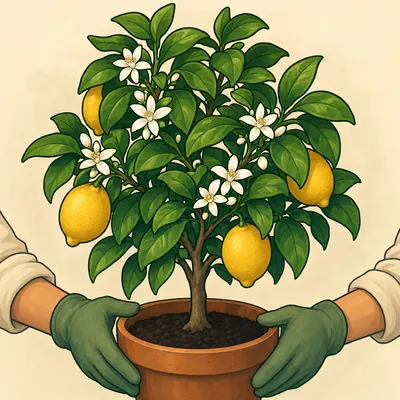
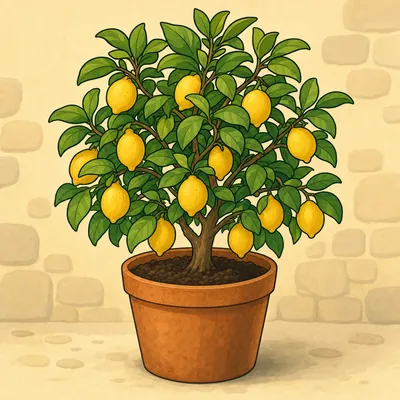
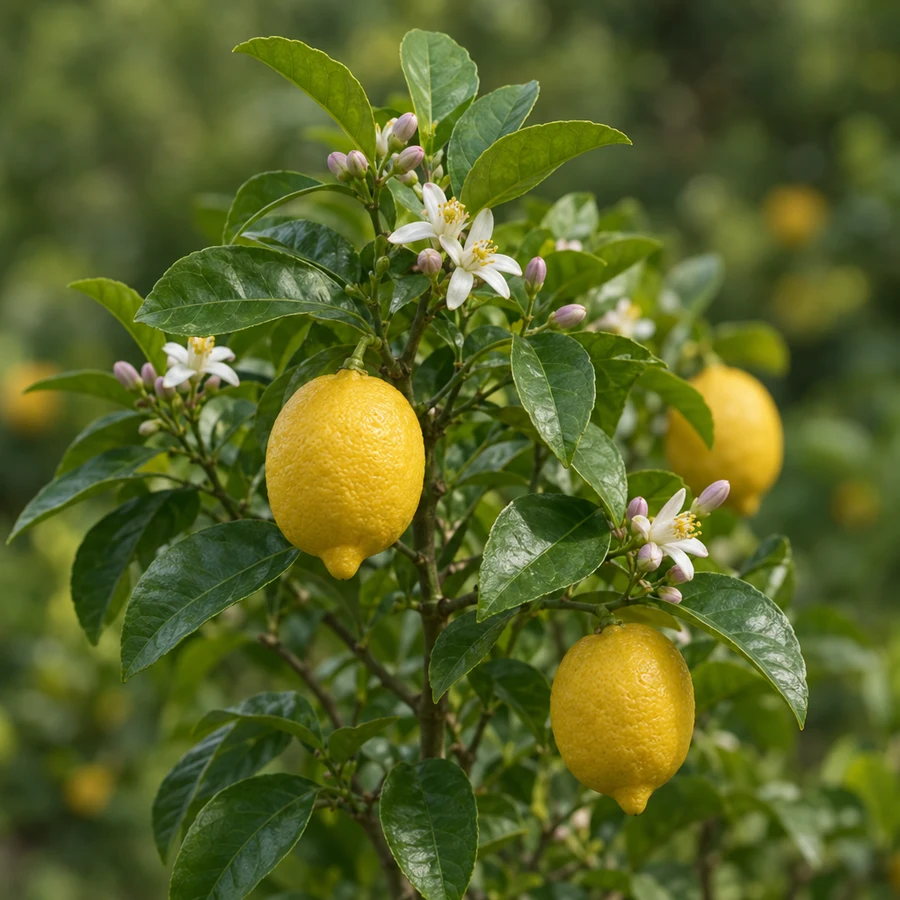
A lemon tree flowers and fruits on and off through the year, so the same branch can carry sweet white blossoms, small green fruit and ripe yellow lemons all at once. Lemons are less cold hardy than oranges, but dwarf trees, especially Meyer, are some of the happiest citrus you can keep in a pot.
Your zone decides how you grow one. In zones 9 to 11 a lemon can live outdoors in the ground all year. Anywhere colder, it lives in a pot that goes outside for summer and comes in for winter. Not sure which you are? Check your zone on our zones page first.
Recent community discussions
No one has talked about Lemon yet. Be the first.
At a glance
| Plant type | Fruit tree (evergreen citrus) |
| Botanical name | Citrus × limon; Meyer lemon is Citrus × meyeri |
| Annual or perennial | Perennial |
| Sun | Full sun, at least 6 hours, ideally 8 or more |
| Water | Deep, regular watering |
| Spacing | Dwarf 6 to 10 feet; standard 15 to 20 feet |
| Planting depth | Same as the nursery pot, root ball top slightly above soil |
| Days to germinate | Not grown from seed; buy a grafted tree |
| Days to maturity | First crop 2 to 3 years after planting a grafted tree; fruit ripens about 6 to 9 months after bloom |
| Best USDA zones | 9 to 11 outdoors (Meyer to about 8b with protection below 20°F); a pot anywhere colder |
| Soil pH | 6.0 to 7.0 |
From planting to harvest
Is it lemon weather where you are? See everything to plant this month or read your zone notes.

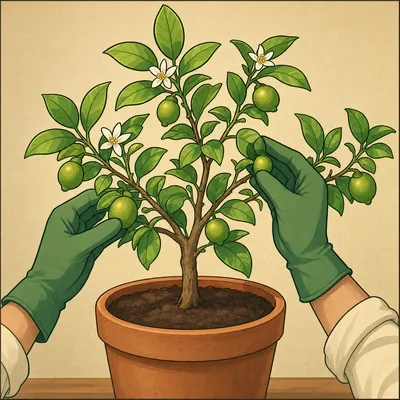
Plant young trees in spring after frost danger has passed. In frost-free zones, can be planted year-round. Container-grown lemons can be transplanted any time.

2–7 years to bear fruit; ripens in 6–9 months.

Zones 9–11, spring?summer; Eureka types 8–12 months after flowering, Meyer types earlier; in warm regions harvestable year-round.

Well-drained sandy loam, pH 6.0–7.0. Requires good aeration and organic matter for strong root systems.
Pests to watch for







A little history
Lemons most likely began in northeast India and the Himalayan foothills. Arab traders carried them around the Mediterranean, and Columbus brought lemon seeds to Hispaniola in 1493, which is how they reached the Americas.
When to sow in your zone
Buying the tree
Buy a young grafted tree from a certified nursery near you. A grafted tree bears in about 2 to 3 years and stays true to its variety. Citrus pests and diseases are under quarantine in several states, so check your state's citrus rules before you carry a tree, cuttings or fruit across state lines.
Spring: Plant or pot up after your last frost.
Fall: In zones 9 to 11, early fall planting works well too, while the soil is still warm.
Why not from a pip
A lemon pip will sprout, but the seedling can take many years to fruit, is often thorny, and the fruit may be nothing like the lemon it came from. Grow one for fun as a leafy houseplant if you like, but buy a grafted tree for lemons.
Growing it, step by step
Pot or ground?
In the ground (zones 9 to 11): Choose your sunniest spot, sheltered from cold wind. Plant at the same depth as the nursery pot, with the top of the root ball slightly above the soil and the graft union (the bump low on the trunk) well clear of it.
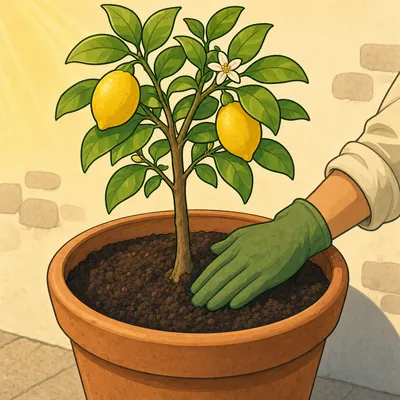
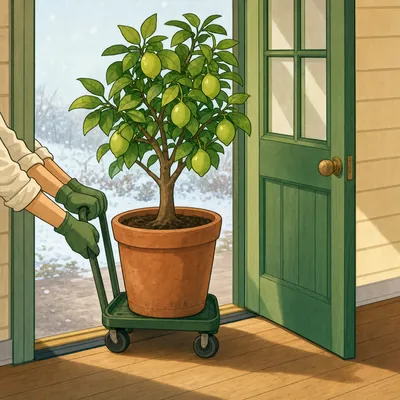
In a pot (everywhere else): Start with a pot a size or two bigger than the nursery pot, with drainage holes, and move it up a size every couple of years. Fill it with a fast-draining potting mix made for citrus. A big pot gets heavy, so set it on a rolling stand before you fill it; you'll be glad of that every fall.
Water
Water deeply when the top 2 to 3 inches of soil are dry. Never let a pot sit in a saucer of water. Pots dry out fast in summer heat, so check them often; there's more in watering containers in summer.
Mulch
In the ground, mulch 2 to 3 inches deep in a wide ring, kept a hand's width away from the trunk.
Feeding
Feed with a citrus fertilizer every 6 to 8 weeks from spring to late summer, then stop so the tree can slow down for winter.
Keeping it happy
Bringing it in for winter
Bring potted lemons indoors before nights drop below about 40°F. Give the tree your brightest window or a grow light, keep it away from heater vents, and water less while growth is slow. Expect a few dropped leaves while it settles; moving it in steps (a shady porch first, then indoors) helps. In spring, after your last frost, take it back out the same gradual way so the leaves don't scorch in full sun. Our post on bringing tender plants indoors walks through the move.
Frost nights in the ground
In zones 9 and 8b, cover the tree with frost cloth reaching right down to the ground when a hard frost is forecast, and water the soil a day ahead. See protect plants from frost.
Pruning and tidying
Cut out dead wood, crossing branches and any shoots coming from below the graft. Little else is needed.
Trouble in the bed
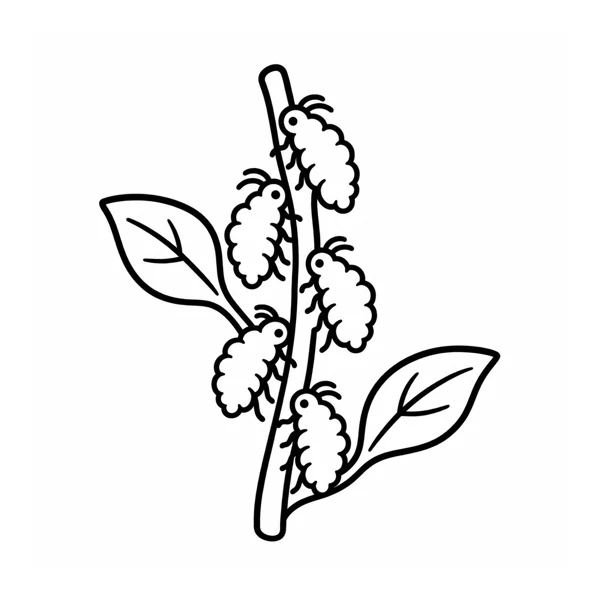
- Aphids: Cluster on soft new shoots. Knock them off with a strong spray of water.
- Whiteflies: Tiny white flies under the leaves, often indoors. Use insecticidal soap or horticultural oil.
- Scale and mealybugs: Wipe them off or use horticultural oil.
- Spider mites: Common indoors in dry winter air. Rinse the leaves and raise the humidity.
- Citrus leafminer: Silvery trails in new leaves. Prune off badly damaged shoots; older leaves are left alone.
- Asian citrus psyllid and citrus greening: The psyllid spreads citrus greening, which has no cure. Check new growth often and report any suspected signs to your extension service.
- Root rot: Comes from soggy soil, especially in pots. Let the top few inches dry between waterings.
Good neighbors






Good: Low herbs such as thyme, oregano and chives around the base, which stay small and don't steal much water.
Avoid: Lawn grass and thirsty plants pressed right up against the trunk.
Seeds that grow well in your area in November
Affiliate links — shopping through these helps keep Evening Vines free. Smooth Blue Aster
 Polka Dot Mix
 Black-Eyed SusanSeeds
 ColumbineSeeds
Varieties worth growing
- Improved Meyer: Sweeter, thin-skinned and the most cold tolerant. The best lemon for a pot.
- Eureka: The classic grocery lemon, nearly thornless, fruits through much of the year.
- Lisbon: Vigorous and more tolerant of heat, cold and wind than Eureka.
- Variegated Pink Eureka: Green and cream striped leaves and fruit, pale pink flesh. Sometimes sold as Pink Lemonade.
- Ponderosa: Huge, thick-skinned fruit on a compact tree.
Lemon trees to buy
Affiliate links — shopping through these helps keep Evening Vines free.Picking notes
Picking day
In zones 9 to 11, lemons ripen on and off almost all year, with the biggest flush from late winter to early summer. Meyer lemons ripen mostly from November to March, so a potted Meyer often colors up just as it comes indoors. Most fruit takes about 6 to 9 months from flower to ripe, a little longer in cool weather.
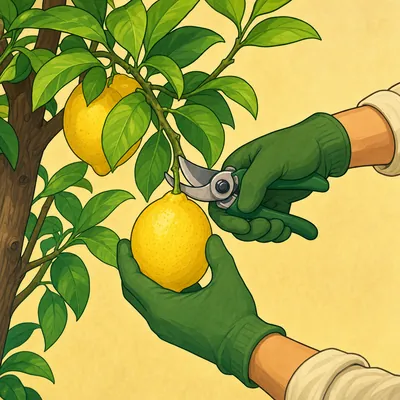
Pick when a lemon is full size, fully colored and gives slightly when you squeeze it. Lemons don't ripen any further once picked, but they hold well on the tree for weeks, so pick as you need them. Clip the stem with pruners rather than pulling.
Saving seed for next year
Not worth it for growing fruiting trees (see "Why not from a pip" above). Lemons are self-fertile, so one tree will fruit on its own.
From garden to table
Lemons are high in vitamin C. Use the juice and zest in cooking, baking, drinks and preserving. Citrus peel oils and the plant itself can upset cats and dogs, so keep fallen fruit and trimmings out of reach.
Questions from the potting bench
Can I grow a lemon tree in a pot in a cold zone? Yes. Choose Improved Meyer, keep it outdoors from late spring to fall, and bring it in before nights drop below about 40°F.
Why are my lemon's leaves dropping indoors? Usually a sudden change in light or temperature, or overwatering. Move it in steps and let the top of the soil dry between waterings.
Why is the fruit falling off small? Some early drop is the tree's normal thinning. Heavy drop points to stress from irregular watering.
Best lemon for a pot? Improved Meyer.
Grower reports
How did Lemon do in your garden? Members rate it and say which zone and month they planted, so everyone can see what works near them.
Recent community discussions
No one has talked about Lemon yet. Be the first.
Trees to try
Affiliate links — shopping through these helps keep Evening Vines free.Essentials for Growing Lemon
 Grow Bags
Breathable fabric pots: grow almost anything on a patio, balcony or driveway, and roots never circle.
See it →
 Organic Fertilizer
Slow-release organic plant food for vegetable beds and containers.
See it →
 Pruning Shears
Sharp bypass pruners for harvesting, deadheading and tidying.
See it →
 Insect Netting
Fine mesh that keeps cabbage worms, flea beetles and birds off your crops, no sprays needed.
See it →
 Soaker Hose
Waters the roots slowly, not the leaves: less disease, less water, less work.
See it →
 Garden Hand Tools
Trowel, transplanter and cultivator: the three tools you reach for most.
See it →
