
Feverfew
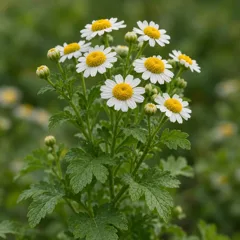
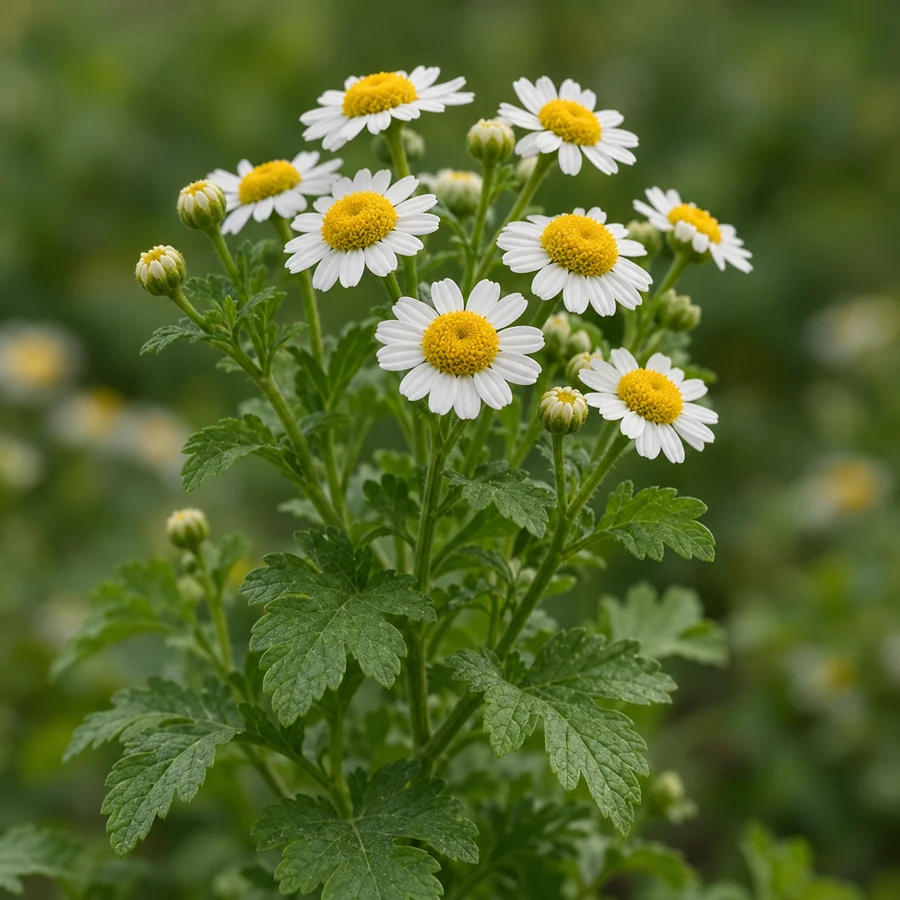
Feverfew is the plant that sows itself. The seed is barely bigger than dust and has to sit right on top of the soil, because it needs light to sprout. Once you've grown it one summer, you'll find little seedlings popping up around the bed the next spring. The plant makes a bushy mound of ferny, sharp-smelling leaves, covered from early summer into fall with small white button daisies that have yellow middles. Deer leave it alone, and it doesn't need much water once it's settled. It's a short-lived perennial in zones 5 to 9, usually lasting two or three years, and the self-sown seedlings keep it going.
Recent community discussions
No one has talked about Feverfew yet. Be the first.
At a glance
| Plant type | Herb and flower |
| Botanical name | Tanacetum parthenium |
| Annual or perennial | Short-lived perennial |
| Sun | Full sun to part shade |
| Water | Low to moderate |
| Spacing | 12 to 18 inches |
| Planting depth | Surface sow (seed needs light) |
| Days to germinate | 10 to 14 |
| Start indoors | 6 to 8 weeks before last frost |
| Days to maturity | Blooms the first summer from an early indoor start |
| Best USDA zones | 5 to 9 |
| Soil pH | About 6.0 to 7.2 (tolerates a wide range) |
Is it feverfew weather where you are? See everything to plant this month or read your zone notes.

Sow indoors 8–10 weeks before last frost. Transplant outdoors in late spring. In mild zones, direct sow in fall for spring bloom.

Germinates in 10–14 days; 8–12 weeks to bloom.

Zones 4–9, June?September; in mild zones May?August following year; indoors year-round.

Light, well-drained sandy soil, pH 6.0–7.5. Tolerates poor soils, flowers better with moderate fertility.
Pests to watch for




Diseases

A little history
Feverfew comes from southeastern Europe, around the Balkans. The Greek physician Dioscorides wrote about using it for inflammation in the first century. The English name comes from the Latin febrifugia, which means "fever reducer," and medieval herb gardens grew it for that reason. Today it's mostly sold as a herbal remedy for migraines, although studies disagree on how well it works.
When to sow in your zone
Spring, indoors: Start seeds 6 to 8 weeks before your last frost date. To find your date, look up your zone on the zone pages and work backward with our count back from last frost guide. Harden the seedlings off and set them out after the last frost, once they have a couple of true leaves. Plants started this way usually flower the same summer.
Spring, outdoors: Scatter seed on the surface once the danger of frost has passed. Direct-sown plants are slower and may not flower much until their second year.
Late summer or early fall: Where winters are mild (roughly zones 7 to 9), you can sow outdoors in late summer. The plants spend the winter as small leafy rosettes and flower the following summer.
Growing it, step by step
Sowing on the surface
Press the seed gently onto damp seed mix or soil and don't cover it. A light mist is better than a heavy watering, which can wash such tiny seed away. Keep it evenly moist until it sprouts, usually in 10 to 14 days.
Setting plants out
Space plants 12 to 18 inches apart in full sun. Part shade is fine, especially where summers are hot. See hardening off seedlings before you move them outside.
Water, soil and feeding
Water regularly until the plants are settled. After that, water only in long dry spells. Feverfew does best in well-drained, average soil. A little compost when you plant is all the feeding it needs, because rich soil or a lot of fertilizer gives you soft, floppy plants and fewer flowers. You don't need mulch, but a thin layer helps keep the soil from drying out in hot areas. Keep it well back from the stems.
Keeping it happy
Feverfew self-seeds hard. If you only want a few seedlings next year, cut off the spent flower heads before they turn brown and dry. Our deadheading guide shows how. When the first big flush of flowers fades, shear the plant back by about half and you'll usually get a second, smaller flush later in the summer. Plants tend to get woody and thin after two or three years. By then there are usually plenty of young seedlings to replace them, so pull the old plants.
Trouble in the bed
Pests:
- Aphids: They cluster on soft new tips. Knock them off with a strong spray of water.
- Spider mites: These are worst in hot, dry weather. Look for fine speckling on the leaves and hose the undersides.
- Slugs and snails: They mainly go after young seedlings. Check after rain and at dusk.
Diseases:
- Powdery mildew: A white dust on the leaves in late summer. Give the plants room so air can move between them, and water the soil rather than the leaves.
- Root rot: This happens in soggy, poorly drained soil. Plant in a well-drained spot and don't overwater.
- Aster yellows: Leaves turn yellow and flowers come up green and twisted. Leafhoppers spread it. There's no cure, so pull and throw away any plants that have it.
- Southern blight: A rot at the base of the stem with white threads, in hot, humid weather. Remove affected plants along with the soil around them.
Good neighbors





Good: Feverfew fits well in a sunny cottage border or herb bed alongside other plants that like the same lean, well-drained soil, such as lavender, thyme and chamomile. People often plant it near roses in the hope that its smell keeps aphids away. That's an old gardeners' habit rather than something we've seen proven.
Keep apart: Some growers find that bees avoid feverfew's bitter smell, so plant it a few feet from crops that need bees to set fruit, such as squash, cucumbers and fruit trees, rather than right beside them. Results vary, because NC State lists it as a plant bees visit.
Seeds that grow well in your area in November
Affiliate links — shopping through these helps keep Evening Vines free. Johnny Jump Up
 Organic Cat Grass
 Arugula Microgreens
 Organic Alfalfa
Varieties worth growing
- Common feverfew: Single white daisies with yellow centers, about 2 feet tall.
- Aureum (Golden feverfew): Chartreuse to golden leaves with white flowers, about 12 inches.
- Golden Ball: Small double flowers in buttery yellow, 12 to 18 inches.
- Tetra White: Double white pompons.
- Ultra Double White: Fully double white buttons on stems about 2 feet tall. Popular with cut-flower growers.
- Virgo: Double white flowers on long stems, a good one for cutting.
Picking notes
Once the plant is bushy, you can pick a few leaves whenever you need them. For drying, cut whole stems just as the flowers open, tie them in small bunches and hang them somewhere dark and airy. Our drying herbs post covers it step by step. For a vase, cut stems when most of the flowers on the spray are open. Feverfew lasts well in water. Wear gloves if your skin is sensitive (see below).
Saving seed for next year
Leave a few flower heads on the plant until they're brown and dry, then snip them into a paper bag and shake out the seeds. Store them cool and dry. If you'd rather not bother, just leave the heads where they are and feverfew will sow itself. See saving seeds from your garden for more.
From garden to table
Feverfew isn't a food plant. It's grown as a cut flower, for drying, and as a traditional herbal remedy for migraines. Before you use it:
- Pets: Feverfew is listed as toxic to cats, dogs and horses. Plant it where animals won't chew it.
- Skin: Handling the plant can cause an itchy rash (contact dermatitis) in some people, so wear gloves if you react.
- Medicines: Feverfew may add to the effect of blood thinners such as warfarin, and of aspirin. If you take either, talk to your doctor or pharmacist first.
- Pregnancy: Don't use it if you're pregnant. If you want to take it as a remedy for any reason, check with a doctor first.
Questions from the potting bench
Is feverfew invasive? Not in the strict sense, but it self-seeds freely. Cut off the spent flowers before they set seed and pull any extra seedlings while they're small.
Will feverfew flower in its first year? Usually, if you start it indoors 6 to 8 weeks before the last frost. Seed sown outdoors in late summer flowers the following summer.
Is feverfew deer resistant? Yes. Deer generally leave the strong-smelling leaves alone.
Is feverfew safe around pets? No. It's listed as toxic to cats, dogs and horses.
Can I grow it in a pot? Yes. Use a pot at least 8 inches across with good drainage, and keep it outdoors in full sun. It's not a houseplant. See planting a herb container for ideas.
Grower reports
How did Feverfew do in your garden? Members rate it and say which zone and month they planted, so everyone can see what works near them.
Recent community discussions
No one has talked about Feverfew yet. Be the first.
Essentials for Growing Feverfew
 Grow Bags
Breathable fabric pots: grow almost anything on a patio, balcony or driveway, and roots never circle.
See it →
 Seed Starting Tray
Reusable tray with a clear dome to give seeds a warm, humid start indoors.
See it →
 LED Grow Light
Full-spectrum light for sturdy seedlings through short winter days.
See it →
 Pruning Shears
Sharp bypass pruners for harvesting, deadheading and tidying.
See it →
 Watering Can
Long-spout can for gentle watering of seedlings and pots.
See it →
 Organic Fertilizer
Slow-release organic plant food for vegetable beds and containers.
See it →
