
Chamomile
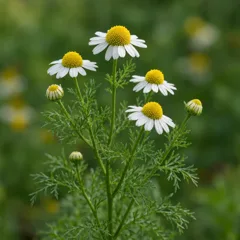
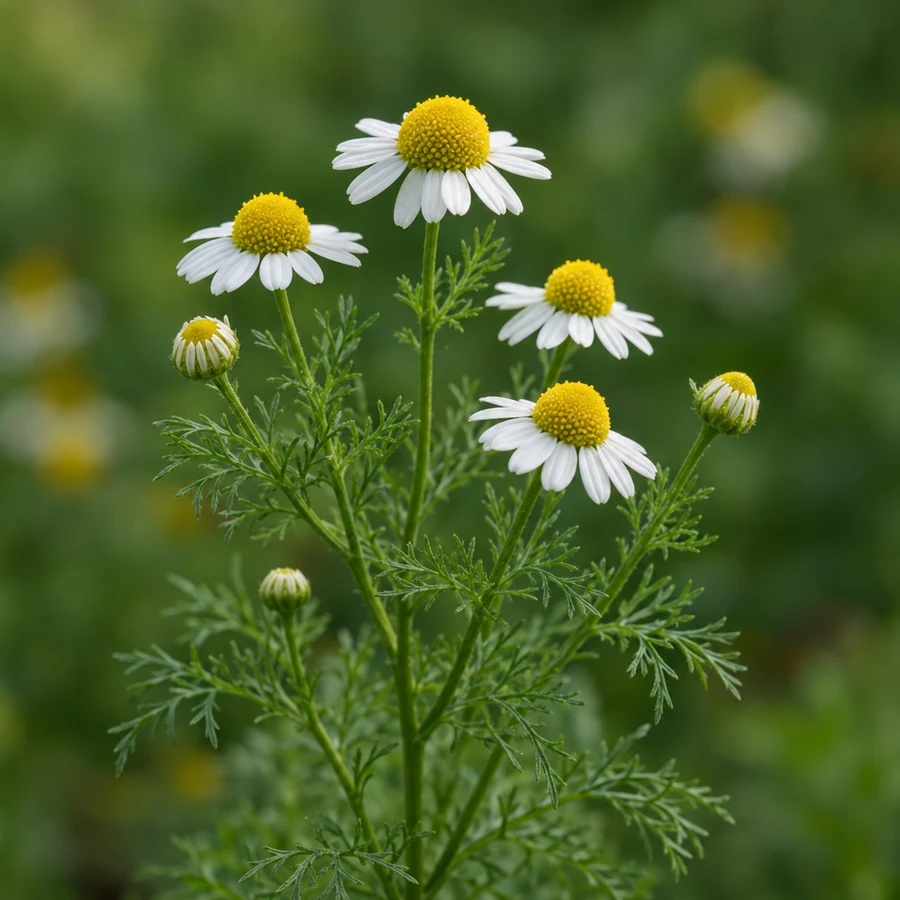
Brush your hand across a chamomile patch on a warm afternoon and you'll smell green apples. That's usually the first thing people notice, before the little white-and-gold flowers that you end up picking by the handful all summer for the teapot.
It's an undemanding plant. Give it sun and soil that drains, don't fuss over feeding, and keep picking. The table above sorts out the two kinds: German for a tea crop, Roman for a low, scented patch that comes back each year.
A small note for the tea drinkers: chamomile makes an herbal tea. True tea comes from the tea plant, Camellia sinensis, and you can read its story in the story of tea.
Recent community discussions
No one has talked about Chamomile yet. Be the first.
At a glance
| Plant type | Herb |
| Botanical name | Matricaria chamomilla (German); Chamaemelum nobile (Roman) |
| Annual or perennial | German is an annual; Roman is a perennial |
| Sun | Full sun to light shade |
| Water | Moderate; well-drained soil, moist but never soggy |
| Spacing | 8 to 12 inches |
| Planting depth | Surface sow (seed needs light) |
| Days to germinate | 7 to 14 |
| Days to maturity | About 8 to 10 weeks from sowing to first flowers |
| Best USDA zones | Roman: 4 to 9. German: an annual, so it grows in any zone in its season |
| Soil pH | 6.0 to 7.5 |
Is it chamomile weather where you are? See everything to plant this month or read your zone notes.

Direct sow 2–3 weeks before last frost, or start indoors 6–8 weeks prior. In mild zones, sow in fall for early spring blooms.

German: 6–8 weeks; Roman: ~3 months; returns yearly.

Zones 3–9, May?September; in mild zones harvest extends into late winter?early spring.

Light, well-drained sandy soils, pH 6.0–7.5. Grows even in poor fertility.
Pests to watch for




Diseases

A little history
People in ancient Egypt, Greece, and Rome all used chamomile as a soothing herb, and it has stayed in kitchen gardens ever since. Roman chamomile also has a long history as a scented lawn plant, and the non-flowering 'Treneague' was picked out for exactly that job: a soft green carpet that smells of apples when you walk on it.
When to sow in your zone
Spring: Start seed indoors 6 to 8 weeks before your last frost, or sow outdoors just before the last frost date. Not sure of your date? Find it on your zone page and count back from last frost.
Fall: German chamomile can be sown straight into the garden in fall, even in cold-winter places like Wisconsin. The seed sits through winter and comes up in spring, often earlier and stronger than a spring sowing. Once you have a patch, it usually self-seeds for you.
Time-sensitive, November: This is the month for that fall sowing. Scatter German chamomile seed on bare, weeded soil now, any time before the ground freezes hard. No covering needed. In frost-free zones, sow now for flowers in late winter and spring.
Growing it, step by step
Sowing the dust-fine seed
The seed is almost as fine as dust. Mix it with a pinch of dry sand so you can see where it lands, scatter it on the surface, and press it down with your palm. Don't bury it: it needs light to sprout. Keep the top of the soil damp with a gentle mist until seedlings show, usually within one to two weeks.
Moving seedlings small
Chamomile doesn't like being moved once it's big, so plan for that from the start. Sow indoors in cell trays or small pots, two or three seeds per cell, and thin to the strongest one. Harden them off and plant them out while they're still small, 8 to 12 inches apart, disturbing the root ball as little as you can. If you can, simply sow where it's going to grow.
Water
Keep the soil evenly moist while seedlings settle in. After that, water in dry spells. It wants soil that drains well and stays moist but not wet; soggy ground is what it dislikes most.
Mulch
Not usually needed. Keep mulch away from seedlings so it doesn't smother them.
Feeding
Little or none. Chamomile copes well with poor soil, and rich feeding just makes soft, leafy growth.
Keeping it happy
Pick the flowers every few days and the plants keep making more, from early summer until frost. Shear Roman chamomile after it flowers to keep the patch low and tidy. Let a few German flowers go to seed at the end of the season if you'd like it to come back on its own.
Trouble in the bed
- Aphids and thrips: Knock them off with a strong spray of water, or use insecticidal soap if they build up.
- Powdery mildew: Space plants so air moves between them and water the soil, not the leaves. More in our powdery mildew notes.
Good neighbors





Garden folklore has long called chamomile a helpful neighbor, though this comes from tradition rather than trials. The plants it's traditionally tucked beside are cabbage-family crops, onions, cucumbers, lettuce, spinach, and tomatoes, along with other herbs such as basil, dill, cilantro, and fennel. Its small open flowers do bring in hoverflies and other little insects, which is a pleasant bonus wherever you put it.
Avoid: Nothing in particular.
Seeds that grow well in your area in November
Affiliate links — shopping through these helps keep Evening Vines free. Smooth Blue Aster
 Polka Dot Mix
 Black-Eyed SusanSeeds
 ColumbineSeeds
Varieties worth growing
- German chamomile 'Bodegold': Large flowers and a heavy crop; a dependable tea type.
- German chamomile 'Zloty Lan': Bred for a high oil content, so the flowers are especially fragrant.
- Roman chamomile: Low perennial that spreads into a soft, scented mat.
- 'Treneague': A non-flowering Roman chamomile for lawns and paths, grown from divisions rather than seed.
- Not a tea chamomile: Dyer's chamomile is Cota tinctoria, a different plant grown for its yellow dye and flowers. It isn't a true chamomile and isn't used for tea.
Chamomile seeds to buy
Affiliate links — shopping through these helps keep Evening Vines free.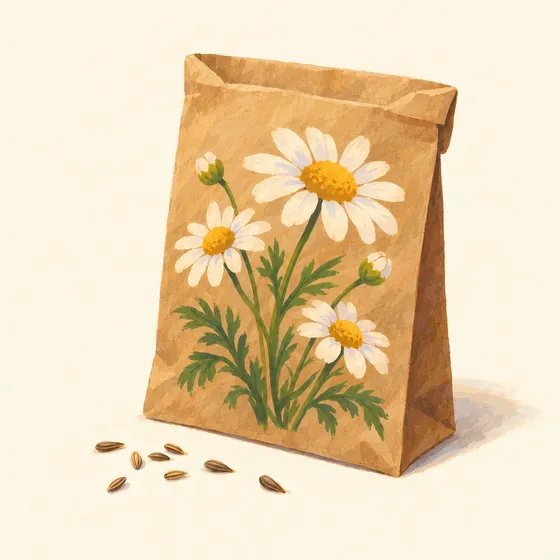 German Chamomile
Picking notes
Pick the flower heads when they're fully open, with the white petals lying flat or just beginning to bend back. Pinch them off just under the head. Spread them on a screen somewhere airy and out of direct sun until they're papery, then keep them in a sealed jar. Our dry herbs for winter post walks through it.
Saving seed for next year
Leave a few German flowers on the plant until the centers turn brown and dry. Rub them over a sheet of paper to free the tiny seeds, and store them cool and dry. See saving seeds from your garden for more.
From garden to table
Chamomile tea is a traditional cup for winding down at bedtime and settling the stomach. The flowers also go into skin care and potpourri.
A word of care: People allergic to ragweed may react to chamomile, and handling the plant can cause a skin rash in some people. Chamomile is also listed as toxic to cats, dogs, and horses, so plant it where pets won't graze on it, and call your vet if one does.
Questions from the potting bench
Which chamomile is best for tea? German chamomile. It flowers heavily and the flowers are what you brew.
Can I sow chamomile in fall? Yes. German chamomile can be sown outdoors in fall in most zones, cold ones included, and it comes up in spring.
Can I grow chamomile in pots? Yes, it does well in containers. Our herb container post has ideas.
Will chamomile come back? Roman does, every year. German is an annual but usually self-seeds.
Is chamomile safe around pets? It's listed as toxic to cats, dogs, and horses, so keep it out of their reach.
Grower reports
How did Chamomile do in your garden? Members rate it and say which zone and month they planted, so everyone can see what works near them.
Recent community discussions
No one has talked about Chamomile yet. Be the first.
Seeds to try
Affiliate links — shopping through these helps keep Evening Vines free.Essentials for Growing Chamomile
 Grow Bags
Breathable fabric pots: grow almost anything on a patio, balcony or driveway, and roots never circle.
See it →
 Seed Starting Tray
Reusable tray with a clear dome to give seeds a warm, humid start indoors.
See it →
 LED Grow Light
Full-spectrum light for sturdy seedlings through short winter days.
See it →
 Pruning Shears
Sharp bypass pruners for harvesting, deadheading and tidying.
See it →
 Watering Can
Long-spout can for gentle watering of seedlings and pots.
See it →
 Organic Fertilizer
Slow-release organic plant food for vegetable beds and containers.
See it →
