
Fig
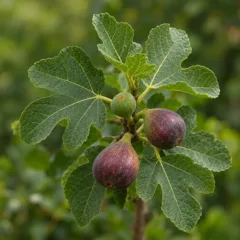
A fig tree gives soft, honey-sweet fruit you rarely find ripe in stores, because ripe figs bruise too easily to ship well. Common figs set fruit without pollination, so one tree is enough. They're happy in a big pot, against a warm wall, or in a small backyard, and in cold zones a fig tree in a pot is often the easiest way to grow one.
Recent community discussions
No one has talked about Fig yet. Be the first.
At a glance
| Plant type | Fruit tree |
| Botanical name | Ficus carica |
| Annual or perennial | Deciduous perennial |
| Sun | Full sun, 8 hours or more |
| Water | About 1 inch per week, more in pots |
| Spacing | 10 to 20 feet in the ground (bushes about 10 feet, trees 15 to 20 feet) |
| Planting depth | Trees 1 to 2 inches deeper than in the nursery pot; bushes about 4 inches deeper |
| Days to germinate | Not grown from seed; start from a rooted cutting or a nursery tree |
| Days to maturity | 2 to 4 years to first fruit (nursery trees can be sooner) |
| Best USDA zones | 8 to 11 (6 to 7 with a hardy variety and winter protection) |
| Soil pH | 6.0 to 6.5 |
From planting to harvest
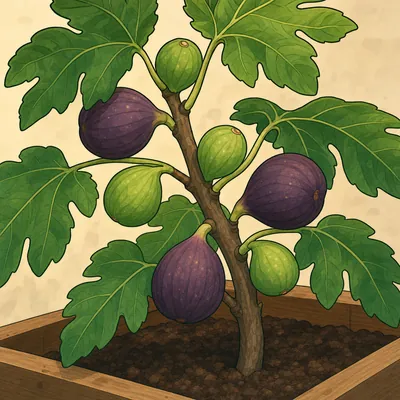
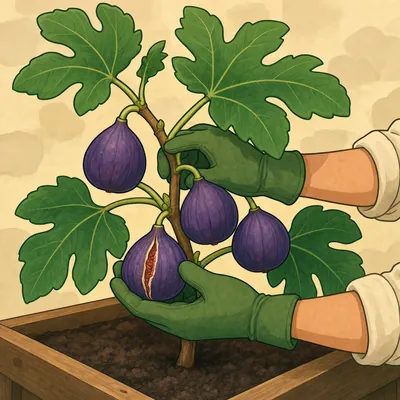
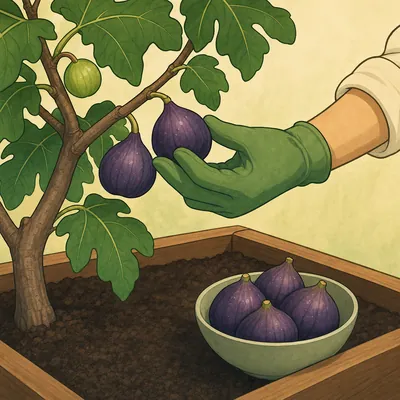
Is it fig weather where you are? See everything to plant this month or read your zone notes.

Propagate from cuttings or plant young trees in late winter to early spring in warm climates. Container-grown figs can be transplanted any time in frost-free zones.

2–5 years to fruit; ripens in summer.

Zones 7–10, late summer?fall when soft to touch and slightly wrinkled; in Zone 6 with protection; container-grown indoors in cold zones.

Deep, well-drained loam, pH 6.0–6.5. Prefers soils rich in organic matter; tolerates sand or clay.
Pests to watch for

Diseases

A little history
Figs are among the very first plants people cultivated. Charred figs found at Gilgal, an early village in the Jordan Valley, show that people were growing them about 11,400 years ago, before wheat or barley. Spanish settlers carried figs to the Caribbean and Florida in the 1500s, and Franciscan friars planted them at the San Diego mission in 1769. That's where the Mission fig gets its name.
When to sow in your zone
Figs go in as young trees, not seeds, and the timing depends on your zone.
Spring (all zones): Plant potted nursery trees in spring, once the danger of frost has passed. That gives the roots a whole season to settle before winter. If you're asking when to plant a fig tree in zone 7, this is your window: spring only, so the tree has time to toughen up.
Late fall to early winter (zones 8 to 11): In mild areas, dormant bare-root trees can also go in from late fall through early winter, while the tree is resting. In zone 8, spring is still the safer bet for a potted tree.
November in the garden: In zones 8 to 11 this is planting season for dormant bare-root figs. In zones 6 to 7, it's time to tuck the tree in for winter instead (see Care and Maintenance), or roll potted figs into an unheated garage once the leaves drop. Our posts on protecting plants from frost, planting trees and shrubs in fall and keeping potted perennials alive through winter cover the details.
Growing it, step by step
Starting a New Tree
Fig seeds won't give you the same fruit as the parent, so skip them. Buy a named variety from a nursery, or root a pencil-thick hardwood cutting from a friend's tree in late winter.
Picking the Spot
Give your fig the sunniest place you have, a full 8 hours or more. A south- or west-facing wall is ideal in cooler zones, since the bricks soak up heat and shelter the tree from winter wind. Figs take most soils, sandy or clay, as long as water drains away. A spot where puddles sit after rain will rot the roots.
Planting
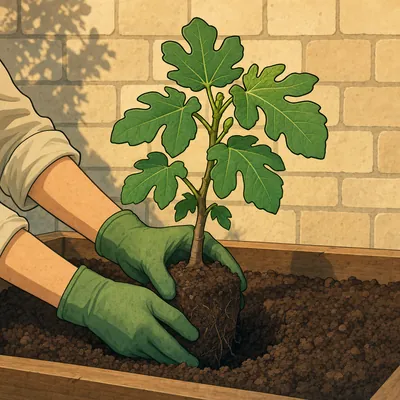
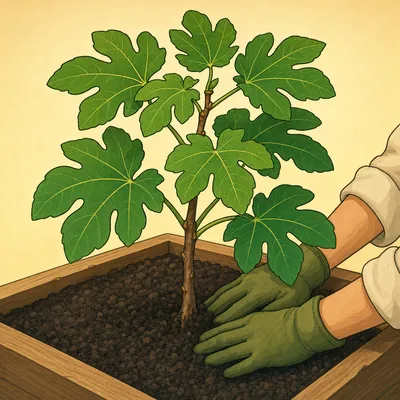
Set a fig tree 1 to 2 inches deeper than it sat in the nursery pot. If you want a bushy, many-stemmed fig (handy in cold zones, where stems may die back), set it about 4 inches deeper so new shoots come up from below the soil.
Growing in a Pot
Start a young tree in a 5- to 10-gallon pot and move it up a size as the roots fill it. Most growers settle on a pot of around 15 to 20 gallons for a grown tree, which is still small enough to wheel into a garage. Use a free-draining potting mix and a pot with good drainage holes.
Water
Water deeply and regularly the first year, about an inch a week in the ground. Potted figs dry out fast in summer and may need water every day in a heat wave. Try to keep the soil evenly moist, because a dry spell followed by a soaking is what splits ripening fruit.
Mulch
Fig roots run shallow, so a few inches of mulch over the root zone keeps them cool and moist. Keep it a hand's width from the trunk.
Feeding
In the ground, figs need very little. A light feeding in late winter or early spring is plenty, and too much nitrogen gives you a big leafy tree with few figs. If your tree puts on more than 1 to 2 feet of new growth a year, cut back. Potted figs are the exception: watering washes nutrients out of the pot, so feed them regularly with a balanced fertilizer through spring and summer, then ease off as summer ends so new growth can firm up before cold weather.
Keeping it happy
Prune while the tree is dormant in late winter, taking out dead, crossing, or damaged wood and keeping the tree to a height you can pick from. Keep in mind that some varieties carry an early breba crop on last year's wood, so heavy winter pruning cuts those figs off.
Figs can freeze back to the ground at about 20°F. In zones 6 to 7, wrap the tree in burlap or pile a thick layer of mulch or leaves over the base once it's dormant, and unwrap in spring. If the top dies anyway, hardy varieties usually send up new shoots from the roots and can still fruit that year.
Trouble in the bed
- Birds and wasps: Both love ripe figs. Net the tree as the fruit softens, and pick promptly.
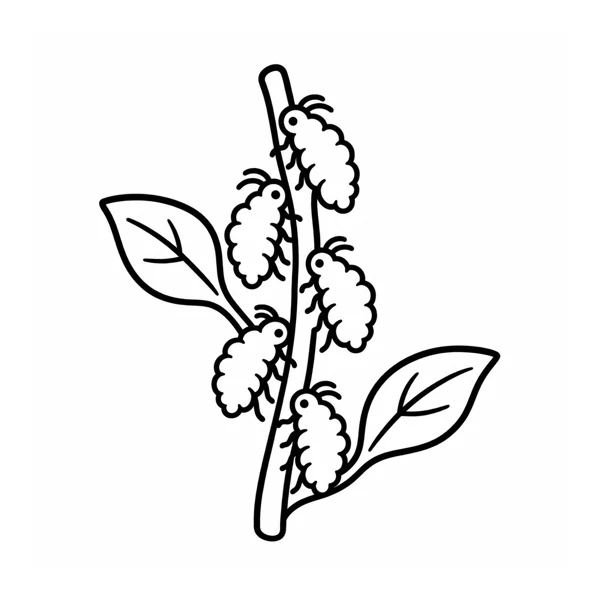
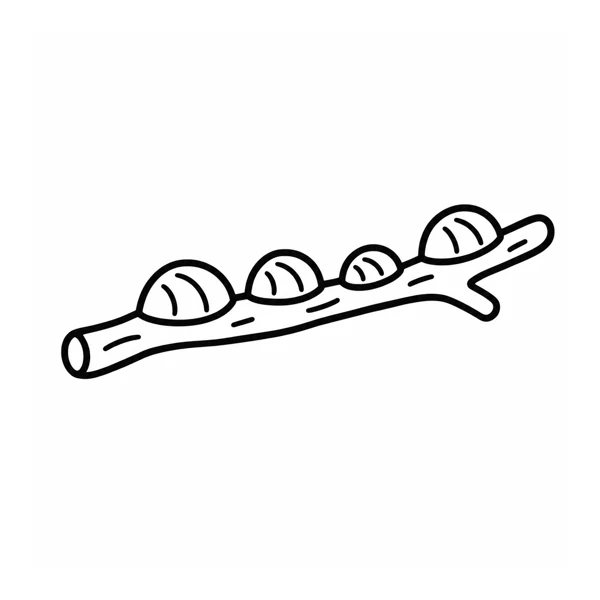
- Scale, mealybugs, and spider mites: Check the undersides of leaves and the stems, especially on potted figs. A strong spray of water knocks mites back; prune out heavily crusted twigs.
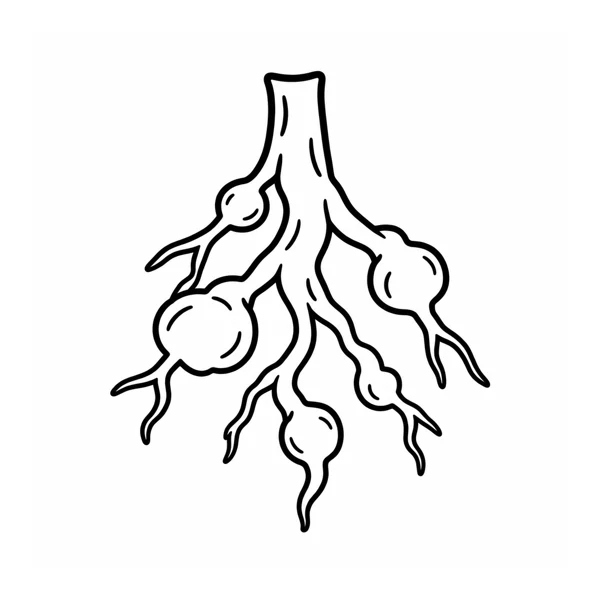
- Root-knot nematodes: These cause swollen, knotted roots and a weak tree, mostly in sandy soils. Mulch heavily, or grow in a pot of fresh mix.
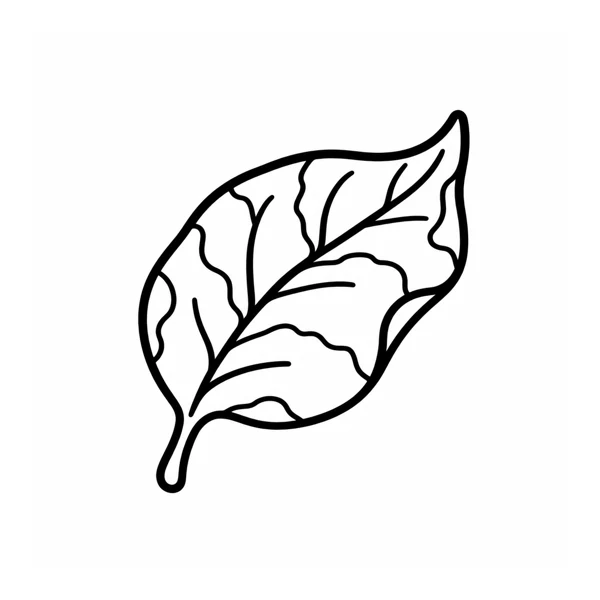
- Fig rust: Small rusty spots on the leaves, which may then drop early. Rake up and throw away fallen leaves, and give the tree room for air.
- Fig mosaic: Mottled, blotchy leaves, spread by the tiny fig mite. There's no cure, but most trees keep cropping.
- Botrytis limb blight: A gray mold that kills back shoots and fruit in cool, wet spells. Prune out dead tips into healthy wood.
- Fruit splitting: Not a disease, but common. It comes from uneven watering or heavy rain as figs ripen. Water evenly and mulch.
Good neighbors




Good: Low, shallow herbs and flowers that don't fight the tree for water, like thyme, oregano, marigolds and nasturtiums, planted around the edge of the root zone.
Avoid: Thirsty, shallow-rooted plants or vegetable beds close to the trunk. Fig roots spread wide just under the surface, and digging near them does damage.
Seeds that grow well in your area in November
Affiliate links — shopping through these helps keep Evening Vines free. PhloxSeeds
 Royal Mix
 Johnny Jump Up
 Organic Cat Grass
Varieties worth growing
Cold-hardy figs (zones 6 to 7, with protection):
- Chicago Hardy: The go-to for zone 6. Dies back in a hard winter and regrows from the roots, fruiting on the new wood.
- Celeste: Small, purple-brown and very sweet, sometimes called the sugar fig. One of the earliest to ripen, from about midsummer, and fairly cold-tolerant.
- Brown Turkey: Reliable and forgiving. It often gives a light early crop of large figs, then a heavy main crop a few weeks later.
- LSU Purple: A Louisiana variety with dark, sweet fruit, good in hot, humid summers.
Warm-zone figs (zones 8 to 11):
- Black Mission: Dark purple skin and rich, deep flavor; the fig the friars brought to California.
- Kadota: Greenish-yellow skin and amber flesh, a classic for drying and preserves.
- Adriatic: Pale green skin with bright red flesh, the fig used in fig bars.
For a fig tree in a pot: Compact selections like Little Miss Figgy, which nurseries list at about 4 to 6 feet tall, suit containers and patios.
Picking notes
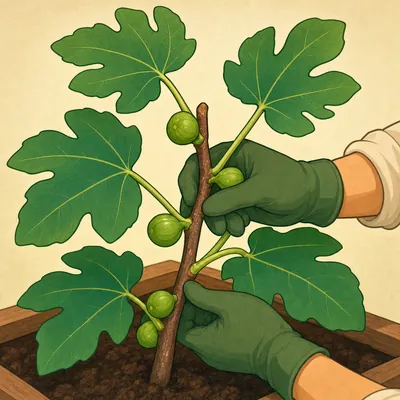
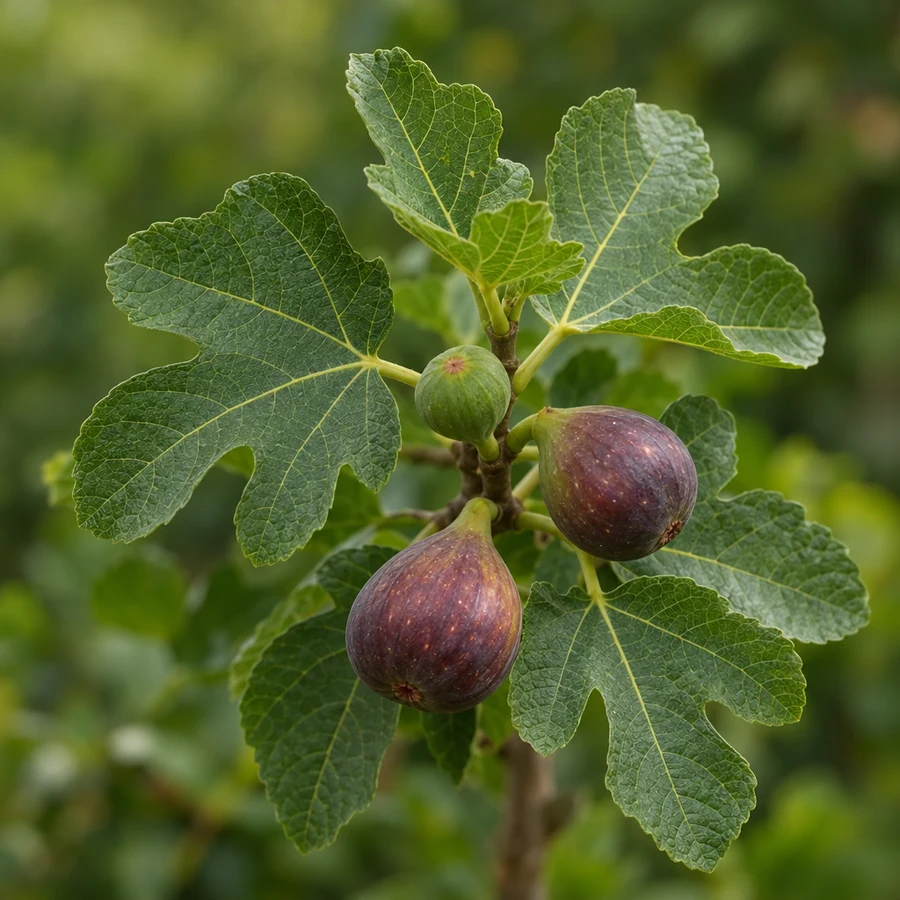
The main crop ripens from late summer into fall. Some varieties also give an early breba crop in early summer, on the wood that grew the year before. Pick a fig when it droops on its stem, feels soft when you squeeze it gently, and may crack slightly at the skin. Figs don't ripen after picking, so leave them until they're truly ready. Wear gloves and long sleeves, as the milky sap can irritate skin, especially in sunlight.
Saving seed for next year
Not practical. Fig seeds won't come true to the parent tree. Root cuttings instead to keep a variety you love.
From garden to table
Dried figs are a good source of fiber and also bring potassium and calcium. USDA figures for dried figs are about 10 grams of fiber, 680 mg of potassium and 160 mg of calcium per 100 grams. Eat them fresh off the tree, dry them, roast them with honey, or cook them down into jam. Ripe figs keep only a few days in the fridge, so eat or preserve them quickly.
Questions from the potting bench
Why are my figs dropping before they ripen? Usually dry soil, a stressed tree, or simply a young tree that isn't ready to carry a crop. Keep watering steady and give it another year.
Do I need two fig trees? No. Common figs are self-fruitful, so one tree will crop on its own.
Can I grow a fig tree in zone 7? Yes. Choose a cold-hardy fig like Chicago Hardy or Celeste, plant in spring against a warm wall, and wrap it for winter. Growing it in a pot you can move into a garage also works well.
Why are my figs splitting? Uneven watering or a heavy rain just as they ripen. Water deeply and evenly, and keep the roots mulched.
Grower reports
How did Fig do in your garden? Members rate it and say which zone and month they planted, so everyone can see what works near them.
Recent community discussions
No one has talked about Fig yet. Be the first.
Essentials for Growing Fig
 Grow Bags
Breathable fabric pots: grow almost anything on a patio, balcony or driveway, and roots never circle.
See it →
 Organic Fertilizer
Slow-release organic plant food for vegetable beds and containers.
See it →
 Pruning Shears
Sharp bypass pruners for harvesting, deadheading and tidying.
See it →
 Insect Netting
Fine mesh that keeps cabbage worms, flea beetles and birds off your crops, no sprays needed.
See it →
 Soaker Hose
Waters the roots slowly, not the leaves: less disease, less water, less work.
See it →
 Garden Hand Tools
Trowel, transplanter and cultivator: the three tools you reach for most.
See it →
