
Starfruit
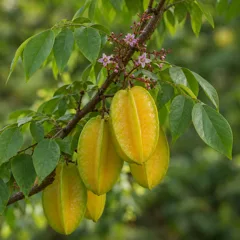
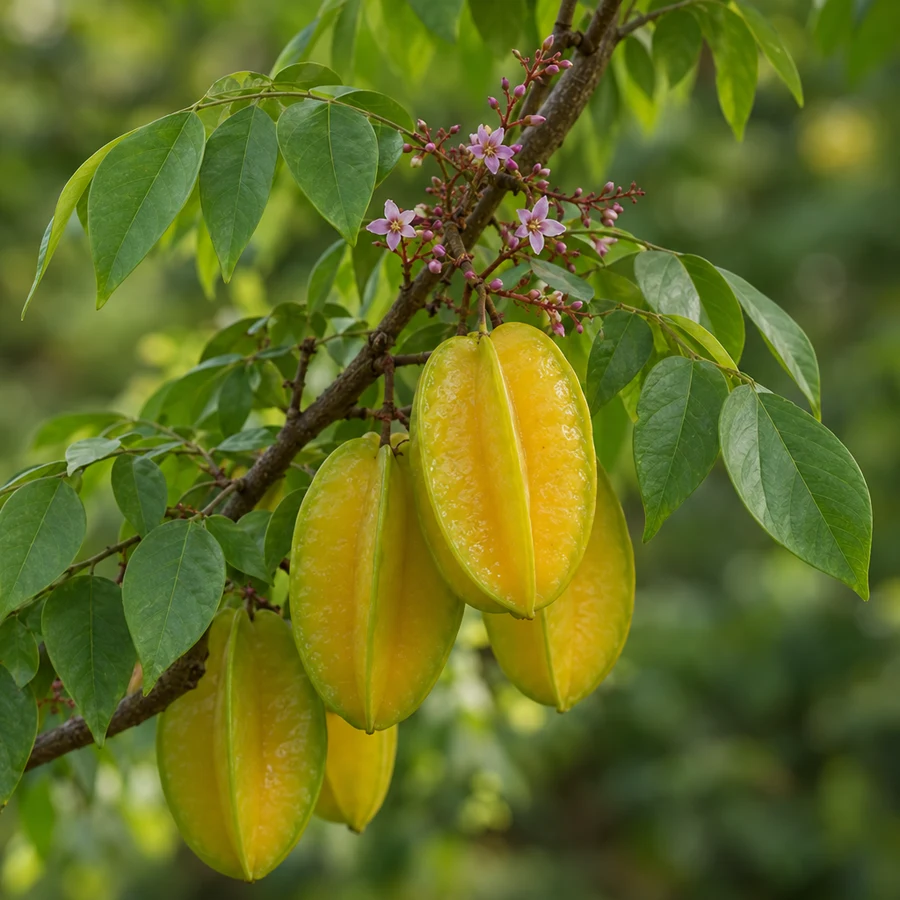
Starfruit, also called carambola, is a small tropical tree with waxy, ribbed yellow fruit. Slice one across and every piece is a five-pointed star. The flesh is crisp and very juicy, somewhere between a grape, an apple and a citrus, with no fiber at all. A happy tree crops heavily: a well-kept mature tree can give 100 to 250 pounds of fruit a year, sometimes more.
It's a true tropical. Outdoors it belongs in frost-free gardens: south Florida and the warm coasts farther north in the state, Hawaii and Puerto Rico, and in Australia coastal Queensland, northern New South Wales and the Top End. Everywhere else, including the UK, Ireland and Canada, it's a tree for a big pot that lives in a heated greenhouse or a bright room in winter. It won't crop as heavily there, but a well-grown potted tree can still flower and fruit.
Health warning: Anyone with kidney disease should not eat starfruit unless their doctor says it's safe. The fruit contains oxalic acid and can cause a fast drop in kidney function in people whose kidneys are already weak.
Recent community discussions
No one has talked about Starfruit yet. Be the first.
At a glance
| Plant type | Fruit tree |
| Botanical name | Averrhoa carambola |
| Annual or perennial | Evergreen perennial (drops some leaves in a cool winter) |
| Sun | Full sun, 8 hours or more |
| Water | Steady moisture; 1 to 2 deep waterings a week in dry spells |
| Spacing | 20 to 30 feet from buildings and other trees; less if you keep it pruned small |
| Planting depth | Same depth as in the nursery pot, or a touch higher |
| Days to germinate | About 1 week in summer, about 2 to 2.5 weeks in winter (fresh seed only) |
| Days to maturity | Grafted trees can start fruiting about 10 months after planting, often a little later |
| Best USDA zones | 10 to 11 (warm, sheltered 9b spots with frost cover); anywhere else in a pot under cover |
| Soil pH | 5.5 to 6.5 (moderately acid; often yellows on alkaline limestone soil) |
Is it starfruit weather where you are? See everything to plant this month or read your zone notes.
Pests to watch for

Diseases


A little history
Starfruit is thought to come from Sri Lanka and the Moluccas (the Spice Islands of eastern Indonesia), and it has been grown across Southeast Asia and Malaysia for centuries. It reached south Florida before 1887. For a long time it was grown there mostly as a curiosity. In 1935 seed from Hawaii was planted at the University of Florida's station at Homestead, and a selection from it was released as Golden Star in 1965. Later, sweeter varieties came in from Thailand (Fwang Tung arrived in 1973), Taiwan and Malaysia, and sweet types are what most nurseries sell today.
When to sow in your zone
Starfruit goes in as a young grafted tree, and the timing is about warmth.
Spring to early summer (zones 10 to 11, and warm 9b): Plant once nights stay mild and the soil has warmed, about a month after any chance of frost, and up to early summer. That gives the tree the whole hot season to root in before the next cool spell. Growth slows right down in cool weather, so a tree planted in late fall just sits there.
Frost-free and tropical gardens (zones 12 to 13, coastal Queensland and the Top End): Plant from spring into early summer; in northern Australia that means September to December, so the tree is settling in as the wet season's rain and heat arrive.
Everywhere colder: Buy a tree in spring, grow it in a pot outdoors in the warmest, sunniest spot through summer, and bring it in well before the first frost. Young trees can be killed at about 32°F, so don't cut it close.
November in the garden: In zones 10 and 11 the tree is slowing down; ease off on water and hold off on planting until spring. In colder zones, a potted starfruit should already be indoors in your brightest window or a heated greenhouse.
Growing it, step by step
Starting a New Tree
Buy a grafted tree of a named variety. Seedlings vary a lot, take longer to bear and may give sour fruit. If you want to try seed for fun or for rootstock, sow it the day you take it from the fruit, because starfruit seed dies within a few days of drying out. Sow it shallowly in moist mix and keep it warm.
Picking the Spot
Pick the warmest, sunniest part of the yard, away from buildings, power lines and other trees. Starfruit hates constant wind, which browns the leaf edges, scars the fruit and stunts the tree, so shelter matters as much as sun. Avoid low spots where water sits after summer rain, and keep it away from salt spray. Salty soil or water burns the leaves.
Planting
Dig a hole three to four times as wide as the pot and about three times as deep, to loosen the soil around it, then backfill so the tree sits level with or a little above the ground. You don't need to add compost to the hole; if you do, mix it no more than half and half with the dug soil. Water it in right away. Where the water table is high or the ground floods, plant on a wide mound of soil 3 to 4 feet high.
Growing in a Pot
This is how most gardeners outside the tropics grow starfruit, and it works because the tree takes pruning well. Start in a 5- to 10-gallon pot and move up to 15 to 25 gallons as it grows. Use a free-draining, slightly acidic potting mix and a pot with big drainage holes. Keep it at 6 feet or so by pinching back long shoots. In winter, give it the brightest light you can (a grow light helps a lot in UK, Irish and Canadian winters), keep it away from cold drafts and heater vents, and water less while it's resting. Some leaf drop in winter is normal.
Water
Starfruit has little drought tolerance. Dry soil shows up as folded, wilting, yellowing leaves and small fruit. Water young trees regularly, and once a tree starts bearing, keep it evenly moist from flowering through harvest. In the ground in dry weather, that's about once or twice a week. But don't let a lawn sprinkler on a timer soak it every day; too much water, too often, rots the roots.
Mulch
Spread 2 to 6 inches of wood chips or bark over the root zone, and keep it 8 to 12 inches from the trunk. Mulch holds moisture, keeps the soil warm, and stops you running a mower or string trimmer near the trunk, which can badly wound the tree.
Feeding
Young trees want small, frequent feedings: about 1/4 to 1/2 pound of a fertilizer with magnesium every one to two months through the growing season. Increase the amount as the tree grows and feed less often, about four to six times a year for a mature tree. In alkaline soils (pH above 7) starfruit runs short of iron, manganese and zinc, and the new leaves turn yellow between green veins. Use a chelated iron made for alkaline soils and a micronutrient spray. Potted trees need regular light feeding from spring to late summer, then little in winter.
Keeping it happy
For the first year or two, tip back shoots longer than 2 to 3 feet to make the tree branch out. After that, keep it 6 to 12 feet tall by taking out a few upper limbs each year. A tree kept at 12 feet or under is far more likely to ride out a hurricane, and the fruit stays within reach. Most fruit grows in the middle of the canopy, so leave the lower branches on.
Starfruit has a handy trick. Once a branch is old enough to flower, it can flower again and again. Flowers come in several flushes, so a good tree gives fruit for many months of the year.
On a frost night in zone 9b or 10a, cover young trees to the ground and water the soil first. Mature trees can take a brief dip to about 27°F with little harm, but a harder or longer freeze kills branches and can kill the whole tree.
Trouble in the bed
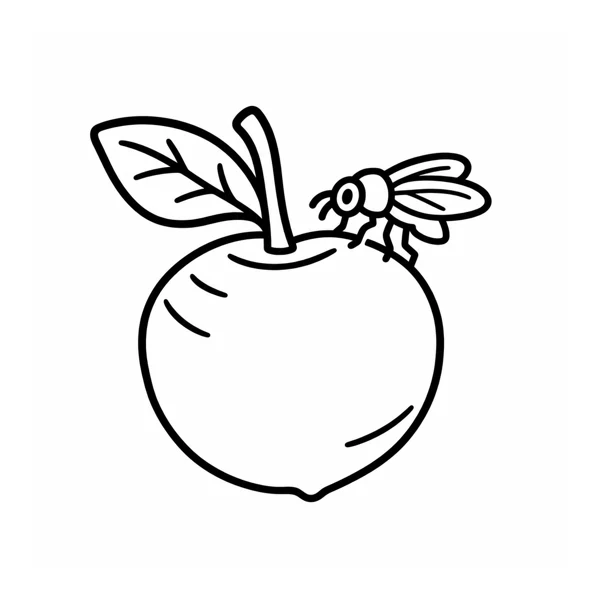
- Fruit flies: The main pest in Australia, Hawaii and the tropics, where they lay eggs in the ripening fruit. Bag fruit on the tree or use fruit fly traps, and pick up fallen fruit.
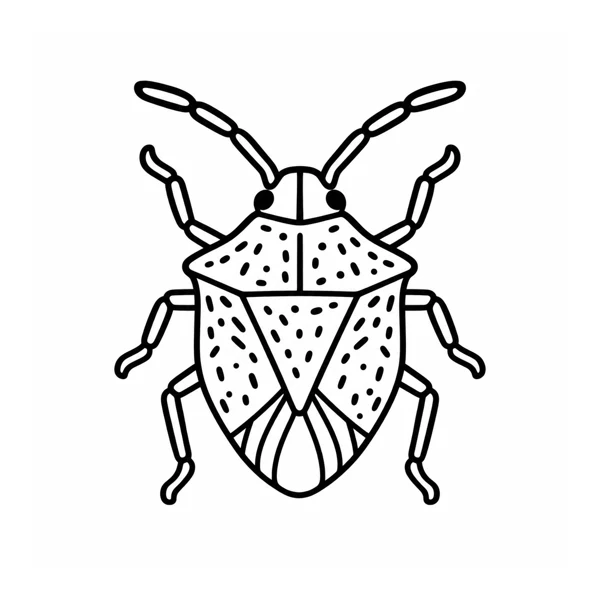
- Stink bugs: They pierce the fruit and leave blemishes, which can then rot. Watch for them while fruit is on the tree and pick them off.
- Scale insects: Several kinds feed on leaves and twigs, causing leaf drop and dieback. Check the stems and leaf undersides, especially on potted trees indoors, and prune out badly crusted twigs.
- Root rot: Comes with wet, poorly drained soil, flooding or overwatering, and shows as a slow decline, leaf drop and dieback. Good drainage is the only real cure.
- Anthracnose: A fungus that rots ripe or bruised fruit. Pick fruit promptly and handle it gently.
- Leaf spots: Several fungi spot the leaves, mostly on stressed or underfed trees. They usually need no treatment beyond better feeding.
- Birds, possums and raccoons: They take ripening fruit. Netting helps, and in northern Australia it also keeps out fruit-piercing moths.
Good neighbors
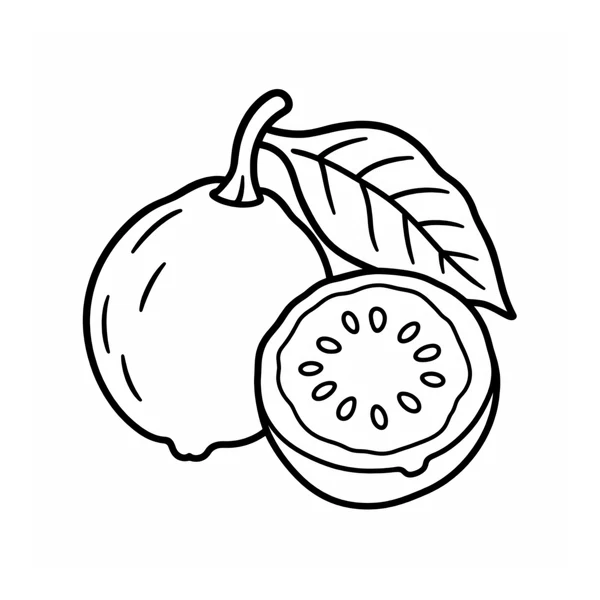


Good: Starfruit wants room and sun more than neighbors. Plant it at a good distance from other tropical fruit like banana, guava and lime, so no tree shades another. Low flowers such as marigolds and nasturtiums are fine around the edge of the mulch ring, where they draw in insects without competing much for water.
Avoid: Lawn grass up to the trunk, and heavily fertilized lawn over the roots, which can cut fruiting. Keep a grass-free circle of 2 to 5 feet or more around the tree. Avoid planting where tall trees or buildings will shade it.
Seeds that grow well in your area in November
Affiliate links — shopping through these helps keep Evening Vines free. Wild Lupine
 Common Milkweed
 PansySeeds
 PhloxSeeds
Varieties worth growing
There are two kinds: sweet types for eating fresh, and tart types for cooking and juice. Tart types turn sweeter if you leave them to ripen fully on the tree.
Sweet varieties (best for most home gardens):
- Kary: Large, bright yellow-orange fruit with very good flavor. From Hawaii.
- Sri Kembangan: A large, sweet Malaysian variety with good flavor; sold in Australia as Kembangan.
- Arkin: The Florida standard. Uniform, very sweet, yellow-orange fruit; partly self-fertile.
- Fwang Tung: A Thai variety with large, pale yellow, very sweet fruit.
- B10: A Malaysian variety, one of the main ones grown commercially in Australia's Northern Territory. Crops over a long season but sets more fruit with a different variety nearby.
Tart varieties:
- Golden Star: The 1965 Florida release. Large and deeply ribbed, mildly tart to sweet, sweetest when picked fully golden. It sets fruit well on its own.
- Newcomb: An older Florida tart type, good for cooking, jams and juice.
For pots and cooler climates: No starfruit is cold-hardy, so in Canada, the UK, Ireland and cold US zones the choice is about size. Varieties that set fruit on their own, like Golden Star and Arkin, are the safest bet for a single potted tree. Compact selections sold as dwarf starfruit, such as Maher Dwarf, stay smaller and suit a greenhouse or conservatory.
For hot and subtropical areas (southern US, northern Australia): Kary, Sri Kembangan, Arkin and B10 all do well, and Golden Star is a reliable cropper.
Picking notes
In south Florida the main crop ripens from late summer to early winter, with a few fruit at odd times all year. Starfruit doesn't get any sweeter after picking, so let it color on the tree. Pick when the skin between the ribs has turned from green to yellow, while the very edges of the ribs are still a little green. Fully golden fruit is sweetest but bruises easily. Fruit picked as it starts to yellow keeps two to four weeks somewhere cool; the fridge works for home picking.
Saving seed for next year
Not worth it for fruit. Seedlings don't come true, and the seed stays alive only a few days. Growers keep a variety going by grafting it onto seedling rootstock.
From garden to table
Starfruit is low in calories, about 31 per 100 grams, and gives a good dose of vitamin C (about 34 mg per 100 grams) along with fiber and potassium. Eat it fresh, skin and all, sliced into stars for salads and garnishes. It's also good in juice, jams, chutneys, pickles and curries, and it can be dried. Tart fruit is the one for cooking.
The kidney warning bears repeating: people with kidney disease should talk to their doctor before eating starfruit, even in small amounts. Sour types carry more oxalic acid than sweet ones.
Questions from the potting bench
Can I grow starfruit outside in zone 9? Only in a warm, sheltered 9b spot, with covers on frost nights, and expect damage in a hard freeze. Zones 10 and 11 are where it grows well outside.
Can I grow starfruit in the UK, Ireland or Canada? Yes, in a large pot. Keep it outdoors in a hot, sunny spot in summer and bring it into a heated greenhouse, conservatory or bright room before the first frost. Expect a lighter crop than in the tropics.
Do I need two trees? Not always. Golden Star crops well on its own and Arkin is partly self-fertile. Some others, like B10, set more fruit with a second variety nearby.
Why are my starfruit leaves yellow? In alkaline soil it's usually a shortage of iron, manganese or zinc; feed with chelated iron and a micronutrient spray. If the soil is wet, suspect root rot. Some yellowing and leaf drop in late winter is normal.
Why is my starfruit so sour? Either it's a tart variety, or it was picked too early. Leave fruit on the tree until it's yellow between the ribs.
Grower reports
How did Starfruit do in your garden? Members rate it and say which zone and month they planted, so everyone can see what works near them.
Recent community discussions
No one has talked about Starfruit yet. Be the first.
Essentials for Growing Starfruit
 Grow Bags
Breathable fabric pots: grow almost anything on a patio, balcony or driveway, and roots never circle.
See it →
 Organic Fertilizer
Slow-release organic plant food for vegetable beds and containers.
See it →
 Pruning Shears
Sharp bypass pruners for harvesting, deadheading and tidying.
See it →
 Insect Netting
Fine mesh that keeps cabbage worms, flea beetles and birds off your crops, no sprays needed.
See it →
 Soaker Hose
Waters the roots slowly, not the leaves: less disease, less water, less work.
See it →
 Garden Hand Tools
Trowel, transplanter and cultivator: the three tools you reach for most.
See it →
