
Flax
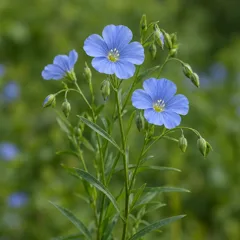
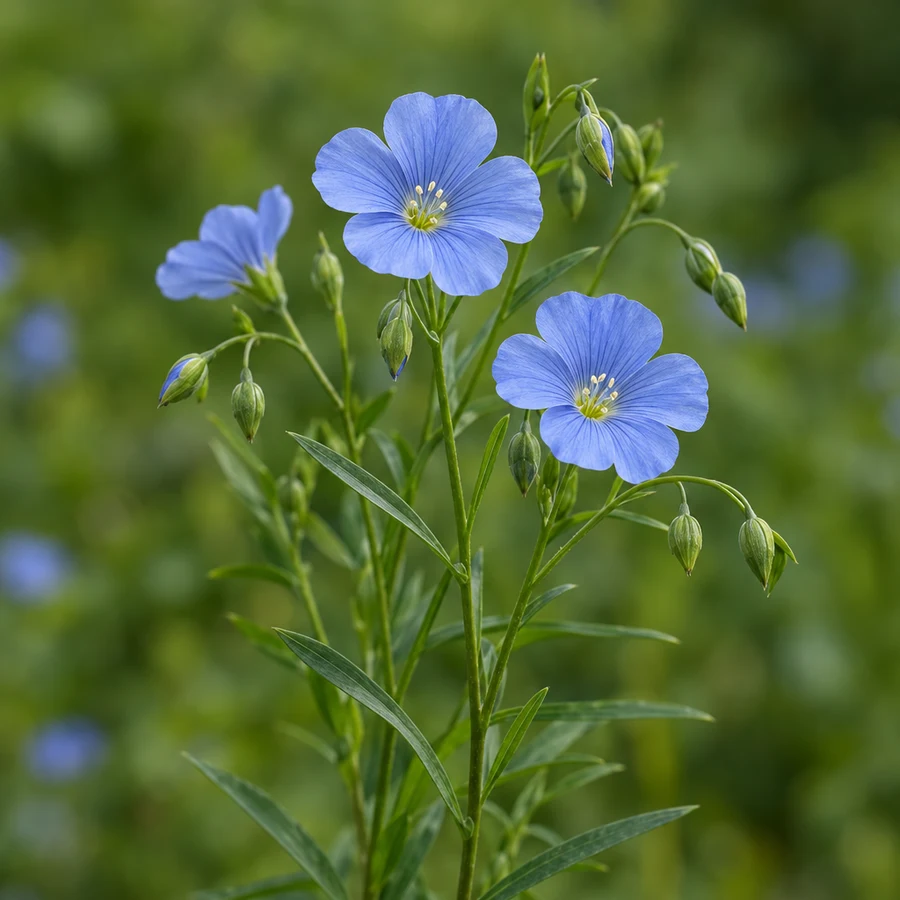
Flax has slender stems topped with sky-blue flowers that open each morning. It's grown for its oil-rich seeds (flaxseed, also called linseed), for linen fiber, or simply as a lovely meadow flower.
Recent community discussions
No one has talked about Flax yet. Be the first.
At a glance
| Plant type | Field crop (seed and fiber) and garden flower |
| Botanical name | Linum usitatissimum |
| Annual or perennial | Annual (blue flax, L. perenne, is perennial) |
| Sun | Full sun |
| Water | Low to moderate |
| Soil | Well-drained loam or clay loam; avoid sandy, poorly drained or crusting soils |
| Spacing | About 1 to 2 inches apart (sow thickly, no thinning) |
| Planting depth | 1/4 to 1/2 inch, a little deeper in dry soil |
| Days to germinate | 7 to 14 |
| Days to maturity | About 90 to 110 |
| Where it grows | Spring-sown almost anywhere; fall-sown in mild-winter zones 8 to 10 |
| Soil pH | 6.0 to 7.0 |
Is it flax weather where you are? See everything to plant this month or read your zone notes.

Direct sow outdoors in early spring as soon as soil can be worked. In mild climates, fall sowing allows earlier flowering.

Germinates in 7–14 days; 90–120 days to mature.

Zones 3–9, late summer?early fall for seeds; for fiber harvest when plants yellow; flowers midsummer.

Well-drained sandy loam, pH 6.0–7.0. Needs good aeration; avoid compacted soils.
Pests to watch for




Diseases

A little history
Flax is one of the oldest cultivated crops, grown in the Fertile Crescent over 9,000 years ago. Ancient Egyptians wrapped mummies in linen made from it.
When to sow in your zone
Spring: Sow outdoors as soon as the soil can be worked, 3 to 4 weeks before the last frost. Young seedlings shrug off a light frost. Seed flax is a spring crop even in cold zones 3 and 4.
Fall: In mild-winter zones 8 to 10, you can sow in fall instead and let it grow through the cool months.
To time it for your own garden, open your zone page from Zones and count back from your last frost date with this post.
Growing it, step by step
From seed
Broadcast or sow in rows 1/4 to 1/2 inch deep, a little deeper if the top of the soil is dry. Sow thickly, so the plants hold each other up. Don't thin them.
Moving it outside
Not recommended; flax has a taproot.
Water
Keep moist until up, then water only in long dry spells.
Mulch
Not needed with dense sowing.
Feeding
Not usually needed. Too much nitrogen makes the stems flop over (lodging).
Keeping it happy
Weed early, as young flax is easily crowded out. Once the row closes in, it shades out most weeds by itself.
Trouble in the bed
Pests
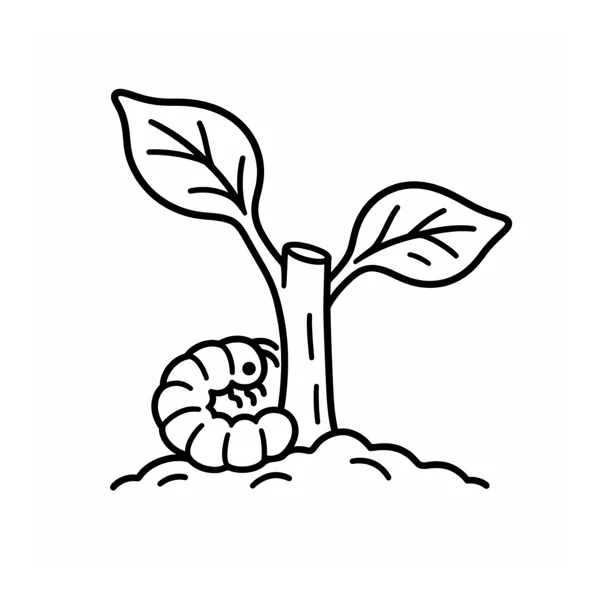
- Cutworms: Chew seedlings off at the soil line. Check at dusk and pick them off, or ring young plants with collars.
- Grasshoppers: Nibble leaves and can clip off the seed bolls in hot, dry summers. Keep grassy edges near the row mowed so young hoppers have less cover.
- Aster leafhoppers: Small, pale green and quick. They do little harm by feeding but carry aster yellows (below).
- Aphids: Spray off with water.
- Beet webworm: Caterpillars eat leaves and flowers, worst after hot, dry weather. Hand-pick if you spot webbing.
- Wireworms: Seldom a problem, but can chew seeds and roots in beds that were lawn or sod last year.
Diseases
- Pasmo: The most serious flax disease in the upper Midwest. Brown bands circle the stems in late summer and leaves drop early. Rotate and clear away old flax stalks after harvest.
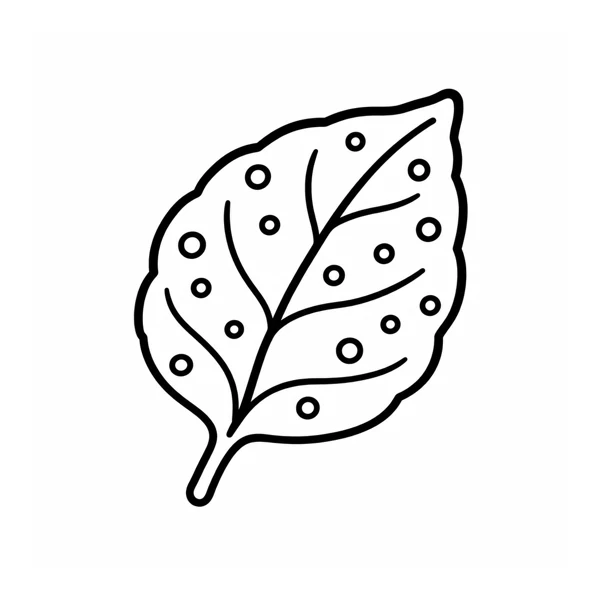
- Rust: Orange pustules on leaves and stems. Grow resistant varieties and don't leave old stubble lying around.
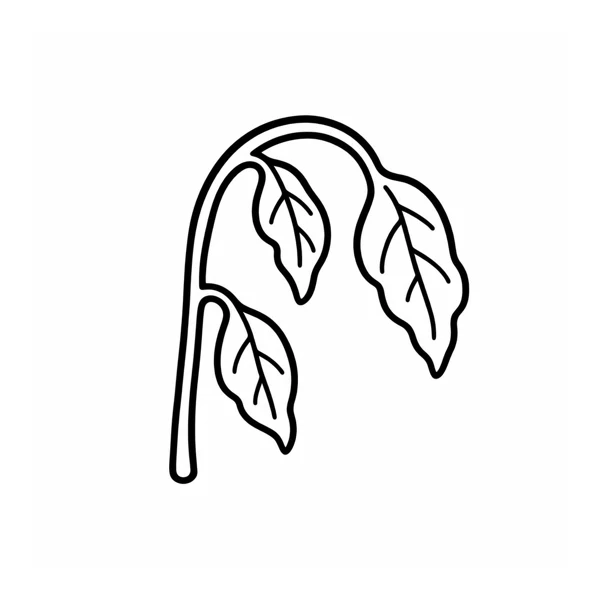
- Fusarium wilt: Seedlings yellow, wilt and die. The fungus lives in the soil for years, so leave at least three years before flax goes back in the same spot.
- Aster yellows: Plants turn yellow and stunted, and flowers come out green or twisted. Pull affected plants; there's no cure.
- Seedling blight: Seedlings rot at the soil line in cold, wet soil. Sow into soil that's starting to warm, and avoid following peas or beans.
Good neighbors





Good: Other sun-loving annual flowers in a meadow mix, such as Bachelor's Buttons, Poppies and Calendula. Flax doesn't have well-proven vegetable partners, so give it its own patch or row.
Avoid: Following flax with flax in the same spot (wait at least three years).
Seeds that grow well in your area in November
Affiliate links — shopping through these helps keep Evening Vines free. Rocket Larkspur
 Wild Lupine
 Common Milkweed
 PansySeeds
Varieties worth growing
- Brown flax: The usual seed type, with dark brown seeds.
- Golden (yellow-seeded) flax: Seed flax with pale yellow seeds and a milder taste. Not the same plant as Linum flavum, a yellow-flowered perennial that is also sometimes called golden flax.
- NorLin: A medium-early, high-yielding oilseed variety bred by Agriculture Canada at Morden, Manitoba.
- CDC Bethune: A modern, medium-late oilseed variety from the University of Saskatchewan's Crop Development Centre (not an heirloom).
- Fiber flax: Taller, less branched types grown for linen. Seed is hard to find in garden catalogs.
- Appar blue flax (L. perenne): A perennial blue flax, not a seed or fiber crop. Released in 1980 by the USDA NRCS, the Forest Service and the Idaho Agricultural Experiment Station for erosion control, land reclamation and gardens.
Picking notes
For seed, cut plants when the stems are yellow and about 90% of the seed bolls have turned brown and rattle. Dry, then crush bolls and winnow out the seed. For fiber, pull plants when the stems are partly yellow.
Saving seed for next year
Seed from your harvest can be stored and resown. Keep it cool, dry and labeled, and see store leftover seeds for how.
From garden to table
Ground flaxseed gives you omega-3 fats, fiber and lignans, plant compounds that researchers are still studying for their health effects (sources: Mayo Clinic; a 2024 review in the journal Nutrients). Add it to baking, smoothies and oatmeal. Stems make linen.
Questions from the potting bench
Can I eat flaxseed whole? It's better ground; whole seeds often pass through undigested.
Is flax perennial? Seed flax is annual; blue flax is perennial.
Will flax self-seed? It can. Blue flax self-sows quite freely. Seed flax tends to keep its seed inside the bolls, so you may see the odd volunteer rather than a carpet of them.
Grower reports
How did Flax do in your garden? Members rate it and say which zone and month they planted, so everyone can see what works near them.
Recent community discussions
No one has talked about Flax yet. Be the first.
Essentials for Growing Flax
 Grow Bags
Breathable fabric pots: grow almost anything on a patio, balcony or driveway, and roots never circle.
See it →
 Seed Starting Tray
Reusable tray with a clear dome to give seeds a warm, humid start indoors.
See it →
 Garden Hand Tools
Trowel, transplanter and cultivator: the three tools you reach for most.
See it →
 Organic Fertilizer
Slow-release organic plant food for vegetable beds and containers.
See it →
 Watering Can
Long-spout can for gentle watering of seedlings and pots.
See it →
 Pruning Shears
Sharp bypass pruners for harvesting, deadheading and tidying.
See it →
