
Papaya
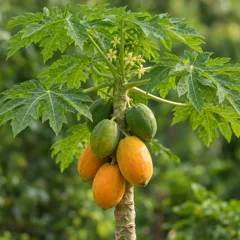
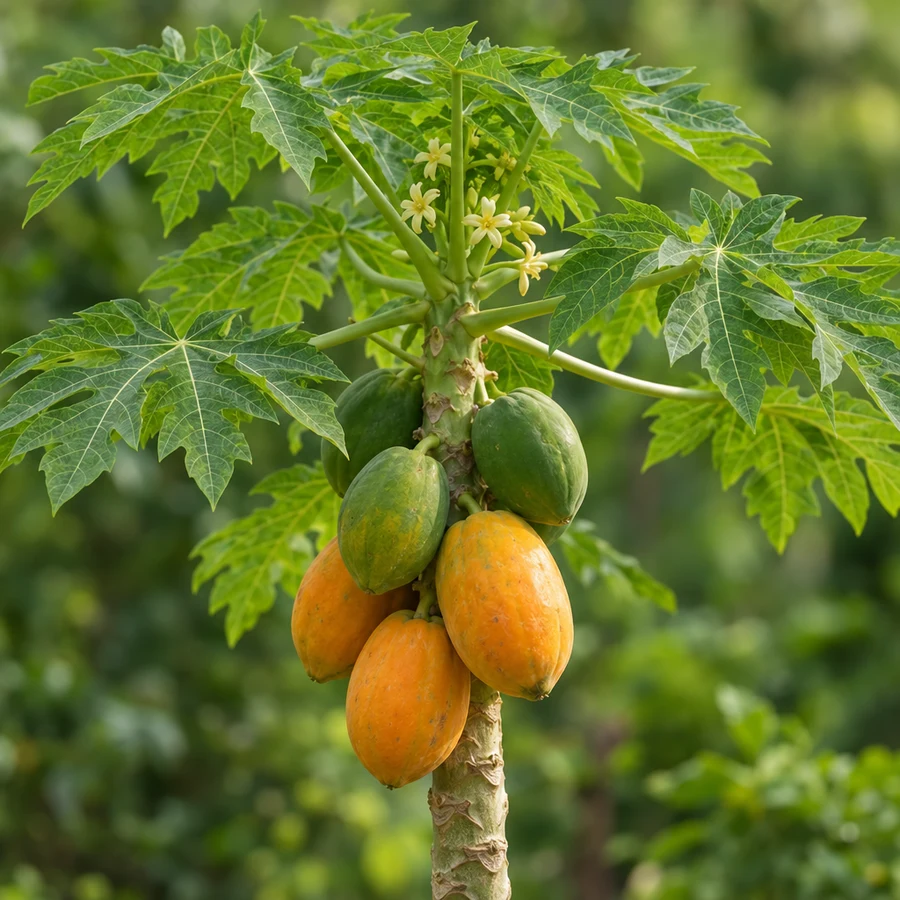
A papaya grows from a seed to a fruiting tree in about a year, which is quick for a fruit tree. It makes a single soft trunk topped with a crown of big, deeply cut leaves, and the fruit hangs in a cluster right against the trunk under the leaves. Ripe papayas are sweet and buttery, with orange or red flesh, and green ones are cooked or shredded into salads.
It's a true tropical. Frost damages it, and it needs steady warmth to flower and fruit well. Where winters stay frost-free it's one of the easiest fruit trees to grow. In cooler places people grow it in a big pot or a heated greenhouse, and even a plant that never fruits makes a handsome leafy pot plant.
Recent community discussions
No one has talked about Papaya yet. Be the first.
At a glance
| Plant type | Fruit tree (a fast, soft-stemmed tropical tree, usually one trunk) |
| Botanical name | Carica papaya |
| Annual or perennial | Short-lived evergreen perennial; best replanted every 2 to 3 years |
| Sun | Full sun, 8 hours or more |
| Water | Frequent, even watering; never soggy |
| Spacing | 7 to 12 feet apart, and 10 feet or more from buildings, other trees and power lines; one per pot |
| Planting depth | Same level as in the pot, or slightly above the surrounding soil |
| Days to germinate | 14 to 21 days in warm soil; slower in cool conditions |
| Days to maturity | 7 to 11 months from planting to first fruit in warm climates; 10 to 16 months in cooler subtropics |
| Best USDA zones | 10 to 11 (9b as a short-lived plant in a warm, sheltered spot; anywhere else in a heated greenhouse or a big pot brought indoors) |
| Soil pH | 5.5 to 6.7 is best; good drainage matters more than pH |
Is it papaya weather where you are? See everything to plant this month or read your zone notes.
Pests to watch for

Diseases
A little history
Papaya comes from the lowlands of southern Mexico and Central America. The Spanish carried its seeds to Panama and the Caribbean by the 1520s, and around 1550 they took it to the Philippines, from where it spread to Malaysia and India and across the tropics. It reached Hawaii in the early 1800s, usually credited to Don Francisco Marín, a Spanish settler there. In 1998 Hawaii's growers got Rainbow, a genetically engineered papaya developed by Cornell University, the University of Hawaii and the USDA to resist papaya ringspot virus, after the disease nearly wiped out the islands' crop.
When to sow in your zone
Papayas are grown from seed or bought as young nursery plants, and the timing is all about warmth.
Spring to early summer (zones 10 to 11): Sow seed in pots or set out young plants once the weather is reliably warm. Planting in spring gives the tree a full warm season to grow before the cooler months, and it often flowers within 4 to 6 months. In the frost-free tropics you can plant almost any time of year, though the start of the warm, wet season is easiest.
Zone 9b: Plant in spring after the last frost, in the warmest, most sheltered spot you have. Expect a short-lived plant that a freeze may kill.
Colder zones (UK, Ireland, Canada, most of the US): Sow indoors in late winter or spring, with bottom heat. Grow the plant in a large pot that lives outside in a sunny spot in summer and comes into a heated greenhouse, conservatory or bright room before nights drop below about 50°F.
Growing it, step by step
Starting From Seed
Scoop seeds from a ripe fruit. For bisexual (self-fruitful) plants, use seed from an elongated, pear-shaped fruit rather than a round one. Press the seeds against a strainer to break the jelly-like sac around each one, since it holds back sprouting. Rinse, then dry them on a paper towel out of the sun. Dry seed keeps for a few years in a bag in the fridge.
Sow 2 to 4 seeds about half an inch deep in a 1-gallon pot of fresh, sterile potting mix, and keep it warm and moist. Seeds sprout in 2 to 3 weeks, faster on a heat mat at 75 to 90°F. Keep the strongest seedling and snip the rest off at the soil line. Pulling them disturbs the roots. Feed with a weak, balanced fertilizer every couple of weeks, and plant out when the seedling is 6 to 12 inches tall.
Male, Female and Bisexual Plants
Papaya plants come in three kinds: male, female and bisexual. Only female and bisexual plants give good fruit. Female plants need pollen from a male or bisexual plant nearby, carried by insects or the wind. Bisexual plants pollinate themselves, so one is enough. You can't tell which kind you have until the plant flowers. Seed from a self-pollinated bisexual Solo-type fruit gives about two bisexual plants for every one female. The usual advice is to grow 2 or 3 plants, then remove extra males once they flower.
Picking the Spot
Choose the warmest, sunniest spot in your yard, out of strong wind. A tree loaded with fruit topples easily in high wind. The ground must drain fast. Papaya roots rot in soil that stays wet after rain, so in low, damp spots plant on a mound of soil 2 to 3 feet high. Keep a grass-free circle of a few feet around the trunk. Mowers and string trimmers wound the soft trunk.
Planting
Dig a hole several times wider than the pot. Mixing in a little compost is fine, but there's no need for fertilizer in the hole. Set the plant so the top of the potting mix sits level with or just above the soil around it, because burying the stem invites rot. Firm the soil, water well, and handle the root ball gently. Papayas sulk if their roots are disturbed.
Growing in a Pot
Start in a 5-gallon pot and move up to 15 to 20 gallons as the plant grows. Use a free-draining potting mix and a pot with plenty of drainage holes. A compact, self-fruitful variety gives you the best chance of fruit. Indoors, give it your brightest spot, ideally a heated greenhouse or a conservatory kept above about 50°F, and a grow light helps in northern winters. Below about 59°F papayas often stop flowering or set misshapen fruit, so a potted plant in a cool climate may only fruit after a long, warm summer.
Water
Papayas like steady moisture. In sandy soil water every day or two in hot, dry weather. In loam every 3 to 4 days is usually enough, and less in the cool months. A dry plant drops flowers, leaves and young fruit, and the fruit it keeps is small and less sweet. Too much water is just as bad, so skip timed lawn sprinklers near the trunk.
Mulch
Spread 2 to 6 inches of wood chips or bark over the root zone, keeping it 8 to 12 inches away from the trunk.
Feeding
Papayas grow fast and fruit nonstop, so they like small, frequent feedings. Give young plants a little balanced fertilizer every 2 weeks, and bigger plants a larger amount every month or two. A fertilizer with magnesium and trace elements suits them well. Potted plants need regular feeding through spring and summer.
Keeping it happy
Don't prune a papaya. It grows from a single tip at the top, and plants that branch usually fruit less. If the top is broken or frozen, side shoots will grow. Keep one or two of the strongest and tie them to a stake. Pull off dead lower leaves, which keeps the plant tidy and stops leaf stalks from scarring the fruit.
Papaya is damaged by even a brief drop to 32°F, and long cold spells kill it, so even a light frost hurts it. On a cold night in zone 9b or 10a, cover the plant with frost cloth that reaches the ground and water the soil beforehand. Plants get tall and harder to pick after a few years, and diseases build up. Most home growers start a new plant every 2 to 3 years.
Trouble in the bed
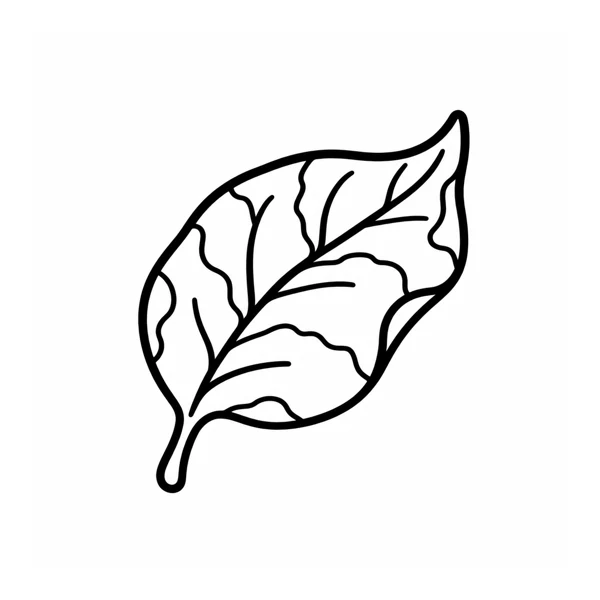
- Papaya ringspot virus: The most serious problem in Florida, Hawaii and southeast Queensland. Leaves turn mottled, yellow and shrunken, with dark streaks on the stalks and dark rings on the fruit. Aphids spread it. There's no cure, so pull out infected plants. Small, pear-shaped Solo types are more prone to it, and Rainbow is bred to resist it.
- Root rot and Phytophthora: Wet, poorly drained soil rots the roots and the base of the trunk, and young seedlings can damp off. Plant high, water carefully, and never pile mulch against the trunk.
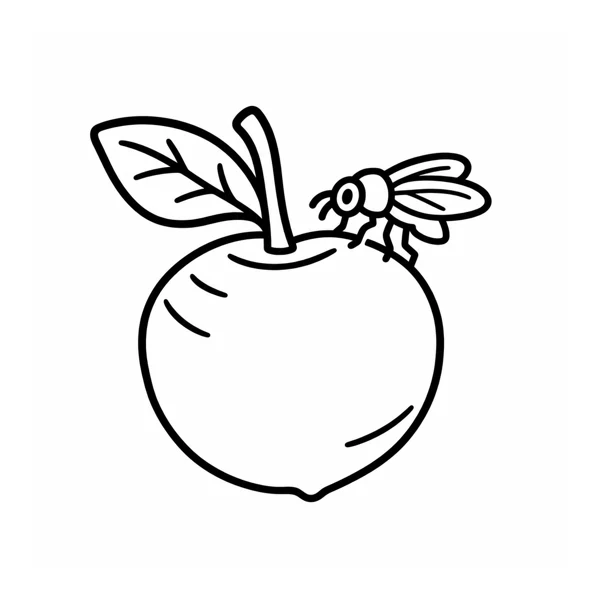
- Fruit flies: In Florida the papaya fruit fly, which looks like a wasp, lays its eggs inside the fruit. In Australia, Queensland fruit fly and other fruit flies attack it. Slip a paper bag over each young fruit and leave it on until harvest, and pick up fallen fruit.
- Spider mites and whiteflies: Both feed under the leaves and can make them drop. They're worst in dry heat and in greenhouses. Hose the undersides of the leaves and remove badly infested leaves.
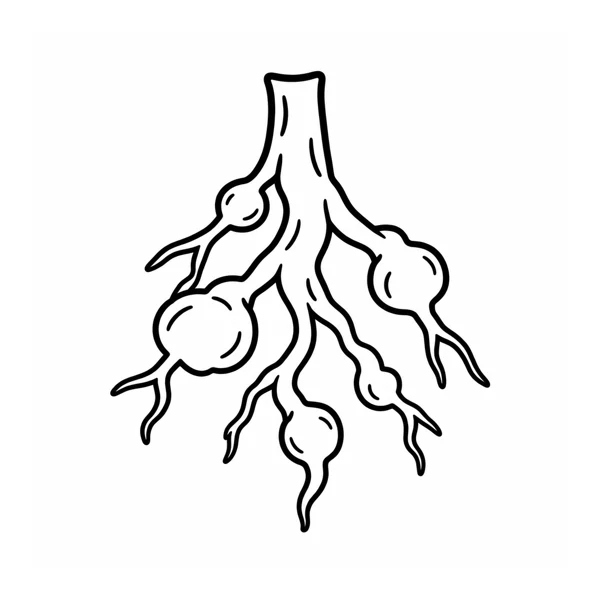
- Root-knot nematodes: These swell the roots and weaken the plant, mostly in sandy soil. Plant in clean soil, or grow in a pot of fresh mix.
- Anthracnose and powdery mildew: Anthracnose makes sunken dark spots on ripening fruit. Powdery mildew leaves white patches on leaves. Remove affected fruit and leaves, and pick fruit promptly.
Good neighbors



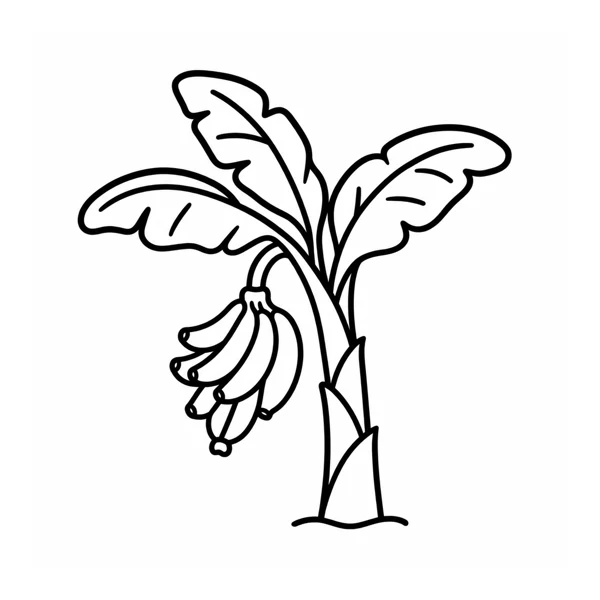
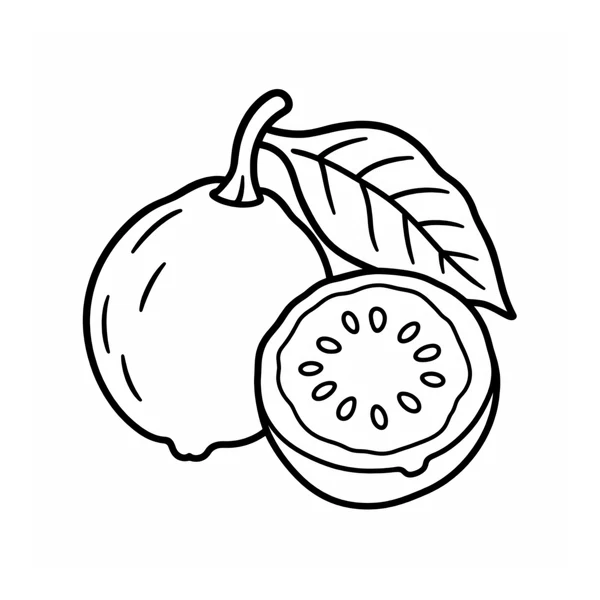
Good: Low, heat-loving plants that like the same warm, sunny conditions, such as sweet potatoes as a ground cover, ginger and turmeric at the edge of the canopy, and marigolds, nasturtiums and basil to bring in pollinators. In a tropical fruit corner, papaya pairs well with banana and guava, as long as each has room and sun.
Avoid: Lawn right up to the trunk, thirsty plants that need heavy watering over the roots, and tall trees that shade it. Heavily fertilized lawn nearby also cuts fruiting.
Seeds that grow well in your area in November
Affiliate links — shopping through these helps keep Evening Vines free. Wild Lupine
 Common Milkweed
 PansySeeds
 PhloxSeeds
Varieties worth growing
Hot, humid climates (Florida, Hawaii, the Gulf Coast, tropical Australia):
- Red Lady: A popular hybrid with red flesh that starts fruiting while the plant is still short. Gives large fruit and has some tolerance to ringspot virus.
- Maradol: The large, red-fleshed papaya common in stores. Heavy-cropping and widely grown in Florida and Mexico.
- Tainung No. 1: A Taiwanese hybrid with big, red-fleshed fruit, another Florida favorite.
- Rainbow: A genetically engineered Hawaiian hybrid with yellow-orange flesh that resists ringspot virus. Seed is sold mainly in Hawaii, and seed saved from the fruit won't come true.
Small, sweet Solo types (good for one plant in a yard or pot):
- Sunrise (Sunrise Solo): Pink-red flesh, fruit about 1 to 2 pounds. Self-fruitful bisexual plants, widely grown around the world.
- Waimanalo: Yellow flesh, slightly bigger fruit than Sunrise, and it bears low on the trunk.
- Kapoho: Hawaii's classic yellow-orange papaya, but quite prone to ringspot virus.
Australian subtropics (Queensland, northern New South Wales):
- Hybrid 29: A yellow-fleshed hybrid that has done well in central Queensland.
- Southern Red: A bisexual red papaya sold for cooler, southern growers. Like all papayas there, it does best in a warm, sheltered, frost-free spot.
Pots and cool climates (UK, Ireland, Canada, northern US):
- TR Hovey: A dwarf, self-fruitful type sold for containers. Nurseries list it at about 4 to 8 feet tall.
- Red Lady and Sunrise also suit large pots, because they fruit young and low.
Outdoors in the UK, Ireland and Canada a papaya can spend summer on a sunny patio, but it needs a heated greenhouse or warm room the rest of the year. Fruit only sets with steady warmth, so many growers there enjoy it mainly as a leafy pot plant and count any fruit as a bonus.
Picking notes
Most plants flower about 4 months after planting, and the fruit ripens 5 to 6 months after the flowers. Once a plant starts, it keeps flowering and fruiting all year in warm climates. Pick when yellow covers about a fifth to a third of the skin. The longer it colors on the tree, the sweeter it gets. Ripen picked fruit at room temperature until it's mostly yellow and gives slightly when pressed, then refrigerate. It keeps about 4 to 7 days. For green papaya salad or cooking, pick full-sized fruit while it's still firm and green.
Wear gloves and long sleeves when picking. The milky sap, especially from green fruit, contains papain, an enzyme that can irritate skin. People with a latex allergy can also react to papaya.
Saving seed for next year
Easy for open-pollinated types like Sunrise, Waimanalo and Kapoho, if you choose well. Save seed from a well-shaped, elongated fruit off a bisexual plant to get mostly self-fruitful seedlings. Break the jelly coat, rinse, dry, and keep the seed in the fridge. Hybrids like Red Lady, Tainung No. 1 and Rainbow won't come true from saved seed, so buy fresh seed each time.
From garden to table
Ripe papaya is low in calories and rich in vitamin C, vitamin A (as beta-carotene), potassium and folate. A 100-gram serving has about 40 calories and roughly as much vitamin C as an orange. Eat it fresh with a squeeze of lime, blend it into smoothies, or add it to fruit salads. Green papaya is shredded into salads like Thai som tam or cooked like squash. Because papain breaks down protein, cooks have long used green papaya and its sap to tenderize meat, and the same enzyme stops gelatin from setting. The peppery seeds are edible in small amounts.
Questions from the potting bench
Do I need two papaya plants? Not if you grow a bisexual variety like Sunrise, which pollinates itself. A female plant needs a male or bisexual plant nearby. Since you can't tell which kind a seedling is until it flowers, plant 2 or 3 and keep the ones that set fruit.
Can I grow a papaya from a store-bought fruit? Yes, and it's easy. Choose an elongated fruit, clean the seeds and sow them warm. Store fruit is often a hybrid like Maradol, so the seedlings may differ from the parent, but they usually still give good fruit.
How long does a papaya take to fruit? In warm climates usually 7 to 11 months from planting, and up to 16 months where winters are cooler. In a pot in a cool climate it may take longer, or not fruit at all without enough heat.
Will a papaya survive frost? Not for long. It's damaged at about 32°F. A brief light frost may only burn the leaves, but a hard freeze usually kills it. In zones colder than 10, grow it in a pot you can move indoors.
Why is my papaya dropping its flowers? Usually a male plant (its flowers grow on long, dangling stalks and fall off), or stress from drought, cold below about 59°F, or long hot, dry spells.
Grower reports
How did Papaya do in your garden? Members rate it and say which zone and month they planted, so everyone can see what works near them.
Recent community discussions
No one has talked about Papaya yet. Be the first.
Essentials for Growing Papaya
 Grow Bags
Breathable fabric pots: grow almost anything on a patio, balcony or driveway, and roots never circle.
See it →
 Organic Fertilizer
Slow-release organic plant food for vegetable beds and containers.
See it →
 Pruning Shears
Sharp bypass pruners for harvesting, deadheading and tidying.
See it →
 Insect Netting
Fine mesh that keeps cabbage worms, flea beetles and birds off your crops, no sprays needed.
See it →
 Soaker Hose
Waters the roots slowly, not the leaves: less disease, less water, less work.
See it →
 Garden Hand Tools
Trowel, transplanter and cultivator: the three tools you reach for most.
See it →
