
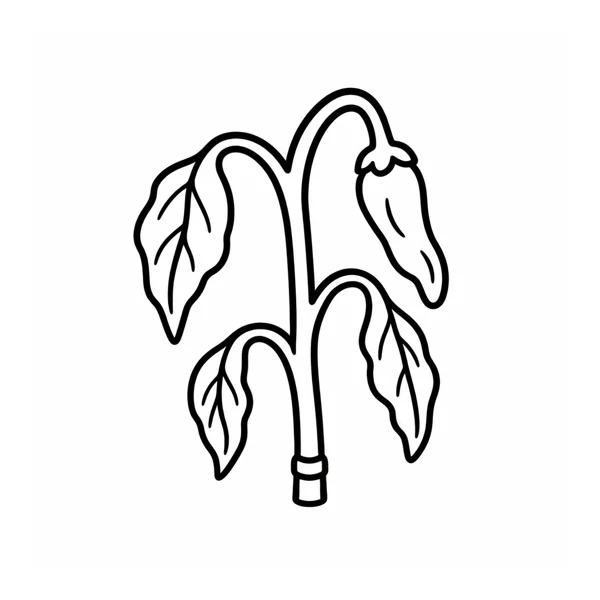
 Phytophthora Blight: Peppers and Squash Collapsing After Rain
At a glance
| Type | Water mold (oomycete) |
| Main cause | Phytophthora capsici |
| Worst conditions | Warm weather with heavy rain or over-watering, soggy or poorly drained soil, and puddles around the plants |
Recent community discussions
No one has talked about Phytophthora Blight: Peppers and Squash Collapsing After Rain yet. Be the first.
Join free to talk about Phytophthora Blight: Peppers and Squash Collapsing After Rain ›
A summer storm rolls through, and a few days later half the pepper row is hanging limp even though the soil is still soaking wet. That's the usual first sight of Phytophthora blight. It rots the roots, the base of the stem, the leaves and the fruit, and after heavy rain it can flatten a row within a week. It doesn't stop at peppers, either: summer squash, winter squash, pumpkins, cucumbers, melons, tomatoes and eggplant are all on its list. So where you plant next year matters as much as what you do this year.
Signs
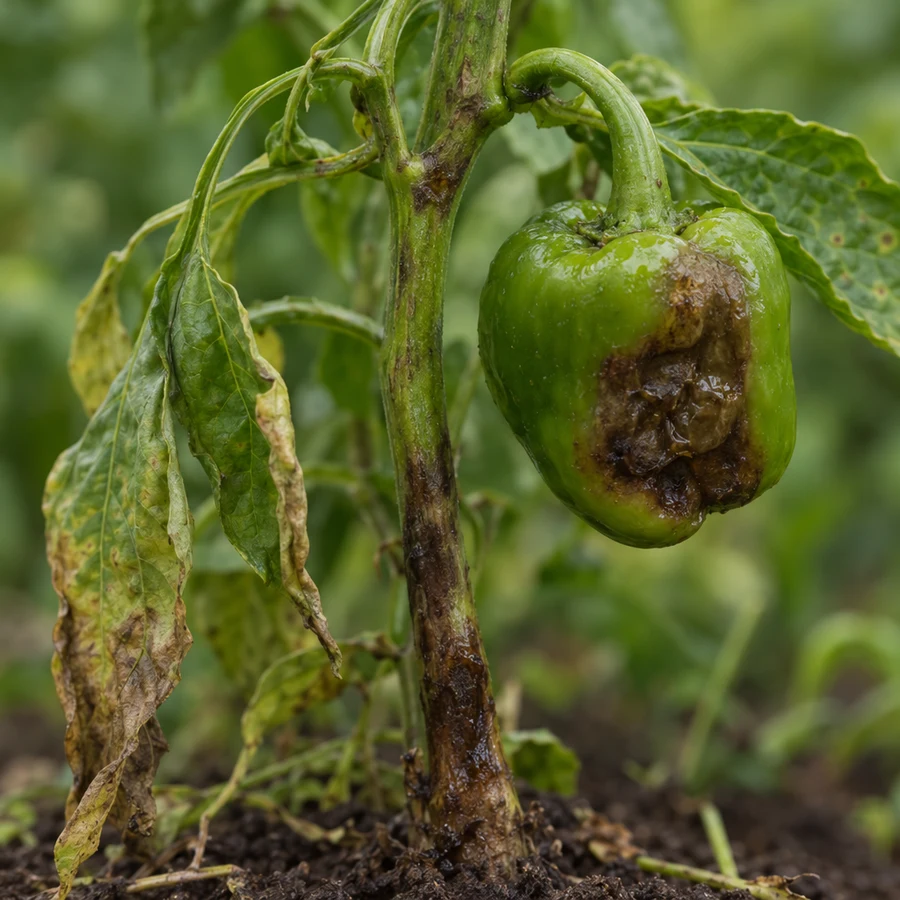
- Plants suddenly wilt and don't recover overnight, even when the soil is wet.
- A dark brown to black, water-soaked band on the stem at or just above the soil line.
- Dark brown to black patches on the stem higher up, with everything above the patch wilting.
- Dark, water-soaked spots on leaves that dry to a pale, light brown.
- Fruit with soft, water-soaked patches that grow a white, powdery coating in damp weather.
- Dead plants often follow the low, wet part of a bed or a line where water runs.
Southern blight looks similar, but it leaves a thick white fungal mat and small round "seeds" (sclerotia) at the stem base. Phytophthora blight doesn't.
Cause and Spread
The organism lives in the soil and survives for years as tough resting spores. When the soil is saturated, it releases swimming spores that move through water in the soil and in puddles, and get splashed onto stems, leaves and fruit. Infected soil carried on tools or boots takes it to new beds. Once a bed has had it, expect it to still be in that soil.
Prevention
- Plant in well-drained soil; use raised beds or ridges where water collects.
- Never let water puddle around the plants; water at the base and let the soil dry a little between waterings.
- Grow bell peppers bred for some resistance, such as 'Paladin' or 'Aristotle'. They're tolerant, not immune, and can still go down in a wet year, so keep up the drainage and rotation too.
- Rotate: keep peppers, the squash family, tomatoes and eggplant out of that bed for at least three years. Lettuce, onions, corn or cabbage-family crops can go there instead; your zone page shows which of them you can plant this month, and our crop rotation plan helps you map out the years.
- Mulch to stop soil splashing onto stems and fruit.
- Clean soil off tools and boots after working in an infected bed.
- Clear away all plant debris and rotten fruit at the end of the season.
Organic Treatment
- Nothing cures a plant once the stem or roots are rotting.
- Pull wilting plants, and the soil ball around them, straight away to slow the spread.
- Bag infected fruit and throw it out. A home compost pile rarely gets hot enough to kill the spores, so the trash is the safer place for it.
- Copper sprays are the one organic choice that does anything at all, and they only shield plants that are still healthy; they won't rescue a sick one. Read the label and check your local extension guide before you spray.
When to Pull the Plant
Pull any plant that wilts and has a dark band at the stem base. It won't recover, and it's spreading spores. Bag it and put it in the trash, not the compost.
Sources
- NC State Extension, Phytophthora Blight of Peppers: https://content.ces.ncsu.edu/phytophthora-blight-of-peppers
- Rutgers NJAES, Phytophthora Blight in the Home Garden (FS548): https://extension.rutgers.edu/fs548
- UMass Extension Vegetable Program, Phytophthora Blight: https://www.umass.edu/agriculture-food-environment/vegetable/fact-sheets/phytophthora-blight
- PNW Plant Disease Management Handbook, Pepper: Phytophthora Blight (Root and Crown Rot): https://pnwhandbooks.org/plantdisease/host-disease/pepper-capsicum-spp-phytophthora-blight-root-crown-rot
- University of Tennessee Extension, W810 (look-alikes and moderately resistant bell pepper varieties): https://utia.tennessee.edu/publications/wp-content/uploads/sites/269/2023/10/W810.pdf
Plants it affects 1
Recent community discussions
No one has talked about Phytophthora Blight: Peppers and Squash Collapsing After Rain yet. Be the first.
Join free to talk about Phytophthora Blight: Peppers and Squash Collapsing After Rain ›
Products that take care of Phytophthora Blight: Peppers and Squash Collapsing After Rain
 Biofungicide (Bacillus subtilis)Friendly bacteria that crowd out mildews, gray mold and leaf spots.See it →
 Seed Starting TrayReusable tray with a clear dome to give seeds a warm, humid start indoors.See it →
 Soaker HoseWaters the roots slowly, not the leaves: less disease, less water, less work.See it →
Products that take care of Phytophthora Blight: Peppers and Squash Collapsing After Rain
SB Plant InvigoratorA non-toxic spray that controls mildew and many bugs by contact, and feeds the leaves as it goes.See it →Seed Starting TrayReusable tray with a clear dome to give seeds a warm, humid start indoors.See it →Soaker HoseWaters the roots slowly, not the leaves: less disease, less water, less work.See it →