
Morning Glories
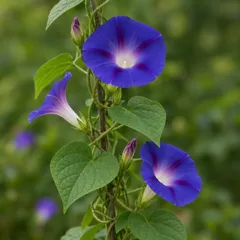
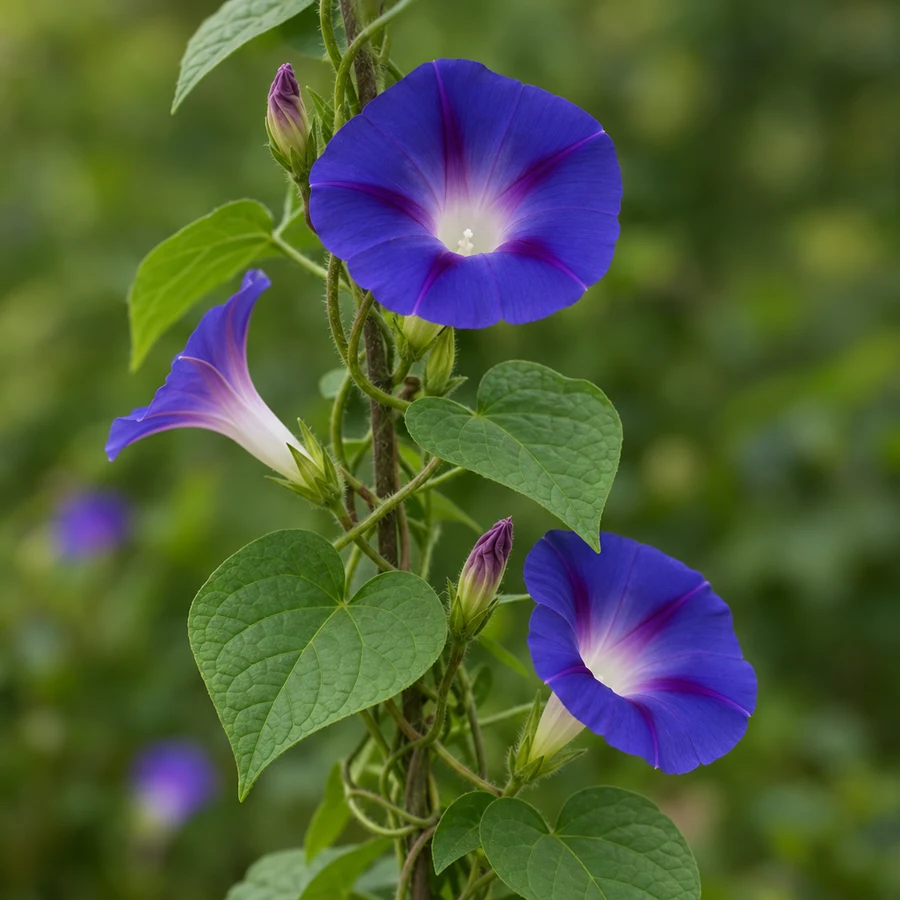
Morning glories are quick, twining vines with trumpet flowers in blue, purple, pink, red and white. Each bloom opens in the morning and folds shut by afternoon, so the show belongs to early risers. Given a sunny fence, trellis or arbor, a few seeds will cover it by midsummer and keep flowering until frost.
A word of caution before you sow: these vines self-sow freely, and NC State notes that Ipomoea tricolor is treated as a noxious weed in some parts of the US. Check your state's noxious-weed list before you plant.
Recent community discussions
No one has talked about Morning Glories yet. Be the first.
At a glance
| Plant type | Climbing vine |
| Botanical name | Ipomoea, several species (common: I. purpurea) |
| Annual or perennial | Grown as an annual; may persist in frost-free zones (about 9 to 11) |
| Sun | Full sun |
| Water | Moderate |
| Spacing | 6 to 12 inches |
| Planting depth | 1/4 to 1/2 inch |
| Days to germinate | 5 to 21 (usually about a week) |
| Days to maturity | 60 to 120 to first bloom |
| Soil temperature to sow | At least 60 to 65°F |
| Bloom season | Early summer to frost |
| Soil | Any well-drained soil, even poor |
| Best USDA zones | Any as an annual |
| Soil pH | 6.0 to 7.5 |
Is it morning glories weather where you are? See everything to plant this month or read your zone notes.

Direct sow outdoors after last frost when soil warms to 65–70°F (18–21°C). Can also be started indoors 4–6 weeks before frost if scarified before sowing.

Germinates in 5–10 days; blooms in 60–90 days.

Zones 3–10, July?October; in warmer zones August?November.

Well-drained sandy soil, pH 6.0–7.5. Tolerates poor soil; moderate fertility improves flowering.
Pests to watch for




Diseases

A little history
Morning glories come from the warm parts of the Americas, with much of their native range in Mexico and Central America. Gardeners have grown them for generations as fast summer cover, and heirlooms like Grandpa Ott's have been passed hand to hand for well over a century.
When to sow in your zone
Morning glories hate cold soil, so the real signal to sow is warmth, not the calendar. Wait until the soil is at least 60 to 65°F and all danger of frost has passed, which for most gardens means a week or two after the last spring frost. To find that date for your garden, look up your zone on the zones page and use our guide to counting back from your last frost.
In frost-free gardens (about zones 10 to 11), seed can go in whenever the soil is warm. Everywhere else, spring is the only time.
If your summers are short, you can give the vines a head start indoors a few weeks before the last frost. Whether you sow indoors or out, prepare the seed the same way (see below).
Growing it, step by step
Waking up the seed
Every morning glory seed, indoors or out, needs help through its hard coat. Either nick it gently with nail clippers or a nail file, or soak it overnight in lukewarm water. A note for your journal: seeds that have swelled up after soaking are ready to go. Any that are still small and hard can be nicked and soaked again.
Sow 1/4 to 1/2 inch deep, right at the foot of the support the vine will climb. Expect sprouts in about a week, though a few stragglers can take up to three.
Moving seedlings
The roots sulk when disturbed. If you start seeds indoors, use pots that go straight into the ground (paper or peat-free fiber pots), and plant them out without breaking up the root ball.
Up the support
Vines twine, so they grip thin things best: string, wire, netting or a slim trellis. A wide post or flat fence needs strings or netting added. Steer young shoots onto the support for the first week or two; after that they find their own way. Our staking and supporting plants post has ideas for simple setups.
Water
Keep the soil evenly moist until the vines are growing strongly, then water only in dry spells.
Mulch
A 2-inch layer of mulch holds moisture in and keeps weeds down around the base.
Feeding
Usually not needed. In very poor soil, a light feeding at planting is plenty. Rich soil or heavy feeding gives you a wall of leaves and very few flowers.
Keeping it happy
Check the vines every few days early on and tuck wandering shoots back onto their support. Morning glories self-sow heavily and can turn weedy, so snip off spent flowers before the pods form (unless you want seed), and pull stray seedlings while they're small. See weed early, before weeds set seed for the same idea applied to the whole garden.
Trouble in the bed
Most years, morning glories get through summer with little trouble. Connecticut's plant pest handbook notes they have no major disease problems in landscapes. Here's what to watch for.
Pests:
- Aphids (often cotton aphids): Look at the newest tips and leaf undersides. A firm jet of water knocks most of them off; insecticidal soap helps if they come back.
- Spider mites: Fine speckling and webbing in hot, dry weather. Rinse the leaves and keep the vines watered.
- Leaf miners: Pale, winding trails inside the leaves. Pick off the worst leaves.
- Morning-glory leafcutter: Green caterpillars that hide by day and feed at night, cutting through leaf stalks so whole leaves wilt. Look for them after dark and hand-pick.
- Tortoise beetles: Small, shiny beetles that chew round holes in the leaves. They also feed on sweet potatoes, a close relative. Hand-pick; light damage does no real harm.
Diseases:
- Fusarium wilt: Vines yellow and wilt even with moist soil. Pull affected plants and grow morning glories somewhere else next year.
- Rust and white rust: Orange or white blister-like spots, mostly on leaf undersides. Remove spotted leaves.
- Powdery mildew: A white dusty coating, usually late in summer. Our powdery mildew in late summer post covers what to do.
- Root rot: Comes with soggy, poorly drained soil. Choose a well-drained spot and don't overwater.
- Leaf spot: Brown spots on the leaves. Remove infected leaves and water at the soil, not over the foliage.
Good neighbors








Morning glories climb anything nearby, so their best neighbors are plants tall and sturdy enough to hold their own. Sunflowers and tall Zinnias make good living poles, and a solid fence, arbor or trellis is the best partner of all. Keep the vines well away from delicate plants and young shrubs, which they can smother in a single season.
Seeds that grow well in your area in November
Affiliate links — shopping through these helps keep Evening Vines free. Polka Dot Mix
 Black-Eyed SusanSeeds
 ColumbineSeeds
 Moonbeam
Varieties worth growing
- Grandpa Ott's (Ipomoea purpurea): Heirloom with deep purple flowers marked with a red star.
- Crimson Rambler (Ipomoea purpurea): Heirloom with rosy red flowers and a white throat.
- Heavenly Blue (Ipomoea tricolor): The classic sky-blue morning glory. Seeds
- Flying Saucers (Ipomoea tricolor): Blue and white streaked flowers, no two quite alike.
- Scarlett O'Hara (Ipomoea nil): Bright red flowers.
- Japanese morning glory (Ipomoea nil): Large flowers in many colors and patterns.
- Moonflower (Ipomoea alba): A night-blooming relative with big white flowers, perfect for an evening garden.
Morning Glories seeds to buy
Affiliate links — shopping through these helps keep Evening Vines free.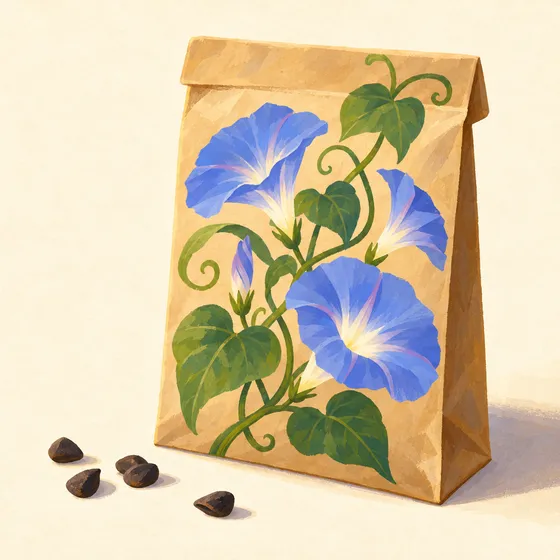 Heavenly Blue
Picking notes
Morning glories are grown for display, not harvest. Each flower lasts only a day, but new ones open every morning from early summer until frost.
Saving seed for next year
Let a few pods turn brown and papery on the vine. Pick them, rub out the seeds, dry them for a week, and store them somewhere cool and dry. Different varieties grown side by side can cross, so expect some surprises if you grow more than one. The seeds are toxic, so label the envelope clearly and keep it away from children and pets. Our saving seeds from your garden post walks through the basics.
From garden to table
Not edible. Morning glory seeds are toxic if eaten. Use the vines for screening, shading a porch, covering an arbor, or brightening a plain fence.
Questions from the potting bench
When should I plant morning glory seeds? After your last spring frost, once the soil is at least 60 to 65°F. Cold soil is the most common reason seeds rot instead of sprouting.
How deep do I plant morning glory seeds? Shallow: 1/4 to 1/2 inch deep, after nicking or soaking the seed.
Why didn't my seeds sprout? Usually the hard seed coat or cold soil. Nick or soak the seeds first, and wait for warm soil. Some take up to three weeks, so be patient.
Why so many leaves and so few flowers? Too much fertilizer, soil that's too rich, or too little sun.
Are morning glory seeds poisonous? Yes. They're toxic, so keep seeds and pods away from children and pets.
Will morning glories come back next year? In most gardens the vines die at frost, but dropped seed often sprouts the next spring, sometimes far too freely. In frost-free areas some plants may keep going.
Grower reports
How did Morning Glories do in your garden? Members rate it and say which zone and month they planted, so everyone can see what works near them.
Recent community discussions
No one has talked about Morning Glories yet. Be the first.
Seeds to try
Affiliate links — shopping through these helps keep Evening Vines free.Essentials for Growing Morning Glories
 Grow Bags
Breathable fabric pots: grow almost anything on a patio, balcony or driveway, and roots never circle.
See it →
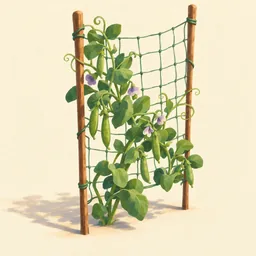 Trellis Netting
Strong netting for peas, beans, cucumbers and melons to climb: more crop in less space.
See it →
 Seed Starting Tray
Reusable tray with a clear dome to give seeds a warm, humid start indoors.
See it →
 Plant Labels
Waterproof markers so you know what's coming up where.
See it →
 Watering Can
Long-spout can for gentle watering of seedlings and pots.
See it →
 Organic Fertilizer
Slow-release organic plant food for vegetable beds and containers.
See it →
