
Haskap
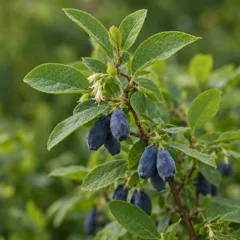
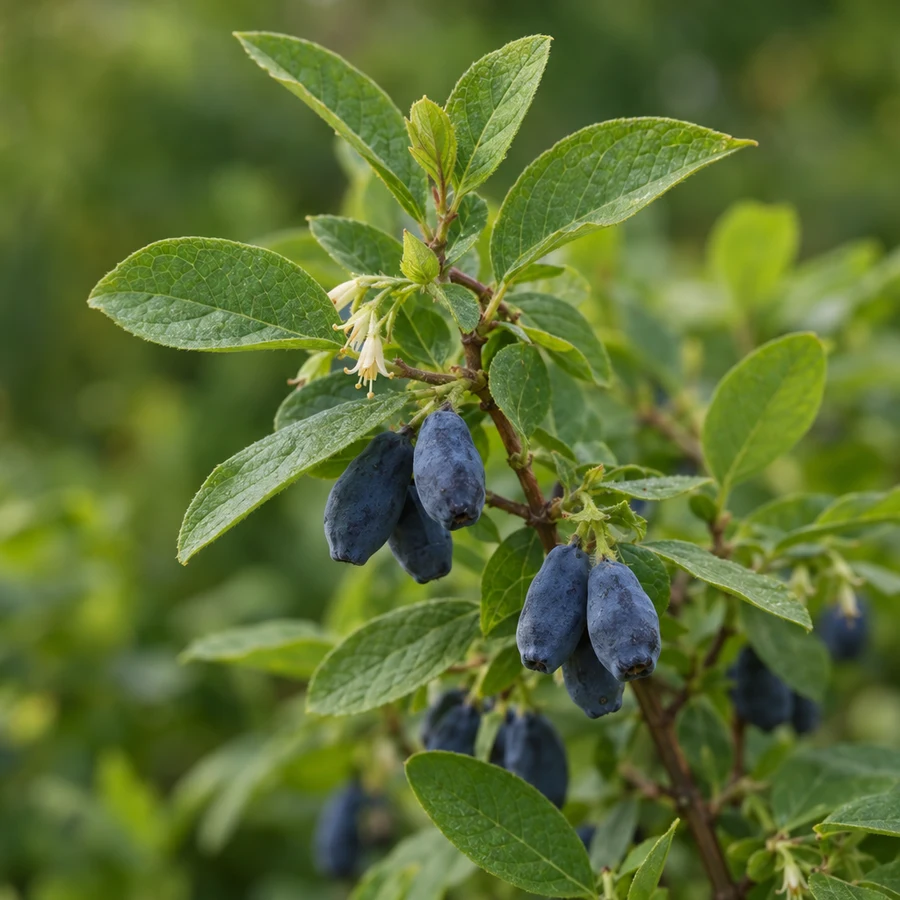
Haskap is an edible honeysuckle, a tough little shrub that gives the first fruit of the year. The berries are long, dark blue and dusted with a pale bloom, a bit like a stretched-out blueberry. The taste sits somewhere between blueberry, raspberry and blackcurrant, with a tart edge.
It's one of the hardiest fruits you can grow. The bushes shrug off winters far below zero, and the flowers can take a hard spring frost down to about 19°F. That makes haskap a real gift for gardeners in the Canadian Prairies, the northern US and other places where peaches and even some apples struggle. Unlike blueberries, it doesn't need acid soil.
Two things to know before you buy. First, you need at least two different varieties that bloom at the same time, or you'll get few berries. Second, eat only berries from plants sold as haskap or honeyberry. The berries of most other honeysuckles are not edible and can make you ill.
Recent community discussions
No one has talked about Haskap yet. Be the first.
At a glance
| Plant type | Fruiting shrub |
| Botanical name | Lonicera caerulea (sold as haskap, honeyberry or blue honeysuckle; garden types are mostly var. edulis, var. kamtschatica and Japanese var. emphyllocalyx) |
| Annual or perennial | Deciduous perennial |
| Sun | Full sun for the best crop; part sun gives fewer berries |
| Water | About 1 inch per week; keep evenly moist, as haskap is not drought tolerant |
| Spacing | 3 to 4 feet apart for a hedge, about 4 to 5 feet for single bushes; 6 to 10 feet between rows |
| Planting depth | 1 to 2 inches deeper than it sat in the nursery pot |
| Days to germinate | Not grown from seed for fruit; start from named nursery plants |
| Days to maturity | 1 to 2 years to a first small crop; good crops by year 3 or 4 |
| Best USDA zones | 2 to 7 (Japanese types handle zone 7 summers best; not suited to hot zones 8 and up) |
| Soil pH | 6.0 to 7.5; puts up with both acid soil and alkaline soil up to about 7.7 |
Is it haskap weather where you are? See everything to plant this month or read your zone notes.
Pests to watch for

Diseases


A little history
Lonicera caerulea grows wild across the cold northern forests of Asia, Europe and North America. The name haskap comes from the Ainu, the native people of Hokkaido in northern Japan, where the wild berries have long been picked and where farms grow them today. In Russia, plant breeders spent decades selecting larger, sweeter forms from wild Siberian plants, and many of the honeyberries sold in North America come from that work.
Haskap reached Canada in the 1950s, when plants were grown at Beaverlodge, Alberta, but those early types were bitter. The University of Saskatchewan began collecting plants in the late 1990s, and its breeding program, led by Dr. Bob Bors, started in 2002. Its first releases, Tundra and Borealis, were followed by Aurora, now one of the most widely planted haskaps in the world, and by the later Boreal series.
When to sow in your zone
Haskap goes in as a young potted or bare-root plant, not seed. The plants are so hardy that timing is about giving the roots a good start.
Early spring (all zones): Plant dormant bare-root or potted bushes from about a month before your last frost up to the last frost date, as soon as the ground can be dug. This is the usual planting time in the Prairies and other cold areas, and it works well in the UK and Ireland too.
Early fall (zones 3 to 7): Potted plants can also go in about 2 to 6 weeks before your first fall frost. Utah State Extension calls fall the best time, because the roots get longer to settle in before the summer heat. In the UK and Ireland, early autumn planting of potted bushes works well too.
Winter cold: Haskap needs a real winter. In mild-winter areas the buds can wake early and unevenly, and in warm zones without much winter cold, haskap rarely crops well.
Growing it, step by step
Choosing Plants
Buy at least two named varieties that bloom at the same time and are known to pollinate each other. Nurseries often sell matching pairs, and some sell two plants in one pot. A good rule is to stay within one group: Canadian varieties with Canadian, Japanese with Japanese. Aurora and Honey Bee are a classic pair. One pollinator can serve several bushes, and both plants fruit.
Picking the Spot
Pick a sunny spot with soil that drains well. Loam or sandy loam is ideal, and clay works if water doesn't sit. Haskap takes most soils, acid or alkaline. Where summers are hot, give it shelter from drying wind and hot late-afternoon sun, as the leaves can scorch. Deer usually leave it alone.
Planting
Dig a hole as deep as the root ball and twice as wide. Mix in some compost. Set the plant 1 to 2 inches deeper than it grew in the pot, backfill, firm, and water deeply to settle the soil around the roots. Keep the soil moist, not soggy, for the next few weeks. Keep grass and other plants about 3 feet from the stems, as the roots are wide and shallow.
Growing in a Pot
Haskap grows well in a large container, about 15 to 20 gallons, filled with a good potting mix. You'll still need two pots of matching varieties side by side. Potted plants dry out fast, so water often in warm weather. The roots are less protected in a pot, so in very cold zones sink the pot into the ground or move it against a sheltered wall for winter.
Water
Water about an inch a week, deeply, every 5 to 7 days if it doesn't rain. Frequent light sprinkles keep the roots shallow. Steady moisture matters most in the first two or three years and while the berries swell in late spring. Drip lines work well.
Mulch
Spread 2 to 3 inches of wood chips, bark or compost over the root zone to keep the shallow roots cool and moist and to keep weeds down. Keep it a few inches from the stems.
Feeding
Haskap needs very little. Don't feed new plants beyond the compost at planting. After that, top-dress with an inch of compost or well-rotted manure each spring. If you use a bagged balanced fertilizer, give a light dose once in early spring only. Late feeding pushes soft growth that winter can damage, and too much feed gives you leaves instead of fruit.
Keeping it happy
Haskap is a low-work shrub. For the first three or four years, just take out dead, damaged or crossing branches. After that, thin out a few of the oldest, thickest stems at the base every year or two so light and air reach the middle. Never take more than about a quarter of the bush in one year. Most growers prune in late winter while the plant is dormant, though a light trim just after harvest works too. An old, worn-out bush can be cut to about 6 inches above the ground and will regrow.
In mild areas like the UK, Ireland and the Pacific Northwest, some varieties flower in late winter, before many bees are flying. The flowers stand up to frost, but if fruit set is poor, brush the open flowers of both varieties with a small soft paintbrush on a mild day.
Trouble in the bed
- Birds: The biggest problem by far. They start eating the berries before they're ripe and can strip a bush. Net plants as the berries begin to color, using netting with holes no bigger than half an inch so birds don't get tangled. Prop it up and weigh down the bottom edge.
- Powdery mildew: White patches on the leaves from midsummer, which later turn brown. It rarely touches the fruit, since harvest is over by then. Choose resistant varieties like Boreal Beauty, prune for airflow, and water the soil rather than the leaves.
- Aphids: Honeysuckle aphids can curl the shoot tips in spring. A spray of water usually knocks them back, and ladybugs finish the job.
- Root rot: Plants in soil that stays wet can sicken and die. Plant in free-draining ground or a raised bed.
- Leaf scorch and early leaf drop: Not a disease, but common in hot summers, especially on Russian types. The leaves brown at the edges and may drop by late summer. Shade from afternoon sun and steady watering help, and Japanese varieties cope better.
A safety note: ripe haskap berries are safe to eat. Many other honeysuckles carry berries that can cause stomach upset if eaten, so check your plant's label, and teach children to pick only from the haskap bushes.
Good neighbors


Good: Low flowers and herbs that bring in early bees and helpful insects, planted at the edge of the root zone, like chives, calendula, borage, thyme and marigolds. Haskap fits well in a mixed fruit bed with strawberries, which like the same sunny, well-fed soil.
Avoid: Tall plants that shade the bushes, and vigorous ground covers or lawn grass right up against the stems. The shallow roots don't like competition or digging.
Seeds that grow well in your area in November
Affiliate links — shopping through these helps keep Evening Vines free. Wild Lupine
 Common Milkweed
 PansySeeds
 PhloxSeeds
Varieties worth growing
Cold winters and short seasons (zones 2 to 5, Canada, the northern US):
- Aurora: Large, sweet berries on a big, fast-growing bush. Mid-season. One of the most widely planted haskaps anywhere.
- Honey Bee: Bred as a pollinator. Tart, cylindrical berries that hang on the bush well. Pairs with Aurora, Tundra, Borealis and the Indigo varieties.
- Borealis: Very large berries with a sweet, tangy flavor. Softer fruit, so best for home gardens rather than shipping.
- Tundra: Firm, large berries with top-rated flavor that don't bleed at the stem when picked.
- Indigo Gem: A heavy cropper with smaller, tangy berries. Somewhat prone to mildew.
- Boreal Beast and Boreal Blizzard: Later-blooming, later-ripening University of Saskatchewan varieties that pollinate each other well. Boreal Blizzard has very large, meaty berries with about half the acidity of most haskaps; Boreal Beast has well-flavored berries of about 2 grams that hang on the bush well.
- Boreal Beauty: Large, firm berries that ripen about a month after most haskaps, on an upright bush that has shown no mildew. Pair it with Boreal Beast.
Cool, mild summers (UK, Ireland, Pacific Northwest):
- Wojtek and Zojka: Honeyberries from Eastern European breeding that British and Irish fruit nurseries often sell as a pair.
- The Boreal varieties: Later bloomers, which helps where mild winters wake early varieties before the bees are out.
- Japanese types like Yezberry Maxie: Bred in Oregon from Japanese haskap for milder climates. Maxie has large, sweet, olive-shaped berries and needs another Yezberry variety as a partner.
Warmer zones (zone 7, hot summers, Tasmania and cool parts of Australia):
- Yezberry Maxie and other Japanese types: Nurseries list them as heat tolerant through zone 7, and Utah State Extension recommends Japanese types where summers are hot.
- Yezberry Solo: A Japanese type sold as able to set fruit without a partner. It can be hard to find, so check stock before you plan around it.
Haskap plants are still hard to find in Australia. Check with local nurseries in Tasmania and cooler highland areas. It isn't a good choice for subtropical Australia or the US South.
Picking notes
Haskap ripens before strawberries. Expect berries from late May into June in much of the US, late June through July on the Canadian Prairies, late spring to early summer in the UK and Ireland, and late spring (November into December) in Tasmania. The berries turn blue 5 to 10 days before they're ripe inside, so don't be fooled by the color. Bite one: ripe flesh is purple-red all the way through and tastes sweet-tart. A green center means it needs more time and will taste sour and grassy.
Pick by hand in the cool of the morning or evening, or spread a sheet under the bush and shake gently for varieties that drop easily. A grown bush can give about 5 to 15 pounds. Fresh berries keep 3 to 5 days in the fridge, and they freeze very well.
Saving seed for next year
Not useful for fruit. Seedlings don't come true to the parent, and many named varieties are patented, so they can't be propagated for sale. If you want more bushes of a variety that isn't protected, take softwood cuttings in early summer.
From garden to table
Haskap berries are rich in vitamin C and in the deep purple anthocyanins that color the juice. Research reviews report vitamin C from about 29 to 187 mg per 100 grams, depending on the variety and where it's grown, which at the high end beats oranges and strawberries. USDA has no standard nutrition entry for haskap yet. The berries are great fresh but really shine cooked, in jam, pie, crumble, sauce, smoothies and juice. The skins melt away when heated and the color is spectacular.
Questions from the potting bench
Do I need two haskap plants? Yes. Haskap needs cross-pollination from a different variety that blooms at the same time. Plant two compatible varieties close together, and both will fruit. Yezberry Solo is a rare exception that crops alone.
What's the difference between haskap and honeyberry? They're the same species. Haskap usually means Japanese types or the Canadian varieties bred from them; honeyberry often means Russian types. In stores the names are used loosely.
Why are my haskap berries sour? They were probably picked too soon. The skin turns blue days before the inside ripens. Wait until the flesh is purple-red right to the center.
Can I grow haskap in a warm climate? It's hard. Haskap needs a cold winter and dislikes long, hot summers. In zone 7, choose Japanese varieties, give afternoon shade and steady water. In zones 8 and warmer, grow fruit that likes the heat instead, like mulberries or figs.
Will birds eat all my haskap berries? They'll try. Net the bushes as soon as the berries start to turn blue.
Grower reports
How did Haskap do in your garden? Members rate it and say which zone and month they planted, so everyone can see what works near them.
Recent community discussions
No one has talked about Haskap yet. Be the first.
Essentials for Growing Haskap
 Grow Bags
Breathable fabric pots: grow almost anything on a patio, balcony or driveway, and roots never circle.
See it →
 Organic Fertilizer
Slow-release organic plant food for vegetable beds and containers.
See it →
 Pruning Shears
Sharp bypass pruners for harvesting, deadheading and tidying.
See it →
 Insect Netting
Fine mesh that keeps cabbage worms, flea beetles and birds off your crops, no sprays needed.
See it →
 Soaker Hose
Waters the roots slowly, not the leaves: less disease, less water, less work.
See it →
 Garden Hand Tools
Trowel, transplanter and cultivator: the three tools you reach for most.
See it →
