
Blueberry
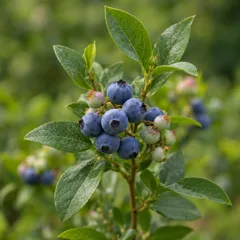
Blueberries are tidy, long-lived shrubs that give you fruit every summer, flowers in spring and some of the best red leaf color of any garden plant in fall. A well-kept bush can crop for 15 to 20 years or more. The one thing they insist on is acid soil. In ordinary garden soil, or with hard tap water, the leaves turn yellow and the plant sulks. Get the soil right, or grow them in a pot of acid potting mix, and they're one of the easiest fruits there is. There are types for almost every climate, from Canadian prairie winters to the Gulf Coast and subtropical Australia, so the main job is choosing the right type for where you live.
Recent community discussions
No one has talked about Blueberry yet. Be the first.
At a glance
| Plant type | Fruit (shrub) |
| Botanical name | Vaccinium corymbosum (northern and southern highbush); Vaccinium virgatum (rabbiteye); Vaccinium angustifolium (lowbush) |
| Annual or perennial | Perennial shrub; deciduous, though some southern types keep their leaves in mild winters |
| Sun | Full sun, at least 6 hours and ideally 8 |
| Water | 1 to 2 inches per week; more in pots and while berries swell |
| Spacing | Half-high types about 3 feet; highbush 4 to 5 feet; rabbiteye about 6 feet; rows 8 to 12 feet apart |
| Planting depth | Same depth as in the nursery pot, or up to an inch deeper; never bury the crown deep |
| Days to germinate | Not grown from seed for fruit; start with a 2- to 3-year-old nursery plant |
| Days to maturity | Pick off flowers for the first 2 years; a small crop in year 3, full crops from about year 6 to 8 |
| Best USDA zones | 3 to 10 (half-highs in 3, northern highbush 4 to 7, rabbiteye 7 to 9, southern highbush 7 to 10) |
| Soil pH | 4.5 to 5.5 |
From planting to harvest
Is it blueberry weather where you are? See everything to plant this month or read your zone notes.
Pests to watch for


A little history
Blueberries are native to North America, and Indigenous peoples gathered the wild berries for thousands of years, eating them fresh and drying them to keep through winter. For a long time they were thought to be impossible to farm. That changed in the early 1900s. Frederick Coville, a botanist with the USDA, worked out that blueberries need acid, well-drained soil, and published his findings in 1910. Elizabeth White, the daughter of a cranberry grower at Whitesbog in the New Jersey Pine Barrens, read his work and offered her family's land for his trials. She paid local pickers to find and tag the best wild bushes, and Coville crossed them. In 1916 their farm sold the first crop of cultivated blueberries. Many of today's varieties, including Bluecrop, came out of that work. Later breeders in Florida, Georgia and North Carolina crossed in native southern species to make the low-chill southern highbush types grown in warm climates around the world.
When to sow in your zone
Blueberries go in as young plants, not seed. Plant while the bush is dormant or just waking up.
Early spring (zones 3 to 7): Plant bare-root or potted bushes as soon as the soil can be worked, a few weeks before your last frost. In cold zones and the Canadian prairies this is the main planting time, so the roots have a full season before winter. If a potted plant has already leafed out in the store, keep it in a garage or on a porch until frost danger has passed.
Late fall through winter (zones 7 to 10): In the South, Clemson Extension suggests late winter for bare-root plants, and fall planting in November or December also works well, especially with potted plants. In Florida, plant in winter before spring growth starts. In the UK and Ireland, the RHS gives mid-autumn to early spring as the best time, avoiding frozen ground. Southern Australia follows the same pattern in its winter.
November in the garden: In zones 7 to 10 this is a good time to plant potted bushes. In colder zones, top up the mulch, net or fence young plants against rabbits and deer, which browse the twigs in winter, and test the soil pH so you have time to add sulfur before spring.
Growing it, step by step
Choosing the Right Type
This matters more than anything else. Northern highbush bushes grow about 5 to 6 feet tall, need a long cold winter (often 800 hours or more below about 45°F), and suit zones 4 to 7, the UK, Ireland and cooler parts of southern Australia. Half-high types are crosses of highbush and the wild lowbush blueberry, stay 1 to 3 feet tall, and are tough enough for zone 3 because snow covers them in winter. Rabbiteye bushes are big, tough southern shrubs, often 8 to 10 feet or more, that handle heat and need only a few hundred chill hours; they suit zones 7 to 9. Southern highbush types carry genes from a Florida native species, need even less winter cold, and are the choice for zones 7 to 10, central Florida, coastal California and subtropical Australia.
Pollination
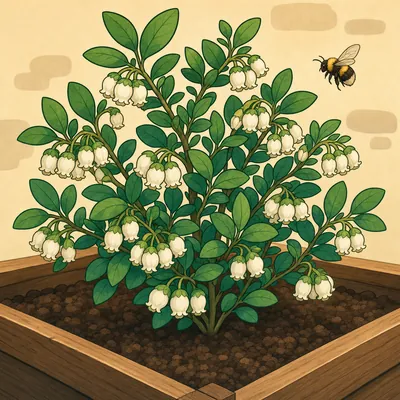
Bees do the work, and you need more than one bush for the best crops. Most highbush varieties are self-fertile, but berries are bigger, earlier and more plentiful with a second variety nearby. Rabbiteyes are largely self-sterile, so you must plant at least two different rabbiteye varieties that flower at the same time. A few compact varieties, such as Sunshine Blue, crop well on their own.
Picking the Spot
Full sun, shelter from strong wind and soil that drains well. Blueberries have fine, shallow roots with no root hairs, so they hate both waterlogged ground and drought. Keep them away from black walnut trees, as blueberries are sensitive to the chemical walnut roots release.
Preparing the Soil
Test the pH first. Blueberries want 4.5 to 5.5. If yours is higher, mix elemental sulfur into the top few inches several months before planting, ideally the fall before, since sulfur works slowly. Dig in plenty of peat moss, composted pine bark or well-rotted sawdust. Don't use lime, wood ash, manure or mushroom compost, which raise the pH. On heavy clay or chalky soil, build a raised bed about 4 feet wide and 9 to 12 inches high and fill it with an acid mix, or grow in pots. If your soil is above about pH 6.5, pots or raised beds are far easier than trying to change it.
Planting
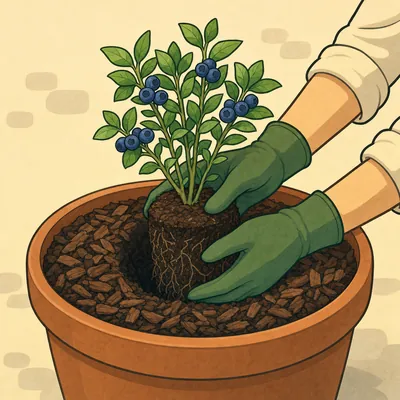
Dig a hole two to three times as wide as the root ball and mix a gallon or so of moist peat or pine bark with the soil you take out. Tease apart the roots of a potted plant, which often circle tightly. Set the plant at the depth it grew in the pot, or up to an inch deeper, then firm the soil and water well.
Growing in a Pot
Blueberries do very well in containers, and in alkaline areas it's the simplest way to grow them. Start in a pot at least 12 inches across and move up to 18 to 20 inches as the plant grows. Fill it with an acid potting mix, sold as ericaceous compost in the UK and Ireland or as azalea and camellia mix in the US. Compact varieties like Sunshine Blue, Top Hat and the half-highs are best. In zones 3 to 6, move pots into an unheated garage or sink them in the ground for winter, since roots in a pot freeze more easily than roots in soil.
Water
Keep the soil evenly moist all season, about 1 to 2 inches of water a week. Don't let it dry out in late summer, when next year's flower buds are forming. Use rainwater if you can, especially for pots. Hard tap water is often alkaline and slowly raises the pH, which is a common reason potted blueberries yellow and fade.
Mulch
Spread 3 to 4 inches of pine bark, pine needles, wood chips or sawdust over the root zone and keep it topped up. It holds moisture, keeps the shallow roots cool, smothers weeds and slowly helps keep the soil acid. Wood chips and sawdust tie up some nitrogen as they break down, so feed a little more where you use them.
Feeding
Blueberries are light feeders and easily burned. Use a fertilizer made for acid-loving plants, sold as azalea or ericaceous feed, or ammonium sulfate, since blueberries take up nitrogen best in the ammonium form. In the first year, wait about four weeks after planting and scatter a small amount well away from the stems. On older bushes, feed once at bloom and again 4 to 6 weeks later. Stop by early summer so new growth hardens before winter. Yellow leaves with green veins usually mean the pH is too high, not that the plant needs more food.
Keeping it happy
First two years: Rub off the flower buds in the year you plant and again the next year. It's hard to do, but the bush puts that energy into roots and shoots, and you'll get far more fruit later.
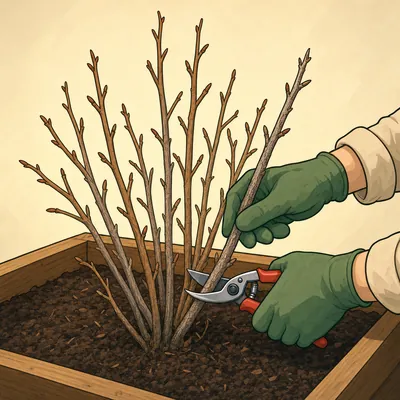
Pruning: Prune in late winter while the bush is dormant. For the first three years, just take out dead, damaged and weak, spindly shoots. From about year four, also cut out one or two of the oldest, thickest stems at the base each year, along with low branches that sprawl on the ground and crossing stems in the middle. The best berries form on younger wood, and this steady renewal keeps the bush young. Rabbiteyes need less pruning than highbush types; mostly just keep them to a height you can pick.
Frost: Open blossoms are hurt by frost at about 28°F. In spring, throw a sheet or frost cloth over bushes on frosty nights and take it off in the morning so bees can reach the flowers.
Winter: Northern highbush and half-highs are very hardy. In zones 3 and 4, a good snow cover protects half-highs; in open, windy sites, a burlap screen helps.
Trouble in the bed
- Birds: The biggest thief of all. They take berries just as they ripen. Cover bushes with netting before the fruit turns blue, or grow them in a fruit cage.
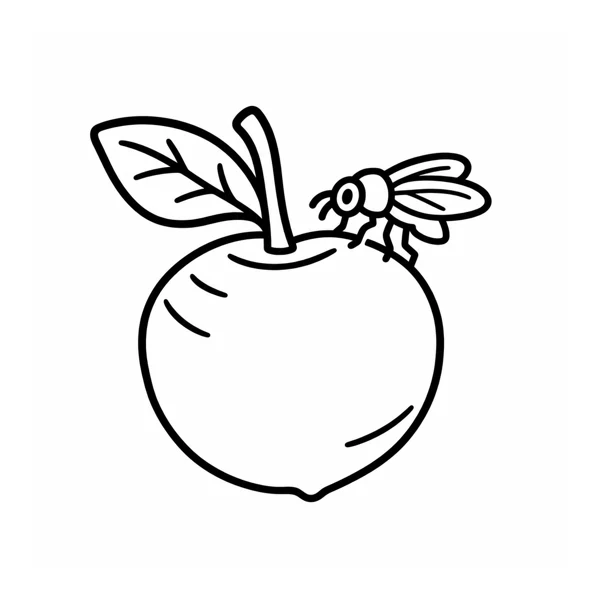
- Spotted wing drosophila: A small fruit fly that lays eggs in ripening berries, leaving soft, leaky fruit with tiny larvae inside. Pick often and promptly, pick up dropped and overripe berries, and chill harvested fruit right away. Fine netting helps.
- Japanese beetles: In the eastern US they chew leaves and sometimes ripe fruit in midsummer. Knock them into a bucket of soapy water in the morning.
- Phytophthora root rot: Wilting, reddish leaves and a dying bush in poorly drained soil. Prevention is everything: plant in raised beds on heavy soil and never let water sit around the roots.
- Mummy berry: A fungus that blights new shoots in spring and turns berries into shriveled, hard "mummies" that drop and carry the disease to next year. Pick up and destroy mummies, and refresh the mulch over any you miss.
- Gray mold and anthracnose: Fuzzy gray mold on blossoms in wet springs, and soft, orange-oozing rot on ripe berries. Prune for good air movement, pick often, and cool berries quickly.
- Blueberry rust: Yellow spots on top of leaves with orange powder underneath, which then drop early. Rake up fallen leaves. In the UK it's a newer arrival, and the RHS asks gardeners to report it.
Good neighbors
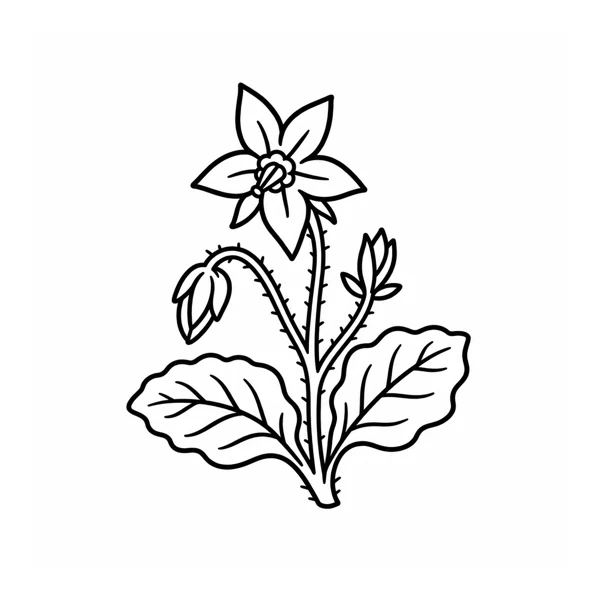

Good: Other acid-loving shrubs such as azaleas, rhododendrons and mountain laurel share the same soil happily. Low, shallow-rooted flowers around the edge of the bed bring in bees at blossom time, like alyssum and thyme. Borage and echinacea are great bee plants to grow nearby in their own bed, outside the acid soil.
Avoid: Lime-loving plants and vegetables in the same amended bed, since liming for them undoes your work. Keep lawn grass and deep, thirsty plants off the shallow root zone, and keep blueberries well away from black walnut trees.
Seeds that grow well in your area in November
Affiliate links — shopping through these helps keep Evening Vines free. Smooth Blue Aster
 Polka Dot Mix
 Black-Eyed SusanSeeds
 ColumbineSeeds
Varieties worth growing
Cold winters and short seasons (zones 3 to 5, Canada and the northern US):
- Northblue: A half-high from the University of Minnesota, 2 to 3 feet tall, with large, firm, dark blue berries. Hardy to zone 3.
- Chippewa: Another Minnesota half-high, taller and wider at about 4 feet, with firm, sweet, sky-blue berries. Good in large pots too.
- Northsky: Very low, about 1.5 to 2 feet, with medium, sweet, mild berries. Under snow it survives some of the hardest winters.
- Northland: A tough, spreading, very hardy bush from Michigan, about 4 feet tall, with heavy crops of medium, mild berries.
- Patriot: An upright, early highbush with very large, slightly tart berries, very cold hardy and fairly tolerant of wetter soils.
Cool, mild summers (UK, Ireland, Pacific Northwest, Tasmania and cool southern Australia):
- Duke: Flowers late, so it dodges spring frosts, but ripens early. Mild, firm berries and heavy crops. Holds the RHS Award of Garden Merit.
- Bluecrop: The old standard from the New Jersey breeding work. Reliable and productive, with medium to large, slightly tart berries.
- Spartan: Large, sweet, early to mid-season berries. Also an RHS Award of Garden Merit winner.
- Bluetta: Compact and early, a good choice for small gardens.
- Chandler: Late, with some of the largest berries of any variety, so you can pick well into late summer.
Hot summers and mild winters (zones 7 to 10, southern US, coastal California, subtropical Australia):
- Sunshine Blue: A compact southern highbush, about 3 feet tall, with pink flowers and a very low chill need. Self-fertile and one of the best for pots, from the Gulf Coast to Sydney and Brisbane.
- Biloxi: An upright southern highbush that ripens very early. Grown in warm areas in the US and Australia; plant with a second variety.
- Emerald and Jewel: University of Florida southern highbush varieties with large berries, suited to central and northern Florida. Plant them together.
- Misty: A southern highbush with sweet, medium to large berries, common in warm-climate nurseries.
- Powderblue and Tifblue: Two classic rabbiteyes for zones 7 to 9 that flower together and pollinate each other. Tifblue berries must be fully ripe or they taste tart. Plants
- Climax and Premier: Early rabbiteyes for the warmer end of the range; they flower early, so they're risky where late frosts are common.
For pots and edible landscaping: Pink Lemonade, a rabbiteye-highbush cross with pink berries, and Top Hat, a tiny lowbush cross, are both sold for containers.
Blueberry plants to buy
Affiliate links — shopping through these helps keep Evening Vines free. Tifblue
Picking notes
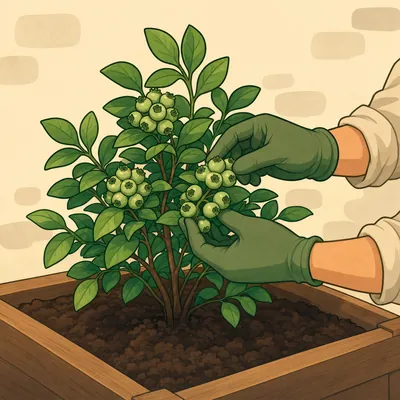
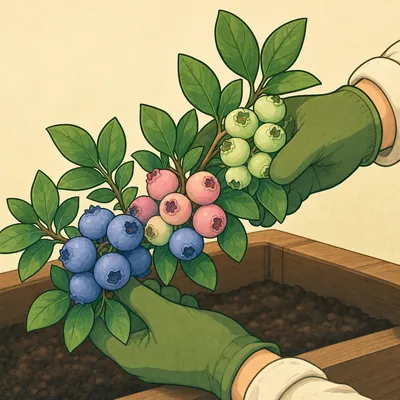
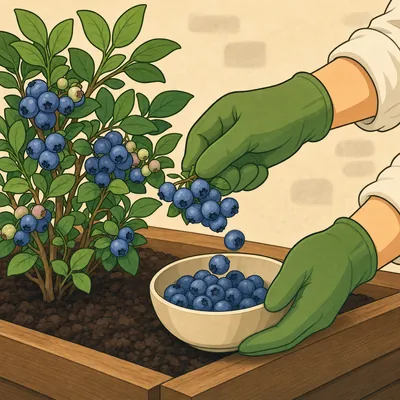
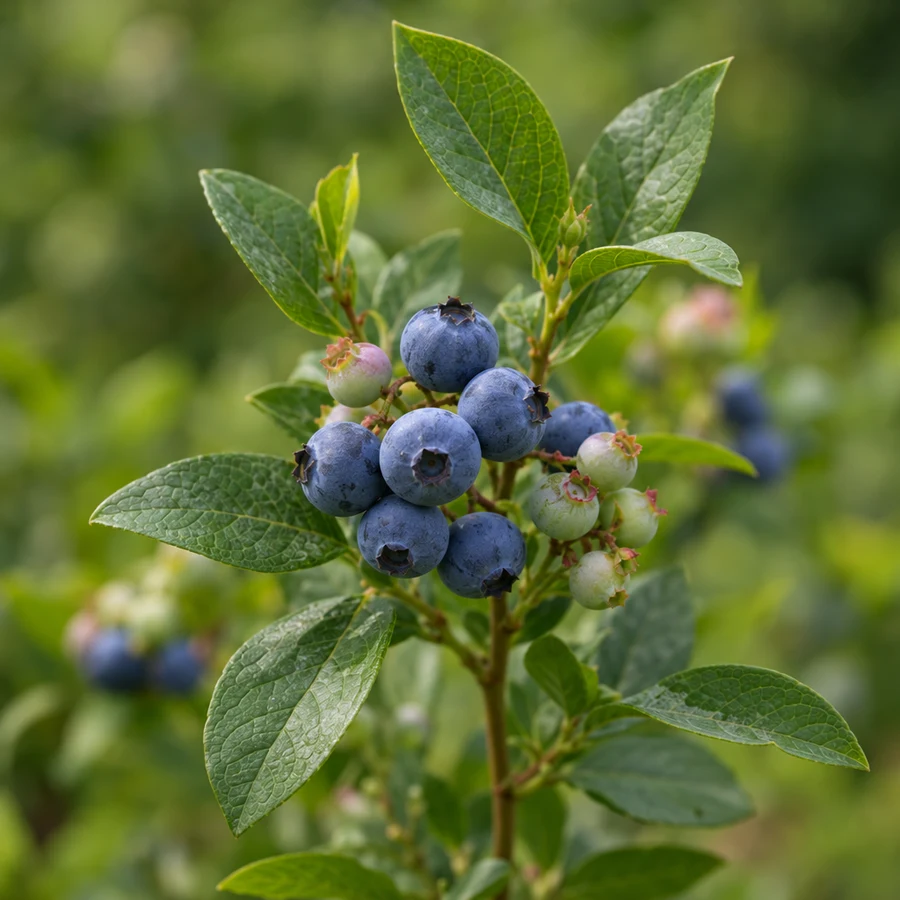
Depending on the type and your climate, berries ripen from late spring in Florida and subtropical Australia to midsummer and late summer farther north. They don't all ripen at once, so a bush gives fruit over several weeks. Don't pick as soon as a berry turns blue. Wait another two or three days and it gets much sweeter. Ripe berries roll off into your palm with a gentle push of the thumb; red-tinged berries are still sour. Pick every few days, when the fruit is dry, and keep it out of the sun. Unwashed berries keep about two weeks in the fridge but only a day or two at room temperature, so chill them fast and rinse just before eating.
Saving seed for next year
Not useful for keeping a variety. Seedlings won't be like the parent and take years to fruit. To keep a variety, take softwood cuttings in early summer or hardwood cuttings in winter and root them in an acid mix of peat and perlite. If you'd like to try seedlings for fun, mash ripe berries, rinse out the tiny seeds, and give them a few months of cold, moist storage in the fridge before sowing.
From garden to table
Raw blueberries are low in calories and a good source of fiber, vitamin C, vitamin K and manganese. USDA figures put them at about 57 calories, 2.4 grams of fiber, 10 mg of vitamin C and 19 micrograms of vitamin K per 100 grams. Their deep blue color comes from anthocyanins, natural plant pigments. Eat them fresh by the handful, on cereal or pancakes, in muffins, pies and cobblers, or cook them into jam. They freeze beautifully: spread dry berries on a tray, freeze, then bag them, and they'll stay loose for use all year.
Questions from the potting bench
Why are my blueberry leaves turning yellow? Almost always because the soil pH is too high, which stops the plant taking up iron. Test the soil. Add sulfur to lower it, mulch with pine bark or needles, feed only with acid plant fertilizer, and water pots with rainwater rather than hard tap water.
Do I need two blueberry bushes? For rabbiteyes, yes, you need two different varieties. Most highbush types will crop alone, but two or three varieties give bigger berries and a longer harvest. Sunshine Blue is a good single-bush choice.
Can I grow blueberries in a pot? Yes, and it's often the best way if your soil is alkaline. Use a pot at least 18 inches across when grown, acid potting mix, rainwater and a compact variety.
How long until my blueberry bush gives fruit? Pick off flowers for the first two years, expect a small crop in year three, and full crops from about year six to eight.
Can I grow blueberries where winters are warm? Yes, with southern highbush or rabbiteye types. Sunshine Blue, Biloxi, Emerald and Jewel need little winter cold and are grown in Florida, the Gulf Coast, southern California and subtropical Australia. Northern highbush varieties won't flower well there.
Grower reports
How did Blueberry do in your garden? Members rate it and say which zone and month they planted, so everyone can see what works near them.
Recent community discussions
No one has talked about Blueberry yet. Be the first.
Plants to try
Affiliate links — shopping through these helps keep Evening Vines free.Essentials for Growing Blueberry
 Grow Bags
Breathable fabric pots: grow almost anything on a patio, balcony or driveway, and roots never circle.
See it →
 Organic Fertilizer
Slow-release organic plant food for vegetable beds and containers.
See it →
 Pruning Shears
Sharp bypass pruners for harvesting, deadheading and tidying.
See it →
 Insect Netting
Fine mesh that keeps cabbage worms, flea beetles and birds off your crops, no sprays needed.
See it →
 Soaker Hose
Waters the roots slowly, not the leaves: less disease, less water, less work.
See it →
 Garden Hand Tools
Trowel, transplanter and cultivator: the three tools you reach for most.
See it →
