
Borage
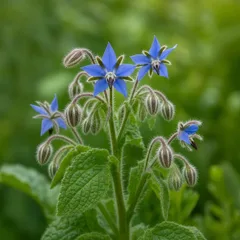
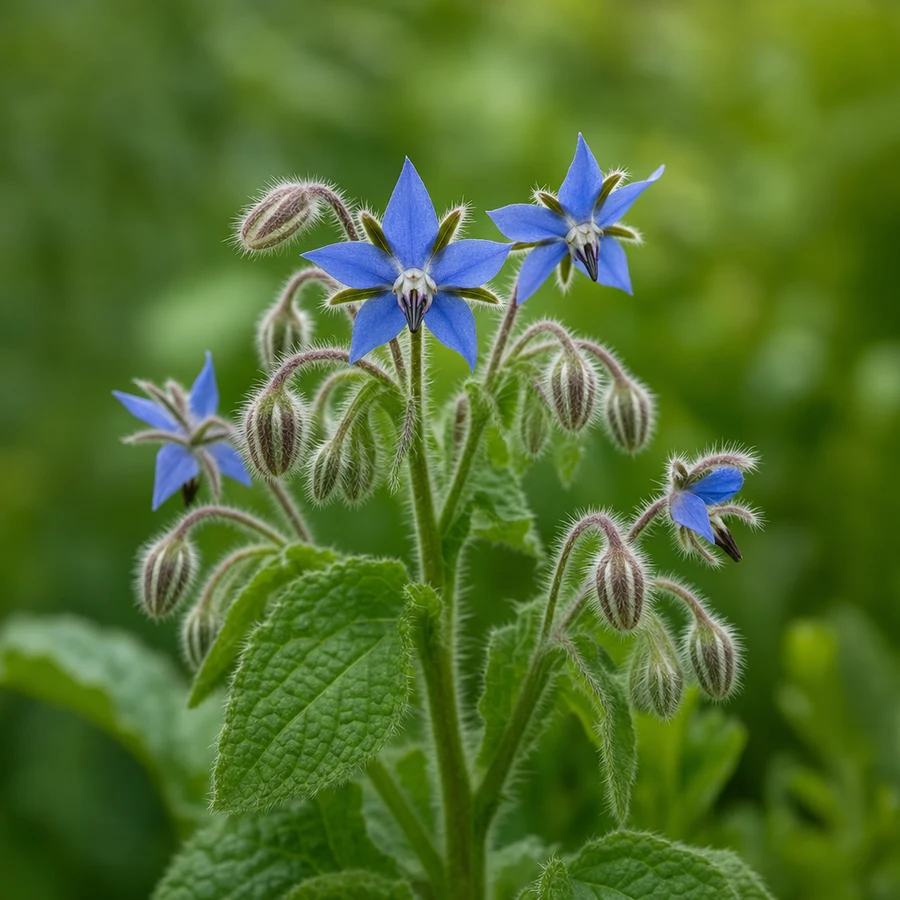
Borage is a big, bristly herb, 2 to 3 feet tall, covered in sky-blue star flowers that hang down from pink buds. Rub a leaf and you get a whiff of cucumber. Once it starts blooming in early summer, it keeps going for weeks and weeks.
Bees, bumblebees above all, work the flowers from morning to evening. Planted near fruiting crops, it brings more bees to the bed, and that helps tomatoes, squash and strawberries set fruit. It copes with thin, tired soil. Let one plant drop its seed and you'll likely have borage in that spot every year after.
Recent community discussions
No one has talked about Borage yet. Be the first.
At a glance
| Plant type | Annual herb, edible flower |
| Botanical name | Borago officinalis |
| Annual or perennial | Annual; self-sows readily |
| Sun | Full sun |
| Water | Low to moderate; drought tolerant once established |
| Spacing | 12 to 24 inches |
| Planting depth | 1/4 to 1/2 inch |
| Days to germinate | 7 to 14 |
| Days to maturity | About 50 to 60 days to bloom |
| Best USDA zones | Annual in zones 2 to 11 |
| Soil pH | 6.0 to 7.0 |
Is it borage weather where you are? See everything to plant this month or read your zone notes.

Direct sow outdoors after last frost. In mild zones, sow in fall for early spring growth.

6–8 weeks to mature; self-seeds yearly.

Zones 3–10, June?September; in mild zones into early winter; self-seeds annually.

Well-drained sandy soils, pH 6.0–7.0. Thrives in poor or neglected soil, reseeds easily.
Pests to watch for



Diseases


A little history
Borage comes from the Mediterranean and has grown in European gardens for centuries. People have long floated the flowers in wine and summer drinks, and in England they still go into a glass of Pimm's. These days it's also farmed for the oil pressed from its seeds.
When to sow in your zone
Spring: When to plant borage? Sow it outdoors at your last frost date or just after it, once the soil has started to warm. Our zone pages give the frost dates, and counting back from last frost shows how to plan around them. Sow a fresh short row every 3 to 4 weeks until early summer and you'll have flowers all season.
Fall: In zones 8 to 10, sow in fall, November included, for plants that grow through winter and flower in spring. In colder zones, leave a few late-summer flowers to drop seed, and seedlings will come up on their own next year.
Growing it, step by step
Sow borage right where you want it to grow. It puts down a long taproot and sulks after being moved. Press the seeds 1/4 to 1/2 inch deep, keep the soil just damp, and look for seedlings in one to two weeks. Thin them to 12 to 24 inches apart. They look small at first, but they fill the gap fast.
If you'd like a head start, sow into small biodegradable pots and plant the whole pot out while the seedlings are still tiny, before the root circles the pot.
Water seedlings often until they're growing well. After that borage gets by on very little, though a deep soak in a long dry spell keeps the flowers coming. A thin mulch keeps the soil damp and the weeds down.
Go easy on feeding. A handful of compost at sowing time is plenty. In rich, heavily fed soil it grows soft and leafy, with fewer flowers.
Keeping it happy
The stems are hollow and break easily in wind, and a full-grown plant leans when it's heavy with flowers. Give it a short stake or a sheltered spot, or let it sprawl in a loose corner where it won't smother anything. Wear gloves to handle it, because the stiff hairs can make skin itch. If you don't want seedlings everywhere next year, snip off the fading flowers. If you do, leave a few to ripen.
Trouble in the bed
Borage isn't troubled by much. These are the problems most likely to turn up:
- Aphids: Knock them off with a jet of water. Ladybugs will clean up the rest.
- Slugs and snails: They go for young seedlings. Go out at dusk and pick them off, or use iron phosphate bait.
- Japanese beetles: Sometimes chew the leaves in midsummer. Pick them off in the morning and drop them into soapy water.
- Powdery mildew: A white dusting on the leaves late in the season. Space plants for airflow and water at the base. See powdery mildew.
- Root rot: Happens in heavy, waterlogged soil. Grow borage somewhere that drains well. See root rot.
Good neighbors







Good: Tomatoes, strawberries, summer squash, winter squash, pumpkins and cucumbers. These crops need bees to set fruit, and borage pulls bees in. Some growers also plant it near cabbage and say they see less cabbageworm damage. That's gardeners' experience, not proven, and cabbage and its relatives are picked before they flower, so they don't need the bees. For more bee plants, see sow a pollinator border.
Avoid: It has no real enemies. Just give it space, because it can shade out small, low plants next to it.
Seeds that grow well in your area in November
Affiliate links — shopping through these helps keep Evening Vines free. Royal Mix
 Johnny Jump Up
 Organic Cat Grass
 Arugula Microgreens
Varieties worth growing
- Common blue borage: The usual kind, with bright blue star flowers.
- White borage ('Alba' or 'Bianca'): White flowers on a plant that's a little sturdier and blooms a bit later. Plenty of seed companies sell it. Seeds
- Variegated borage: Leaves splashed with cream, and blue flowers.
- Creeping borage (Borago pygmaea): A smaller relative that comes back each year, with pale blue flowers.
Borage seeds to buy
Affiliate links — shopping through these helps keep Evening Vines free.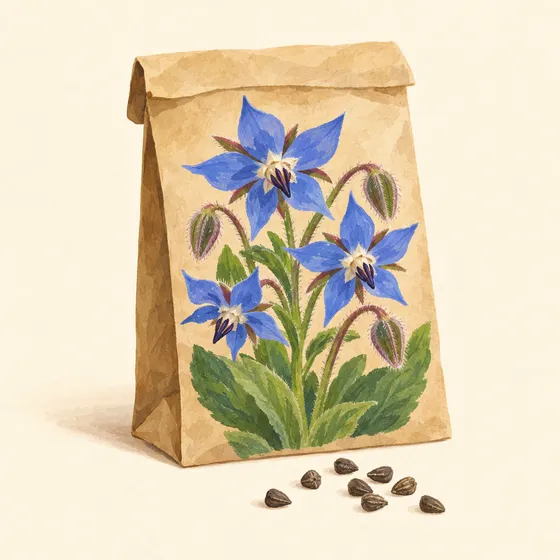 White Borage
Picking notes
Pick the flowers in the morning, once they're fully open, and use them the same day. Pinch each one and pull it gently, and the star slips free of its hairy green cup. If you want leaves, pick them small and young, and wear gloves.
Saving seed for next year
When the flowers fade, the seeds turn dark and fall almost straight away, so check the plants every day or two and collect what's ready. Dry the seeds for a week, then store them somewhere cool and dry. Saving seeds from your garden has more tips.
From garden to table
The flowers taste cool and cucumbery. Float them in drinks, freeze them into ice cubes, or scatter them over salads and desserts. The leaves contain pyrrolizidine alkaloids, which can damage the liver, so eat them only now and then, in small amounts. Skip them completely if you're pregnant or have liver trouble. Pull spent plants and put them on the compost heap.
Pets: The ASPCA lists borage as toxic to dogs, cats and horses. Eating it can cause vomiting and diarrhea, and the hairs can irritate skin. If your pets like to chew plants, grow it where they can't reach.
Questions from the potting bench
Will borage take over my garden? It self-sows a lot, but the seedlings are easy to spot and easy to pull.
Can I eat borage leaves? Only young leaves, in small amounts, now and then.
Does borage grow in pots? Yes. Use a deep pot so the taproot has room. See plant a herb container.
Is borage safe around pets? Not completely. It's listed as toxic to dogs and cats, so plant it where they can't chew it.
Grower reports
How did Borage do in your garden? Members rate it and say which zone and month they planted, so everyone can see what works near them.
Recent community discussions
No one has talked about Borage yet. Be the first.
Seeds to try
Affiliate links — shopping through these helps keep Evening Vines free.Essentials for Growing Borage
 Grow Bags
Breathable fabric pots: grow almost anything on a patio, balcony or driveway, and roots never circle.
See it →
 Seed Starting Tray
Reusable tray with a clear dome to give seeds a warm, humid start indoors.
See it →
 LED Grow Light
Full-spectrum light for sturdy seedlings through short winter days.
See it →
 Pruning Shears
Sharp bypass pruners for harvesting, deadheading and tidying.
See it →
 Watering Can
Long-spout can for gentle watering of seedlings and pots.
See it →
 Organic Fertilizer
Slow-release organic plant food for vegetable beds and containers.
See it →
