
Cosmos
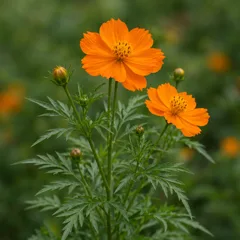
Cosmos is the flower for a gardener who doesn't want to fuss. Scatter the seed on warm soil in late spring, rake it in, and within a couple of months there are tall, feathery plants waving pink, white and crimson daisies over the bed. They keep coming until frost if you keep cutting them. Bees and butterflies work them all day, and a handful of stems fills a vase.
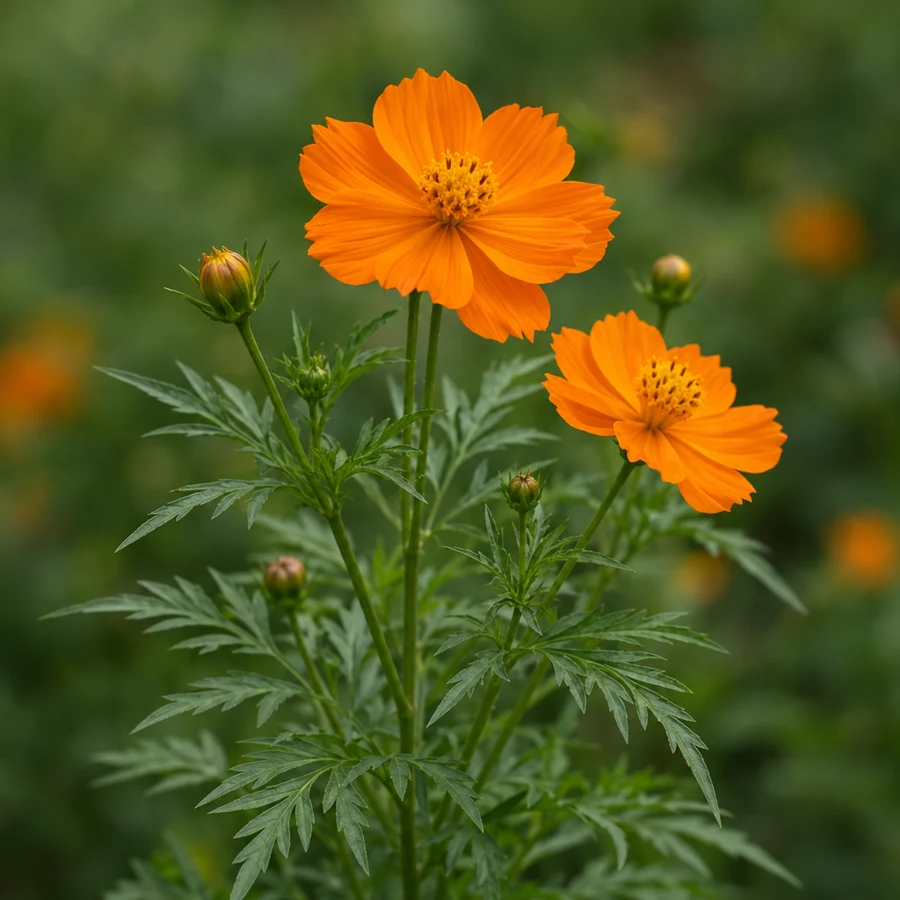
There are two main kinds. Garden cosmos (Cosmos bipinnatus) has fine, lacy leaves and flowers in pink, white, red and purple, on plants from 1 to 6 feet tall. Yellow cosmos (Cosmos sulphureus) is bushier, with orange, yellow or red flowers, and it laughs at heat. Both do best in poor, dry soil, which makes them a good choice for the hot, lean corner where other flowers struggle.
Recent community discussions
No one has talked about Cosmos yet. Be the first.
At a glance
| Plant type | Flower |
| Botanical name | Cosmos bipinnatus (garden cosmos); Cosmos sulphureus (yellow or orange cosmos) |
| Annual or perennial | Tender annual |
| Sun | Full sun, at least 6 hours a day |
| Water | Deep soak about once a week once seedlings are up; drought tolerant when established |
| Spacing | 12 to 24 inches |
| Planting depth | 1/8 to 1/4 inch |
| Days to germinate | 7 to 14 in warm soil (70 to 75°F); slower in cool soil |
| Days to maturity | About 60 to 90 days from sowing to first flowers, by variety; dwarf types are quickest |
| Best USDA zones | Any zone, grown as a summer annual |
| Soil pH | 6.0 to 7.5; tolerates neutral to slightly alkaline soil |
Is it cosmos weather where you are? See everything to plant this month or read your zone notes.
Pests to watch for


Diseases

A little history
Cosmos is native to Mexico and nearby parts of Central America, where it grows in meadows and along roadsides. The Spanish botanist Antonio José Cavanilles described the genus in 1791, in a book printed in Madrid. He took the name from the Greek kosmos, a word that can mean order, harmony or ornament. From Spain it spread to gardens across Europe and North America, and it is still a cottage-garden favorite.
When to sow in your zone
Spring: Sow outdoors after your last frost, once the soil has warmed to about 60°F. You can keep sowing every few weeks into early summer for a longer show. For earlier flowers, start seed indoors 4 to 6 weeks before your last frost. Cosmos grows fast, so don't start it much earlier than that, or the seedlings get tall and floppy before it's safe to plant out. Set indoor-raised plants out once frost is past. Not sure of your date? Count back from your last frost.
Bloom time: Many tall cosmos flower more freely as the days shorten, so the best show often comes in late summer and early fall. Early dwarf varieties start blooming sooner, which helps in short northern seasons.
Late season: In zones 9 to 11, a sowing in mid to late summer gives flowers through fall, and in frost-free areas well into winter.
This month (November): In most zones the cosmos is done. Pull the dead plants once you've collected any seed you want, or leave a few seed heads standing for finches. In zones 10 and 11, fall-sown plants may still be flowering; keep cutting them. Order seed now if you want to try new colors next spring.
Growing it, step by step
Sowing in place
Rake the bed smooth, scatter seed thinly, and press it in or cover it with no more than 1/4 inch of soil. Deep sowing cuts germination. Keep the surface moist for the week or two it takes to sprout. Thin seedlings to 12 to 24 inches apart, or leave them a little closer so the plants hold each other up.
Starting indoors
Sow two or three seeds per cell, 1/8 inch deep, and keep them at about 70°F. Thin to the strongest seedling. Harden off for a week and plant out after the last frost.
Water
Water seedlings regularly until they are growing well. After that, a deep soak about once a week is plenty, less in rainy weather. Too much water gives lots of leaves and fewer flowers.
Mulch
A thin mulch keeps weeds down, but it isn't essential. Leave bare soil where you want cosmos to reseed.
Feeding
Skip it. Rich soil and fertilizer make tall, weak stems that flop over, and they delay flowering. Only feed plants in pots, lightly, once a month.
Keeping it happy
Pinch out the growing tip when young plants are about 12 inches tall. They branch out and give more, shorter stems. Tall varieties may need a stake or a loop of string in windy spots (staking tips). Snip off faded flowers every few days to keep new buds coming (deadheading).
If plants get tired and seedy in midsummer, cut them back by about a third. They usually flower again within a few weeks. Cosmos reseeds freely, so deadhead if you don't want seedlings next year. Yellow cosmos has escaped gardens and gone wild on roadsides and waste ground in parts of the southeastern US, and garden cosmos has done the same in Queensland and New South Wales, so in warm areas cut the flowers before they set seed.
Trouble in the bed
Cosmos has few serious problems.
- Aphids: Gather on buds and stem tips. Spray off with water.
- Spider mites: Worst in hot, dry weather. Look for fine webbing and speckled leaves; hose the undersides of the leaves.
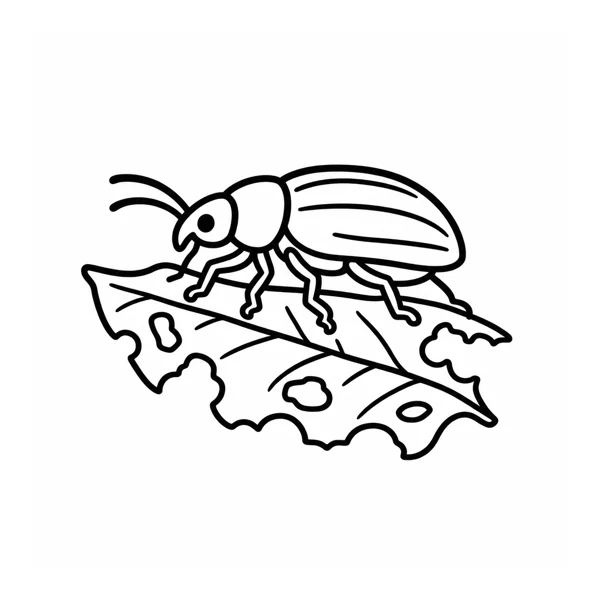
- Japanese beetles: Chew flowers in midsummer. Knock them into soapy water in the morning.
- Powdery mildew: White dust on leaves late in the season. Space plants for airflow and water at the base (late-summer mildew).
Good neighbors





Good: Dahlias, black-eyed Susans, coreopsis, celosia and bachelor's buttons all like the same sun and fill a cutting bed. Cosmos also draws hoverflies and other helpful insects, so it earns a spot along the edge of the vegetable garden. Edge the bed with sweet alyssum or calendula.
Avoid: Rich, heavily fed beds and shady spots. Very tall cosmos can shade low crops, so plant it on the north side.
Seeds that grow well in your area in November
Affiliate links — shopping through these helps keep Evening Vines free. Wild Lupine
 Common Milkweed
 PansySeeds
 PhloxSeeds
Varieties worth growing
- Sensation Mix: The classic tall garden cosmos, 4 to 5 feet, in pink, white and crimson. Good for warm, long summers. Seeds
- Purity: Clean white flowers on tall plants. A favorite for cutting. Seeds
- Sonata Series: Dwarf, about 1 to 2 feet, and early to bloom. Holds up to wind and suits pots, short Canadian summers and the cool, breezy UK and Irish season.
- Double Click: Ruffled double flowers in rose, white and bicolors, about 3 to 4 feet.
- Cupcakes: Petals fused into a cup shape, white or blush pink.
- Rubenza: Deep ruby red that fades to dusky rose, about 3 to 4 feet.
- Seashells: Rolled, tube-shaped petals in pink, white and crimson, on tall plants of 3 to 4 feet. Seeds
- Cosmic Orange: A compact yellow cosmos (C. sulphureus), about a foot tall, with bright orange semi-double flowers; an All-America Selections winner for 2000. Handles heat and humidity, so it does well in the southern US and warm parts of Australia.
- Bright Lights: A taller C. sulphureus mix in yellow, orange and red for hot summers. Seeds
Cosmos seeds to buy
Affiliate links — shopping through these helps keep Evening Vines free.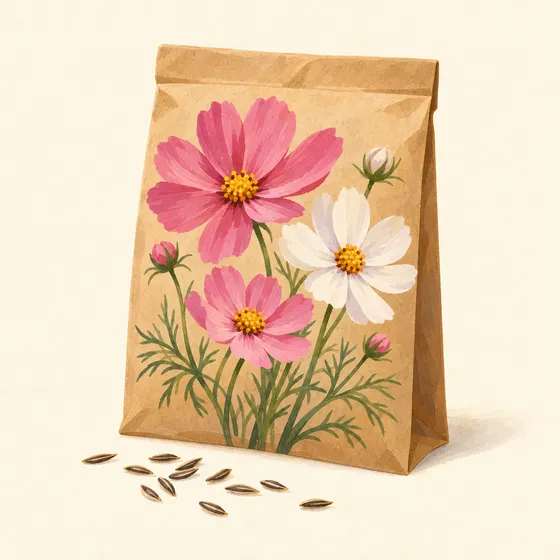 DazzlerSeeds
Picking notes
Cut stems in the cool of the morning, when the first flowers are just opening, and put them straight into water. Picking often keeps the plant flowering. Cut cosmos lasts about 4 to 6 days in the vase.
Saving seed for next year
Let a few flower heads dry on the plant until the long, thin seeds turn dark brown and pull away easily. Rub them off into a paper bag, dry them for a week indoors, and store them cool and dry. Different varieties cross with each other, so saved seed may give new mixes of color, which is part of the fun.
From garden to table
Grown for borders, cut flowers and pollinators. Bees, butterflies and goldfinches all visit. Cosmos is not grown as a food plant in Western gardens, although a related species, Cosmos caudatus, is eaten as a leafy green in Southeast Asia. Don't eat garden cosmos or flowers that have been sprayed. Cosmos isn't on the common lists of plants poisonous to pets, but keep cats and dogs from chewing it, since any mouthful of leaves can upset a stomach.
Questions from the potting bench
Why are my cosmos tall with no flowers? Usually rich soil or fertilizer, or too much water. Cosmos also waits for shorter days, so some tall types don't bloom much until late summer. Next year, skip the feeding and try an early dwarf variety.
Will cosmos come back next year? The plants die with frost, but they often reseed and pop up again in the same bed.
Can I grow cosmos in a pot? Yes. Choose a dwarf type like Sonata and a pot at least 10 to 12 inches across with drainage holes. Water when the top inch is dry.
Why are my cosmos falling over? Rich soil, too much water and wind. Pinch young plants, stop feeding, plant them close so they lean on each other, or give tall types a stake.
Grower reports
How did Cosmos do in your garden? Members rate it and say which zone and month they planted, so everyone can see what works near them.
Recent community discussions
No one has talked about Cosmos yet. Be the first.
Seeds to try
Affiliate links — shopping through these helps keep Evening Vines free.Essentials for Growing Cosmos
 Grow Bags
Breathable fabric pots: grow almost anything on a patio, balcony or driveway, and roots never circle.
See it →
 Pruning Shears
Sharp bypass pruners for harvesting, deadheading and tidying.
See it →
 Seed Starting Tray
Reusable tray with a clear dome to give seeds a warm, humid start indoors.
See it →
 Garden Kneeler
A kneeling pad that flips into a seat: easier on knees and back.
See it →
 Plant Labels
Waterproof markers so you know what's coming up where.
See it →
 Organic Fertilizer
Slow-release organic plant food for vegetable beds and containers.
See it →
