
Marigolds
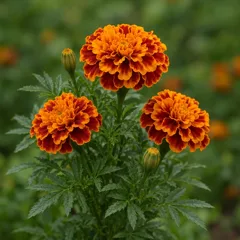
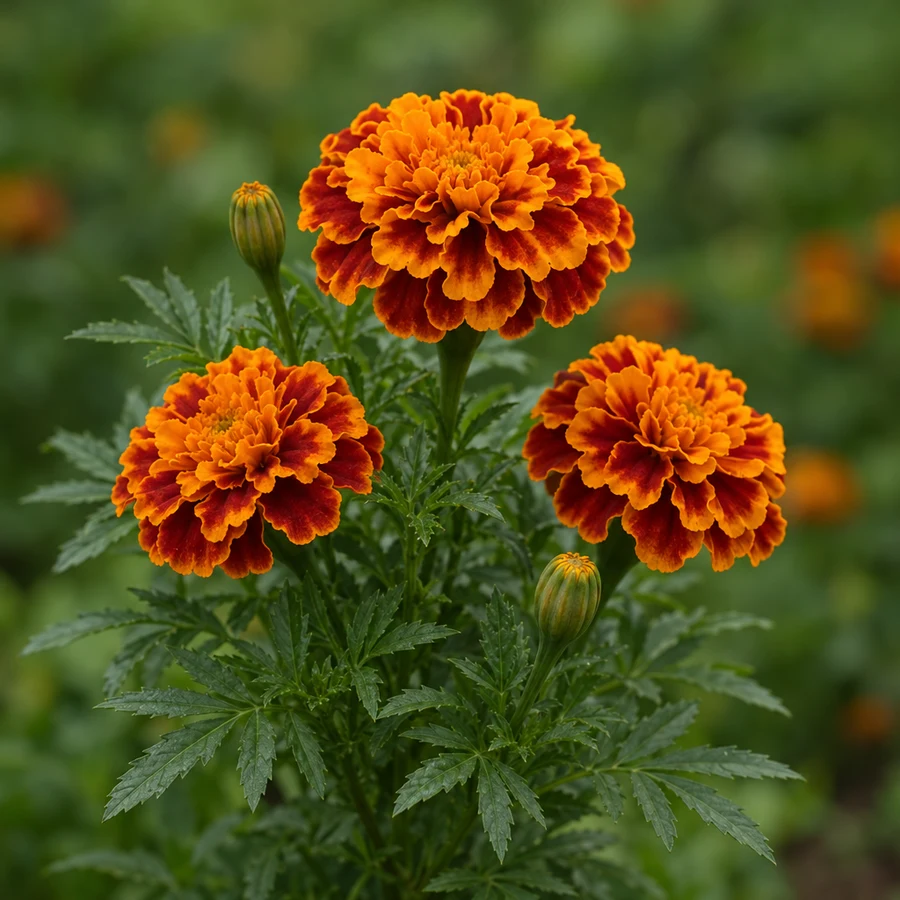
Marigolds are easy, cheerful flowers in gold, orange, yellow, and red. They love heat and bloom from early summer until frost, in beds and pots alike.
Recent community discussions
No one has talked about Marigolds yet. Be the first.
At a glance
| Plant type | Flower |
| Botanical name | Tagetes patula (French), Tagetes erecta (African), Tagetes tenuifolia (signet) |
| Annual or perennial | Annual |
| Sun | Full sun |
| Water | Moderate |
| Spacing | 6 to 10 inches (French and signet), 12 to 16 inches (African) |
| Planting depth | 1/4 inch |
| Days to germinate | 4 to 14 |
| Days to maturity | About 45 to 60 to first bloom (French and signet), 70 to 90 (African) |
| Bloom season | Early summer until frost; in zones 9 to 11, fall sowings flower through the mild winter months |
| Best USDA zones | 2 to 11 (grown as an annual) |
| Soil pH | 6.0 to 7.0 |
Is it marigolds weather where you are? See everything to plant this month or read your zone notes.

Direct sow outdoors after the last frost, or start indoors 4–6 weeks before frost. Bloom time extends from early summer through fall with successive sowings.

Germinates in 4–14 days; blooms in 45–60 days.

Zones 2–11, May?October; in warm zones July?November; indoors year-round with light.

Adaptable, prefers sandy loam, pH 6.0–7.0. Best in moderately fertile conditions.
Pests to watch for






A little history
Marigolds come from Mexico and Central America, where they've long been used in celebrations such as Día de los Muertos. Explorers carried them to Europe, and they spread around the world.
When to sow in your zone
Spring: Sow outdoors once your last frost has passed. For earlier flowers, start French and signet types indoors 4 to 6 weeks before that date, and give the big African types about 8 weeks, since they take longer to come into bloom. Our count-back guide helps you pick the day.
Fall: In zones 9 to 11, sow in early fall for color through the winter. In colder zones, wait for spring.
Not sure when your last frost lands? Look up your zone on the zone pages and you'll see the right marigold sowing window for where you live.
Growing it, step by step
From the seed tray
Cover seeds with 1/4 inch of mix. They sprout quickly when kept at 70 to 75°F.
Setting them out
Harden off seedlings for a week, then plant them after frost at the same depth they sat in the pot. Leave French types 6 to 10 inches apart and African types 12 to 16 inches, because the tall ones can reach 2 to 3 feet.
Water and mulch notes
Water at the base when the top inch of soil is dry, and don't let the bed stay soggy. A 1 to 2 inch layer of mulch holds moisture and keeps weeds down.
Feeding
Little is needed. Too much nitrogen gives lots of leaves but few flowers.
Keeping it happy
Snip off faded flowers to keep new ones coming (see deadheading for more blooms). Pinch young plants for a bushier shape, and stake tall African types in windy spots.
Trouble in the bed
Pests
- Spider mites: Worst in hot, dry weather. Rinse the undersides of the leaves with water.
- Aphids, thrips, and whiteflies: Knock them off with a strong spray of water and check new growth often.
- Caterpillars: Pick them off by hand.
- Slugs and snails: Hand-pick at dusk or set traps, mostly a worry for young seedlings.
Diseases
- Botrytis (gray mold): Brown spots and rotting flowers in damp weather. Remove affected blooms and give plants room.
- Powdery mildew: A white film on the leaves. Space plants for airflow and water at the soil line.
- Aster yellows: Stunted, twisted, yellowish growth spread by leafhoppers. Pull and throw away infected plants.
- Root rot: Comes from wet, heavy soil. Plant in well-drained ground and don't overwater.
Good neighbors








Good: Low-growing herbs make easy partners because they want the same sunny, well-drained spot: rosemary, sage, oregano, basil, parsley and chamomile. Mint works too, as long as it stays in its own pot. Single-flowered marigolds also bring in bees and hoverflies, so a few plants tucked along a row of cucumbers, cabbage or broccoli adds color and gives those helpful insects a reason to visit.
Avoid: No known bad neighbors; just don't crowd small seedlings.
Seeds that grow well in your area in November
Affiliate links — shopping through these helps keep Evening Vines free. Foxglove Mix
 Rocket Larkspur
 Wild Lupine
 Common Milkweed
Varieties worth growing
- Durango: Compact French marigold with large, early blooms. Seeds
- Crackerjack: Tall African marigold with big pom-pom flowers, good for cutting. Seeds
- Lemon Gem: Signet marigold (Tagetes tenuifolia) with lacy leaves and edible petals.
- Disco: Single-flowered French marigold that bees can reach easily.
Marigolds seeds to buy
Affiliate links — shopping through these helps keep Evening Vines free.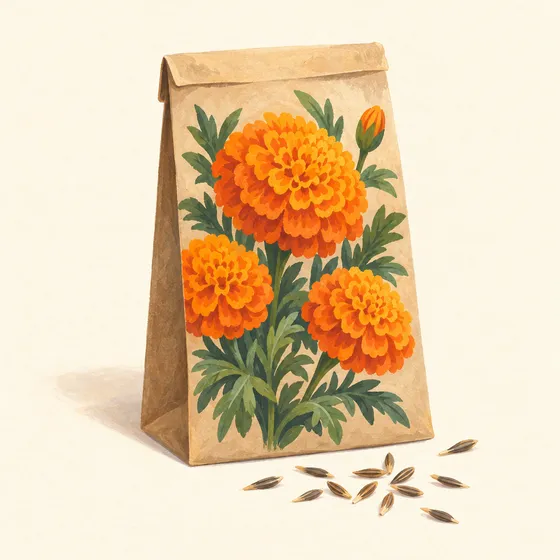 Crackerjack
Picking notes
Cut flowers for bouquets once fully open. For drying, hang bunches upside down in a dark, airy spot.
Saving seed for next year
Let a few blooms dry and turn brown on the plant. Pull out the seeds, dry them for a week, and store cool and dry. Save from open-pollinated varieties; hybrids won't come true from saved seed. More tips in saving seeds from your garden.
From garden to table
Most marigolds are ornamental. Signet marigold petals are edible in small amounts. Calendula, sometimes called pot marigold, is a different plant.
A note on nematodes: Dotting marigolds among your vegetables won't protect the plants next to them from root-knot nematodes. What can help is growing a thick, solid bed of French marigolds (such as 'Single Gold' or 'Tangerine') for at least two months in the exact spot where the crop will go, with plants under 7 inches apart, then turning them into the soil before you plant. It isn't a one-time fix, so it has to be repeated each season, and it only lowers nematode numbers rather than clearing them out.
Questions from the potting bench
Will marigolds keep pests away? Not on their own. They draw in some helpful insects, but mixing them in among crops doesn't stop nematodes or most pests. A dense marigold bed grown before the crop is the method that has research behind it.
Why no blooms? Usually too much shade or too much fertilizer. African types also simply take longer, often 70 days or more from sowing.
Do they come back? No, they're annuals, but they may self-sow.
Grower reports
How did Marigolds do in your garden? Members rate it and say which zone and month they planted, so everyone can see what works near them.
Recent community discussions
No one has talked about Marigolds yet. Be the first.
Seeds to try
Affiliate links — shopping through these helps keep Evening Vines free.Essentials for Growing Marigolds
 Grow Bags
Breathable fabric pots: grow almost anything on a patio, balcony or driveway, and roots never circle.
See it →
 Pruning Shears
Sharp bypass pruners for harvesting, deadheading and tidying.
See it →
 Seed Starting Tray
Reusable tray with a clear dome to give seeds a warm, humid start indoors.
See it →
 Garden Kneeler
A kneeling pad that flips into a seat: easier on knees and back.
See it →
 Plant Labels
Waterproof markers so you know what's coming up where.
See it →
 Organic Fertilizer
Slow-release organic plant food for vegetable beds and containers.
See it →
