 White Rust (White Blister)
At a glance
| Type | Water mold (oomycete), not a true rust |
| Main cause | Albugo species: Albugo candida on mustards and arugula; Albugo bliti (now often called Wilsoniana bliti) on amaranth; Albugo ipomoeae-panduratae on morning glories |
| Worst conditions | Cool, wet spring and fall weather, with dew or rain keeping leaves wet (on amaranth, infection is best at about 55–77°F with leaves wet for at least 2 to 3 hours) |
Recent community discussions
No one has talked about White Rust (White Blister) yet. Be the first.
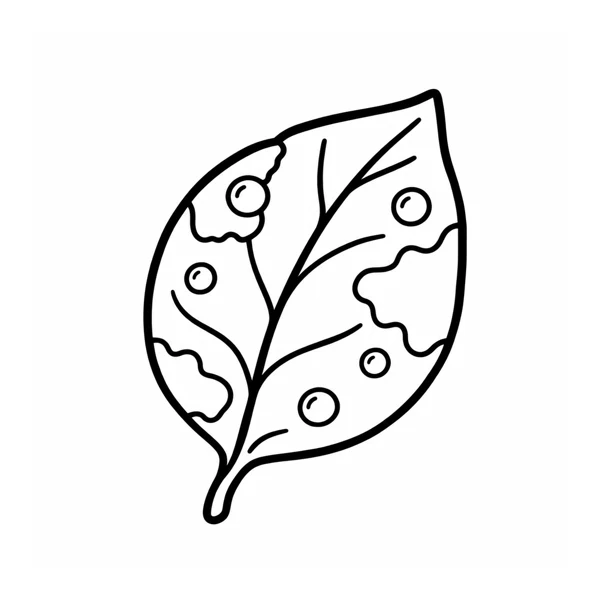
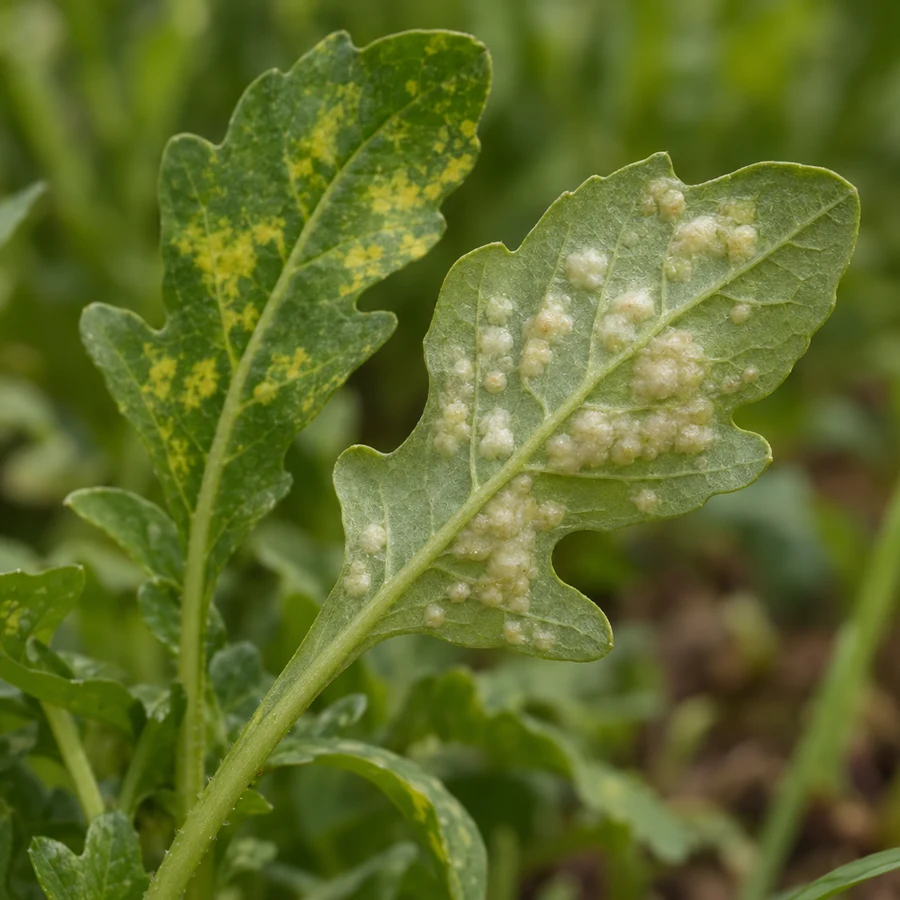
White rust makes raised, chalky white blisters on leaves. If you've found white rust on mustard greens, or white blisters under arugula leaves when you turn them over, this is very likely what you're looking at. Despite the name it isn't a rust fungus; it's a water mold related to downy mildew. Each plant family gets its own kind, so white rust on amaranth won't move to your mustard greens or arugula, and the kind on morning glories stays with morning glories and their relatives, like sweet potatoes.
Signs
- Small, raised, shiny white or creamy blisters, mostly on the undersides of leaves.
- Yellow patches on the upper side of the leaf above the blisters.
- Blisters break open and release a white powder.
- Once the spores are out, the yellow patches on top of the leaf can die and turn reddish-brown, and at that stage they're easy to mistake for an ordinary leaf spot.
- Badly hit stems and flower heads swell, twist and become deformed.
Cause and Spread
The organism survives in old infected plant debris, in the soil and in related weeds (wild mustards for the brassica type, pigweed for the amaranth type, wild morning glories for the morning glory type). Wind and splashing water carry the white powdery spores onto wet leaves. Cool nights with dew are when it spreads most.
Prevention
- Clear away all old plant debris at the end of the season.
- Pull related weeds nearby: wild mustard and shepherd's purse near brassicas, pigweed near amaranth, wild morning glory near morning glories.
- Rotate where you grow mustard family crops.
- Space plants for air flow, and water the soil, not the leaves, in the morning.
- Grow mustards and arugula when the weather suits them (see when to sow them in your area), but expect more white rust in long cool, wet spells.
Organic Treatment
- Pick off leaves with blisters as soon as you see them and throw them away.
- For leafy greens, harvest early and often, and eat unaffected leaves.
- There's no organic cure for leaves that are already blistered.
- Fungicides are rarely worth it in a home garden; on amaranth, the products that help are described as impractical for home gardeners (University of Arkansas), and the RHS says none are offered to home gardeners at all.
When to Pull the Plant
Pull and throw away plants whose stems or flower heads are swollen and twisted, since they won't recover and spread spores. Plants with only a few spotted leaves can stay once those leaves are removed.
Sources
- Texas A&M AgriLife Plant Clinic: White rust on crucifers
- University of Arkansas Cooperative Extension: Plant Health Clinic Newsletter, Issue 24 (white rust of amaranth)
- University of Illinois Extension: White rust
- Royal Horticultural Society: White blister
- Agricultural Pests of the Pacific (University of Hawaiʻi CTAHR, University of Guam and partners), ADAP 2000-23: White rust of kangkong (Albugo ipomoeae-panduratae)
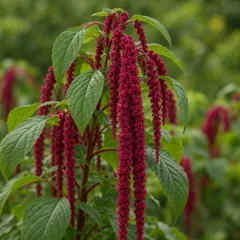
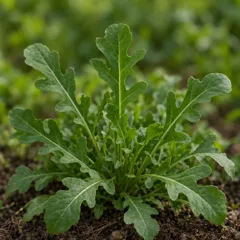
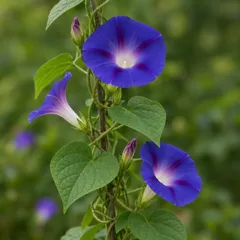
Plants it affects 4
Recent community discussions
No one has talked about White Rust (White Blister) yet. Be the first.