
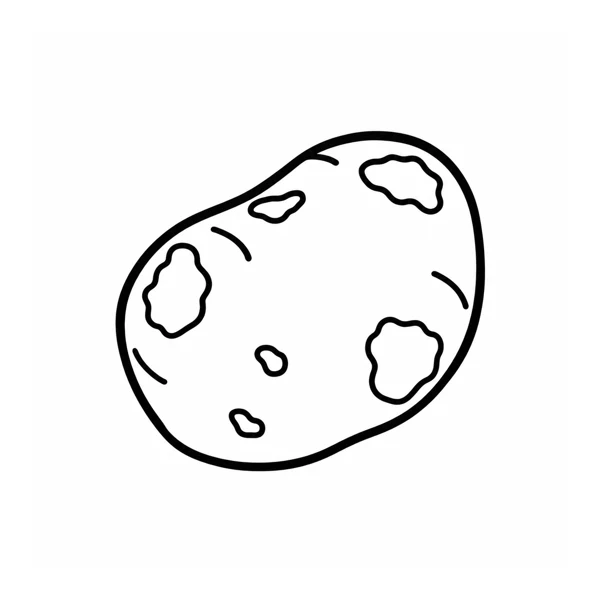
 Common Scab
At a glance
| Type | Soil-borne bacterium (a filament-forming actinomycete) |
| Main cause | Streptomyces scabies and related Streptomyces species |
| Worst conditions | Soil above about pH 5.5, worse the closer it gets to neutral or alkaline; dry soil while tubers are forming; light sandy or gravelly soil |
Recent community discussions
No one has talked about Common Scab yet. Be the first.
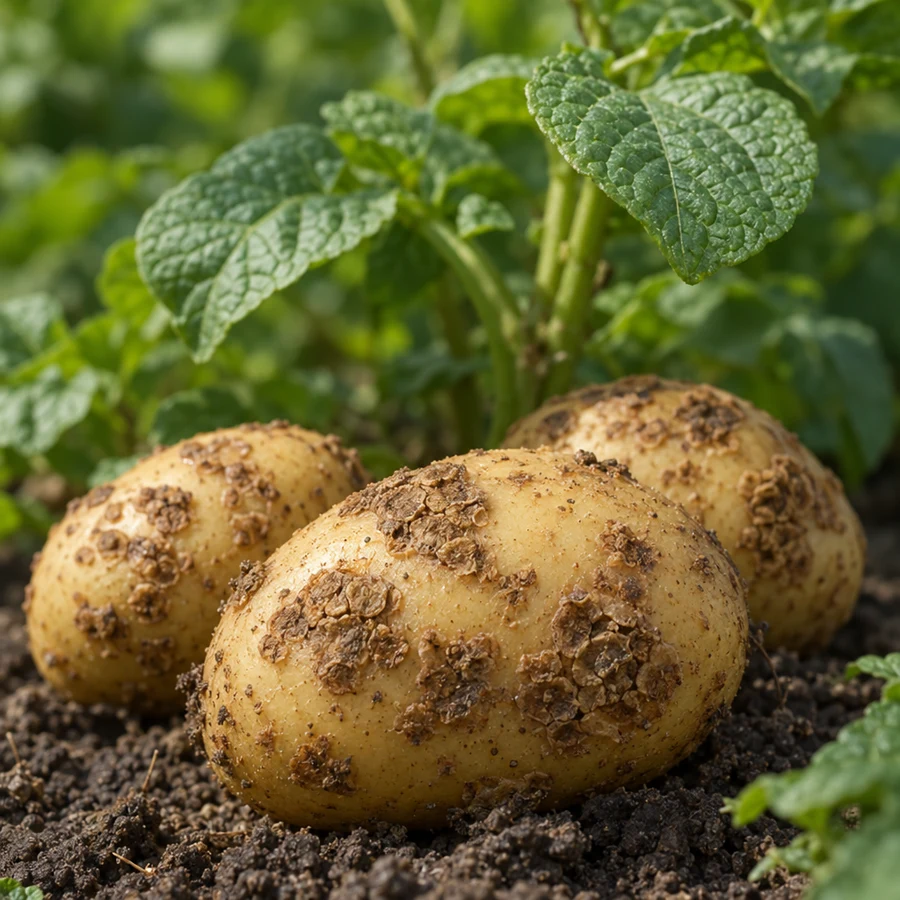
Common scab, also called potato scab, spoils the skin of potatoes and beets but rarely harms the flesh. Peel off the scabby skin and cut out any deep pits, and the rest is fine to eat.
Signs
- Rough, corky, tan to brown patches on the skin of tubers or beet roots.
- Spots can be raised and scabby, flat and netted, or sunk into shallow pits.
- Spots often join up and cover much of the skin.
- Leaves and tops look normal; you only find it at harvest.
- The flesh under the scab is usually sound once peeled.
Cause and Spread
The bacteria live in most soils and survive for years on decaying plant matter, so rotation alone can't get rid of them. They enter young tubers through pores in the skin in the first weeks after tubers start to form, mostly when the soil is dry. They spread on infected seed potatoes, in soil on tools and boots, in wind-blown soil and in manure. Scab is less common and less serious on beets than on potatoes.
Prevention
- Plant certified, scab-free seed potatoes.
- Keep the soil evenly moist from the moment tubers start forming (around when plants begin to flower or a little before) and for the next 6 weeks or so; this is the single most useful step (UC IPM, UConn).
- Don't lime, add wood ash or use fresh manure in the potato bed; they raise pH or feed the bacteria.
- Where soil is alkaline, a slightly acid soil (about pH 5.2 to 5.5) holds scab back. Test first, and lower pH with sulfur well before planting only if your other crops can handle it.
- Rotate potatoes and beets with non-host crops for 3 to 4 years; it lowers, but doesn't remove, the bacteria.
- Grow scab-resistant potato varieties where they're offered (russet-skinned types tend to cope better).
- Since so much depends on timing, check the Potatoes page for when to plant in your area, and see Plant Seed Potatoes in Spring for getting them in the ground.
Organic Treatment
- There's no cure and no spray recommended for home gardens.
- Even watering at tuber set, no lime or fresh manure, and resistant varieties are the real tools.
When to Pull the Plant
There's no need to pull plants; scab doesn't spread through the leaves. Harvest as normal, peel the scabby skin and eat the rest. Don't save scabby tubers as seed potatoes, and don't compost scabby peelings into soil you'll plant potatoes or beets in.
Sources
- UMass Extension, Potato Scab: https://www.umass.edu/agriculture-food-environment/vegetable/fact-sheets/potato-scab
- UC IPM, Potato: Common Scab: https://ipm.ucanr.edu/agriculture/potato/common-scab/
- PNW Plant Disease Handbook, Potato: Common Scab: https://pnwhandbooks.org/plantdisease/host-disease/potato-solanum-tuberosum-common-scab
- Michigan State University Extension, Common Scab of Potato (E2990): https://www.canr.msu.edu/uploads/resources/pdfs/michigan_potato_diseases_-_common_scab_of_potato_(e2990).pdf
- UConn IPM, Common Scab: https://ipm.cahnr.uconn.edu/common-scab
- University of Wisconsin Extension, Potato Disorders: Common Scab and Powdery Scab (A3833): https://hort.extension.wisc.edu/files/2014/11/A3833.pdf
- University of Illinois, Common Scab of Potato (RPD 909): https://ipm.illinois.edu/diseases/series900/rpd909/
Plants it affects 2
Recent community discussions
No one has talked about Common Scab yet. Be the first.
Products that take care of Common Scab
 Copper FungicideOrganic spray that protects leaves from blights, leaf spots and bacterial diseases.See it →
 Biofungicide (Bacillus subtilis)Friendly bacteria that crowd out mildews, gray mold and leaf spots.See it →
 Soaker HoseWaters the roots slowly, not the leaves: less disease, less water, less work.See it →
