
 Common Smut (Corn Smut)
At a glance
| Type | Fungus |
| Main cause | Ustilago maydis |
| Worst conditions | Warm weather; dry spells around pollination; plants wounded by hail, insects, hoeing or detasseling; too much nitrogen or manure |
Recent community discussions
No one has talked about Common Smut (Corn Smut) yet. Be the first.
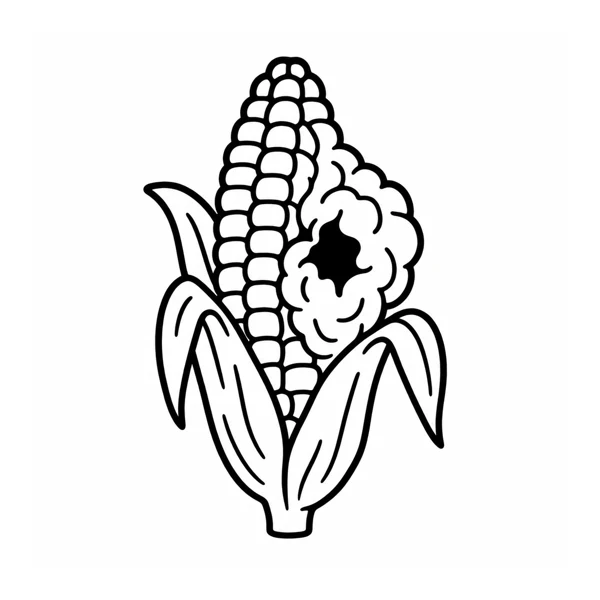
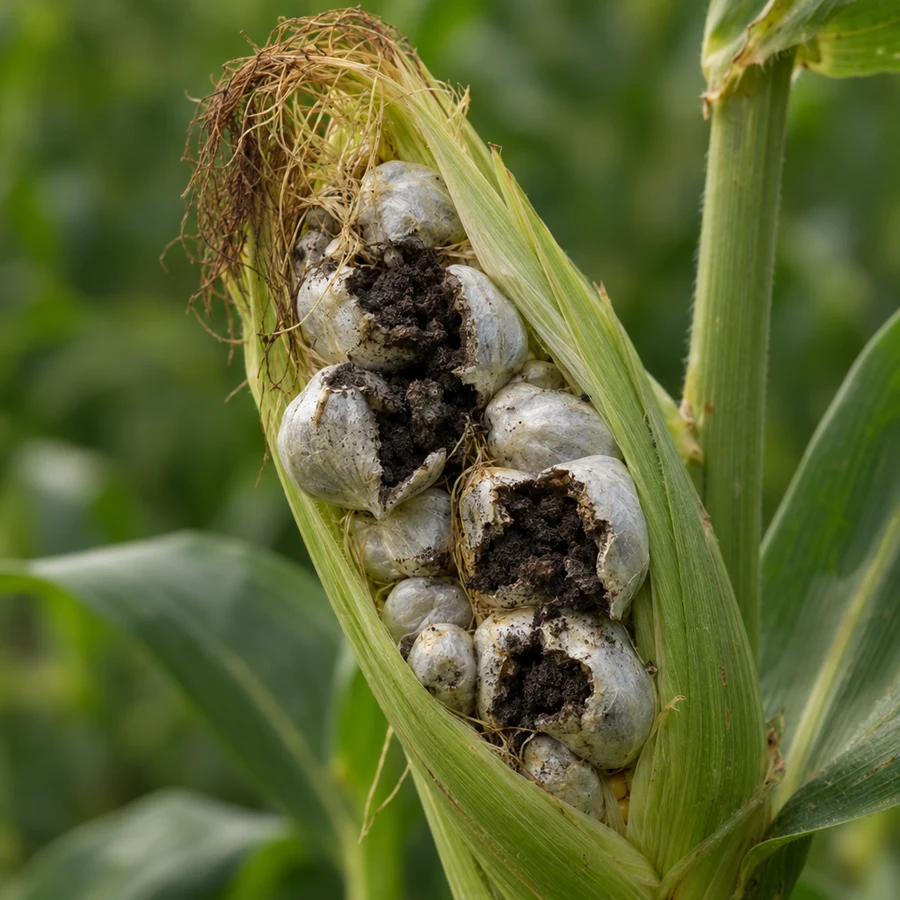
Common smut, also called corn smut, makes big grey galls on corn. It looks alarming, but it rarely ruins a whole planting, and young galls are a prized food in Mexico (huitlacoche).
Signs
- Swollen, shiny, silvery-white to grey galls on ears, tassels, stalks or leaves.
- Galls grow fast and can reach several inches across on ears.
- As they age, galls darken and burst open into a mass of powdery black spores.
- Galls on leaves stay small and hard; on ears they replace kernels.
Cause and Spread
Smut spores live for several years in soil and old corn stalks. Wind and splashing water carry them onto silks and fresh wounds on any actively growing part of the plant. Each gall then releases billions of new spores. Heirloom and landrace types are the most likely to get it, and sweet corn is where it does the most harm.
Prevention
- Grow modern sweet corn varieties with smut tolerance where offered (heirlooms are more susceptible). Our post on choosing disease-resistant varieties shows what to look for on the packet.
- Rotate corn to a new spot for a few years so spores in the soil die off. The crop rotation plan makes that easy to keep track of.
- Avoid wounding plants when hoeing, and keep corn earworm and other insects in check.
- Feed in balance; don't overdo nitrogen or fresh manure.
- Sow on time for your area so the plants aren't pollinating in the worst of a dry spell, and water evenly while the silks are out. The What to Plant tool shows corn timing for your ZIP, and planting sweet corn in blocks covers spacing and sowing.
- Clear away corn stalks at the end of the season.
Organic Treatment
- There's no effective spray or fungicide for smut.
- Cut off galls while they're still firm and white, before they burst, and bin them (don't compost them).
- Or harvest young, firm galls to cook as huitlacoche, the way you'd cook mushrooms.
When to Pull the Plant
There's usually no need to pull the plant; remove the galls and let the rest of the ears ripen. Pull and bin only stalks with many burst galls, and clear all corn debris after harvest. See cleaning up diseased plants in fall for how to deal with the leftovers.
Corn can also get northern corn leaf blight, which shows up as long grey-green streaks on the leaves rather than galls.
Sources
- Utah State University Extension, Corn Smut: https://extension.usu.edu/planthealth/research/corn-smut
- University of Wisconsin Plant Disease Diagnostics Clinic, Corn Smut fact sheet: https://pddc.wisc.edu/wp-content/uploads/sites/39/2024/11/CornSmutAdultsFactSheet.pdf
- Iowa State University Extension, Corn Smut: https://yardandgarden.extension.iastate.edu/encyclopedia/corn-smut
- UMass Extension, Corn Smut: https://www.umass.edu/agriculture-food-environment/vegetable/fact-sheets/corn-smut
- University of Minnesota Extension, Common Smut of Corn: https://extension.umn.edu/corn-pest-management/common-smut-corn
- American Phytopathological Society, Common smut (plant disease lesson): https://apsnet.org/edcenter/pdlessons/Pages/CornSmut.aspx
Plants it affects 1
Recent community discussions
No one has talked about Common Smut (Corn Smut) yet. Be the first.



