
 Septoria Leaf Spot
At a glance
| Type | Fungal |
| Main cause | Septoria fungi; each species attacks one host |
| Worst conditions | Warm, wet weather; long periods of wet leaves from rain or overhead watering |
Recent community discussions
No one has talked about Septoria Leaf Spot yet. Be the first.
Signs
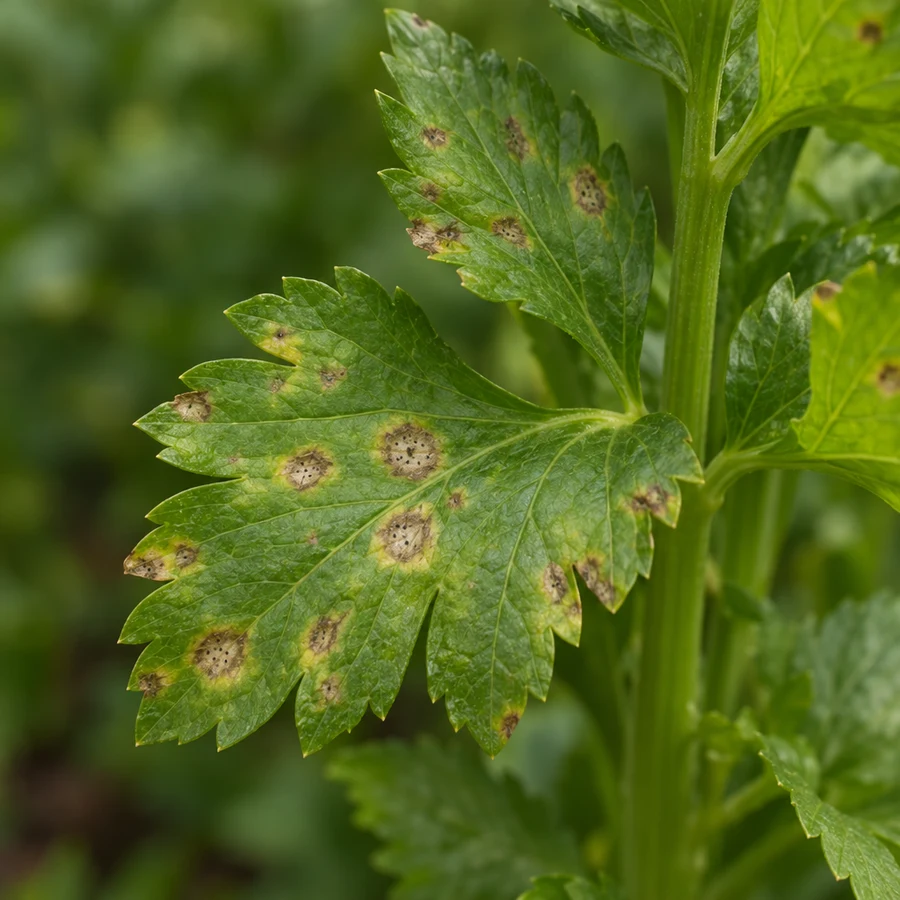
- Lots of small spots on the leaves, usually starting low on the plant and working upward.
- On most plants the spots are roundish, with a pale or gray center and a dark brown edge. On black-eyed Susan they look different: purplish-black and irregular (see below).
- Tiny black dots inside older spots. These are the fungus's spore cases, and a hand lens shows them clearly.
- Spotted leaves turn yellow, dry out and drop. A bad case can strip a plant from the bottom up.
- On tomato, Septoria spots are smaller and far more numerous than early blight spots, and they have no target rings (K-State L721; University of Wisconsin).
How It Looks on Each Plant
Every Septoria species keeps to its own host, so spots on your tomatoes won't jump to your parsley or your black-eyed Susans. Here's what each one looks like in the bed.
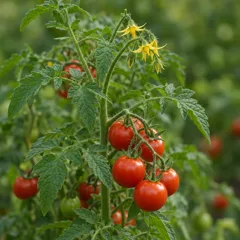
- Tomato (Septoria lycopersici): Small round spots with whitish-gray centers and dark rims, many to a leaf. It usually shows up once the plants fill in and the leaves stay damp inside the canopy, often around the time the first fruits are forming. The fruit itself is rarely spotted, but losing the lower leaves leaves fruit open to sunscald.
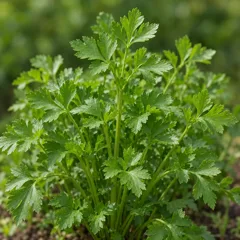
- Parsley (Septoria petroselini): Small grayish-brown spots that are a little angular, with small oval spots on the leaf stalks too. Dark specks form on the upper side of the leaf. The fungus rides in on seed, and infected seed can come up patchy (PNW Handbook). Wear gloves when you clear out badly spotted parsley, as the PNW Handbook notes infected plants can irritate skin.
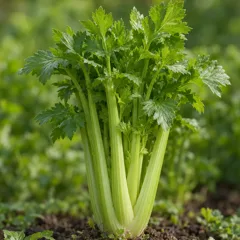
- Celery (Septoria apiicola): Growers call this "late blight" of celery, but it has nothing to do with late blight on tomatoes and potatoes, which can't infect celery. Look for small yellow spots on leaves and stalks that turn brown, round at first or boxed in square by the leaf veins, with black pimple-like specks inside. Seed is the main way it arrives (UC IPM).
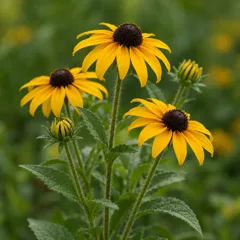
- Black-Eyed Susan (Septoria rudbeckiae): Irregular purplish-black spots, often flat on one side where a leaf vein stops them, turning gray in the middle as they age. They start on the lower leaves, and in a wet summer the whole clump can look blackened. It rarely kills the plant. 'Goldsturm' is known to be very prone to it (UMN Extension). Downy mildew can look similar, so check the leaf undersides: a fuzzy coating there points to downy mildew instead.
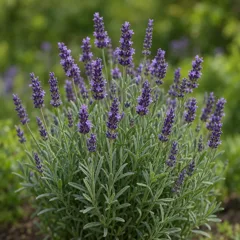
- Lavender (Septoria lavandulae): Small oval to irregular gray-brown spots with a darker edge on the lower leaves. Nearly all reports come from Europe (for example Croatia and, in 2024, Switzerland), and it's uncommon in North America. If your lavender has spotted leaves, ask your local extension office to look at a sample before you assume it's Septoria.
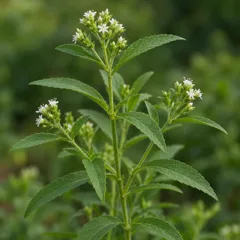
- Stevia (Septoria steviae): Spots can sit quietly on the leaves all summer, then multiply and run together in warm, wet late-summer weather, dropping leaves just before harvest. It's been confirmed in North Carolina (APS 2018).
Cause and Spread
The fungus survives the winter in old infected leaves and stems, and for parsley and celery it also travels on seed. Tomato Septoria can hang on in related weeds such as horsenettle. Spores move by splashing rain and overhead watering, and on hands, sleeves and tools when you work among wet plants.
Prevention
- Water at the soil, in the morning, so leaves dry fast. Stay out of the bed while the leaves are wet.
- Mulch to keep soil from splashing onto the lower leaves (see mulching in spring).
- Rotate crops, and clear away all plant debris at the end of the season (crop rotation plan, cleaning up diseased plants in fall). For parsley and celery, keep them out of beds that just grew carrots, dill, fennel or parsnips too.
- Start with clean seed and transplants. Seed is a common source for parsley and celery (PNW Handbook; UC IPM). Hot-water-treated seed is one option for parsley (soaked at 122°F for 30 minutes), though treatment can lower germination, so buy it already treated rather than trying it in the kitchen.
- Space and stake plants for good airflow, and pinch off lower tomato leaves that touch the soil.
- Pick less prone varieties where you can (choosing disease-resistant varieties).
- Planting time matters too. Tomatoes set out on time can be staked and mulched before summer rains settle in (planting out warm-season crops), and parsley and celery started early get going before the hottest, wettest stretch (start celery and parsley early).
Organic Treatment
- Pick off spotted leaves as soon as you see them and bag them. Don't add them to the compost.
- Copper fungicides allowed in organic growing can slow the spread when used early as a preventive. They help much less once spots are everywhere. Follow the label.
- Clean pruners after working on spotted plants (clean and store garden tools).
When to Pull the Plant
Most plants can be kept going if you keep removing spotted leaves. Pull crops grown as annuals (tomato, plus celery and parsley, which are biennials we grow for one season) when most of their leaves are spotted and they've stopped producing, and bag them.
For perennials, it depends on the plant. Cut black-eyed Susan back in fall and bag the spotted foliage. Don't cut lavender back in fall, because fresh cuts going into winter invite cold damage. Instead, rake up and bag any fallen spotted leaves in fall, and prune lavender in spring once new growth shows, or lightly right after flowering.
Sources
- Kansas State University, Tomato Leaf and Fruit Diseases and Disorders (L721): https://bookstore.ksre.ksu.edu/download/tomato-leaf-and-fruit-diseases-and-disorders_L721
- University of Wisconsin Extension, Septoria leaf spot: https://hort.extension.wisc.edu/articles/septoria-leaf-spot/
- Pacific Northwest Plant Disease Management Handbook, Parsley: Septoria leaf spot: https://pnwhandbooks.org/plantdisease/host-disease/parsley-petroselinum-crispum-septoria-leaf-spot
- UC IPM, Celery late blight: https://ipm.ucanr.edu/agriculture/celery/late-blight/
- University of Minnesota Extension, Rudbeckia leaf spots: https://apps.extension.umn.edu/garden/diagnose/plant/annualperennial/rudbeckia/leavesspots.html
- Plant Disease 98(2):282, First report of Septoria leaf spot of lavandin in Croatia: https://apsnet.org/publications/plantdisease/2014/February/Pages/98_2_282.2.aspx
- Agroscope, Septoria leaf spot on lavender found in Switzerland (2025): https://www.agroscope.admin.ch/agroscope/en/home/news/newsroom/2025/02-25_lavendel.html
- APS, Septoria leaf spot of stevia (2018 abstract): https://www.apsnet.org/meetings/annual/meetingarchives/Pages/2018Abstracts.aspx?LID=345
- Purdue Extension, Prune lavender at the right time: https://www.purdue.edu/hla/sites/yardandgarden/?p=8847
- University of Delaware Extension, Parsley fact sheet: https://udel.edu/content/dam/udelImages/canr/pdfs/extension/factsheets/Parsley.pdf
- Purdue Extension BP-184, tomato diseases: https://www.extension.purdue.edu/extmedia/bp/bp-184-w.pdf
Plants it affects 6
Recent community discussions
No one has talked about Septoria Leaf Spot yet. Be the first.
Products that take care of Septoria Leaf Spot
 Copper FungicideOrganic spray that protects leaves from blights, leaf spots and bacterial diseases.See it →
 Biofungicide (Bacillus subtilis)Friendly bacteria that crowd out mildews, gray mold and leaf spots.See it →
 Soaker HoseWaters the roots slowly, not the leaves: less disease, less water, less work.See it →
