
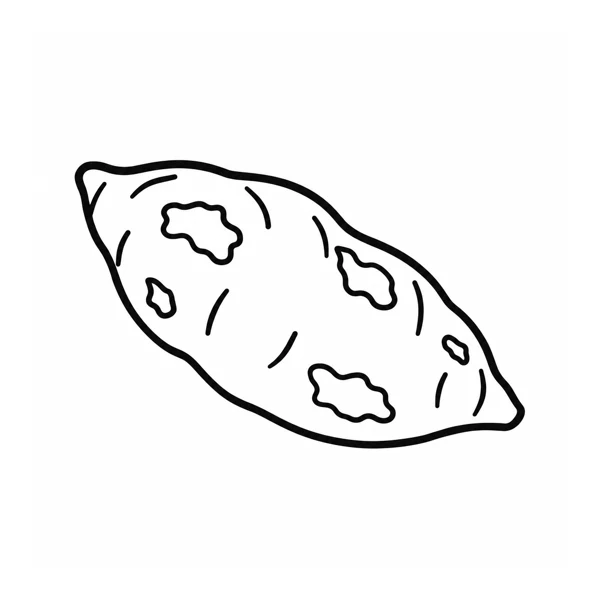
 Sweet Potato Scurf
At a glance
| Type | Fungus |
| Main cause | Monilochaetes infuscans |
| Worst conditions | Infected slips, heavy, damp soils high in organic matter, and replanting in the same ground |
Recent community discussions
No one has talked about Sweet Potato Scurf yet. Be the first.
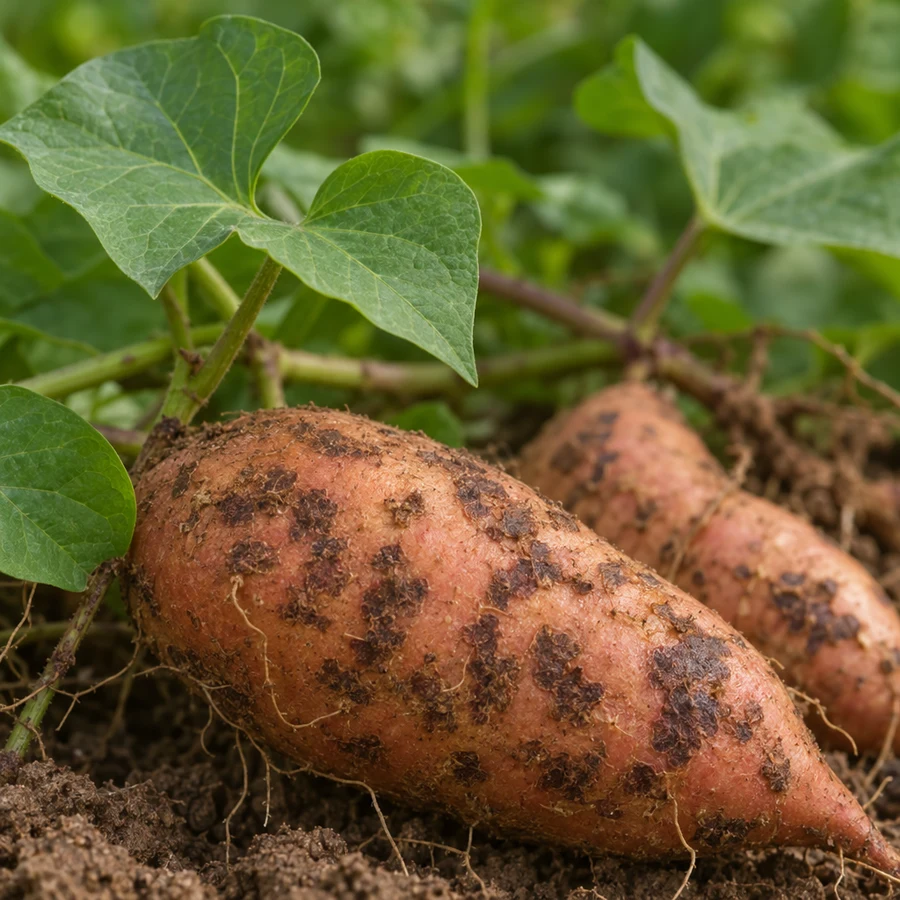
Scurf is mostly a skin problem. If you've dug up sweet potatoes (or sweetpotatoes, as growers and researchers often spell it) with dark spots on the skin, scurf is a likely cause. It stains the outside of the roots but doesn't rot the flesh. It can, though, make roots lose moisture and shrivel faster in storage.
Are sweet potatoes with scurf safe to eat? Yes. The fungus lives only in the skin, and extension services agree it doesn't change the eating quality. Peel off the stained skin and cook them as usual. They don't store as well, so eat the scurfy ones first.
Signs
- Brown to black patches or blotches on the skin, sometimes joining into large dark areas.
- Stains stay on the surface; peel them and the flesh underneath is normal.
- The color depends on the skin: on red-skinned roots the patches look nearly black, on copper-skinned roots they're brown, and some show a purplish or grayish tint.
- Stored roots with lots of scurf can dry out and shrink.
Sweet potato black rot also gives dark spots, but its spots are sunken with a black center, and the flesh underneath is discolored and bitter. If the dark color goes past the skin, read that page instead.
Cause and Spread
The fungus is carried mostly on the roots used to grow slips, and from there onto the new roots growing in the soil. It can also stay in the soil for one to three years, longer in heavy, damp soil with lots of organic matter. It only infects the skin of roots that grow in contact with it. Apart from sweet potatoes, the only other plants it's known to live on are morning glories, its close cousins, so weedy morning glory around the patch can keep it going.
Prevention
- Use certified, disease-free slips, or grow slips only from clean, unstained roots.
- Cut slips an inch or more above the soil line so the base, where scurf lives, stays behind.
- Rotate: don't grow sweet potatoes in the same spot for three to four years.
- Grow in light, well-drained soil rather than heavy, wet ground.
- Avoid digging in large amounts of manure right before planting sweet potatoes, and don't manure the same patch every year.
- Pull wild morning glory vines from in and around the sweet potato bed.
- Set clean slips out once the soil is warm after your last frost. The Sweet Potatoes page shows when that is where you live, and Plant Sweet Potato Slips walks through planting them.
Organic Treatment
- No treatment works once scurf is on the roots.
- Peel scurfy roots and eat them as normal.
- Don't use scurfy roots to grow next year's slips.
- No resistant varieties are available, so prevention is the whole plan.
When to Pull the Plant
You don't need to pull plants for scurf. Harvest as normal, eat the stained roots first, and keep clean roots for storage and for growing next year's slips. Dig and Cure Sweet Potatoes covers getting the clean ones ready to keep.
Sources
- NC State Extension, Sweetpotato Scurf: https://content.ces.ncsu.edu/sweetpotato-scurf
- NC State Plant Pathology Extension, How to Identify and Manage Sweetpotato Scurf Caused by Monilochaetes infuscans: https://plantpathology.ces.ncsu.edu/news/how-to-identify-and-manage-sweeetpotato-scurf-caused-by-monilochaetes-infuscans/
- University of Maryland Extension, Scurf on Sweet Potatoes: https://extension.umd.edu/resource/scurf-sweet-potatoes
- Penn State Extension, Scurf on Sweet Potato: https://extension.psu.edu/scurf-on-sweet-potato
- Tamil Nadu Agricultural University (TNAU) Agritech Portal, Sweet Potato Diseases: https://agritech.tnau.ac.in/crop_protection/sweet%20potato_diseases_4.html
Plants it affects 1
Recent community discussions
No one has talked about Sweet Potato Scurf yet. Be the first.



