
 Fusarium Wilt
At a glance
| Type | Fungus |
| Main cause | Fusarium oxysporum, which has many plant-specific forms (e.g. f. sp. lycopersici on tomato, f. sp. batatas on sweet potato, f. sp. basilici on basil) |
| Worst conditions | Warm soil; sandy or light soils; plants stressed by root damage; root-knot nematodes, which can break down a plant's resistance |
Recent community discussions
No one has talked about Fusarium Wilt yet. Be the first.
If your tomato's lower leaves are yellowing on one side of the plant, or a basil plant wilts suddenly in warm weather, Fusarium wilt is one of the first things to check for. It's a soil fungus that blocks a plant's water pipes from the inside. Nothing cures an infected plant, but resistant varieties, clean seed and moving crops around keep it from settling into your beds.
Signs
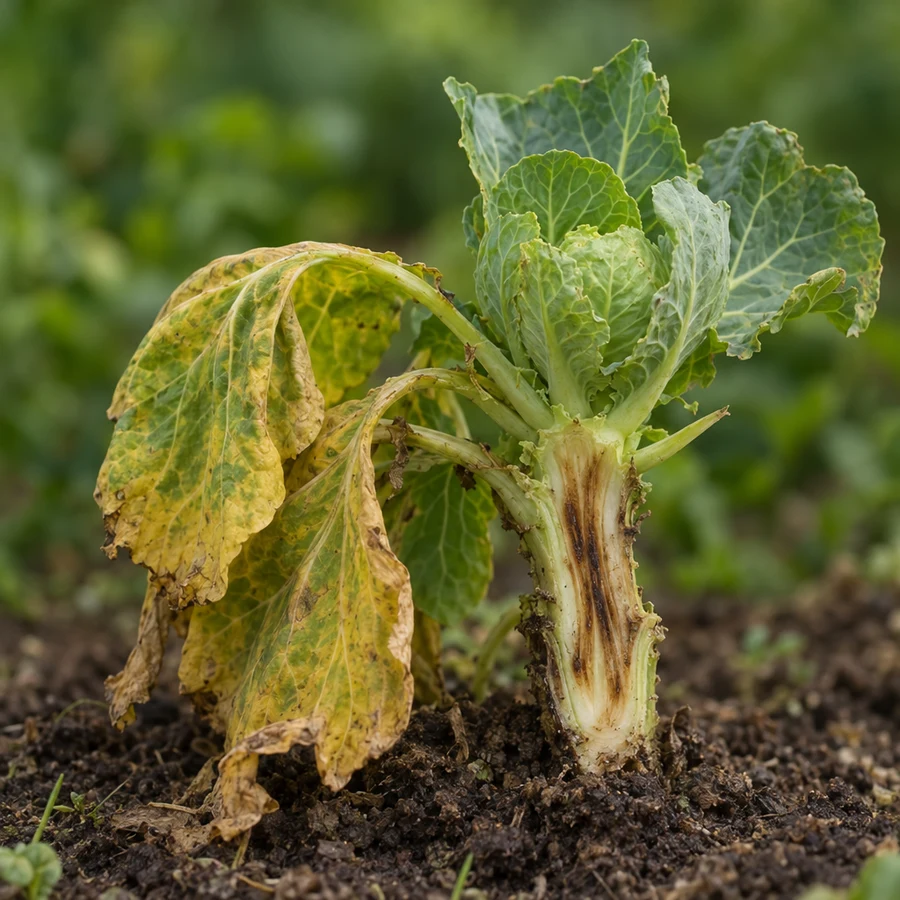
- Lower leaves turn yellow, often on one side of the plant or one side of a leaf first, then wilt and die. On tomatoes this one-sided yellowing is often the first clue.
- Plants wilt in the heat of the day and may recover at night at first, then stop recovering.
- Cut the stem near the soil: the water-carrying tissue inside is stained brown.
- Growth is stunted and yields drop.
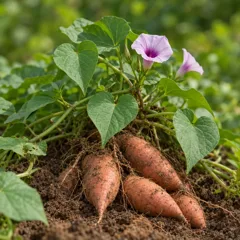
- On sweet potatoes, the young leaves at the vine tips turn yellow, the older leaves wilt and drop, and the stem at soil level can take on a faint bluish tint (Texas A&M).
- On basil, young plants wilt and stems may show brown streaks inside, often soon after the weather warms up.
Cause and Spread
The fungus lives in the soil and can stay there for years, up to about ten without a host plant (NC State). It enters through the roots and blocks the plant's water-carrying vessels. It travels in infected soil (on tools, boots and in water), on infected transplants and slips, and on some seed, basil seed especially. Each form only attacks its own kind of plant, so the strain that wilts your tomatoes won't move on to your basil. Some common weeds, such as pigweed and crabgrass, can carry the tomato form between crops (NC State).
Prevention
- Choose resistant varieties. On tomato labels, "F" means Fusarium wilt resistance (often shown as VFN with Verticillium and nematodes). A single "F" usually means race 1 only; "FF" covers races 1 and 2, and "FFF" all three known races. If Fusarium has turned up in your garden before, look for FF or FFF (UC Master Gardeners, NC State). Our post on choosing disease-resistant varieties explains how to read these letters.
- Rotate: keep the same crop family out of an infected bed for several years, 3 to 5 for tomatoes (NC State). Two-year rotations help with sweet potatoes, though the fungus can persist longer (Connecticut Agricultural Experiment Station). Keep the bed weeded while you rest it. Our crop rotation plan shows how to map it out.
- Buy healthy transplants, certified sweet potato slips and tested seed. For basil, buy seed that's been tested for Fusarium and look for resistant varieties; keep basil and its mint-family cousins out of an infected bed for at least 2 to 3 years (University of Maryland Extension).
- Clean tools and boots after working in an infected bed. Here's how to clean and store garden tools.
- Grow in containers with fresh potting mix, or in raised beds filled with clean soil, if the garden soil is known to be infected.
Organic Treatment
There's no fungicide for home gardeners, and none cures a plant that's already infected (NC State). Treatment comes down to removing sick plants and preventing the next round.
When to Pull the Plant
Pull wilting plants as soon as you're sure (brown streaks inside the stem), including the roots, and put them in the trash, not the compost. Don't replant the same crop in that spot; choose resistant varieties next time. Our fall clean-up guide for diseased plants covers what to do with the rest of the bed.
Sources
- NC State Extension, Fusarium wilt of tomato: content.ces.ncsu.edu/fusarium-wilt-of-tomato
- Iowa State University Extension, Managing tomato diseases: yardandgarden.extension.iastate.edu
- UC Master Gardeners, Tomato disease resistance codes: ucanr.edu/node/165983
- Sweet potato: Texas A&M Plant Disease Handbook, Sweet potato: plantdiseasehandbook.tamu.edu
- Sweet potato: Connecticut Agricultural Experiment Station, Sweet potato: portal.ct.gov/caes
- Basil: UF/IFAS Extension, PP113: edis.ifas.ufl.edu/publication/PP113
- Basil: University of Maryland Extension, Fusarium wilt of basil: extension.umd.edu
- Cabbage: UC IPM, Fusarium wilt (yellows) of cabbage: ipm.ucanr.edu
- Cabbage: Cornell Vegetable Program, Fusarium yellows of cabbage and related crops: vegetables.cornell.edu
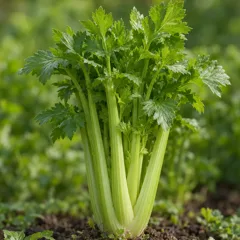
- Celery: UC IPM Celery Pest Management Guidelines, Fusarium yellows: ipm.ucanr.edu
- Aster (the known host is China aster, Callistephus chinensis): UC IPM, Aster diseases: ipm.ucanr.edu
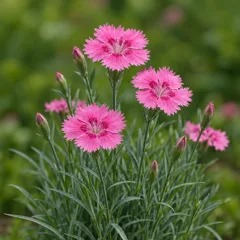
- Dianthus and Sweet William: UC IPM Floriculture Guidelines, Sweet William: ipm.ucanr.edu
- Dianthus and Sweet William: Penn State Extension, Carnation (Dianthus) diseases: extension.psu.edu
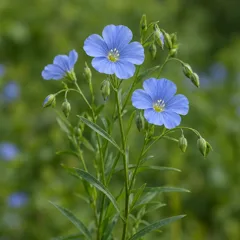
- Flax: Pacific Northwest Plant Disease Management Handbook, Flax wilt: pnwhandbooks.org
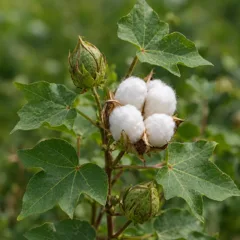
- Cotton: Texas A&M AgriLife Extension, Diagnosis and management of vascular wilts in cotton: cotton.tamu.edu
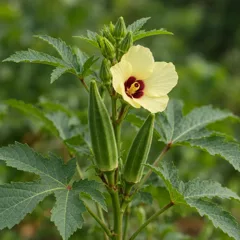
- Okra: University of Arkansas Extension, Okra wilt: uaex.uada.edu
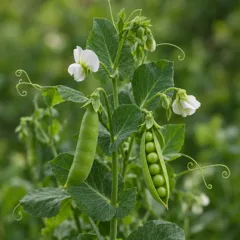
- Peas: NDSU Pea Disease Diagnostic Series: ag.ndsu.edu
- Tomatillo: Latham, O'Donnell and Busman (2017), Fusarium oxysporum f. sp. physalis, a novel forma specialis causing vascular wilt of tomatillo in California, Plant Disease: TreeBASE record
Plants it affects 14


Recent community discussions
No one has talked about Fusarium Wilt yet. Be the first.



