
 Sweet Potato Black Rot
At a glance
| Type | Fungus |
| Main cause | Ceratocystis fimbriata |
| Worst conditions | Infected slips or seed roots, warm moist soil, bruised roots, and storage in warm, damp conditions |
Recent community discussions
No one has talked about Sweet Potato Black Rot yet. Be the first.
Black rot is a serious disease of sweet potatoes, both in the field and in storage. It leaves dark, sunken patches on the roots and makes them taste bitter even in parts that look fine. It isn't the same disease as black rot of grapes or cabbage.
Signs
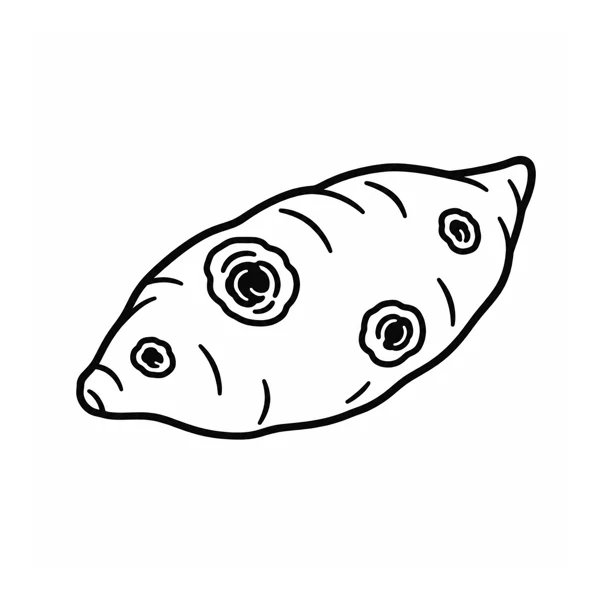
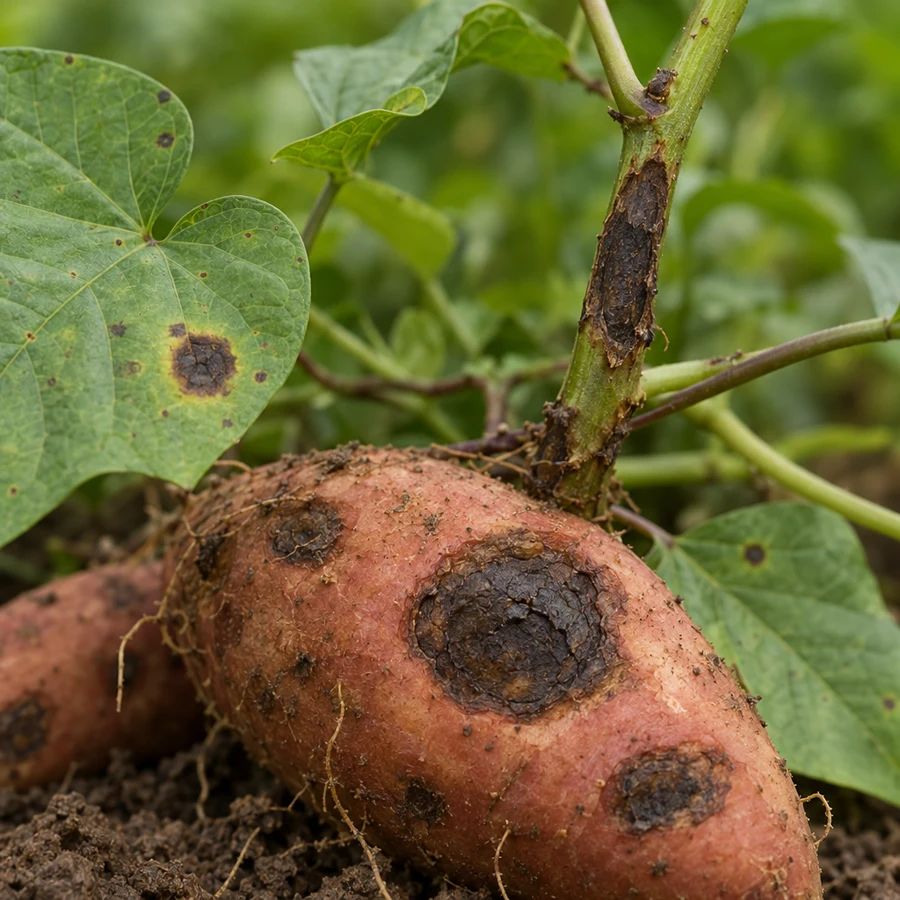
- Round, dark brown to black, slightly sunken spots on the roots. They start small and keep getting bigger in storage.
- The rot stays firm, dry and fairly shallow, but the flesh underneath turns greenish-black.
- Cooked roots taste bitter, even around the spots.
- In damp storage, tiny black bristly bumps and a little white fuzz can grow on the spots.
- On slips and young plants: black, sunken patches on the stem below ground, and plants that turn yellow or stay stunted.
Scurf also leaves dark marks, but it only stains the skin. Black rot is a firm, sunken rot that goes into the root. If your marks look like a surface stain, check the sweet potato scurf page.
Can you eat sweet potatoes with black spots? It's best not to. The bitter taste reaches into the flesh around the spot, so cutting the spot out won't reliably save the root. Throw spotted roots away.
Cause and Spread
The fungus usually arrives on infected slips or on the roots used to grow them. It can also live in soil and plant debris for a few years, and it spreads on tools, crates and storage bins, and by some insects. Wounds at harvest let it into the roots, and in storage it keeps spreading from root to root.
Prevention
- Start with certified, disease-free slips, or grow your own only from clean, healthy-looking roots. Our guide to planting sweet potato slips walks through it.
- Set clean slips out once the soil has warmed up. To find the right time for your area, look up your zone on the planting calendar by zone.
- Cut slips off above the soil line instead of pulling them, so any infection on the lower stem stays behind.
- Rotate: don't grow sweet potatoes in the same spot for three to four years. Our crop rotation plan can help you map it out.
- Dig carefully so you don't cut or bruise the roots.
- Cure roots properly (warm and humid for about a week). Then keep them cool (about 55 to 60°F) and fairly humid, and never put them in the fridge or anywhere colder than 55°F. The step-by-step is in dig and cure sweet potatoes.
- Look over stored roots now and then, as in check stored harvests in winter, and take out any with spots.
- Clean crates, bins and tools between seasons (see clean and store garden tools).
Organic Treatment
- Once a root is infected, nothing will cure it.
- Sort roots at harvest and again through storage, and throw away any with black spots.
- Don't grow next year's slips from spotted roots.
- Commercial growers treat seed roots, slips and packed roots with fungicides to protect them. None of these cures a rot that has already started, and there's no organic or home-garden spray for black rot. In a home garden, clean slips and good habits are what keep it out.
When to Pull the Plant
Pull up young plants with blackened stems below ground and throw them away. At harvest, don't store or eat any root with spots. Throw them out, because they taste bitter and the rot spreads in storage. Our fall clean-up guide covers getting rid of diseased plants safely.
Sources
- NC State Extension, Black Rot of Sweetpotato: https://content.ces.ncsu.edu/black-rot-of-sweetpotato
- NC State Plant Pathology Extension, How to Control Black Rot of Sweetpotato: https://plantpathology.ces.ncsu.edu/news/how-to-control-black-rot-of-sweetpotato/
- University of Arkansas Division of Agriculture, Plant Health Clinic Newsletter Issue 25, 2020: https://www.uaex.uada.edu/yard-garden/plant-health-clinic/docs/2020_Plant_Health_Clinic_Newsletters/Plant%20Health%20Clinic%20Newsletter-Issue%2025%202020.pdf
- Penn State Extension, Sweetpotato Curing and Storage: https://extension.psu.edu/sweetpotato-curing-and-storage
- Washington State University Extension, Sweetpotato Guide: Curing and Storage: https://wpcdn.web.wsu.edu/extension/uploads/sites/25/2025/06/Sweetpotato-Guide-Curing-and-Storage.pdf
Plants it affects 1
Recent community discussions
No one has talked about Sweet Potato Black Rot yet. Be the first.
Products that take care of Sweet Potato Black Rot
 Copper FungicideOrganic spray that protects leaves from blights, leaf spots and bacterial diseases.See it →
 Biofungicide (Bacillus subtilis)Friendly bacteria that crowd out mildews, gray mold and leaf spots.See it →
 Soaker HoseWaters the roots slowly, not the leaves: less disease, less water, less work.See it →
