
Asparagus
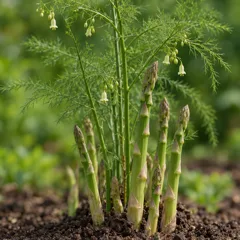
Asparagus is the one vegetable you plant for the next twenty years. It takes patience at the start, since you wait two or three years before the first real harvest, but after that a well-kept bed sends up fresh spears every spring with very little work. Spears cut minutes before cooking are sweeter and more tender than anything from a store.
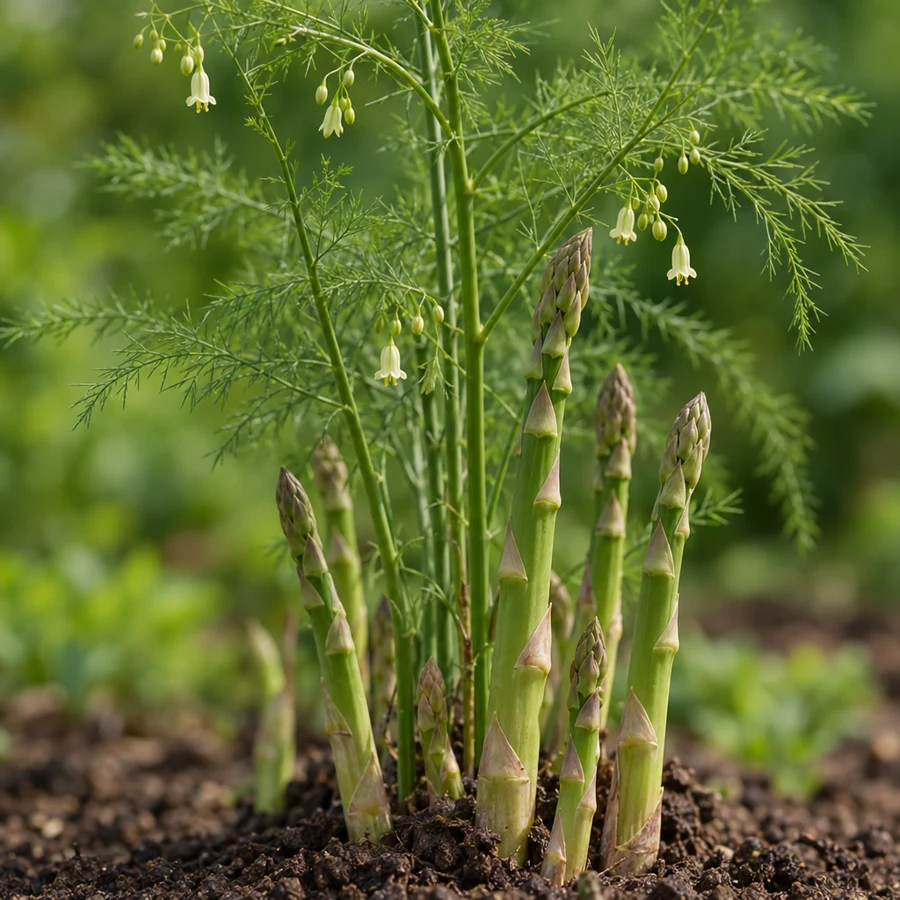
The spears are young shoots. Any you don't pick grow into tall, feathery ferns, 4 to 6 feet high, that feed the roots for next year. Plants are either male or female. Female plants set small red berries, and most modern varieties are all-male, which crop more heavily.
Pick a spot you won't need for anything else, because asparagus doesn't like to be moved once it settles in. Like rhubarb, it belongs at the edge of the vegetable garden where it won't be dug up by mistake.
Recent community discussions
No one has talked about Asparagus yet. Be the first.
At a glance
| Plant type | Perennial vegetable |
| Botanical name | Asparagus officinalis |
| Annual or perennial | Hardy perennial; a bed can crop for 15 to 20 years or more |
| Sun | Full sun, 8 hours or more |
| Water | About 1 inch per week, especially in the first two years |
| Spacing | 12 to 18 inches apart, rows 3 to 5 feet apart |
| Planting depth | Crowns in a trench 6 to 8 inches deep (up to 10 to 12 inches in sandy soil), covered gradually; seed 1 inch deep |
| Days to germinate | 10 to 21 from seed; crowns send up spears 2 to 3 weeks after planting |
| Days to maturity | 2 to 3 years from crowns to the first full harvest (3 years or more from seed) |
| Best USDA zones | 3 to 8; also 9 and 10 in dry-winter areas with warm-climate varieties |
| Soil pH | 6.5 to 7.0 (6.0 to 7.5 is tolerated) |
Is it asparagus weather where you are? See everything to plant this month or read your zone notes.

Diseases
A little history
Wild asparagus grows around the Mediterranean and across parts of Europe and western Asia, often on sandy coasts and riverbanks. The ancient Greeks gathered it, and the Romans grew it on purpose: the Roman writer Cato the Elder gave instructions for an asparagus bed in his farming handbook more than 2,000 years ago. It was grown much less in much of Europe after Rome, was a prized garden crop in France and England again by the 1600s, and was brought to North America by European settlers. Today it is grown commercially from California and Washington to Ontario, England, the Netherlands, Peru and Victoria in Australia.
When to sow in your zone
Most people plant one-year-old crowns rather than seed. Crowns save a full year and are much more reliable.
Spring (zones 3 to 8): Plant dormant crowns in early spring, once the soil can be worked and has warmed to about 50°F. That is usually from about 4 weeks before your last frost to a couple of weeks after it, while the crowns are still dormant. In the northern US and Canada this often means late April or May. In the UK and Ireland, March and April are the usual months, and March is ideal.
Starting from seed: Sow indoors about 10 to 12 weeks before your last frost, at around 75°F, and set the young plants out after the last frost. Or sow outdoors in a nursery bed in spring and move the young crowns to their permanent bed the next spring.
Mild winters (zones 9 and 10): Plant crowns in winter, from about December to February (into March in zone 9), while they're dormant. In Australia that means winter, June to August, in temperate and subtropical gardens; colder inland and highland areas plant toward late winter and early spring. Asparagus needs a rest each year, from winter cold or a dry spell, so it does poorly in the humid tropics.
Growing it, step by step
Choosing crowns
Buy firm, healthy one-year-old crowns from a nursery or seed company. All-male varieties give more spears and don't scatter self-sown seedlings. Plant crowns soon after they arrive, and keep them cool and slightly damp until then.
Preparing the bed
Asparagus will be in the same place for many years, so take time over the bed. Choose full sun and loose, well-drained soil, and clear out perennial weeds like quackgrass and bindweed completely first. Work in plenty of compost. Raised beds are a good answer to heavy clay or wet ground, since standing water rots the crowns. Test the soil if you can and add lime if it is acidic, because asparagus dislikes acid soil.
Planting
Dig a trench 12 to 18 inches wide and 6 to 8 inches deep (10 to 12 inches in very sandy soil). Make a low ridge of soil down the middle, set the crowns on it 12 to 18 inches apart, and spread the roots out like the legs of a spider. Cover with 2 to 3 inches of soil. As the shoots grow through the summer, keep adding soil until the trench is level with the ground. Don't bury the young shoots all at once.
Growing from seed
Soak seed overnight, then sow 1 inch deep. Germination is slow, up to three weeks. Seed-grown beds include both male and female plants. You can remove the females once they show berries, if you want an all-male bed.
Growing in a container
Asparagus isn't a natural pot plant, but a deep container of at least 15 to 20 gallons can hold one or two crowns for a few years. Feed and water a potted plant more often than one in the ground, and expect a smaller harvest.
Keeping it happy
- The first two years: Don't harvest in the first year after planting crowns. Let every spear grow into fern so the roots can build up their reserves.
- Watering: Water deeply in dry spells, especially in the first two years and while the ferns are growing in summer.
- Weeding: Weeds are the main reason asparagus beds fail. Pull them by hand or hoe very shallowly, because the crowns sit near the surface.
- Mulch: A few inches of straw, shredded leaves or compost keeps weeds down and the soil moist.
- Feeding: Give a balanced fertilizer or a layer of compost in early spring, before spears come up, or right after the harvest ends. Avoid "weed and feed" lawn products near the bed.
- Ferns: Leave the ferns standing all summer. In late fall, once they have turned yellow or brown, cut them to the ground. In cold areas some gardeners leave them over winter to catch snow, then cut them in early spring.
- Late frost: A frost after the spears come up can turn them brown or bend them. Cut off damaged spears; new ones will follow.
Trouble in the bed
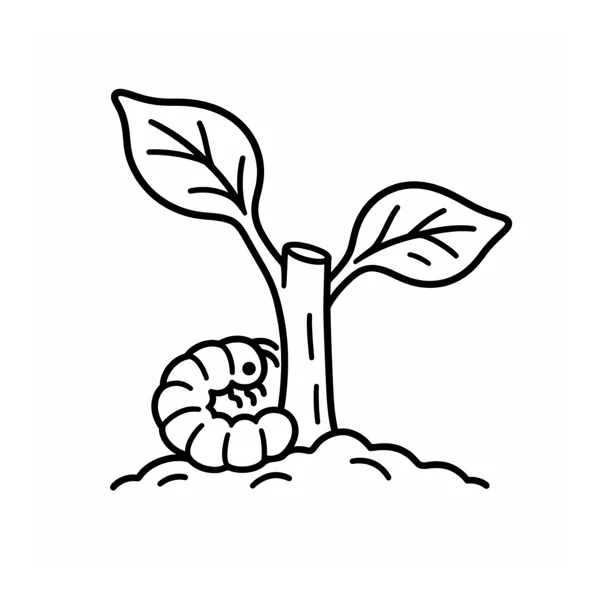
- Asparagus beetles: Small beetles and their grayish larvae chew spears and strip the ferns in summer. Hand-pick them, knock larvae off the ferns, and clean up old stems in fall where adults spend the winter.
- Cutworms: These cut spears off at the soil line or leave them crooked as they come up in spring.
- Aphids: The asparagus aphid makes ferns stunted and bushy. A hard spray of water and the beneficial insects in a healthy garden usually keep them in check.
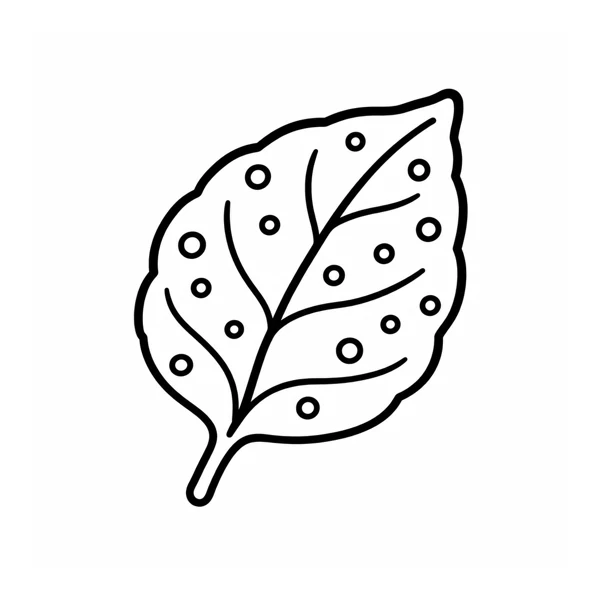
- Rust: Orange, then black, powdery spots on the ferns in summer. Grow resistant varieties, give the plants room for air, and remove old ferns at the end of the season.
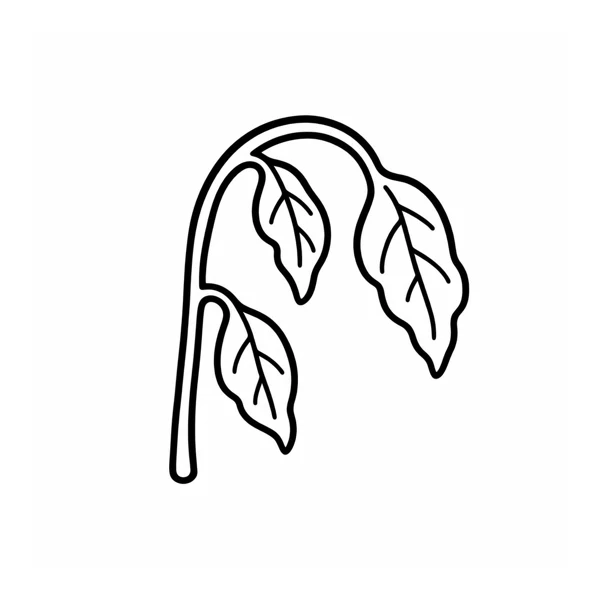
- Fusarium crown and root rot: Plants turn yellow, weaken and die out over time. Plant in well-drained soil, start with healthy crowns, and don't replant asparagus where an old bed died out.
Good neighbors



Good: Tomatoes are the classic partner, and parsley, basil and marigolds grow happily alongside once the ferns are up. These pairings come from long garden tradition rather than hard research, but they make good use of the space.
Avoid: Anything that needs regular digging close to the crowns, like potatoes and other root crops. Don't plant asparagus where potatoes or carrots have grown recently, as they can carry violet root rot, which also attacks asparagus.
Seeds that grow well in your area in November
Affiliate links — shopping through these helps keep Evening Vines free. Purple Coneflower
 Stinging Nettle
 Smooth Blue Aster
 Polka Dot Mix
Varieties worth growing
Cold winters and short seasons (northern US, Canada):
- Guelph Millennium: An all-male variety bred at the University of Guelph in Ontario. Vigorous, very cold-hardy and heavy-cropping. Also an RHS Award of Garden Merit winner.
- Mary Washington: An old, open-pollinated favorite with good cold tolerance. It crops less than the all-male types, but it is widely sold and dependable. Plants
- Jersey Knight: All-male with thick spears and good disease resistance. The Jersey types can be hurt in very cold winters without snow cover, and they are being phased out, so stock may be limited. Plants
Cool maritime summers (UK, Ireland, Pacific Northwest):
- Gijnlim: An early, all-male variety from the Netherlands with many medium spears. An RHS Award of Garden Merit winner.
- Backlim: All-male and later, so it extends the season. Also an Award of Garden Merit winner.
- Pacific 2000: Sweet, tender green spears from New Zealand with a fairly late season. Good eaten raw.
Hot summers and mild winters (southern US, California, Australia):
- Jersey Giant: All-male with large spears, and adapts well to the South.
- UC 157: A University of California hybrid bred for warm climates, widely grown in California and Australia.
- Atlas: A vigorous variety bred in California for hot regions.
Purple:
- Purple Passion: Sweet, purple spears that turn green when cooked. Crowns are a mix of male and female, and plants can take an extra year to settle in. Plants
Asparagus plants to buy
Affiliate links — shopping through these helps keep Evening Vines free.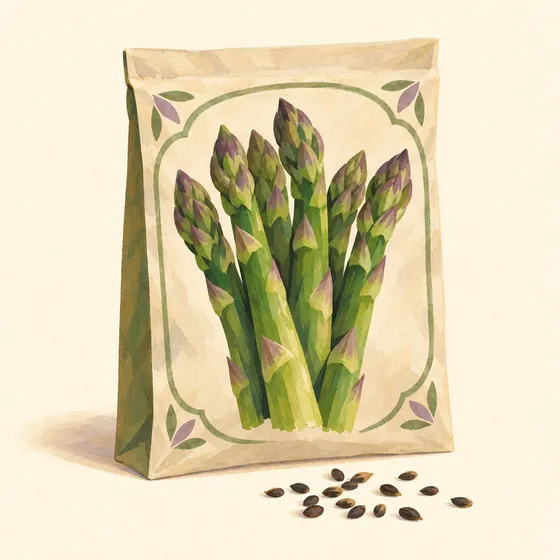 Mary Washington
Picking notes
In the second spring after planting crowns, pick lightly for about 2 weeks. Some growers wait until the third year, especially with slower varieties, and in the UK and Ireland the usual advice is to leave the bed uncut until the third spring. From the third year on, harvest for 6 to 8 weeks, then stop and let the rest grow into fern. In the northern US a common rule is to stop by about July 1.
Cut or snap spears when they are 6 to 8 inches tall, before the tips start to open. Cut just at or slightly below the soil, taking care not to damage spears that haven't come up yet. In warm weather spears grow fast, so check the bed every day or two. Stop for the year when most new spears come up thinner than a pencil. Keep cut spears upright in a little water in the fridge, or wrapped in a damp towel, and use them within a few days.
Saving seed for next year
Possible, but rarely worth it. Most garden asparagus is an all-male hybrid that makes no seed, and seed from female plants won't come true to a named hybrid. If you grow an open-pollinated variety like Mary Washington, let the red berries ripen on the female plants in fall, crush them, wash the black seeds clean and dry them. Expect three or more years from seed to a full harvest.
Caution: The red berries are not edible and can upset the stomach if eaten. Keep children and pets away from them.
From garden to table
Asparagus is low in calories and a good source of folate and vitamin K. USDA figures for raw asparagus are about 20 calories, 2 grams of fiber, about 50 micrograms of folate and about 40 micrograms of vitamin K per 100 grams. Roast or grill the spears with oil and salt, steam them, add them to eggs and pasta, or shave thin raw spears into salads. White asparagus is the same plant grown in the dark under mounded soil, so it never turns green.
Questions from the potting bench
Why do I have to wait so long for a harvest? The crowns need two seasons of fern growth to build up enough stored energy. Cutting too early weakens the bed for years to come.
Why are my spears so thin? Usually a young bed, cutting for too long last year, weeds, or too little feeding and water. Let the ferns grow freely this summer and the spears should thicken.
Can I grow asparagus in a warm climate? Yes, in places with a dry or cool season that lets the plants rest, such as California's valleys and much of southern Australia. Choose UC 157, Atlas or Jersey Giant. It struggles in humid, frost-free tropics where it never goes dormant.
What are the red berries on my plants? Those are female plants setting seed. The berries aren't edible. Many gardeners pull up female plants and seedlings so the bed stays all-male and productive.
Grower reports
How did Asparagus do in your garden? Members rate it and say which zone and month they planted, so everyone can see what works near them.
Recent community discussions
No one has talked about Asparagus yet. Be the first.
Plants to try
Affiliate links — shopping through these helps keep Evening Vines free.Essentials for Growing Asparagus
 Grow Bags
Breathable fabric pots: grow almost anything on a patio, balcony or driveway, and roots never circle.
See it →
 Seed Starting Tray
Reusable tray with a clear dome to give seeds a warm, humid start indoors.
See it →
 Garden Hand Tools
Trowel, transplanter and cultivator: the three tools you reach for most.
See it →
 Organic Fertilizer
Slow-release organic plant food for vegetable beds and containers.
See it →
 Watering Can
Long-spout can for gentle watering of seedlings and pots.
See it →
 Pruning Shears
Sharp bypass pruners for harvesting, deadheading and tidying.
See it →
