
Horseradish
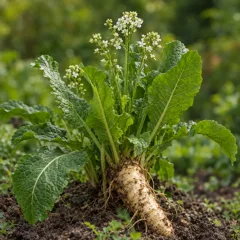
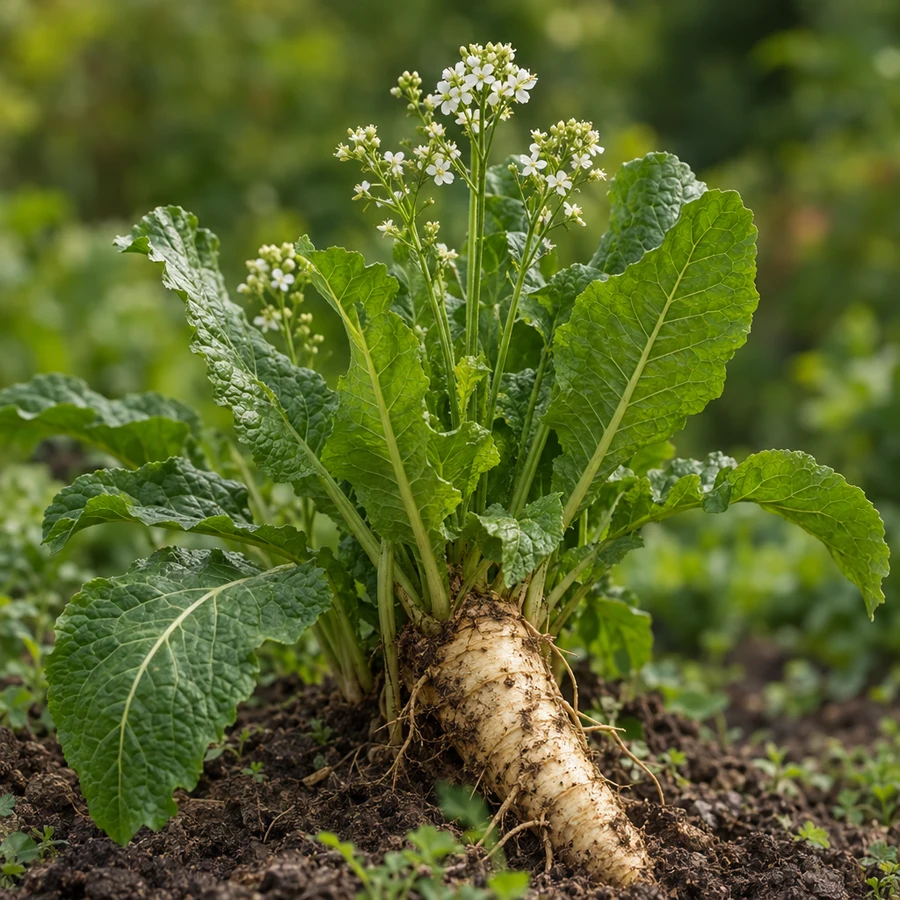
Horseradish is a big, leafy plant grown for its thick white root. Freshly grated, it has a clean, eye-watering heat that jarred sauce rarely matches. The plant makes a rosette of large, coarse leaves about 2 feet tall and needs almost no care once it settles in.
The catch is that it's hard to get rid of. Any small piece of root left in the soil grows into a new plant, so give it a corner of its own or a deep container. A family needs only four to six plants.
Horseradish belongs to the cabbage family, along with cabbage, kale and mustard greens. It is not the same plant as wasabi, though the two taste alike.
Recent community discussions
No one has talked about Horseradish yet. Be the first.
At a glance
| Plant type | Perennial root vegetable |
| Botanical name | Armoracia rusticana |
| Annual or perennial | Hardy perennial; often dug and replanted each year |
| Sun | Full sun; puts up with a little shade |
| Water | About 1 inch per week; soak deeply rather than sprinkle |
| Spacing | About 12 inches apart |
| Planting depth | Root cuttings at a 45-degree angle, top 2 to 3 inches below the soil |
| Days to germinate | Not grown from seed; start from root cuttings or crowns |
| Days to maturity | One growing season; dig in fall after a few frosts or the following spring |
| Best USDA zones | 3 to 9 (best roots where falls are cold) |
| Soil pH | 6.0 to 7.5 |
Is it horseradish weather where you are? See everything to plant this month or read your zone notes.
Pests to watch for

Diseases

A little history
Horseradish is native to southeastern Europe and western Asia, roughly from Ukraine into southern Russia. It was grown across central and northern Europe by the Middle Ages, as both a medicine and a condiment, and the German name Kren still appears in some variety names. European colonists brought it to North America. In the 1800s, German immigrants started growing it in the river-bottom soils around Collinsville, Illinois, and that area still grows a large share of the US crop.
When to sow in your zone
Horseradish goes in as root cuttings, not seed.
Spring (all zones): Plant as soon as the soil can be worked, a few weeks before your last frost. Cool spring soil suits it, and the roots have the whole season to fill out.
Fall (zones 5 to 9): You can also plant in fall, around your first frost and a month or more before the ground freezes. Side roots saved at harvest can go straight back in. The cuttings root in before winter and grow away early the next spring.
Mild and hot climates: Horseradish likes cool weather and grows best at about 60 to 65°F. It needs a cold fall to make big, hot roots. In zones 8 and 9 it still grows, but plant in late winter, and expect smaller, milder roots. In tropical and subtropical areas, such as northern Australia, it struggles and is best kept in a pot in light shade.
Your own dates: Pick your zone on the zones page to see when horseradish goes in where you live.
Growing it, step by step
Getting roots
Buy root cuttings (sometimes called sets or thongs) from a nursery or seed company in spring, or take them from a friend's patch. A root from the grocery store can grow too, if it's fresh and firm. Good cuttings are 8 to 12 inches long and about as thick as a pencil or a finger. Seed is rarely sold and takes much longer to make a usable root.
Telling top from bottom
Cut the top of each cutting square and the bottom at a slant. That way you'll know which end goes up. Planted upside down, it still grows, but the root comes out crooked.
Planting
Dig the soil 8 to 10 inches deep and work in compost. Lay each cutting at a 45-degree angle in a trench, with the square top end 2 to 3 inches below the surface, and point all the tops the same way. Space them 12 inches apart.
Soil and sun
Deep, loose, moist soil gives long, straight roots that are easy to dig. Heavy clay and stony ground give forked, gnarled roots. Full sun is best, though plants manage in light shade.
Keeping it in bounds
The easiest way is a large pot or tub at least 12 inches wide and deep, which also makes harvest simple. In the ground, some gardeners sink a big plastic tub with the bottom cut out. Digging most of the roots every year keeps a bed from spreading.
Keeping it happy
- Watering: About 1 inch a week, given as one deep soak. Pots dry out fast in summer and need more.
- Feeding: Compost at planting is usually enough. Too much nitrogen gives a lot of leaf and a branched, forked root.
- Weeds: Hoe between young plants until the leaves shade the ground.
- Straighter roots (optional): When the leaves are about a foot tall, pull the soil back from the top of the main root, rub off the small side roots, and keep the best two or three shoots. Cover it back up. Repeat 4 to 6 weeks later. This takes some work, but it gives a smoother, bigger root.
- Winter: Plants are very hardy and need no protection.
- Renewing: Old clumps left alone for years get woody and stringy. Dig the bed up every year or two and replant fresh cuttings.
Trouble in the bed
Horseradish is tough and rarely troubled. What does show up:
- Flea beetles: Tiny jumping beetles that pepper the leaves with small holes. Older plants shrug it off. Cover young plants with row cover in spring if damage is heavy.
- Imported cabbage worms: Green caterpillars that chew holes in the leaves, the same ones that eat cabbage. Hand-pick them or use a Bt spray.
- Root rot: The main problem in soggy soil. Plant in well-drained ground, don't overwater, and move the planting to a new spot every 3 or 4 years.
- White rust and turnip mosaic virus: Commercial growers worry about these more than home gardeners. Start with clean, healthy cuttings, and pull out any plants with mottled, twisted leaves.
Good neighbors


Grows happily nearby: Many gardeners keep a clump of horseradish at the edge of the potato patch. That's an old tradition rather than a tested benefit, but horseradish does sit well in a sunny, out-of-the-way corner beside other perennial crops.
Keep apart: Don't plant it in the middle of a vegetable bed you dig and rotate each year, because stray root bits will pop up for years. It also shares flea beetles and cabbage worms with cabbage, kale, broccoli and other cabbage-family crops, so a patch right beside them can keep those pests close.
Seeds that grow well in your area in November
Affiliate links — shopping through these helps keep Evening Vines free. ColumbineSeeds
 Moonbeam
 Foxglove Mix
 Rocket Larkspur
Varieties worth growing
Most horseradish is sold simply as "horseradish," with no variety name. When named types are offered, these are the ones home gardeners find:
- Maliner Kren: An old German type with big, vigorous roots and a strong bite. A good all-round choice, including cold winters in Canada and the northern US.
- Bohemian (New Bohemian): Narrower, smoother leaves. Better resistance to white rust and mosaic virus, though the roots can be a little smaller. Useful in humid summers.
- Variegata: Leaves splashed with cream. Less vigorous and less likely to spread, and it takes part shade. Handy in small gardens and pots, including the cool, damp summers of the UK and Ireland.
All of them are fully hardy and grow well in cold-winter places. In hot or subtropical areas, any type will make smaller roots, so a pot in afternoon shade is the best bet.
Horseradish plants to buy
Affiliate links — shopping through these helps keep Evening Vines free.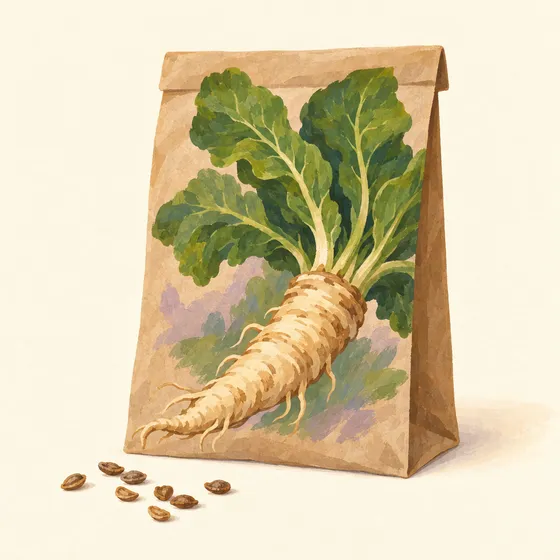 HorseradishPlants
Picking notes
The best time to dig is late fall, after a few frosts have killed back the leaves, because the cold sharpens the flavor. You can also dig in early spring before new growth starts. Spring-planted cuttings are usually ready that fall or the next spring. Use a fork to loosen the soil well around the clump and lift the whole thing. Keep the largest roots for the kitchen, and save the side roots that are about 8 inches long for replanting.
In a pot, tip the plant out, take up to half the roots, and replant the rest in fresh potting mix. Young leaves can be picked lightly in spring and early summer.
To store, trim off the leaves and keep whole roots in a plastic bag in the refrigerator, or packed in damp sand somewhere cold and dark (32 to 40°F). Stored this way, they keep their flavor for up to 3 months.
Saving seed for next year
Horseradish rarely makes good seed, and it isn't grown that way. Save root cuttings instead. At harvest, keep pencil-thick side roots about 8 inches long, cut the top square and the bottom slanted, and store them in damp sand in a cool place until spring planting. Each one grows a plant just like its parent.
From garden to table
The root is grated fresh into a sauce for roast beef, smoked fish, oysters and sandwiches, and it is a key part of seafood cocktail sauce. The heat comes from mustard oils that form only when the cells are crushed, so a whole root barely smells at all. Grate it in a food processor near an open window, because the fumes sting the eyes and nose. Add white vinegar right away for a milder sauce, or wait about 3 minutes for a hotter one; the vinegar stops the heat from building. Use white or distilled vinegar, since cider vinegar can darken it. Grated horseradish keeps only a few weeks in the refrigerator.
Do not feed horseradish to livestock or pets. It can badly irritate an animal's stomach.
Questions from the potting bench
Will horseradish take over my garden? It can. Any piece of root left in the ground regrows. Grow it in a deep pot or a sunk tub, or in a spot you're happy to give it for good.
Why is my horseradish not hot? Roots dug in summer, roots grown in hot climates and old, woody roots are all milder. Dig in late fall after frost, and use it soon after grating.
Can I plant a horseradish root from the store? Yes, if it is firm and fresh. Plant it at an angle with the thicker top end just under the soil, in spring.
Can I grow horseradish in a pot? Yes. Use a pot at least 12 inches wide and deep. It's the tidiest way to grow it, and harvest is easy.
Grower reports
How did Horseradish do in your garden? Members rate it and say which zone and month they planted, so everyone can see what works near them.
Recent community discussions
No one has talked about Horseradish yet. Be the first.
Plants to try
Affiliate links — shopping through these helps keep Evening Vines free.Essentials for Growing Horseradish
 Grow Bags
Breathable fabric pots: grow almost anything on a patio, balcony or driveway, and roots never circle.
See it →
 Seed Starting Tray
Reusable tray with a clear dome to give seeds a warm, humid start indoors.
See it →
 Garden Hand Tools
Trowel, transplanter and cultivator: the three tools you reach for most.
See it →
 Organic Fertilizer
Slow-release organic plant food for vegetable beds and containers.
See it →
 Watering Can
Long-spout can for gentle watering of seedlings and pots.
See it →
 Pruning Shears
Sharp bypass pruners for harvesting, deadheading and tidying.
See it →
