
Kumquat
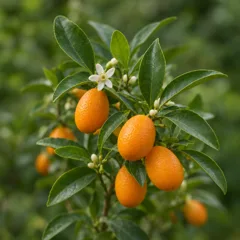
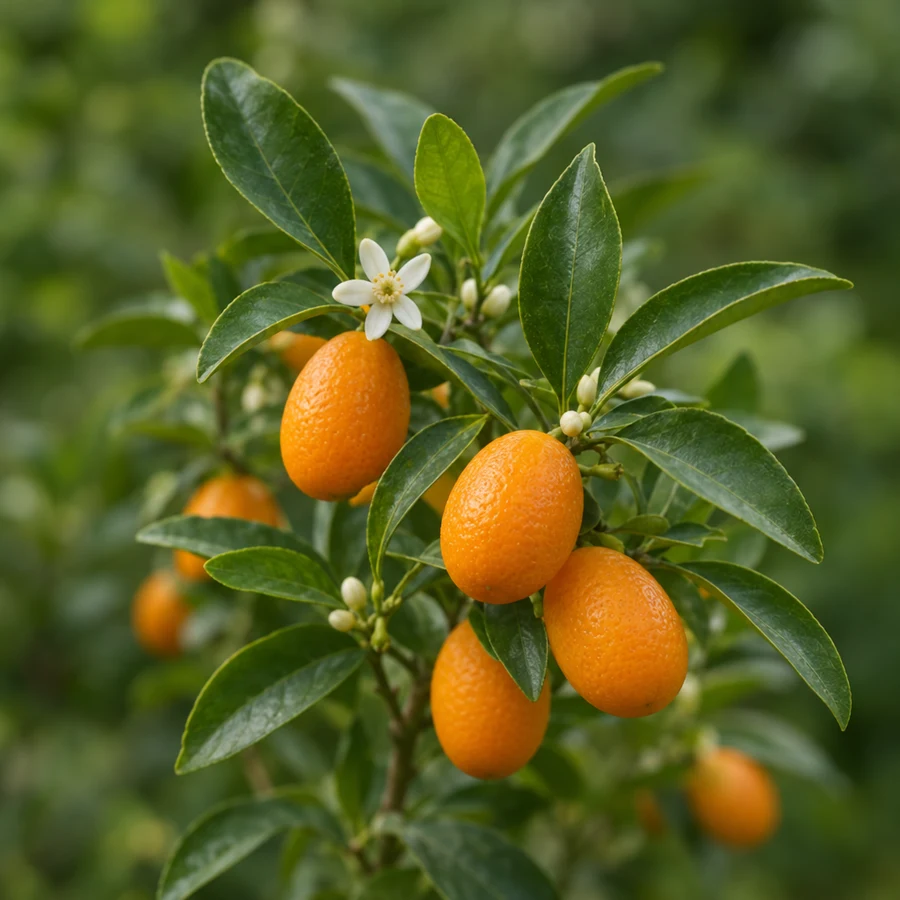
A kumquat is the citrus you eat whole, skin and all. The fruit is the size of a large olive, with a sweet, tender peel and sharp, juicy flesh, so each bite is sweet and sour at once. The tree is small, slow-growing and tidy, with glossy leaves, scented white flowers in summer, and bright orange fruit hanging on through winter.
Kumquats are the hardiest of the common citrus. A settled tree can take a few degrees below 20°F, which lets it grow outdoors in places too cold for a lemon or lime. One tree is enough, as kumquats are self-fruitful. In colder areas they're one of the easiest citrus to keep in a pot, because they stay small and fruit young.
Recent community discussions
No one has talked about Kumquat yet. Be the first.
At a glance
| Plant type | Fruit tree (small citrus tree or large shrub) |
| Botanical name | Citrus japonica (often still sold under the older name Fortunella) |
| Annual or perennial | Evergreen perennial |
| Sun | Full sun, 6 to 8 hours or more; takes light shade with a smaller crop |
| Water | Deep, regular watering; about 1 inch per week in the ground, more in pots |
| Spacing | 8 to 12 feet apart in the ground; one tree per pot |
| Planting depth | Same depth as in the nursery pot, with the graft union well above the soil |
| Days to germinate | Not grown from seed for fruit; start from a grafted nursery tree |
| Days to maturity | 1 to 3 years to first fruit for a grafted tree (often fruits in the pot it came in) |
| Best USDA zones | 9 to 11 (8b with a sheltered spot and winter cover; anywhere in a pot brought indoors) |
| Soil pH | 6.0 to 7.0 |
Is it kumquat weather where you are? See everything to plant this month or read your zone notes.
Pests to watch for




Diseases

A little history
Kumquats are native to southern China, and Chinese writers described them in the 1100s. The name comes from the Cantonese words for "golden orange." They reached Japan by the early 1700s. The plant collector Robert Fortune brought the Nagami kumquat to London in 1846, and for many years the group carried the genus name Fortunella in his honor. Kumquats were reported in North America around 1850, and the USDA brought the sweet Meiwa kumquat in from Japan in the early 1900s. Botanists now count kumquats as true citrus again, which is why the name Citrus japonica is used today.
When to sow in your zone
Kumquats go in as young grafted trees, not seeds.
Spring (all zones): Plant or pot up a tree after your last frost, once the soil has warmed. That gives it the whole summer to root before cool weather. In zone 8b and the colder end of zone 9, spring is the only window.
Early fall (zones 9 to 11): Where winters are mild, early fall planting works well too, while the soil is still warm.
Colder zones (8a and below): Grow your kumquat in a pot. It can sit outside from late spring to early fall and come into a bright, cool room, sunroom or greenhouse before the first frost.
Buying the tree
Buy a young grafted tree from a certified nursery near you. Citrus pests and diseases are under quarantine in several states, so check your state's citrus rules before you carry a tree, cuttings or fruit across state lines.
Growing it, step by step
Starting a New Tree
Kumquat seeds sprout, but seedlings grow slowly, can take many years to fruit, and may not match the parent. Buy a grafted tree instead. Trees grafted onto trifoliate orange (Poncirus trifoliata, or Flying Dragon for an extra dwarf) handle cold best and stay compact, which suits pots and cooler zones.
Picking the Spot
Give it the sunniest spot you have. A kumquat will grow in light shade, but sun brings more flowers and sweeter fruit. In zone 8b and cool-summer climates, plant against a south- or west-facing wall, which gives extra warmth and shelter from winter wind. Good drainage matters most. Like all citrus, kumquats rot in soggy ground.
Planting
Dig a hole as deep as the root ball and twice as wide. Set the tree at the same depth it grew in the pot, keeping the graft union (the knobbly bump low on the trunk) well above the soil. Firm the soil, make a ring of soil around the edge as a watering basin, and soak it well.
Growing in a Pot
Kumquats are made for pots. Start a young tree in a 5- to 7-gallon pot and move it up to 10 to 20 gallons as it grows. Use a free-draining, gritty potting mix and a pot with good holes. Don't let it sit in a saucer of water. For winter, bring it in before the first frost to a bright, cool room or greenhouse, ideally around 40°F to 55°F. A hot, dry living room tends to drop leaves. Move it back outside gradually once frosts are over.
Water
Water deeply and then let the top inch or two of soil dry before watering again. In the ground that's usually about an inch a week in summer. Potted trees dry out much faster and may need water every day or two in hot weather. In winter, water a resting potted tree sparingly.
Mulch
Spread 2 to 3 inches of mulch over the root zone to keep moisture even and weeds down. Keep it a hand's width from the trunk, since damp mulch against the bark invites rot.
Feeding
Feed with a citrus fertilizer from late winter through summer, following the label. Kumquats need nitrogen plus small amounts of iron, zinc and manganese, which citrus fertilizers include. Yellow leaves with green veins usually mean the tree is short of these. Potted trees need feeding more often, because watering washes nutrients out. Ease off by late summer in colder zones so new growth can firm up before winter.
Keeping it happy
Kumquats need very little pruning. Snip out dead or crossing twigs and shape the tree lightly after the main harvest, before new growth starts. Heavy pruning cuts the crop. Rub off any shoots that come from below the graft union, as they grow from the rootstock and won't give good fruit.
Kumquats go into a deep winter rest and don't push new growth during short warm spells, which is part of why they're hardier than other citrus. A settled tree can take roughly 18°F to 20°F, a little lower on trifoliate rootstock, but young trees and ripe fruit are damaged at higher temperatures. When a hard freeze is forecast, water the soil the day before, then cover the tree to the ground with frost cloth or an old sheet. Holiday lights (the old warm-bulb kind) under the cover add a little heat. Take the cover off once it warms up.
Trouble in the bed
- Scale and mealybugs: Sticky leaves, black sooty mold, or small bumps and white fluff on stems. Potted trees indoors get these most. Wipe them off, or spray with horticultural oil.
- Aphids: Clusters on soft new shoots in spring. A strong spray of water usually does it.
- Citrus leafminer: Silvery, winding trails in new leaves. It looks bad but rarely harms an established tree. Prune off the worst shoots and leave older leaves alone.
- Spider mites: Speckled, dull leaves, often on potted trees kept indoors in dry air. Mist the leaves or rinse them off.
- Root rot: Yellowing, wilting and leaf drop on a tree in wet soil. Plant high, keep mulch off the trunk, and never let a pot stand in water.
- Asian citrus psyllid and citrus greening: The psyllid spreads citrus greening, which has no cure. Check new growth often and report anything suspicious to your extension service.
- Fruit fly (Australia): Queensland and Mediterranean fruit flies can lay eggs in ripening fruit. Pick fruit promptly and pick up any that drops.
Kumquats are highly resistant to citrus canker, one of the few citrus that shrug it off.
Good neighbors




Good: Low flowers and herbs that bring in helpful insects without crowding the roots, like alyssum, calendula, nasturtiums and chives, planted at the edge of the root zone. Sweet alyssum in particular draws in tiny wasps and hoverflies that eat aphids and scale. In a pot, a ring of alyssum or thyme at the base works well.
Avoid: Thirsty, shallow-rooted plants and lawn grass right up to the trunk. Citrus roots run near the surface and don't like competition or digging. Keep a clear, mulched circle under the canopy.
Seeds that grow well in your area in November
Affiliate links — shopping through these helps keep Evening Vines free. Royal Mix
 Johnny Jump Up
 Organic Cat Grass
 Arugula Microgreens
Varieties worth growing
The main kumquats (zones 9 to 11, and pots everywhere):
- Nagami: The most common kumquat in the US. Oval fruit with a sweet peel and quite sour flesh. Great for marmalade, candying and preserving. Grows up to about 15 feet in the ground, much smaller in a pot.
- Meiwa: Round, larger fruit with a thick, sweet peel and few seeds. The sweetest kumquat and the best for eating fresh off the tree. A naturally small tree.
- Marumi: Small, round fruit with a spicy peel. A little thornier, and one of the more cold-tolerant kumquats.
- Fukushu (Changshou): Larger, bell-shaped fruit and broad leaves on a compact, nearly thornless tree. A good pot plant.
- Centennial Variegated: Leaves splashed with cream and young fruit striped green and yellow, turning orange as it ripens. A Nagami type, very ornamental on a patio.
Colder edges (zone 8b, and cooler parts of the Southeast and Gulf Coast):
- Marumi and Nagami on trifoliate orange rootstock are the usual picks for the coldest spots kumquats can grow outdoors. Plant against a warm wall and cover the tree in hard freezes.
Pots, cool summers and short seasons (UK, Ireland, Canada, northern US):
- Nagami and Fukushu both fruit well in a pot and stay compact. Grow them outside in a warm, sheltered spot through summer and bring them under glass or indoors for winter. In the UK and Ireland a frost-free greenhouse or conservatory is the reliable way to ripen fruit, and in most of Canada a kumquat lives indoors by a bright south window from fall to late spring.
Hot or subtropical areas (Florida, Gulf Coast, southern California, much of Australia):
- Meiwa gives the sweetest fruit where summers are long and hot. Nagami also does well. Kumquats grow outdoors in most of Australia apart from cold mountain areas, though young trees need frost protection.
Calamondin is a separate plant, a kumquat hybrid with small, sour fruit used like a lime. It's grown much the same way, but it's less cold-hardy than a true kumquat.
Picking notes
In the US, kumquats ripen from late fall through winter, roughly November to February, and the fruit holds well on the tree for weeks. In Australia, the crop comes in through winter. Pick when the fruit is fully orange and slightly soft. Clip each fruit with scissors, leaving a short stem or a leaf or two, rather than pulling, which can tear the skin. Kumquats keep a couple of days at room temperature or about two weeks in the fridge.
Saving seed for next year
Not practical for fruit. Kumquat seedlings are slow, may take many years to bear, and may not match the parent. Keep a variety you love by buying a grafted tree.
From garden to table
Kumquats are eaten peel and all, which makes them a good source of fiber. USDA figures for raw kumquats are about 71 calories, 6.5 grams of fiber and 44 mg of vitamin C per 100 grams (roughly five or six fruit). Roll a fruit gently between your fingers before eating to release the oils in the peel. Eat them fresh, slice them into salads, candy them in syrup, or cook them into marmalade or a sharp sauce for duck or pork. Citrus peel oils can upset cats and dogs, so keep fallen fruit and clippings away from pets.
Questions from the potting bench
Do I need two kumquat trees? No. Kumquats are self-fruitful, so one tree will crop on its own, even indoors.
Why doesn't my kumquat flower in spring like my other citrus? Kumquats bloom later, usually in early to midsummer once the weather is hot, and some years they flower more than once. The fruit then ripens through winter.
Can I grow a kumquat outside in zone 8? In zone 8b, often yes. Choose Nagami or Marumi on trifoliate rootstock, plant against a sunny wall, and cover it in hard freezes. In zone 8a and colder, a pot you can move into a bright, cool room is safer.
Why is my potted kumquat dropping leaves indoors? Usually too little light, warm dry air, or soggy roots. Give it the brightest spot you have, keep the room cool if you can, and let the top of the soil dry between waterings.
Grower reports
How did Kumquat do in your garden? Members rate it and say which zone and month they planted, so everyone can see what works near them.
Recent community discussions
No one has talked about Kumquat yet. Be the first.
Essentials for Growing Kumquat
 Grow Bags
Breathable fabric pots: grow almost anything on a patio, balcony or driveway, and roots never circle.
See it →
 Organic Fertilizer
Slow-release organic plant food for vegetable beds and containers.
See it →
 Pruning Shears
Sharp bypass pruners for harvesting, deadheading and tidying.
See it →
 Insect Netting
Fine mesh that keeps cabbage worms, flea beetles and birds off your crops, no sprays needed.
See it →
 Soaker Hose
Waters the roots slowly, not the leaves: less disease, less water, less work.
See it →
 Garden Hand Tools
Trowel, transplanter and cultivator: the three tools you reach for most.
See it →
