
Larkspur
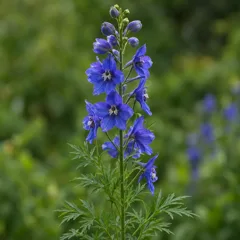
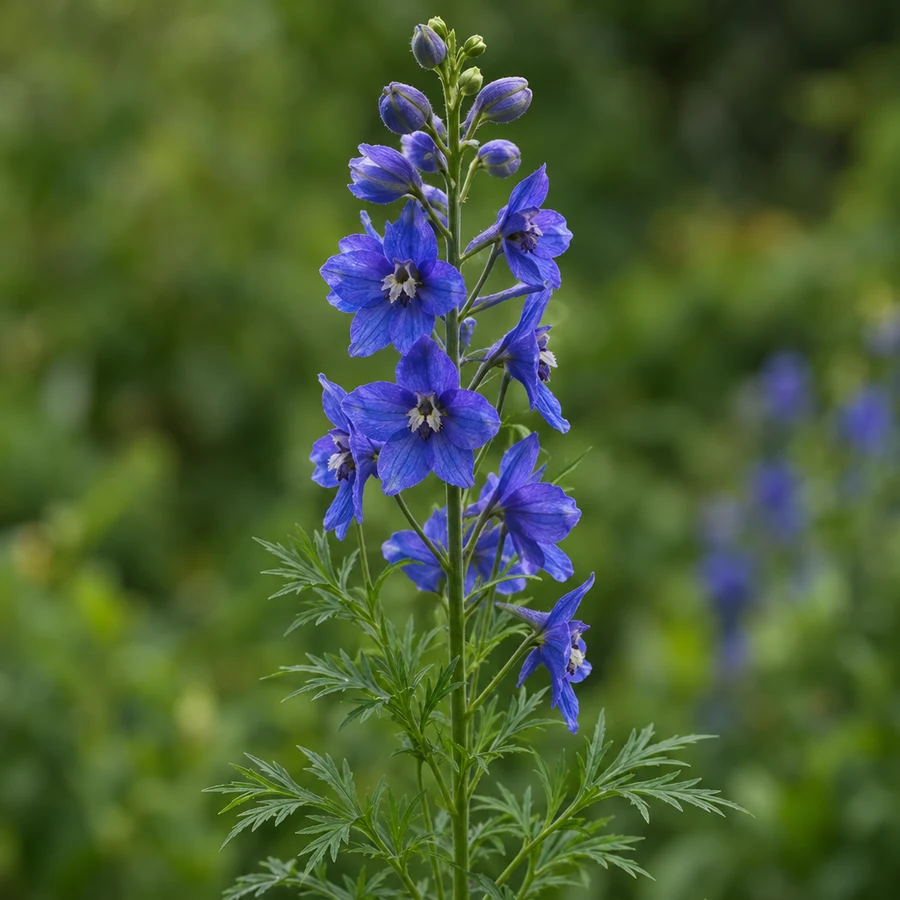
Picture a June border with spires of blue, violet, rose, and white standing waist-high above everything else. That's larkspur. It grows fast from a pinch of seed, likes the cold more than the heat, and gives you armloads of stems for the vase, plus some of the easiest flowers there are for drying. Its true home is the cool part of the year, so the trick with larkspur is sowing early, often months before you'd think to.
Recent community discussions
No one has talked about Larkspur yet. Be the first.
At a glance
| Plant type | Cool-season flower |
| Botanical name | Consolida ajacis (syn. Delphinium ajacis) |
| Annual or perennial | Hardy annual |
| Sun | Full sun to light shade |
| Water | Moderate, even moisture |
| Soil | Well-drained loam; tolerates chalk |
| Spacing | 8 to 12 inches |
| Planting depth | 1/8 to 1/4 inch (needs darkness to sprout) |
| Days to germinate | 14 to 21 in cool soil (about 50 to 55°F); fall-sown seed may wait until late winter |
| Days to bloom | Spring-sown: about 75 to 90 days. Fall-sown: blooms the next late spring, roughly 5 to 7 months after sowing |
| Bloom and harvest | Late spring (fall-sown) to early summer (spring-sown); a cold-season plant, not one for growing indoors |
| Best USDA zones | Spring sowing: zones 2 to 10. Fall sowing: zones 6 to 10 (zone 5b can try it) |
| Soil pH | 6.0 to 7.5 |
Is it larkspur weather where you are? See everything to plant this month or read your zone notes.

Best sown in fall (Zones 7–10) for spring blooms or in early spring in cooler Zones (3–6). Requires cold stratification for best germination.

Germinates in 14–28 days; 90–120 days; self-seeds.

Zones 2–9, June?Aug for spring planting; Apr?Jun for fall planting; indoors year-round possible.

Best in chalky or gravelly loam, pH 6.0–7.5. Prefers cooler, well-drained soils.
Pests to watch for






A little history
Larkspur comes from the Mediterranean and southern Europe, where it grows wild in fields and on dry slopes. It has been grown in European gardens for centuries, and gardeners still love it for cutting and drying today.
When to sow in your zone
Fall (zones 6 to 10): This is the best time, and it's time-sensitive right now. In zones 7 to 10, sow in October and November so the seedlings settle in over winter and come back as big, sturdy plants in spring. In zone 6, sow in late fall, close to the first hard freeze, so the seed sits still all winter and sprouts in early spring. Zone 5b gardeners can try a late-fall sowing too, but it's a gamble.
Spring (all zones, 2 to 10): Sow straight into the bed as soon as you can work the soil, several weeks before your last frost. The cooler the start, the better: spring plants bloom in about 11 to 13 weeks and fade once summer heat arrives.
Not sure which side of the line you're on? Look up your zone and frost dates on our zones page, then check Count back from your last frost for spring timing.
Growing it, step by step
Cold seed, dark bed
Chill seed in the fridge for 1 to 2 weeks before sowing. Sow 1/8 to 1/4 inch deep, cover it fully (light keeps it from sprouting), and keep the bed cool and moist. Warm soil is the most common reason larkspur fails.
Leave the roots alone
Larkspur hates having its roots moved. Sow it where you want it to flower. If you must start some in pots, use small biodegradable ones and plant them out young.
First weeks of water
Keep the soil evenly moist while seedlings are small. Once established, plants shrug off short dry spells.
A light blanket of mulch
A thin mulch keeps roots cool and stretches the season into early summer.
Go easy on food
Average soil is fine. Too much nitrogen makes soft, floppy stems.
Keeping it happy
Thin seedlings to 8 to 12 inches apart so air can move between them. Tall types need help: run a layer of netting or a few stakes and twine before the spikes get heavy. Cut spent spikes to get more side blooms. Plants decline in hot weather, and if you leave a few pods, they'll often self-sow for next year.
Trouble in the bed
- Powdery mildew: White dust on leaves, worst in late spring. Space plants for airflow and water at the base.
- Crown and root rot: Stems collapse at soil level. Plant in well-drained soil and don't let water sit around the crown.
- Bacterial leaf spot: Black, irregular spots on leaves. Pick off spotted leaves, water at the base, and clear out plants at the end of the season.
- Aphids: Knock them off with a strong spray of water.
- Leaf miners: Tiny fly larvae tunnel inside the leaves and leave pale, winding trails or blotches. Pick off mined leaves as you see them, and clear away old stalks and nearby weeds at season's end so fewer overwinter.
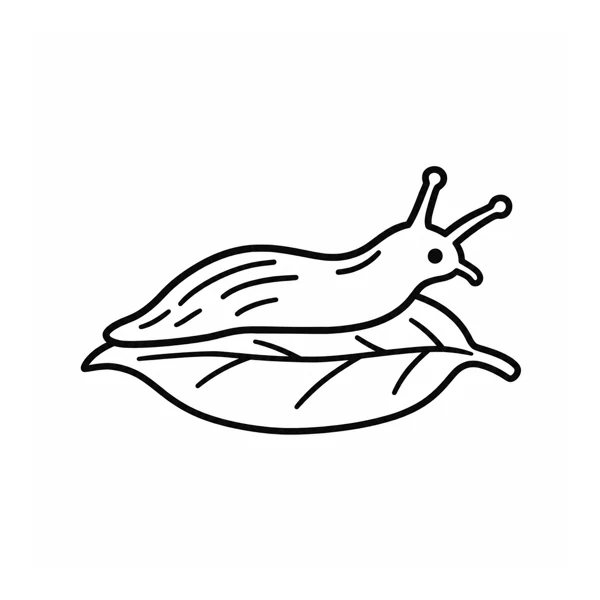
- Slugs and snails: Protect young seedlings, especially fall sowings in mild, damp winters.
Good neighbors




Good: Other cool-season cutting flowers that like the same early sowing: poppies, bachelor's buttons, and sweet peas. Larkspur also looks lovely rising behind roses.
Avoid: Vegetable and herb beds, and any spot where pets or children might nibble. Every part of larkspur is toxic, so keep it in the flower border.
Seeds that grow well in your area in November
Affiliate links — shopping through these helps keep Evening Vines free. Foxglove Mix
 Wild Lupine
 Common Milkweed
 PansySeeds
Varieties worth growing
- Giant Imperial Mix: Tall, branching, classic cutting larkspur.
- QIS Series: Strong stems bred for cut flowers.
- Sublime Series: Tall, well-branched spikes in clear colors.
- Earl Grey: Unusual smoky lilac-gray.
- Dwarf Hyacinth-Flowered Mix: Shorter plants for borders.
Larkspur seeds to buy
Affiliate links — shopping through these helps keep Evening Vines free.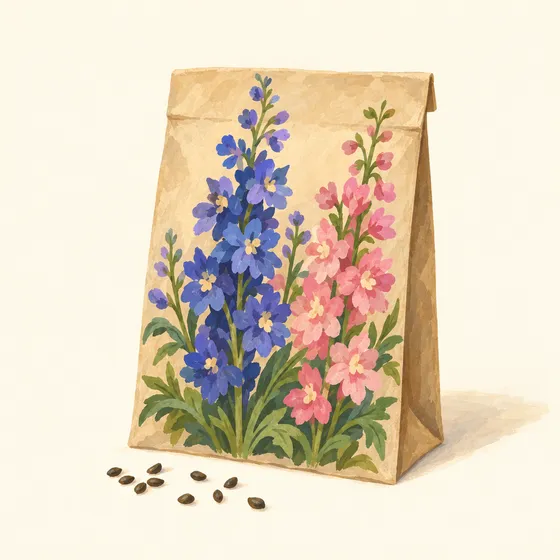 Rocket Larkspur
Picking notes
For fresh flowers, cut when the bottom third of the spike is open. For drying, cut when most of the flowers are open and hang the stems upside down in a dark, airy place.
Saving seed for next year
Let pods dry brown on the plant and collect them before they split. Store the seed cool and dry in a labeled envelope. If it's been a while, run a quick paper towel test before you sow.
From garden to table
Not edible: all parts are toxic to people, pets, and livestock, especially the seeds. Grow it for borders, bouquets, and dried arrangements, and wear gloves if your skin is sensitive.
Questions from the potting bench
When should I plant larkspur seeds? In zones 7 to 10, October and November are best. In zone 6, sow in late fall near the first hard freeze. Everywhere, you can also sow in early spring as soon as the soil can be worked.
Why didn't my larkspur sprout? The soil was probably too warm, or the seed wasn't covered. Chill seed first, cover it fully, and sow in cool weather.
Is larkspur the same as delphinium? Close relatives. Larkspur is an annual; delphinium is a perennial.
Will it come back? Not the same plant, but it self-sows freely.
Grower reports
How did Larkspur do in your garden? Members rate it and say which zone and month they planted, so everyone can see what works near them.
Recent community discussions
No one has talked about Larkspur yet. Be the first.
Seeds to try
Affiliate links — shopping through these helps keep Evening Vines free.Essentials for Growing Larkspur
 Grow Bags
Breathable fabric pots: grow almost anything on a patio, balcony or driveway, and roots never circle.
See it →
 Pruning Shears
Sharp bypass pruners for harvesting, deadheading and tidying.
See it →
 Seed Starting Tray
Reusable tray with a clear dome to give seeds a warm, humid start indoors.
See it →
 Garden Kneeler
A kneeling pad that flips into a seat: easier on knees and back.
See it →
 Plant Labels
Waterproof markers so you know what's coming up where.
See it →
 Organic Fertilizer
Slow-release organic plant food for vegetable beds and containers.
See it →
