
Zinnias
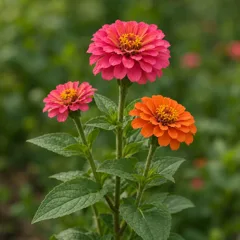
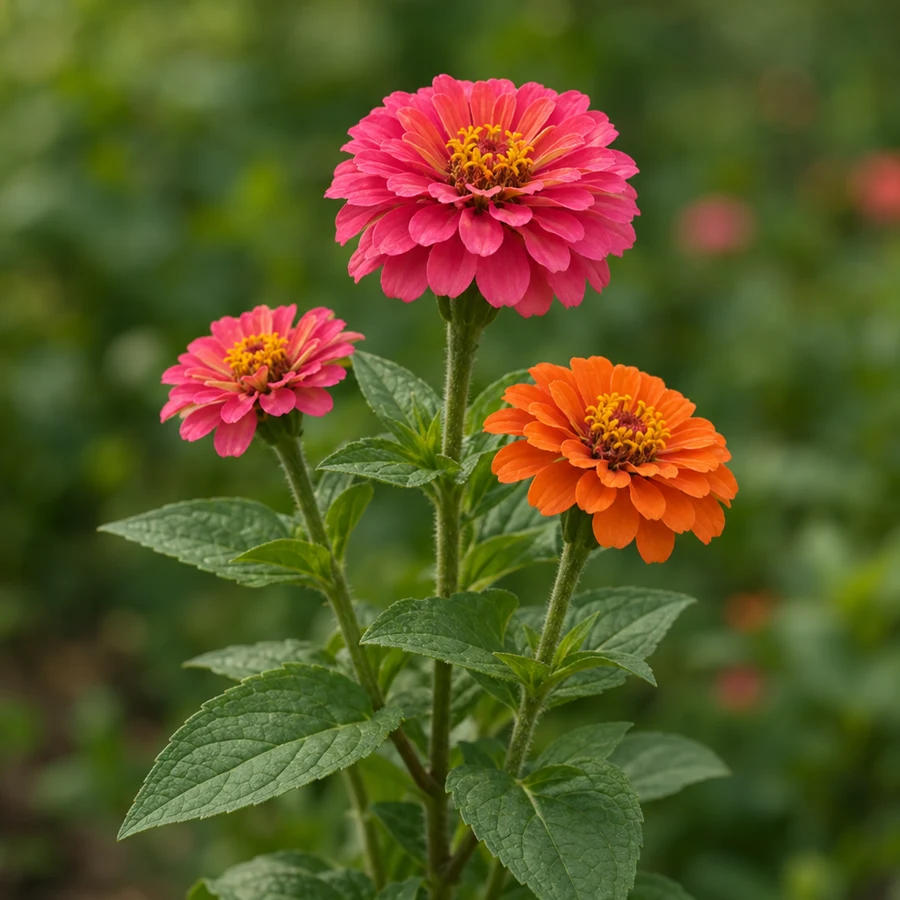
Zinnias are easy, cheerful annuals that flower from early summer right up to the first frost. Pick almost any bright or warm shade you like, plus white, lavender and soft lime green. Blooms run from button-sized to as wide as a saucer, on plants from 6 inches to 4 feet tall.
They love heat and sun and race up from seed. Butterflies, bees and hummingbirds work the flowers all summer. Every stem you take for the vase pushes the plant to branch and send up fresh buds, which is why zinnias earn a spot in so many cutting beds.
Recent community discussions
No one has talked about Zinnias yet. Be the first.
At a glance
| Plant type | Flower |
| Botanical name | Zinnia elegans and hybrids (Profusion = Z. × hybrida, Zahara = Z. marylandica) |
| Annual or perennial | Annual |
| Sun | Full sun |
| Water | About 1 inch per week; handles short dry spells once settled |
| Soil | Well-drained soil rich in organic matter |
| Spacing | 8 to 24 inches (dwarf types 8 to 9 inches, tall cutting types 12 to 24 inches) |
| Planting depth | 1/4 inch |
| Days to germinate | 4 to 7 days in warm soil |
| Days to bloom | About 60 to 85 days from seed |
| Bloom season | Early summer until the first fall frost (all year in frost-free zones 10 to 11) |
| Best USDA zones | 3 to 11 as a summer annual |
| Soil pH | 6.0 to 7.0 |
Is it zinnias weather where you are? See everything to plant this month or read your zone notes.

Direct sow after last frost when soil is 70°F+ (21°C). Start indoors 4–6 weeks earlier for transplants. Successive sowing extends bloom.

Germinates in 5–10 days; blooms in 50–75 days.

Zones 2–11, June?Oct for spring planting; July?Nov for later sowing.

Thrive in light sandy soils or gravelly loams, pH 5.5–7.5. Very drought-tolerant once established.
Pests to watch for







A little history
Zinnias grow wild in Mexico and the southwestern United States. They're named for Johann Gottfried Zinn, a German botanist who described them in the 1700s. Serious breeding didn't start until about a century later, through the 1800s, and the big-flowered giant types arrived in the 1920s. Newer, tougher types such as Profusion and Zahara came from crossing Z. elegans with its wild relatives, which is where much of their mildew resistance comes from.
When to sow in your zone
Spring: Sow outdoors 1 to 2 weeks after your last frost, once the soil has warmed to about 70°F. Sowing straight into the bed is the simplest way, because the roots sulk when they're moved. For earlier flowers, start seeds indoors about 3 to 4 weeks before the last frost. Sow a fresh row every 3 weeks or so to keep flowers coming.
When to plant zinnias in your zone (rough guide, tied to the last frost):
- Zones 3 and 4: early June.
- Zone 5: late May.
- Zone 6: mid-May.
- Zone 7: late April to early May.
- Zone 8: mid-April.
- Zone 9: March, plus a late-summer sowing for fall flowers that last until the first frost.
- Zones 10 and 11: spring through fall. These frost-free zones are the only ones where a fall sowing gives winter flowers.
Fall and winter: In zones 3 to 8, spring is the only sowing time. Zone 9 gets frosts, so treat its late-summer sowing as a fall show, not a winter one. In November, only gardeners in frost-free zones 10 and 11 can still sow zinnias.
Not sure which zone you're in? Find yours on the zones page or enter your ZIP in the planting tool to see whether it's zinnia time where you are. The count back from last frost post helps you pick an exact sowing day.
Growing it, step by step
Sowing the seed
Sow 1/4 inch deep and keep the soil evenly moist. Seeds come up in 4 to 7 days in warm soil. Thin seedlings to their final spacing so air can move between them. The thinning seedlings post walks through it.
Moving seedlings outside
Zinnias dislike root disturbance, so move them young: plant out at about 3 to 4 weeks old, which lines up with an indoor start 3 to 4 weeks before the last frost. Harden them off for about a week first, then plant after frost at the same depth they sat in the pot.
Watering at the roots
Give about 1 inch of water a week, aimed at the base. Wet leaves invite mildew, so skip the sprinkler. Settled plants handle short dry spells, but long droughts mean fewer and smaller flowers.
A layer of mulch
Spread 1 to 2 inches of mulch to hold moisture and keep the roots cool. Leave a little gap around the stems.
Feeding
Work compost into the bed at planting. A balanced fertilizer once a month through summer keeps flowers coming. Too much nitrogen gives you lush leaves and fewer blooms.
Keeping it happy
Pinch seedlings at about 8 inches tall to get bushier plants with more stems. Snip off spent flowers often (see deadhead flowers for more blooms). Stake tall types in windy spots. Plenty of room and sun is your best guard against disease.
Trouble in the bed
Pests:
- Japanese beetles: Chew petals and leaves in midsummer. Knock them into soapy water in the cool of the morning.
- Aphids: Cluster on new growth. Hose them off or use insecticidal soap.
- Spider mites and whiteflies: Show up in hot, dry spells. Look under the leaves, rinse them off, and keep plants watered.
Diseases:
- Powdery mildew: White powder on the leaves, worst in late summer. Space plants well, water at the base, and grow resistant types like Profusion and Zahara. More in powdery mildew in late summer.
- Leaf spots (Alternaria and bacterial leaf spot): Brown or dark spots on the leaves. Keep foliage dry, pull off spotted leaves, and move zinnias to a new bed each year.
Good neighbors




Good: Tomatoes, peppers, cosmos and marigolds. Zinnias pull pollinators into the vegetable garden.
Avoid: Shady, humid corners and crowded beds that stay wet.
Seeds that grow well in your area in November
Affiliate links — shopping through these helps keep Evening Vines free. Smooth Blue Aster
 Polka Dot Mix
 Black-Eyed SusanSeeds
 ColumbineSeeds
Varieties worth growing
- Benary's Giant: Tall, strong stems with big, dahlia-like blooms, a cut-flower favorite.
- State Fair: Tall plants with large, bright flowers for cutting. Seeds
- Profusion (Z. × hybrida): Compact, disease-resistant plants for beds and pots.
- Queen Lime: Chartreuse, lime-green blooms on tall stems. (The rose-and-green one is its sister, Queen Red Lime.)
- Zahara (Z. marylandica): Compact, heat-tolerant and mildew resistant. Seeds
Zinnias seeds to buy
Affiliate links — shopping through these helps keep Evening Vines free.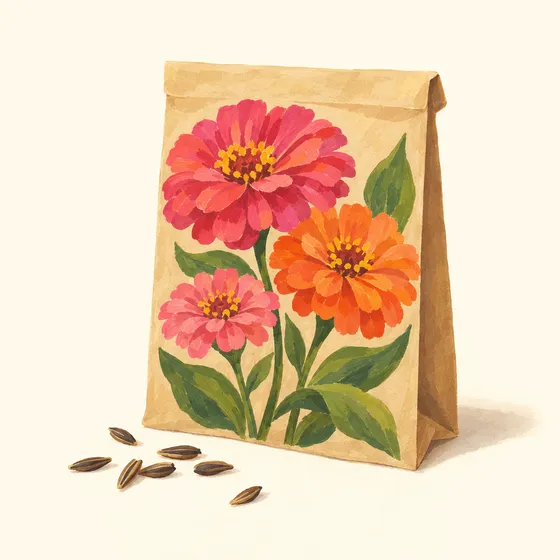 State Fair Mix
Picking notes
Cut when the flower is fully open and the stem is firm: hold the stem just below the bloom and give it a wiggle. If it flops, wait a day or two; if it stays upright, it's ready. Cut in the morning and get stems into water right away. Cut back to just above a leaf pair so the plant branches and blooms again.
Saving seed for next year
Leave a few flowers to dry on the plant until the head turns brown and crisp. Pull out the seeds, dry them for a week, and store them cool and dry. Hybrid types won't come true from seed. Open-pollinated types cross with each other easily, so expect some surprises. See saving seeds from your garden and store leftover seeds.
From garden to table
Zinnias are grown for cut flowers, borders, pots and pollinator gardens, and they fit well in a pollinator border. They're generally listed as non-toxic to pets, but they aren't a food plant.
Questions from the potting bench
When should I plant zinnias in zone 7? Late April to early May, once frost is past and the soil feels warm. Other zones are in When to Sow above.
Why do my zinnias get white powder on the leaves? That's powdery mildew. Give plants more room, water at the base, and try resistant types.
Do I need to deadhead? Yes, for more flowers. Leave a few heads to ripen if you want seed.
Can I grow them in pots? Yes. Choose compact types and use a pot with drainage holes.
Grower reports
How did Zinnias do in your garden? Members rate it and say which zone and month they planted, so everyone can see what works near them.
Recent community discussions
No one has talked about Zinnias yet. Be the first.
Seeds to try
Affiliate links — shopping through these helps keep Evening Vines free.Essentials for Growing Zinnias
 Grow Bags
Breathable fabric pots: grow almost anything on a patio, balcony or driveway, and roots never circle.
See it →
 Pruning Shears
Sharp bypass pruners for harvesting, deadheading and tidying.
See it →
 Seed Starting Tray
Reusable tray with a clear dome to give seeds a warm, humid start indoors.
See it →
 Garden Kneeler
A kneeling pad that flips into a seat: easier on knees and back.
See it →
 Plant Labels
Waterproof markers so you know what's coming up where.
See it →
 Organic Fertilizer
Slow-release organic plant food for vegetable beds and containers.
See it →
