
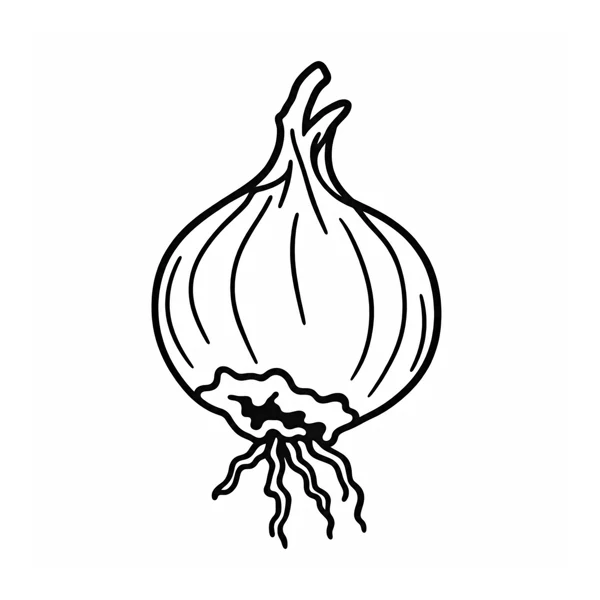
 Fusarium Basal Rot
At a glance
| Type | Fungus |
| Also called | Onion basal rot, basal plate rot |
| Main cause | Fusarium oxysporum f. sp. cepae |
| Worst conditions | Warm soil (the spores sprout best around 77-84°F), nicks and wounds at the base of the bulb, beds that have grown onions or garlic before, soil that swings between soggy and bone dry |
Recent community discussions
No one has talked about Fusarium Basal Rot yet. Be the first.
Onions rotting from the bottom up? Fusarium basal rot, also known as onion basal rot or basal plate rot, is a soil fungus that moves into the flat plate under a bulb where the roots grow. Every member of the onion family can get it, but onions and garlic suffer the most. Often the bed looks fine all summer, and you only find out weeks later when a stored bulb goes soft at the bottom.
Signs
Here's what you'll notice, in the order you're likely to notice it.
- From the path: a plant here and there goes off while its neighbors stay green. The top of each leaf yellows first and the yellow creeps downward. Leaves can flop over, and in hot spells the whole plant may wilt.
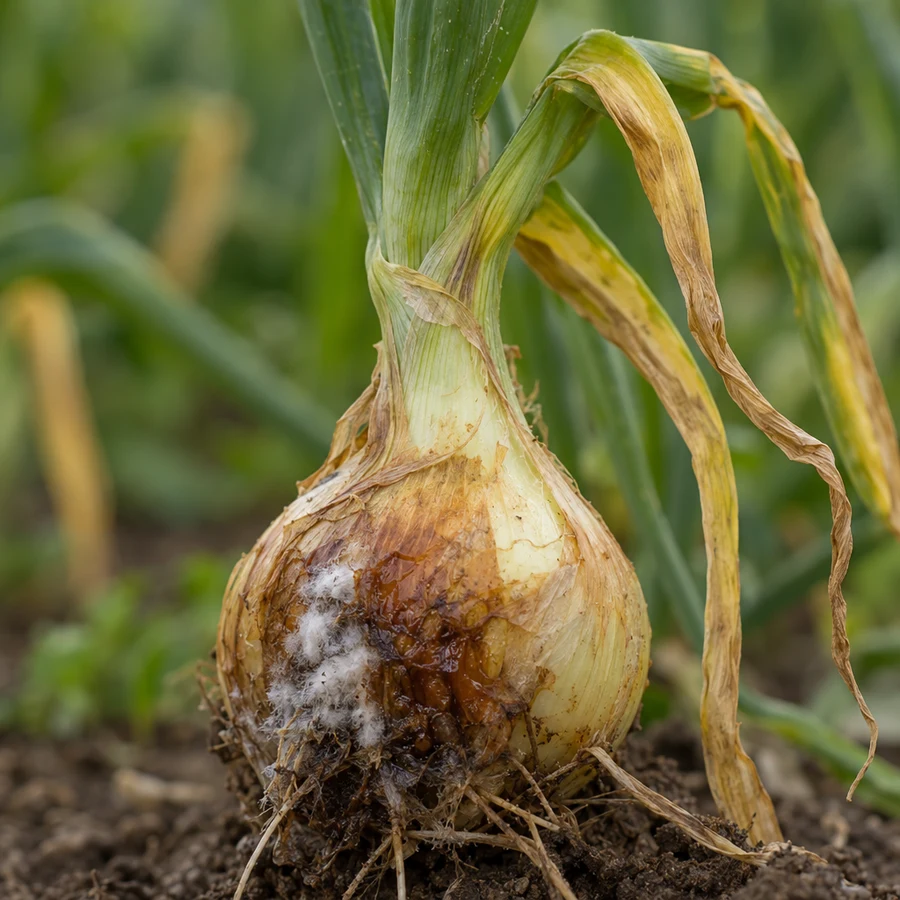
- When you pull one: it comes up far too easily. The roots are thin on the ground, dark brown to pinkish, or gone altogether. In damp soil you may see a white fuzz of fungus on the base.
- When you cut it: slice straight down through the base. A healthy bulb is white and firm right to the bottom. An infected one has a brown stain that starts at the root plate and creeps up into the layers. Older rot turns dry and pitted.
- In storage: onions that seemed sound at harvest soften from the base up. Garlic heads go spongy or sunken, and the cloves crack and shrivel.
Cause and Spread
The fungus has a hard time getting into a whole, unbroken bulb. It slips in through damage at the base: a hoe nick, roots broken when transplants go in, old root scars, or the feeding of onion maggots and other soil insects. Warm soil is what sets it going. It can be active across a wide range, but it sprouts fastest when the soil sits around 77-84°F, so hot summers bring the worst of it. Between crops it waits in the soil as tough resting spores that last for years, and it can sit on the roots of other plants without making them sick. It reaches a clean bed in infected sets, transplants and garlic cloves, in soil carried on boots and tools, and in water running off infected ground.
Prevention
- Plant while the soil is cool. The fungus wants warmth, so get onions in early in spring, as soon as the ground can be worked. See when to plant onions where you live on the zone pages, and our guide to planting onion sets in spring.
- Sow seed straight into the bed if your season allows. Basal rot turns up more often in transplanted onions than in direct-sown ones.
- Mulch to keep the ground cool. Once plants are up, lay about 4 inches of mulch between the rows so the soil stays cooler through summer. Tips on mulching in spring.
- Give the bed a long rest. Keep onions, garlic, leeks, shallots and chives out of the same spot for at least 3 to 4 years (longer if the rot was bad), and follow them with lettuce, carrots, beets or celery. Our crop rotation plan shows how to map it out. If you have the room, skip any bed where bulbs rotted at the base before.
- Protect the base of the bulb. Hoe shallow and keep well back from the bulbs, pull weeds by hand close to the row, don't pile fertilizer against the plants, and keep onion maggots off with row cover.
- Start clean. Plant firm, disease-free sets, transplants and garlic cloves, and set aside any with a soft or stained base. Choose varieties sold as resistant or tolerant to basal rot when you can find them.
- Water evenly so the soil never stays soggy or dries out hard for long stretches.
- Store them right. Cure bulbs well after harvest (see how to harvest and cure onions), then keep them cool, about 39°F, and fairly dry.
Organic Treatment
- No spray or soil treatment cures basal rot once it's in a bulb.
- Pull plants that are yellowing and rotting at the base, and throw them away (don't compost them).
- Check stored onions often and take out any soft ones. Basal rot itself rarely jumps from bulb to bulb in storage, but a rotting onion invites soft-rot bacteria and molds that can.
- Use sound but slightly affected onions first; don't keep them for long storage.
When to Pull the Plant
Pull a plant as soon as its leaves yellow from the tip down and its base feels soft, or the roots come away rotten. It won't recover, and leaving it in the bed only adds more spores to the soil.
Sources
- UMass Extension Vegetable Program, Alliums: Fusarium Basal Rot: https://www.umass.edu/agriculture-food-environment/vegetable/fact-sheets/alliums-fusarium-basal-rot
- UC IPM (University of California), Basal Rot of Onions and Garlic (home and landscape): https://ipm.ucanr.edu/home-and-landscape/basal-rot-of-onions-and-garlic/
- University of Saskatchewan Gardening, Basal rot in alliums: https://gardening.usask.ca/articles-and-lists/articles-diseases/disease-basal-rot-in-alliums.php
- Utah State University Extension, Fusarium Basal Rot (onion): https://extension.usu.edu/vegetableguide/onion/fusarium-basal-rot
- Colorado State University Extension, Soil-Borne Diseases of Onion: https://extension.colostate.edu/resource/soil-borne-diseases-of-onion/
- AUSVEG / Hort Innovation, Fusarium basal rot guide (2022): https://ausveg.com.au/app/uploads/2024/05/fusarium-basal-rot-guide-june-2022.pdf
- Hort Innovation, Epidemiology and management of fusarium basal rot in onions (VN20006): https://horticulture.com.au/growers/help-your-business-grow/research-reports-publications-fact-sheets-and-more/vn20006
Plants it affects 1
Recent community discussions
No one has talked about Fusarium Basal Rot yet. Be the first.



