
Onions
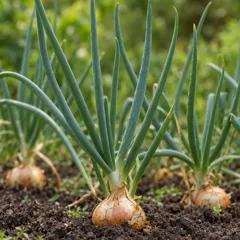
An onion doesn't watch the calendar, it watches the daylight. A bulb only starts to swell once the days stretch past a certain length, so the first question isn't really when to plant onions but which kind. Short-day vs long-day comes down to where you garden: short-day types begin bulbing at about 10 to 12 hours of light and suit mild-winter gardens in the southern half of the country, long-day types wait for the 14 to 16 hour days of a northern summer, and intermediate-day types sit in between. Pick the wrong one and you get lovely green tops with hardly a bulb underneath. Pick the right one, cure it well, and a braid of onions can see the kitchen through winter.
Recent community discussions
No one has talked about Onions yet. Be the first.
At a glance
| Plant type | Vegetable (bulb) |
| Botanical name | Allium cepa |
| Annual or perennial | Biennial, grown as an annual |
| Sun | Full sun |
| Water | About 1 inch per week |
| Spacing | 3 to 6 inches (wider for big bulbs) |
| Planting depth | 1/4 inch (seed); 1 inch (sets and transplants) |
| Days to germinate | 7 to 12 |
| Days to maturity | 100 to 175 from seed (a little less from sets or transplants) |
| Harvest | Late summer to early fall from spring planting; late spring to early summer from fall-planted short-day onions in zones 8 to 11 |
| Best USDA zones | 3 to 11 (choose day length by region) |
| Soil pH | 6.0 to 7.0 |
From planting to harvest
Is it onions weather where you are? See everything to plant this month or read your zone notes.

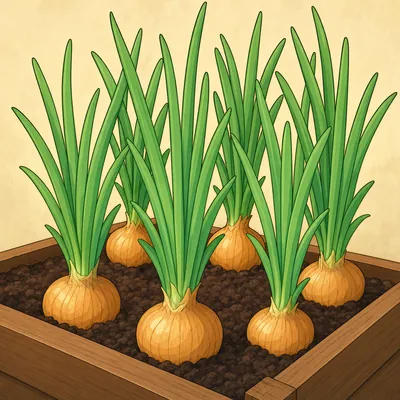
Sow seeds indoors 8–10 weeks before last frost. Direct sow sets/transplants in early spring; in mild zones, sow in late summer for overwintering.

Scallions: 8–12 weeks; storage types: 100–175 days.

Zones 3–9, late summer?early fall when tops yellow; green onions harvestable anytime at usable size.

Light, friable sandy loam, pH 6.0–7.0. Avoid heavy clay; needs loose soils for bulb growth.
Pests to watch for



A little history
People have grown onions for over 5,000 years, first in Asia and the Middle East. They were an everyday food in ancient Egypt and Rome.
When to sow in your zone
Spring (zones 3 to 7): Start seed indoors 8 to 10 weeks before your last frost (see counting back from last frost and starting onions from seed indoors). Plant sets and transplants as soon as the soil can be worked. Grow long-day or intermediate-day types. For sets, see planting onion sets in spring.
Fall into winter (zones 8 to 11): Grow short-day types. Sow seed in fall and plant transplants from late fall through winter, depending on how mild your winters are. These onions grow leaves through the cool months, bulb up as the days lengthen, and are ready to lift in late spring or early summer.
Right now, in November: this is onion time in zones 8 to 10. Sow short-day seed, or set out transplants where winters stay mild. Check your own zone page for the full list of what goes in this month: zone 8, zone 9, zone 10, or all zones.
Growing it, step by step
If this is your first onion bed, keep it simple: choose the day length that fits your region, give the plants full sun and loose, weed-free soil, feed them early, and stop watering once the tops flop. Most disappointments come from skipping one of those.
Seed trays first
Sow 1/4 inch deep. When the seedlings get tall and floppy, snip the tops back to 3 or 4 inches. It keeps them sturdy and easier to plant.
Into the bed
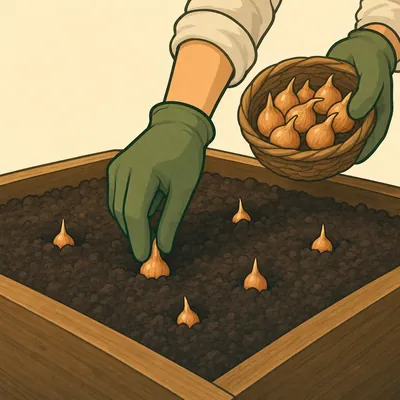
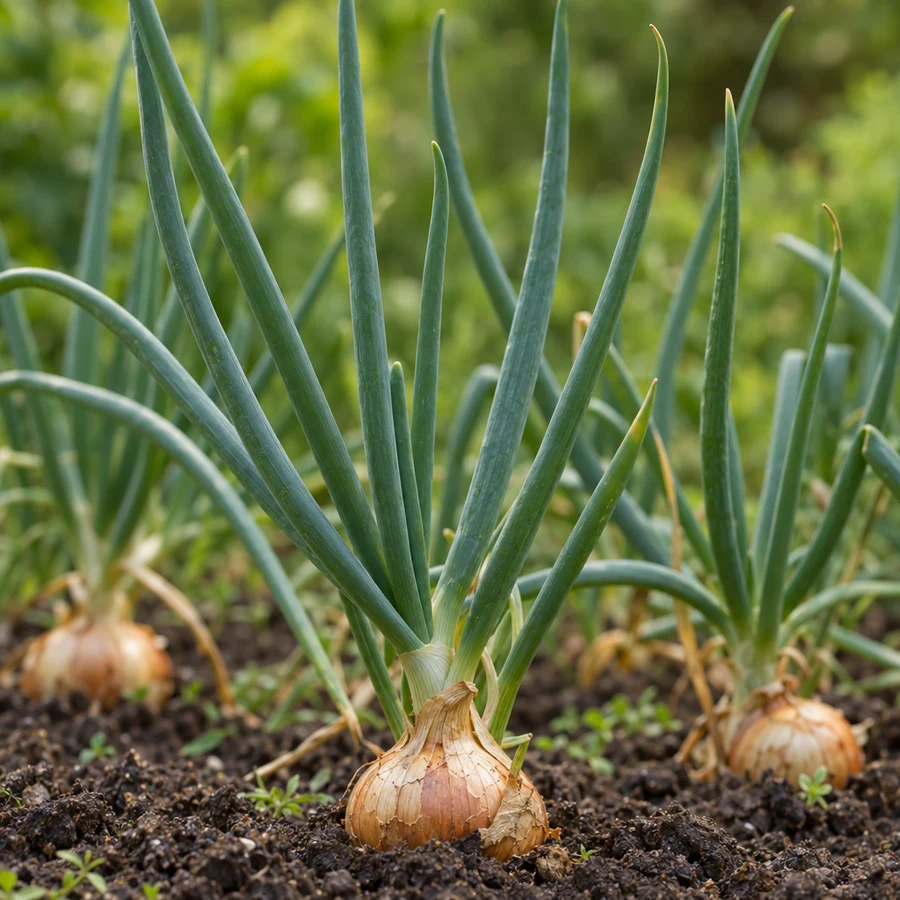
Plant seedlings and sets 1 inch deep, sets pointed end up. Space them 3 to 4 inches apart for medium bulbs, or up to 6 inches for big sweet onions. Choose small sets, no wider than about 3/4 inch, because big ones are more likely to flower.
Water, mulch and feeding
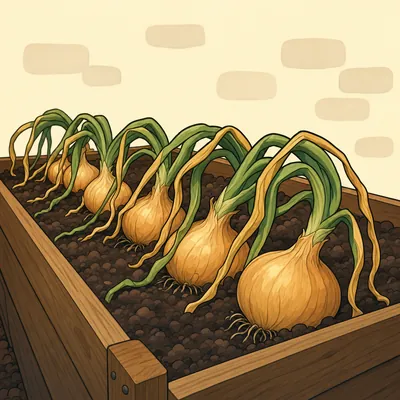
Give about 1 inch of water a week, and stop once the tops start to fall over. A light straw mulch holds moisture and keeps weeds down; pull it back as the bulbs swell. Feed with nitrogen every 3 weeks until the bulbs begin to form, then stop.
Keeping it happy
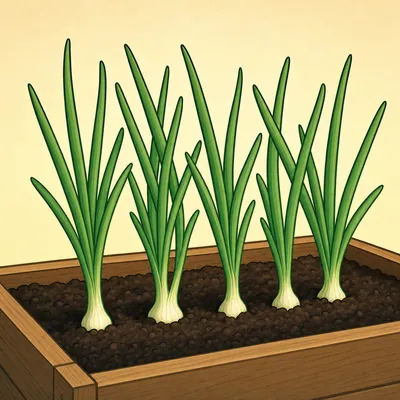
The roots are shallow, so weed by hand and gently. Don't heap soil over the swelling bulbs; they like to sit near the surface. Leave 3 years before onions or any other allium go back in the same bed (see a crop rotation plan against disease). The one exception is white rot: if it has ever shown up in a bed, keep alliums out of that bed for good.
Trouble in the bed
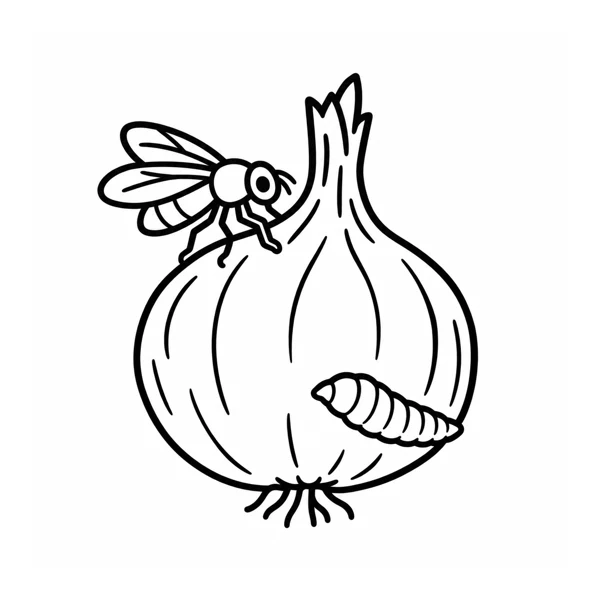
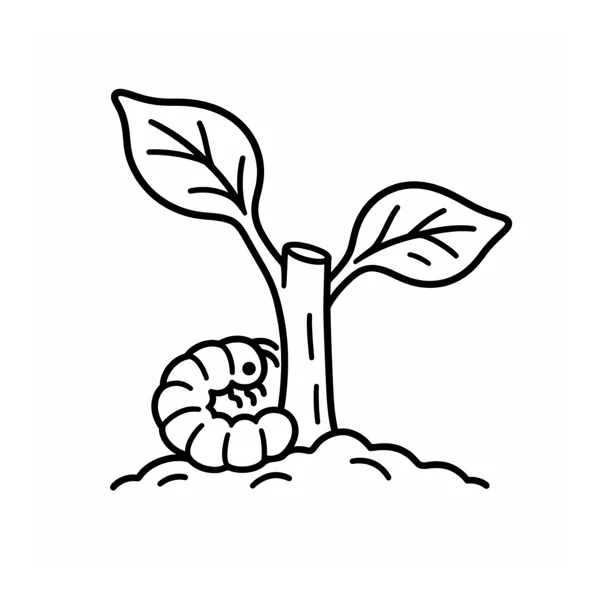
- Onion thrips: Hose them off or use insecticidal soap, and keep weeds down around the bed.
- Onion maggots: Cover new plantings with row cover and rotate crops.
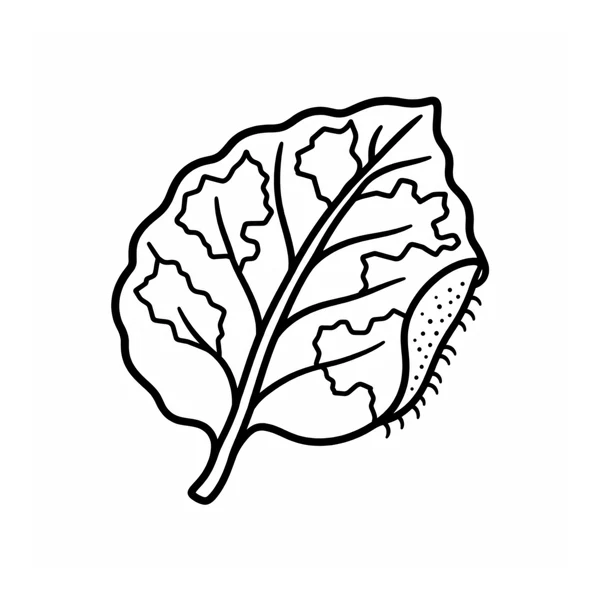
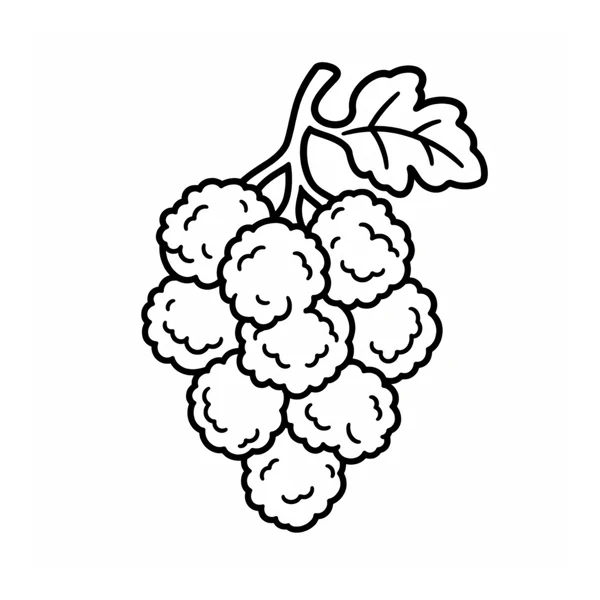
- Downy mildew: Space plants so air moves through them, water at the base, and rotate crops.
- Purple blotch (Alternaria): Purple-centered spots on the leaves, worst in warm, wet weather. Give plants room, water in the morning at soil level, and clear away old onion leaves at the end of the season.
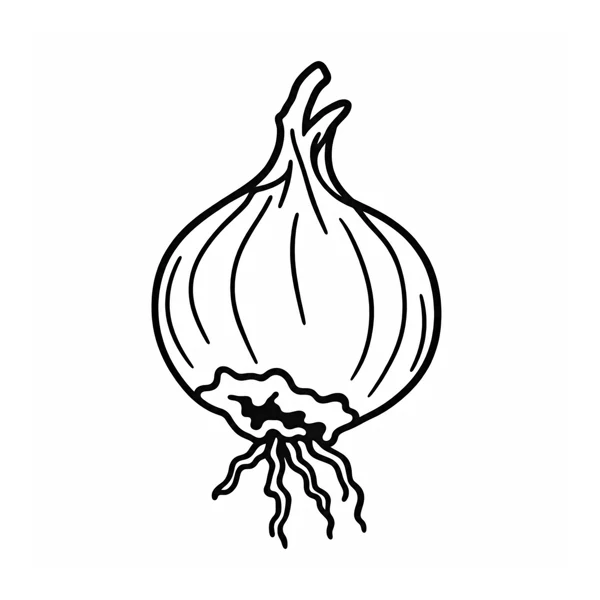
- White rot: Leaves yellow and die back, and the base of the bulb shows white fluffy growth with tiny black specks. Those specks can live in the soil for 20 years or more, so rotation won't clear it. Start with clean sets and transplants from a trusted source, never move soil or tools from an infected bed to a clean one without cleaning them, and stop growing onions, garlic, leeks and chives in that bed.
Good neighbors





Companion planting with onions is mostly garden tradition rather than research, so treat these as old habits worth trying.
Good: Carrots, beets, lettuce, spinach and tomatoes sit happily alongside, and quick greens like lettuce and spinach can fill the gaps between young onion rows. Cabbage-family crops such as kale and broccoli are traditional neighbors. Low flowers like alyssum and a few dill plants nearby bring in helpful insects that feed on small pests.
Traditionally kept apart: Peas and beans. Gardeners have long kept them away from onions, though there's little solid evidence either way.
Seeds that grow well in your area in November
Affiliate links — shopping through these helps keep Evening Vines free. Common Milkweed
 PansySeeds
 PhloxSeeds
 Royal Mix
Varieties worth growing
Onions seeds to buy
Affiliate links — shopping through these helps keep Evening Vines free.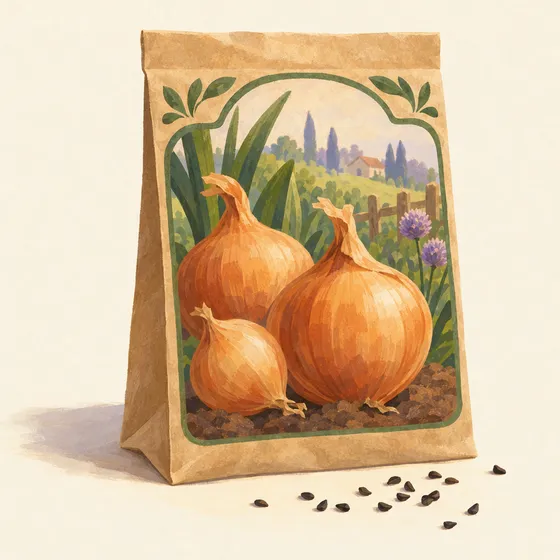 Walla Walla
Picking notes
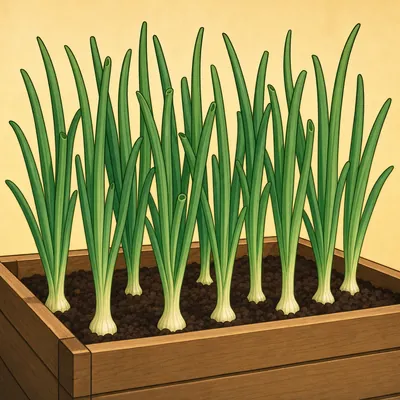
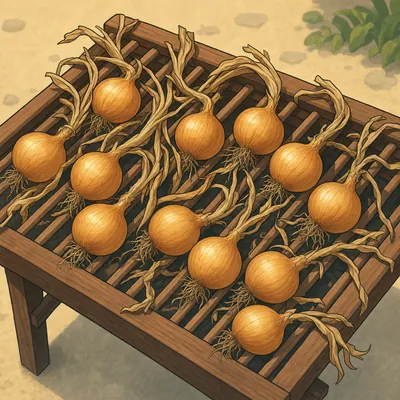
Lift bulbs when most of the tops have fallen over and begun to yellow. Spring-planted onions are ready in late summer to early fall; fall-planted short-day onions in zones 8 to 11 come in late spring or early summer. Cure them somewhere warm, airy and out of direct sun for 2 to 4 weeks, until the necks are dry and papery, then trim and store cool and dry. Sweet types don't keep as long, so eat those first. Green onions can be pulled any time. More detail in how to harvest and cure onions.
Saving seed for next year
Onions flower in their second year. Replant a few of your best bulbs in spring and let the round flower heads dry on the stalk. Different onion varieties cross with each other, so let only one variety flower if you want seed that comes true. Onion seed is short-lived and keeps only a year or two (see storing leftover seeds).
From garden to table
Onions are low in calories and give you some vitamin C. Use them raw, cooked, pickled or slowly caramelized. Onions are toxic to cats and dogs, so keep scraps away from pets.
Questions from the potting bench
Why didn't I get big bulbs? Usually the wrong day length for your region, plants set too close together, or too little nitrogen early on, before bulbing starts.
Sets or seed? Sets are the quickest start, but they come in few varieties and flower more readily than transplants. Seed and transplants give you far more choice, including the short-day types southern gardens need.
Why did they bolt? Onions flower when they've been through a long cold spell, several days or more below about 45 to 50°F, after they've grown to about pencil thickness. To the plant, that feels like winter has passed. Oversized sets, wider than about 3/4 inch, bolt more often too. Pull bolted onions and use them soon, since they won't store well.
Grower reports
How did Onions do in your garden? Members rate it and say which zone and month they planted, so everyone can see what works near them.
Recent community discussions
No one has talked about Onions yet. Be the first.
Seeds to try
Affiliate links — shopping through these helps keep Evening Vines free.Essentials for Growing Onions
 Grow Bags
Breathable fabric pots: grow almost anything on a patio, balcony or driveway, and roots never circle.
See it →
 Garden Hand Tools
Trowel, transplanter and cultivator: the three tools you reach for most.
See it →
 Plant Labels
Waterproof markers so you know what's coming up where.
See it →
 Soaker Hose
Waters the roots slowly, not the leaves: less disease, less water, less work.
See it →
 Organic Fertilizer
Slow-release organic plant food for vegetable beds and containers.
See it →
 Watering Can
Long-spout can for gentle watering of seedlings and pots.
See it →
