
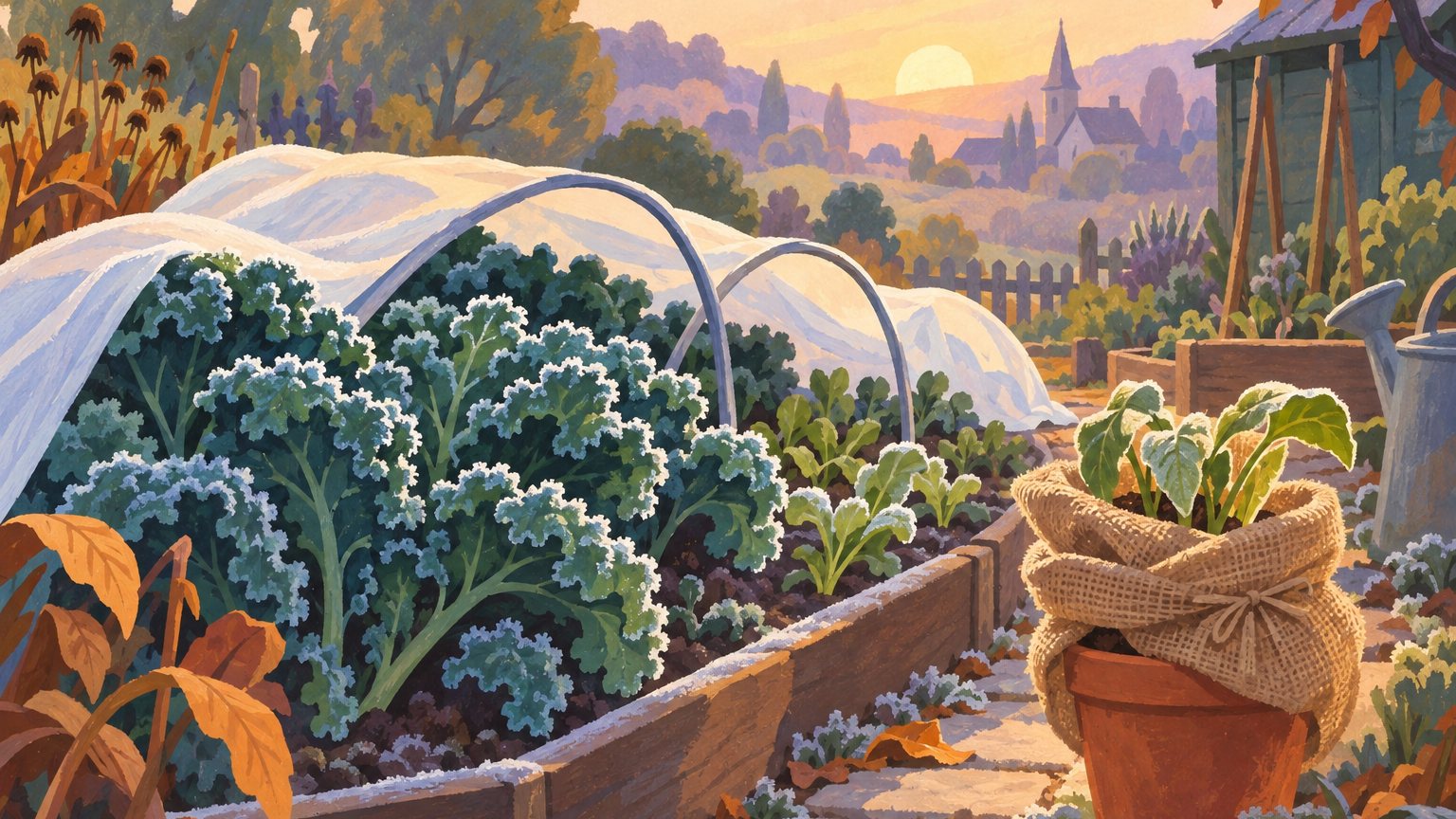
Sooner or later there's an evening when the forecast drops into the twenties and the garden is suddenly on borrowed time. That one night doesn't need to end the season. A bit of work in the afternoon and a few minutes at dusk can keep you picking for weeks. This is the checklist we follow, in the order the night actually happens.
A few days out: read the dates and the sky
Your hardiness zone tells you how cold winter gets. It doesn't tell you when the first frost will come. Two gardens in the same zone can see their first frost weeks apart, so start with your local average first frost date. You'll find frost dates and planting lists on our zones page.
As a rough guide only:
- Colder zones (3 to 6): the first frosts have usually come and gone by November, and hard freezes are close behind or already here.
- Zones 7 and 8: the first frost often comes in late October or November. Hard freezes can wait until December, especially in zone 8.
- Zones 9 to 11: zone 9 gets a few frosty nights most winters, while zones 10 and 11 see them only now and then. Keep an old sheet handy all the same.
Watch the overnight low, not the daytime high, and pay the most attention to clear, still nights. With no clouds to hold it in, the day's warmth leaves the ground fast.
It also helps to know which kind of cold is on its way. A light frost (about 29 to 32°F) is enough to kill tender crops like basil and tomatoes, and it nips the leaves of tougher plants. A hard freeze (28°F or lower for a few hours) damages even crops that shrug off a light frost.
Who needs help on a cold night
Here's how we sort our own beds when a cold night is coming:
| Group | What happens in the cold | Crops |
|---|---|---|
| Tender | Killed or badly scarred at 32°F | Tomatoes, peppers, basil, squash, beans, cucumbers |
| Frost-tolerant | Fine through a light frost; cover them if a hard freeze is forecast | Lettuce, Swiss chard, carrots, parsnips |
| Hardy | Usually ride out 28°F and a little below | Kale, cabbage, Brussels sprouts, spinach, parsley |
Two notes on that table. Spinach and parsley are hardy, but we still throw a cover over them when we want clean leaves to pick through early winter, because hard frost makes the outer leaves tatty. And carrots and parsnips come through the cold mainly because their roots sit underground. Their tops are tender, so it's the soil and a good layer of mulch that keep the roots safe, not the plants themselves. A light frost does sweeten kale and carrots, which is one of the nicer surprises of late fall.
The afternoon before: pick, water and sort
- Pick the tender crops. Tomatoes, peppers, squash, beans and basil won't come back from a freeze, so take everything usable while it's still dry. Green tomatoes that have started to pale will finish on the counter: see ripen green tomatoes indoors.
- Water the beds. Damp soil holds and gives off more heat overnight than dry soil does, so give the beds you plan to cover a good soak.
- Move the pots. Soil in a container freezes far faster than soil in the ground. Carry potted herbs and tender perennials into a garage, porch or bright window. Rosemary and bay like a cool, sunny sill. Our posts on bringing tender plants indoors and keeping potted perennials alive through winter go into more detail.
- Gather your covers. Old bedsheets, frost cloth, buckets, milk jugs, stones for the edges and a few stakes.
At dusk: tuck everything in
Get covers on before the sun goes down, while the ground still holds the day's warmth.
- Sheets or frost cloth. Drape them loosely over the plants and let the fabric reach the soil all the way around, then pin the edges with stones. The cover works by holding in the heat that rises from the ground, so gaps at the bottom let it slip away.
- Keep plastic off the leaves. Plastic barely insulates, and leaves freeze wherever it touches them. If plastic is all you've got, hold it up on stakes or hoops so there's air between it and the plants.
- Buckets and jugs. An upturned bucket or a milk jug with the bottom cut off makes a good overnight cloche for a single plant.
- Mulch the root rows. A thick layer of straw or shredded leaves over carrots, parsnips and beets keeps the ground soft enough to dig later. More on that in leave root crops in the ground.
If you want to keep picking greens well into winter, a simple cold frame saves you doing this every cold night.
The morning after: let the light back in
Leave the covers on until the air has warmed above freezing, then take them off so the plants get light and don't cook under the fabric on a sunny day. Clear plastic heats up especially fast. Frosted leaves often look limp at dawn and perk up by midday, so wait before you judge the damage. Plants that are still dark and mushy by afternoon have had it. Fold the sheets somewhere handy, because a cold snap rarely stops at one night.
Once it's over: settle the garden for winter
When the hard freezes are here to stay, the work turns to putting things away:
- Pull the spent summer crops and compost the healthy ones. Plants with disease belong in the trash, not the pile.
- Leave some seed heads standing for the birds.
- Spread compost or shredded leaves over empty beds and let the worms take it down by spring. See fall leaf mulch and put the garden to bed.
- Clean and dry your tools before they go into the shed: clean and store garden tools.
For what you can still sow or plant where you live, check the planting list for your area on our zones page.
Frost dates are averages, and every year is different. Check your local forecast before any cold night.








