
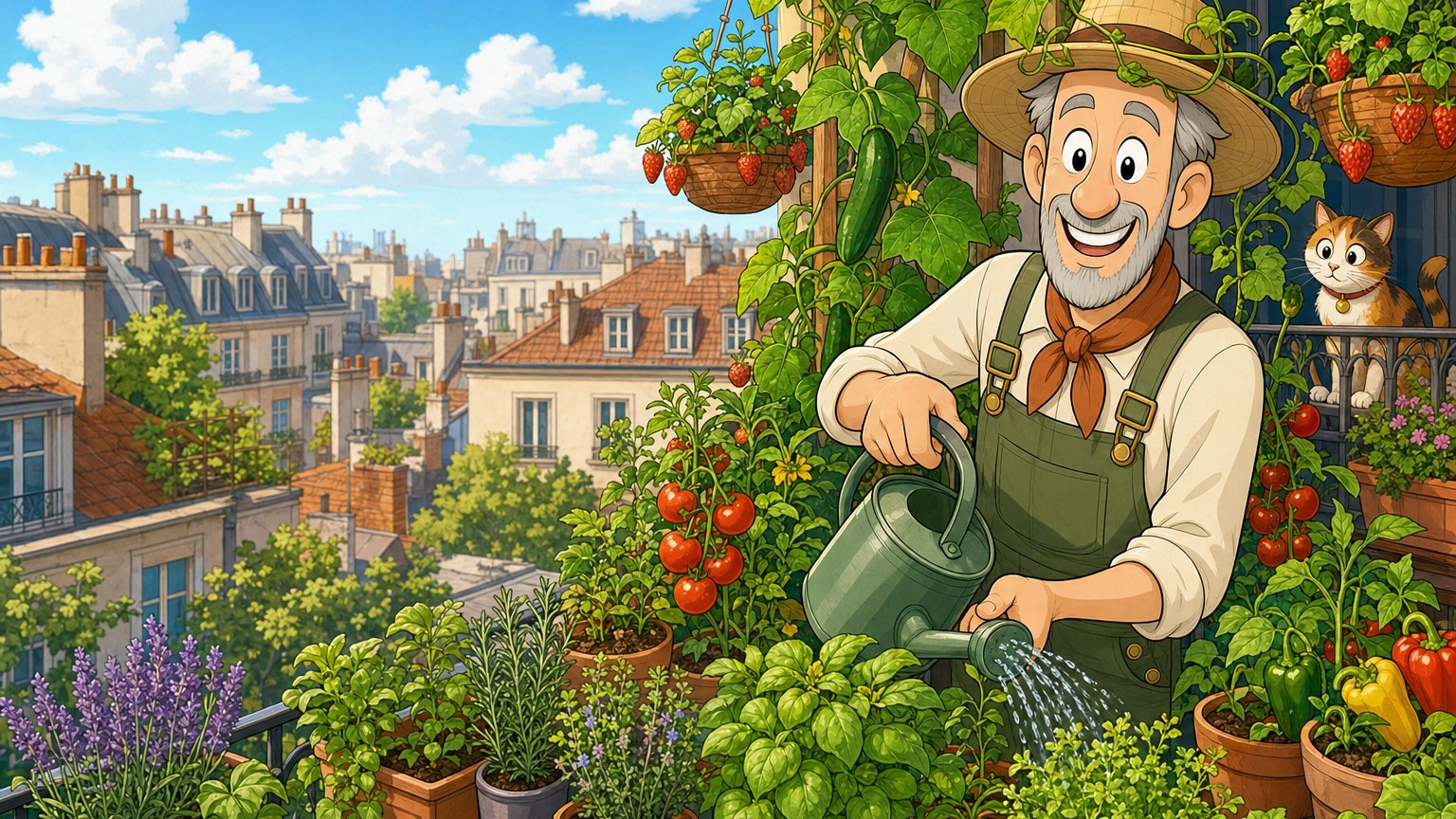
No garden? No problem. A patio, a balcony or a few steps by the back door can grow a surprising amount of food and flowers. Here is how to set one up for real success.
1. Start with the sun
Spend a day watching your patio before you buy a single pot.
- Fruit and flowers (tomatoes, peppers, strawberries) need 6–8 hours of direct sun. Leafy greens and most herbs manage with 4–6.
- Which way it faces (north of the equator): south gets sun all day, west gets hot afternoons, east gets gentle mornings, north suits shade lovers. In Australia and the southern hemisphere, flip it: north-facing is the sunny one.
- East-facing patios are perfect for lettuce and herbs. North-facing ones suit mint, ferns, parsley and leafy greens.
- Walls and paving radiate heat. A south-facing wall can be ten degrees hotter than the open garden: great for tomatoes, hard on lettuce.
- Only a few hours of sun? Lettuce, spinach, chard, parsley, mint and chives all crop well in part shade.
2. Containers and grow bags
Every container needs drainage holes. Without them, roots sit in water and rot.
| Plant | Pot size |
|---|---|
| Herbs, lettuce | 1–3 gallons |
| Peppers, strawberries | 3–5 gallons |
| Tomatoes | 10 gallons or more |
| Dwarf fruit trees | 15–20 gallons |
- Terracotta breathes but dries out fast. Plastic and glazed pots hold water longer and weigh less.
- Fabric grow bags are cheap, light, fold flat in winter, and stop roots circling. Perfect for tomatoes (plant deep, up to the first leaves) and potatoes (plant low, add mix as they grow, tip the bag out to harvest).
- Self-watering pots have a reservoir in the base: a lifesaver if you work long days.
- Put big pots on wheeled caddies to roll them into the sun or indoors for winter.
- On a balcony, check the weight limit. Wet soil is heavy: keep the biggest pots near walls and corners.
3. The right soil
- Never use garden soil in pots. It packs down hard and drains badly.
- Use a good potting mix, light and fluffy, holding water and air at the same time.
- For vegetables, mix 3 parts potting mix to 1 part compost. Add perlite for rosemary, lavender and anything that hates wet feet.
- Potting mix runs out of food in about six weeks: feed with a liquid fertilizer every 1–2 weeks in the growing season.
- Each spring, refresh the top few inches with new mix and compost, or replace it for hungry plants like tomatoes.
4. Grow up, not out
- Trellises and netting against a sunny wall: cucumbers, pole beans, peas and small squash. Tie new stems loosely as they climb.
- Railing planters: lettuce, herbs and strawberries.
- Hanging baskets: trailing tomatoes and strawberries, out of reach of slugs.
- Wall pockets and tower planters: a salad bar in a corner. Water them often; small pockets dry out fast.
- Stake or cage tomatoes and peppers at planting time, before the roots spread.
5. The best patio plants
- Tomatoes: compact bush, dwarf or cherry types.
- Peppers and chilies, which love a warm patio.
- Bush beans, lettuce and salad leaves (cut and come again).
- Herbs: basil, parsley, thyme, chives, rosemary. Mint goes in its own pot, or it takes over.
- Strawberries in hanging baskets.
- Dwarf lemon, lime or fig in a big pot, indoors for winter in cold climates.
Varieties bred for pots (look for compact, patio or container on the packet): Tumbling Tom and Patio Princess tomatoes, Lunchbox and Mini Bell peppers, Spacemaster cucumber, and everbearing strawberries.
6. Spacing and layout
- Tall plants at the back, against the wall on the shady side, so they don't shade smaller ones.
- Keep pots 12–18 inches apart for light and air, and leave a path to reach and water every plant.
- In one big pot: one tomato per 10-gallon pot. A wide trough holds lettuce 6 inches apart or herbs 8–10 inches apart.
- Group pots by water needs: thirsty tomatoes and cucumbers together, rosemary and lavender together.
- Raise pots on feet so they drain freely and don't stain the paving.
7. Watering
- Pots dry out much faster than beds, sometimes twice a day in a heatwave.
- Finger test: dry an inch down? Water until it runs out of the bottom. Mornings are best.
- A drip kit on a timer waters every pot slowly at the roots. It saves water, time and worry when you're away.
- Mulch (bark chips or straw) cuts evaporation. Empty saucers after rain.
8. Wind, heat and the seasons
- Balconies can be windy: put tough plants on the windward side, stake tall ones, and use a trellis panel or tall grasses as a windbreak.
- Heatwaves: move pots into afternoon shade, group them, or rig up shade cloth.
- Spring: plant tender crops after your last frost. Summer: water and shade. Autumn: lettuce, peas and garlic.
- Winter: bring citrus and lemongrass indoors, wrap big pots in burlap, raise them off frozen ground.
9. Pests and disease
- Check the undersides of leaves every few days. A sharp spray of water knocks aphids off.
- Slugs and snails: copper tape around the rim, or a flashlight check after dark.
- Water the soil, not the leaves, keep space between pots, and remove spotted or yellow leaves straight away.
- Marigolds, alyssum and flowering herbs bring in ladybugs and hoverflies.
- Remove a badly infested or diseased plant before it spreads.
10. Where to shop
- Seeds: a good seed company has far more choice, especially compact varieties bred for pots.
- Young plants of tomatoes, peppers and herbs: a local nursery, grown for your climate.
- Reuse: buckets with drilled holes, fabric-lined crates, even a laundry basket for potatoes.
Your first patio: a simple starter plan
Five containers are enough to start:
- 1 tomato in a 10-gallon grow bag
- 1 pepper in a 5-gallon pot
- A trough of lettuce
- A pot of mixed herbs
- Strawberries in a hanging basket
Add a trellis against the sunniest wall with a cucumber or pole beans at its base. Shopping list: pots or grow bags, potting mix and compost, a liquid feed, a watering can and a few stakes. Plant in late spring after your last frost: lettuce in about 4 weeks, herbs within weeks, the first tomatoes by midsummer.
Harvest little and often, in the morning when everything is cool and crisp. A pot of nasturtiums or violas brightens the patio, draws pollinators, and the flowers are edible. Keep a notebook of what grew well where, and next year's patio will be even better.
The most common patio mistakes
- Pots that are too small.
- Watering by the calendar instead of the finger test.
- Too many plants in one pot.
- Forgetting to feed.
Which plant are you putting on your patio first, and which way does your patio face? Tell us in the comments.








