
 Damping-Off
At a glance
| Type | Soil-borne fungi and water molds that attack seeds and young seedlings |
| Main cause | Pythium species and Rhizoctonia solani; sometimes Phytophthora, Fusarium or Aphanomyces |
| Worst conditions | Wet, poorly drained mix or soil, crowded seedlings, still air, and temperatures that are too cool for the crop |
Recent community discussions
No one has talked about Damping-Off yet. Be the first.
Damping-off kills seeds and seedlings, either before they come up or in their first few weeks. Once a seedling has fallen over it can't be saved, so the whole game is prevention.
It isn't a fussy disease. Tomato, Peppers, Cabbage, Broccoli and the other brassicas, Lettuce, Cucumber, Basil, Spinach, Peas and Green Beans are all common victims, and any seed tray or freshly sown row can be hit.
Signs
- Seeds that never come up, or rot in the soil (pre-emergence damping-off).
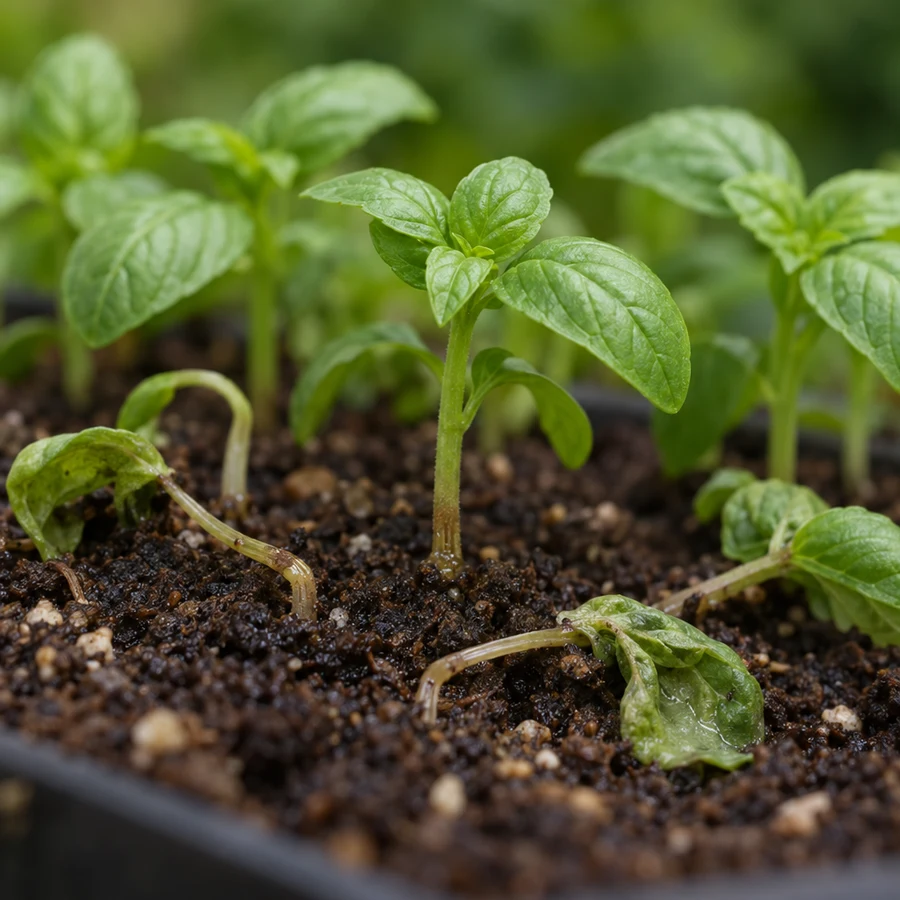
- Seedlings that come up, then suddenly topple over at soil level.
- A thin, water-soaked, brown or pinched stem right at the soil line.
- Patches of dead seedlings that spread outward across a tray or row.
- Sometimes fluffy white, cobweb-like growth on the stems and the mix right around them when the air is humid. A white mold on the surface of the mix by itself, with the seedlings still standing strong, usually just means the mix is staying too wet.
Cause and Spread
The organisms live in garden soil and on old plant debris, and can survive there for a long time. Pythium and Phytophthora like cool, wet soil and often kill seeds before they emerge; Rhizoctonia and Fusarium favor warmer, drier conditions and tend to strike just after emergence (Rutgers). They move in water, splashing soil, reused pots and trays, dirty tools, and garden soil brought indoors. Risk is highest in the first couple of weeks after a seed sprouts, while the young stem is soft. It fades as the seedling grows true leaves and a strong root system (UC IPM, UMN).
Prevention
- Start seeds in fresh, sterile seed-starting mix, never garden soil.
- Wash reused pots and trays, then soak them for 30 minutes in 1 part bleach to 9 parts water and let them air dry (UMN, UC IPM).
- Use containers with drainage holes, and water from below so the surface stays drier.
- Let the top of the mix dry slightly between waterings; soggy mix is a main trigger, and it's the one you have the most control over.
- Sow thinly and thin crowded seedlings so air can move between them.
- Give seedlings strong light and a gentle fan breeze; remove humidity domes once seeds sprout.
- Sow when the soil is warm enough for the crop; cold, wet soil slows seedlings and gives the fungi time. Your zone page shows the right sowing months for where you live.
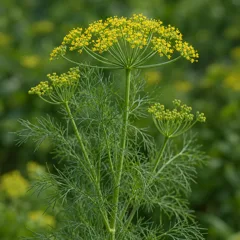
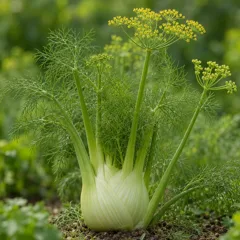
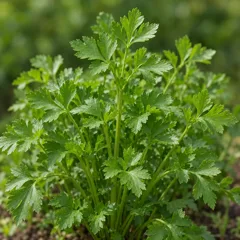
- Outdoors, direct-sow carrots, beets, dill, fennel and parsley into well-drained beds, not waterlogged ground.
- Some seed is sold already treated with a fungicide to guard against damping-off. Each treatment only controls certain of these organisms, and it isn't an organic option, so read the packet if that matters to you (Texas A&M, Rutgers).
Organic Treatment
- There's no cure for a seedling that has already collapsed.
- At the first losses, remove affected seedlings and the mix around them, ease off watering and improve airflow.
When to Pull the Plant
Pull fallen and pinched seedlings right away, with the mix around them. If a whole tray is hit, throw out the mix (not into the compost you'll use for seedlings), clean and disinfect the tray, and re-sow in fresh mix. For a clean setup next time, see Make Your Own Seed-Starting Mix and Bottom Watering Seedlings.
Sources
Plants it affects 7

Recent community discussions
No one has talked about Damping-Off yet. Be the first.
Products that take care of Damping-Off
 Biofungicide (Bacillus subtilis)Friendly bacteria that crowd out mildews, gray mold and leaf spots.See it →
 Seed Starting TrayReusable tray with a clear dome to give seeds a warm, humid start indoors.See it →
 Soaker HoseWaters the roots slowly, not the leaves: less disease, less water, less work.See it →
Products that take care of Damping-Off
SB Plant InvigoratorA non-toxic spray that controls mildew and many bugs by contact, and feeds the leaves as it goes.See it →Seed Starting TrayReusable tray with a clear dome to give seeds a warm, humid start indoors.See it →Soaker HoseWaters the roots slowly, not the leaves: less disease, less water, less work.See it →