
Hyssop
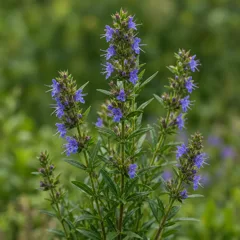
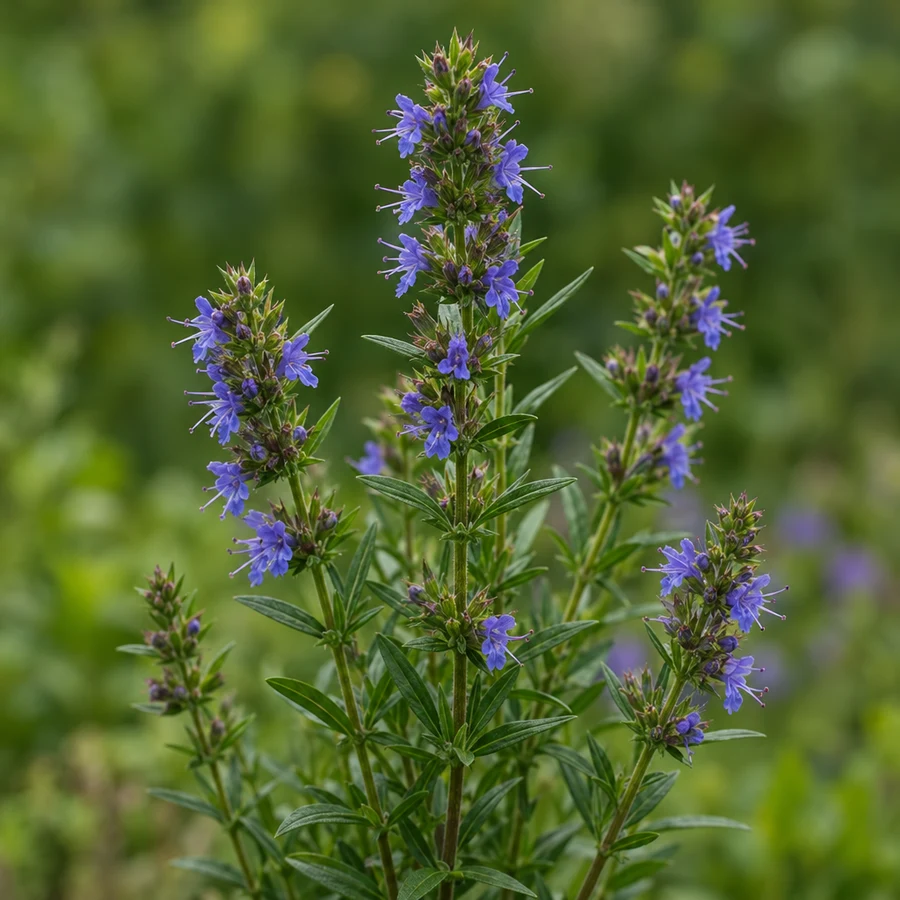
Hyssop is a hardy, bushy herb that grows 1 to 2 feet tall, with narrow leaves and spikes of blue-violet flowers in summer. It has a strong, minty, slightly bitter scent. It's easy to grow in dry, sunny spots, copes well with chalky or alkaline soil, and stays green through much of the winter in mild areas.
Hyssop is a bee and butterfly magnet and a good edging plant for herb gardens, or a tough addition to a pollinator border. This page is about true hyssop, Hyssopus officinalis, not anise hyssop (Agastache), which is a different plant with a licorice scent.
Recent community discussions
No one has talked about Hyssop yet. Be the first.
At a glance
| Plant type | Herb and small flowering shrub |
| Botanical name | Hyssopus officinalis |
| Annual or perennial | Perennial (semi-evergreen) |
| Sun | Full sun |
| Water | Low once established |
| Spacing | 12 to 18 inches |
| Planting depth | 1/8 to 1/4 inch, barely covered |
| Days to germinate | 14 to 21 |
| Days to maturity | 75 to 90 from seed |
| Best USDA zones | 4 to 9 |
| Soil pH | 6.0 to 8.0 |
Is it hyssop weather where you are? See everything to plant this month or read your zone notes.

Sow seeds indoors 6–8 weeks before last frost. Transplant outdoors after frost danger has passed. Can also be direct sown in late spring.

Germinates in 14–21 days; matures in 60–90 days; perennial.

Zones 4–9, June?September; in mild zones May?August the following year; indoors year-round.

Dry, well-drained rocky or sandy soils, pH 6.0–7.5. Tolerates poor fertility.
Pests to watch for




Diseases
Mateo is researching the diseases that affect this plant.
A little history
Hyssop is native to parts of Europe, Asia and Africa and has been grown for centuries, in cooking, in folk medicine and as a strewing and cleansing herb. It was a common plant in medieval monastery and cottage gardens in Europe. The "hyssop" named in very old texts may have been a different plant altogether, so the herb in your bed has a long story, just perhaps not the oldest one.
When to sow in your zone
Spring: Start seeds indoors 6 to 8 weeks before your last frost (counting back from your frost date makes this easy), then set plants out once frost danger has passed. Or sow directly outdoors in late spring, after the last frost, when the soil has warmed.
Fall: In mild zones (8 and 9), nursery plants can go in during early fall while the soil is still warm, as long as the spot drains fast, since cold, wet soil is what hyssop dislikes most. In colder zones, and anywhere with soggy winters, spring planting is the safer bet.
In November: In zone 9, a nursery plant can still go into a dry, sunny spot. In zones 4 to 8, it's too late to plant; leave existing plants unpruned until spring and add hyssop to your seed list for indoor sowing late next winter. Find your zone on the zones page and see what else fits this month in the November planting list.
Growing it, step by step
From seed
The seeds are small. Barely cover them, 1/8 to 1/4 inch deep, and keep them at 65 to 70°F. They sprout in 2 to 3 weeks.
Moving it outside
Harden off seedlings, then plant them in a sunny spot with excellent drainage, 12 to 18 inches apart. Water in well, then ease off.
Water
Water young plants weekly. Established plants need water only in long dry spells. Soggy soil causes rot.
Mulch
Use gravel or a thin layer of light mulch to keep the crown dry. Avoid piling thick organic mulch against the stems.
Feeding
Hyssop prefers lean soil and needs little feeding. A little compost in spring is enough; rich soil makes leggy plants with less flavor.
Keeping it happy
Wait until mid-spring to prune, once fresh shoots are showing; cuts made in fall can be damaged by frost. Trim back to just above the new growth to shape the plant, and give it a light shear after flowering to keep it compact. Bare, leafless stems can be slow to sprout again, so go gently if a plant is very woody. Plants live for several years but get woody, so replace them with young plants when growth slows. Hyssop also makes a neat low hedge.
Trouble in the bed
- Root rot: The main risk. Plant in fast-draining soil and avoid overwatering. More on root rot.
- Powdery mildew: Occasional. Space plants for airflow and avoid overhead watering. More on powdery mildew.
- Septoria leaf spot: Reported now and then as small dark spots on the leaves. Pick off spotted leaves and keep the foliage dry.
- Spider mites: Appear in hot, dry weather. Rinse the leaves with water.
- Aphids: Spray off with water or use insecticidal soap.
- Leafhoppers: Can cause pale speckling on the leaves. Usually minor; a strong spray of water helps.
- Root-knot nematodes: Recorded on hyssop, mostly in warm, sandy soils. Stunted plants with knobbly roots are the sign; move hyssop to a fresh spot.
Good neighbors




Good: Lavender, rosemary, sage, and thyme, which like the same dry, sunny conditions, and cabbage-family crops such as cabbage and broccoli, since its flowers draw bees and beneficial insects.
Avoid: Thirsty plants like mint that want moist, rich soil, which would leave hyssop too wet.
Seeds that grow well in your area in November
Affiliate links — shopping through these helps keep Evening Vines free. Smooth Blue Aster
 Polka Dot Mix
 Black-Eyed SusanSeeds
 ColumbineSeeds
Varieties worth growing
True hyssop is mostly sold as the species. You'll also find:
- Blue hyssop (the species): The standard, with blue-violet flowers. Sometimes sold as "true hyssop"; it's the same plant.
- White hyssop (Hyssopus officinalis f. albus): White flowers.
- Pink hyssop ('Roseus'): Soft pink flowers.
- Rock hyssop (Hyssopus officinalis subsp. aristatus): A compact, dwarf form, good for edging.
Hyssop seeds to buy
Affiliate links — shopping through these helps keep Evening Vines free.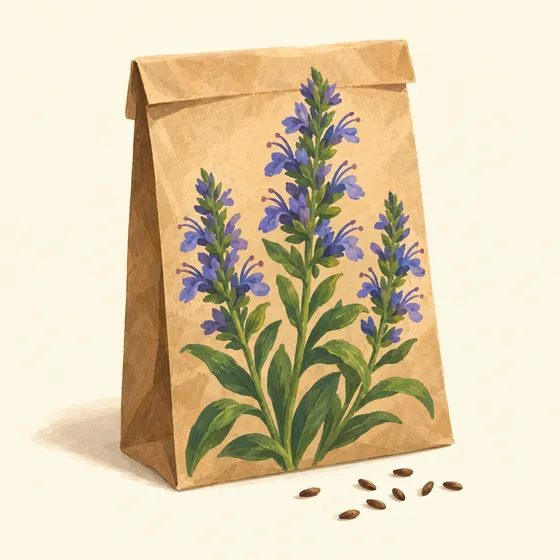 Hyssop
Picking notes
Plants sown in spring give their first leaves by summer of the first year. Snip leaves and flowering tops from June to September; they taste best just as the flowers start to open. Harvest in the morning after the dew dries. Use them fresh, or hang small bundles upside down in a warm, shady, airy place (see drying herbs for winter).
Saving seed for next year
Let some flower spikes dry on the plant until the seed heads turn brown. Rub them over a bowl to release the small seeds, dry them for a week, and store them somewhere cool and dry. Hyssop also self-sows in good conditions.
From garden to table
Hyssop leaves and flowers are used in small amounts in soups, salads, teas, and liqueurs. The flavor is strong and bitter, so use it sparingly. The essential oil is potent and can be harmful in large amounts. Anyone who is pregnant or has epilepsy should avoid hyssop or ask a health professional first. A compact plant also does well in a sunny herb container.
Questions from the potting bench
My "hyssop" smells like licorice. Is it the same plant? No. Hyssopus officinalis is true hyssop, with a minty, bitter scent. Anise hyssop is Agastache and smells like licorice.
When can I plant hyssop in my zone? In zones 4 to 8, start seeds indoors in late winter or set plants out after the last spring frost. In zone 9, early fall planting works too if the soil drains well. Check your frost dates on the zones page.
Does it come back? Yes, in zones 4 to 9, and it stays semi-evergreen in mild areas.
Do bees like it? Yes, very much.
Grower reports
How did Hyssop do in your garden? Members rate it and say which zone and month they planted, so everyone can see what works near them.
Recent community discussions
No one has talked about Hyssop yet. Be the first.
Seeds to try
Affiliate links — shopping through these helps keep Evening Vines free.Essentials for Growing Hyssop
 Grow Bags
Breathable fabric pots: grow almost anything on a patio, balcony or driveway, and roots never circle.
See it →
 Seed Starting Tray
Reusable tray with a clear dome to give seeds a warm, humid start indoors.
See it →
 LED Grow Light
Full-spectrum light for sturdy seedlings through short winter days.
See it →
 Pruning Shears
Sharp bypass pruners for harvesting, deadheading and tidying.
See it →
 Watering Can
Long-spout can for gentle watering of seedlings and pots.
See it →
 Organic Fertilizer
Slow-release organic plant food for vegetable beds and containers.
See it →
