
Impatiens
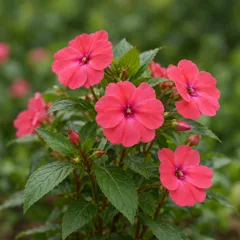
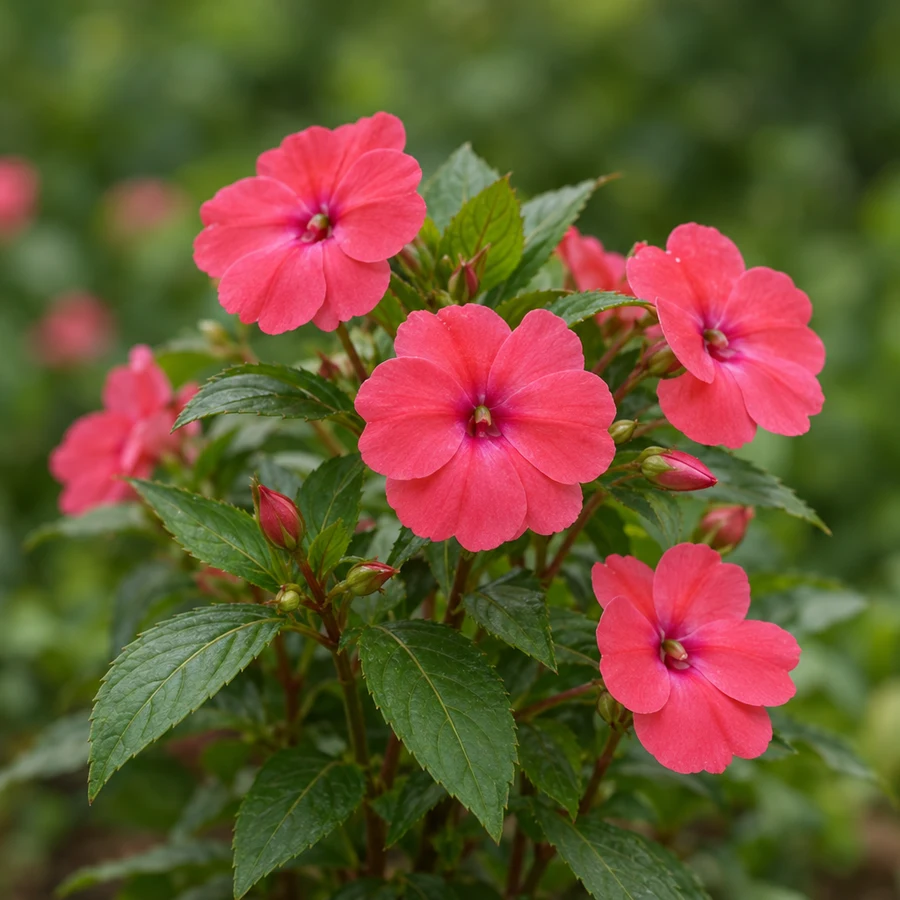
Impatiens are the flower for the shady side of the house. Where most summer annuals sulk without sun, these keep a low mound of pink, red, white, coral or lilac flowers going from late spring until the first frost. They need no deadheading, as the old flowers drop off on their own. Give them rich, moist soil and steady water, and they'll fill a bed under a tree or a pot on a north-facing step.
There are three main kinds. Busy Lizzie (Impatiens walleriana) is the classic shade bedding plant. New Guinea impatiens have bigger flowers and darker, glossier leaves and handle a bit more sun. SunPatiens are hybrids bred to grow in full sun.
A disease called impatiens downy mildew has made busy Lizzies harder to grow since the 2000s. Newer resistant varieties and the New Guinea types are the answer, and the details are below.
Garden balsam is a close cousin in the same genus.
Recent community discussions
No one has talked about Impatiens yet. Be the first.
At a glance
| Plant type | Tender bedding flower |
| Botanical name | Impatiens walleriana (busy Lizzie); New Guinea impatiens are Impatiens hawkeri |
| Annual or perennial | Tender perennial grown as an annual |
| Sun | Part shade to full shade; New Guinea types like morning sun; SunPatiens take full sun |
| Water | Keep evenly moist, never soggy; pots and beds under trees may need water daily in summer |
| Spacing | 8 to 10 inches for compact types; up to 18 inches for tall ones |
| Planting depth | Seed on the surface, barely dusted with mix; transplants at the depth they grew in the pot |
| Days to germinate | 14 to 21 days at about 65 to 70°F |
| Days to maturity | About 12 weeks from seed to first flower; bought plants bloom from planting until frost |
| Best USDA zones | Annual in zones 2 to 11; perennial outdoors in zones 10 to 11 |
| Soil pH | About 6.0 to 7.0 (slightly acidic to neutral) |
Is it impatiens weather where you are? See everything to plant this month or read your zone notes.
Pests to watch for



Diseases


A little history
Busy Lizzie comes from eastern Africa, in a band from Kenya and Tanzania south through Malawi to Mozambique and Zimbabwe, where it grows in damp, shady forest. Its species name honors Horace Waller, a 19th-century English missionary. It reached European greenhouses in the late 1800s and grew into one of the best-selling bedding plants in the US and UK. The genus name is Latin for "impatient," after the ripe seed pods that burst at a touch.
New Guinea impatiens came from plant-collecting trips to New Guinea in the 1970s, and breeders crossed them into the garden types sold today.
In the UK, impatiens downy mildew was first found in 2003 and caused a major outbreak in 2011. It swept across much of the US in the early 2010s. Sales fell sharply on both sides of the Atlantic until resistant busy Lizzies arrived in the late 2010s, starting with Imara in 2018 in the UK.
When to sow in your zone
Spring, indoors: Impatiens are slow from seed. Start them indoors 10 to 12 weeks before your last frost. Not sure of your date? Count back from your last frost.
Planting out: Set plants outside 1 to 3 weeks after the last frost, once nights stay above about 45 to 50°F. Cold nights stall them, and frost kills them outright.
Mild winters: In zones 10 and 11, plant in fall for flowers through the winter and spring. Summer heat there is hard on busy Lizzies, so many gardeners treat them as cool-season color.
This month (November): In zones 9 and colder, frost has ended the season. Pull and trash the old plants (don't compost them if you saw leaf drop or white fuzz). If you want to keep a favorite New Guinea plant, pot it up and grow it as a houseplant in a bright window. In zones 10 and 11, this is a good time to set out new plants for winter color.
Growing it, step by step
From seed
The seed is tiny. Press it onto the surface of moist seed-starting mix and barely dust it over, as it needs light to sprout. Cover the tray with a clear lid and keep it at about 65 to 70°F in a bright spot out of direct sun. Expect sprouts in 2 to 3 weeks. Grow seedlings under lights or in a bright window, and move them into small pots once they have two sets of true leaves.
Moving it outside
Harden off for about a week. Plant 8 to 10 inches apart for compact busy Lizzies, or as the label says for New Guinea types and SunPatiens. Close spacing gives a solid carpet sooner, but a little more room lets leaves dry and helps keep disease down.
Soil
Rich, crumbly soil that holds moisture but drains. Dig in compost before planting. In pots and hanging baskets, use a good potting mix, never garden soil.
Water
Impatiens wilt fast when dry, and a plant that wilts often drops its buds and flowers. Water at the base so the leaves stay dry, and water in the morning. Beds under trees lose water to the tree roots and need more than you'd think. Don't let pots sit in a saucer of water.
Mulch
An inch or two of fine mulch keeps the roots cool and the soil evenly moist.
Feeding
Feed once a month with a balanced water-soluble fertilizer, or every 2 weeks in pots and baskets. Too much nitrogen gives big leaves and fewer flowers.
Keeping it happy
Impatiens clean themselves, so there's no deadheading. If plants get leggy by midsummer, cut the stems back by about a third and feed them. They'll fill out again in a couple of weeks.
New Guinea impatiens can be kept over winter. Pot one up before frost, or take tip cuttings 3 to 4 inches long. Cuttings root easily in water or moist mix. Keep them in a bright spot above about 50°F and plant them out again after the last frost.
Trouble in the bed
- Impatiens downy mildew: The big one for busy Lizzies. Leaves turn yellow, curl down and drop, often with white fuzz underneath, until only bare stems are left. It spreads in cool, wet weather and can stay in the soil for years. Pull and bag infected plants, roots and all. Don't plant busy Lizzies in that bed again for at least a year, and replace the mix in pots. Grow resistant series such as Beacon or Imara XDR, or switch to New Guinea impatiens or SunPatiens, which are resistant. See downy mildew.
- Aphids: Cluster on new growth. Spray them off with water.
- Spider mites: Speckled, dull leaves in hot, dry weather, mostly on New Guinea types in sun. Keep plants well watered and rinse the undersides of leaves.
- Slugs and snails: Chew holes in leaves in damp shade. Check at dusk.
- Damping off: Seedlings collapse at soil level. Use clean trays and fresh mix, and don't overwater.
Good neighbors






Good: Begonias, coleus, ferns and hostas share the same shade and moist soil. Lobelia, alyssum and forget-me-nots make soft edges in part shade. In spring pots, violas can fill in until it's warm enough for impatiens.
Avoid: Hot, dry, sunny beds (except for SunPatiens), and shallow-rooted trees that steal all the water.
Seeds that grow well in your area in November
Affiliate links — shopping through these helps keep Evening Vines free. Common Milkweed
 PansySeeds
 PhloxSeeds
 Royal Mix
Varieties worth growing
- Beacon: Busy Lizzie bred for strong downy mildew resistance. Grown from seed or sold as plants. A good choice anywhere the disease has shown up, including the UK and Ireland.
- Imara XDR: Another resistant busy Lizzie series, about 8 to 10 inches tall, in many colors.
- Super Elfin XP: A long-time favorite compact busy Lizzie, from seed. Not resistant, so best where downy mildew hasn't been a problem.
- Divine (New Guinea): Grown from seed, with bronze or green leaves and large flowers. Takes morning sun.
- SunPatiens Compact: Hybrid sold as plants. Handles full sun and heat, so it suits southern US and Australian gardens. Resistant to downy mildew.
Picking notes
Impatiens aren't a cut flower, as the stems wilt fast in a vase. Single flowers float nicely in a shallow bowl of water for a day or two.
Saving seed for next year
Busy Lizzies make small green pods that burst when ripe. Cup a fat pod in your hand to catch the seed, then dry it for a week and store it cool and dry. Most garden types are hybrids, so seedlings won't match the parent. Never save seed from plants that had downy mildew. New Guinea types and SunPatiens are kept from cuttings, and many are protected varieties, so don't propagate them for sale.
From garden to table
Grown for shade beds, borders, pots and hanging baskets. Impatiens flowers are sometimes listed as edible garnishes, but grow them for looks, not for eating. NC State Extension lists busy Lizzie as non-toxic to cats, dogs and horses.
In frost-free areas, busy Lizzie can self-seed into damp, shady ground and has escaped into moist forest in some warm regions. Don't dump old plants or potting mix in the bush or woods.
Questions from the potting bench
Why did my impatiens drop all their leaves? If leaves yellowed and fell in a few days, leaving bare stems, it's likely downy mildew. Pull the plants, bag them and grow a resistant type or New Guinea impatiens next year. If plants just wilted, it was a dry spell. Water and they'll usually recover, though they may drop flowers.
Can impatiens take sun? Busy Lizzies scorch in full sun except in cool, cloudy summers like the UK and Ireland, where they manage with more light. New Guinea types like morning sun and afternoon shade. SunPatiens are the ones bred for full sun.
Will impatiens come back next year? Only in zones 10 and 11, and even there they often fade in summer heat. Elsewhere, treat them as annuals or bring cuttings indoors for winter.
Do I need to deadhead impatiens? No. The old flowers fall off on their own. Trim leggy plants back by a third in midsummer if they flop.
Grower reports
How did Impatiens do in your garden? Members rate it and say which zone and month they planted, so everyone can see what works near them.
Recent community discussions
No one has talked about Impatiens yet. Be the first.
Essentials for Growing Impatiens
 Grow Bags
Breathable fabric pots: grow almost anything on a patio, balcony or driveway, and roots never circle.
See it →
 Pruning Shears
Sharp bypass pruners for harvesting, deadheading and tidying.
See it →
 Seed Starting Tray
Reusable tray with a clear dome to give seeds a warm, humid start indoors.
See it →
 Garden Kneeler
A kneeling pad that flips into a seat: easier on knees and back.
See it →
 Plant Labels
Waterproof markers so you know what's coming up where.
See it →
 Organic Fertilizer
Slow-release organic plant food for vegetable beds and containers.
See it →
