
Scabiosa
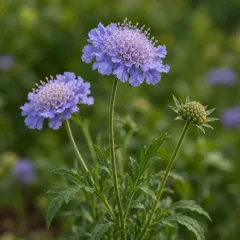
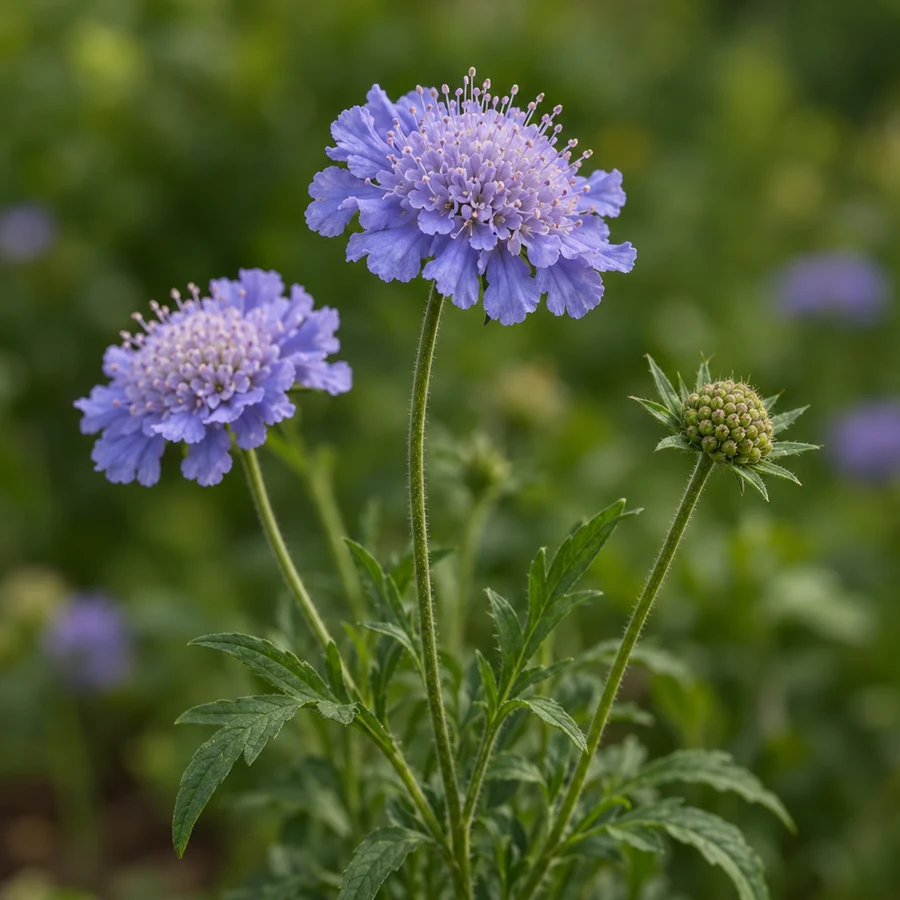
Scabiosa, or pincushion flower, has airy blooms on tall, wiry stems. Each flower is a domed cushion of tiny florets ringed by ruffled petals, and the stamens poke out like pins. Bees and butterflies love it, it's a favorite for cutting, and it keeps blooming for months if you keep picking.
Recent community discussions
No one has talked about Scabiosa yet. Be the first.
At a glance
| Plant type | Flower |
| Botanical name | Scabiosa atropurpurea (annual); Scabiosa columbaria (perennial) |
| Annual or perennial | Annual or short-lived perennial |
| Sun | Full sun |
| Water | Moderate |
| Spacing | 9 to 15 inches (annuals); 12 to 18 inches for perennial clumps |
| Planting depth | Barely cover, about 1/8 inch (light helps germination) |
| Days to germinate | 10 to 14 days |
| Days to maturity | 90 to 110 days to bloom |
| Best USDA zones | 3 to 9 (perennial types); annual types anywhere |
| Soil pH | 6.5 to 8.0 (neutral to alkaline) |
Is it scabiosa weather where you are? See everything to plant this month or read your zone notes.

Start indoors 6–8 weeks before last frost, transplant after frost. In mild zones, sow in fall for early spring blooms.

Germinates in 7–14 days; blooms in 60–90 days.

Zones 3–9, June?Oct; in mild zones April?Aug; prefers moderate climates.

Well-drained sandy loam, pH 6.0–7.5. Moderate fertility with organic matter supports growth.
Pests to watch for




Diseases


A little history
The name comes from the Latin scabies, "the itch," a nod to the plant's rough leaves and to old herbal remedies meant to soothe itchy skin. At one time people also believed it could cure scurvy. Wild scabiosa grows across southern Europe, western Asia and northern Africa.
When to sow in your zone
Spring: Start seeds indoors 6 to 8 weeks before your last frost. Plant out once frost danger has passed. Our count back from last frost post shows how to find your start date.
Fall: In zones 8 to 10, sow annual types in fall for spring bloom. In colder zones, wait and sow in spring.
By zone: In zones 3 to 7, sow or set out plants after the last spring frost. Perennial types planted in spring settle in and come back the next year. In mild zones 8 to 10, fall sowing gives earlier, longer bloom the following spring. Look up your frost dates and sowing windows on the zone pages.
Growing it, step by step
From seed
Press the seed onto the mix and barely cover it, about 1/8 inch, since light helps it sprout. Keep it at 65 to 70°F and keep the mix moist. Expect seedlings in 10 to 14 days.
Moving it outside
Plant out after frost at the same depth as in the pot. Space annuals 9 to 15 inches apart and perennial clumps 12 to 18 inches apart.
Water
Water weekly and let the soil dry slightly between drinks. Soggy soil is the quickest way to lose a plant.
Mulch
Add a thin layer of mulch and keep it off the crown.
Feeding
Mix compost in at planting. Skip heavy feeding; scabiosa flowers best in lean soil.
Keeping it happy
Deadhead spent blooms to keep new ones coming (see deadhead flowers for more blooms). Stake tall types in windy spots. Add a little lime if your soil is acidic. Divide perennial types every 3 to 4 years in early spring, just as new growth starts; it keeps short-lived clumps young.
Trouble in the bed
- Aphids: Spray them off with water or use insecticidal soap.
- Slugs and snails: They chew young leaves, especially in damp springs. Hand-pick in the evening or set traps.
- Root rot and crown rot: The main trouble for scabiosa. Both come from wet, heavy soil. Plant in well-drained ground, don't bury the crown, and pull up any plant that wilts and collapses at the base.
- Powdery mildew: Give plants room for air to move and water the soil, not the leaves.
Good neighbors






Good: Zinnias, cosmos, coneflowers and snapdragons. All like the same sun and drainage, and they make a long-blooming cutting bed together. For a bee-friendly mix, see sow a pollinator border.
Avoid: Acidic, soggy beds.
Seeds that grow well in your area in November
Affiliate links — shopping through these helps keep Evening Vines free. Wild Lupine
 Common Milkweed
 PansySeeds
 PhloxSeeds
Varieties worth growing
- Black Knight: Deep maroon, nearly black flowers (annual).
- Chile Black: Near-black maroon blooms with a light scent (annual or short-lived perennial).
- Butterfly Blue: Lavender-blue perennial that blooms for months. It's sterile, so it won't self-seed.
- Pink Mist: Soft pink perennial.
- Fama: Large deep blue to violet-blue blooms on long stems (Scabiosa caucasica).
- Stellata (drumstick or starflower scabiosa): A less common annual grown for its seed heads, papery globes studded with little stars. The flowers are small and pale; the seed heads are the show.
Picking notes
Cut stems when the flowers are nearly fully open and put them in water right away. For Stellata seed heads, cut while they're still pale green with bronze edges, before they turn brown and start to shed. Both dry well for winter arrangements.
Saving seed for next year
Let flowers form seed heads that dry on the plant. Rub out the seeds and store them cool and dry. Two things to know: Butterfly Blue is sterile and won't give you seed, while the annual S. atropurpurea self-sows freely and has escaped gardens in some areas. If you don't want seedlings popping up, deadhead before the heads ripen. More tips in saving seeds from your garden.
From garden to table
Grown for display, not food. Use it in borders, cutting beds and pollinator gardens, and in the vase both as fresh flowers and as dried seed heads.
Questions from the potting bench
Does scabiosa come back? Perennial types do, but they're short-lived. Dividing every 3 to 4 years helps.
When should I plant scabiosa? Start seeds indoors 6 to 8 weeks before your last frost, or sow annual types in fall in zones 8 to 10. Your zone page has the dates.
Does it like acidic soil? No. It wants neutral to alkaline soil, about pH 6.5 to 8.0.
Will it self-seed? The annual kind often does. Butterfly Blue won't, because it's sterile.
Is it good for cut flowers? Yes, it lasts well in a vase.
Grower reports
How did Scabiosa do in your garden? Members rate it and say which zone and month they planted, so everyone can see what works near them.
Recent community discussions
No one has talked about Scabiosa yet. Be the first.
Essentials for Growing Scabiosa
 Grow Bags
Breathable fabric pots: grow almost anything on a patio, balcony or driveway, and roots never circle.
See it →
 Pruning Shears
Sharp bypass pruners for harvesting, deadheading and tidying.
See it →
 Seed Starting Tray
Reusable tray with a clear dome to give seeds a warm, humid start indoors.
See it →
 Garden Kneeler
A kneeling pad that flips into a seat: easier on knees and back.
See it →
 Plant Labels
Waterproof markers so you know what's coming up where.
See it →
 Organic Fertilizer
Slow-release organic plant food for vegetable beds and containers.
See it →
