
Watermelon
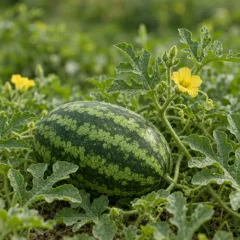
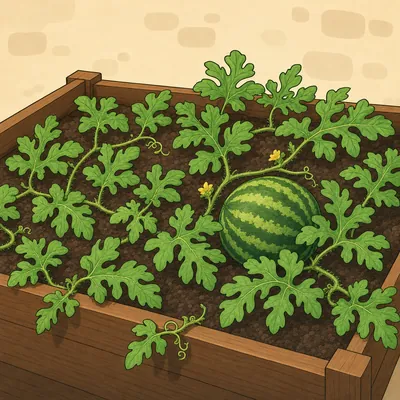
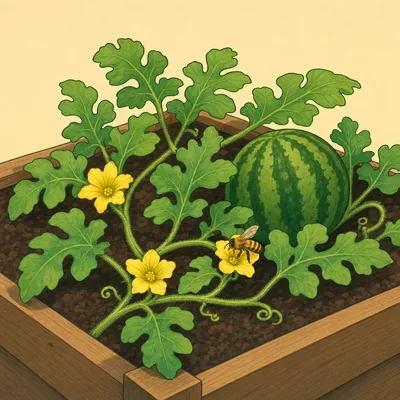
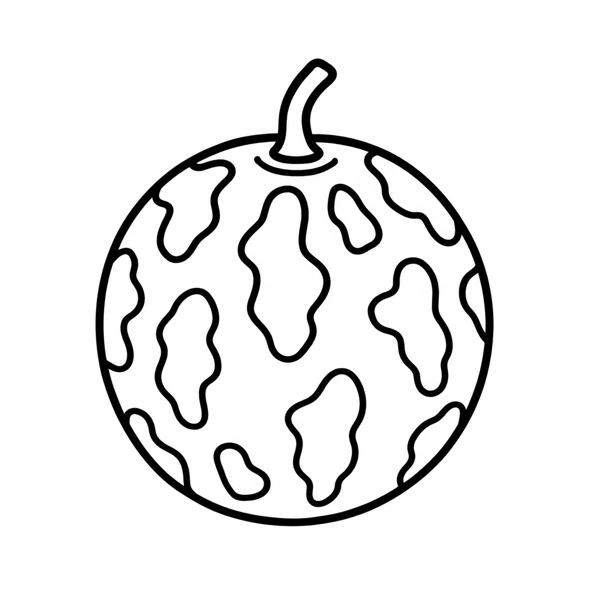
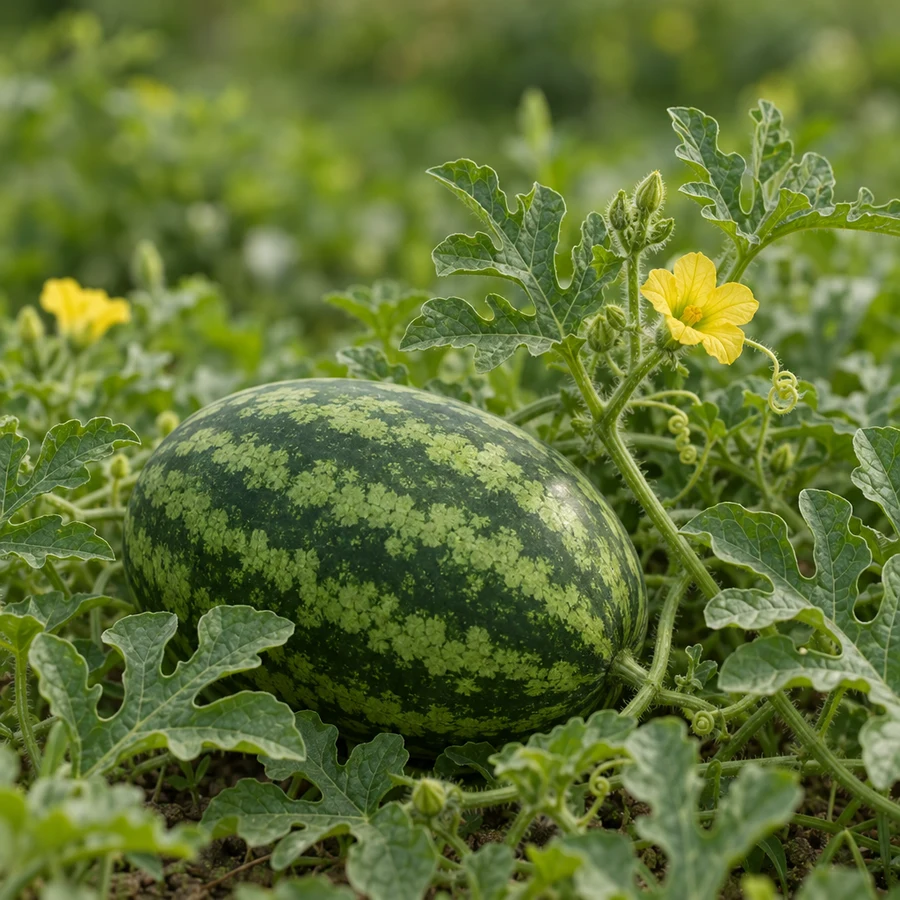
Watermelon is a sprawling, sun-hungry vine with deeply lobed leaves and big, juicy fruits strung along runners. Vines wander 6 to 12 feet, less for compact kinds. Inside, the flesh can be red, pink, orange, or yellow, and the fruits run from little icebox melons to 20-pound giants.
Think of it as a heat lover first. Your zone number matters less than whether your summer is long and warm enough. In cooler places it still works if you pick a fast, small-fruited variety, warm the soil with black plastic, and set out transplants rather than seed.
Recent community discussions
No one has talked about Watermelon yet. Be the first.
At a glance
| Plant type | Fruit (vining) |
| Botanical name | Citrullus lanatus |
| Annual or perennial | Annual |
| Sun | 8 or more hours of full sun |
| Water | 1 to 2 inches per week, deep and even until fruit starts to ripen |
| Spacing | 24 to 36 inches for compact types; 36 to 48 inches for vining types |
| Planting depth | 1 inch |
| Days to germinate | 3 to 10 days |
| Days to maturity | 70 to 100 days |
| Best USDA zones | 4 to 11 (zone 3 only with very fast types under black plastic; it needs 70 to 100 warm, frost-free days) |
| Soil pH | 6.0 to 6.8 |
From planting to harvest
Is it watermelon weather where you are? See everything to plant this month or read your zone notes.

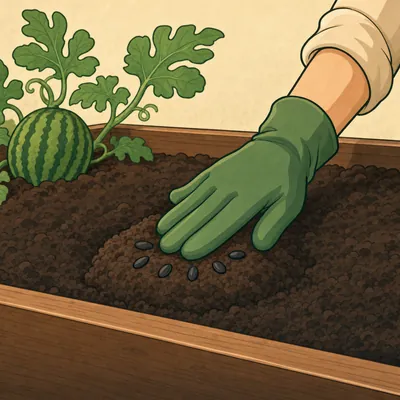
Direct sow 2 weeks after last frost when soil reaches 70°F+ (21°C). In Zones 9–11, can sow again in late summer for a fall crop.

70–90 days; large types longer.

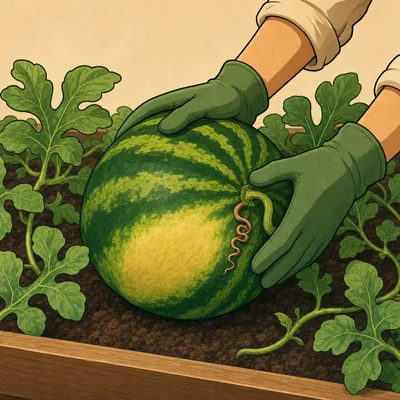
Zones 3–11, July?Sept; ready when underside turns golden-yellow and melon sounds hollow.

Prefers sandy soils, pH 6.0–7.5. Needs warm soil for germination.
Pests to watch for





A little history
Watermelon began in the dry regions of Africa, where wild relatives were valued for their water and seeds. Cultivation spread to ancient Egypt and across the Mediterranean and Asia. It arrived in the Americas centuries ago and is now a classic summer fruit worldwide.
When to sow in your zone
When to plant watermelon in spring: Wait for warm soil, at least 70°F at planting depth, which usually means 2 to 3 weeks after your last frost. Sow seed straight into the bed then. In short-summer areas, start seed indoors 3 to 4 weeks before that date so the plants go out the same week. Our count back from last frost post shows how to work out the dates.
Timing by zone (find your frost dates on your zone page):
- Zones 3 to 5: Plant out in early to mid June. Use quick varieties and black plastic. See zone 3, zone 4, zone 5.
- Zones 6 to 8: Plant out from mid May to early June. See zone 6, zone 7, zone 8.
- Zones 9 to 11: Plant out from late winter to spring, once nights stay above 55°F, and again in midsummer for a fall crop. See zone 9, zone 10, zone 11.
Fall: Watermelon can't take frost, so most gardens get no fall crop. In frost-free and nearly frost-free spots (zones 9 to 11), a sowing in July can ripen fruit from October into December. Everyone else waits for spring.
In November: It's no time to sow watermelon, except maybe in the very warmest frost-free gardens. For most of us this month is for jotting down which variety to try next summer.
Growing it, step by step
From seed
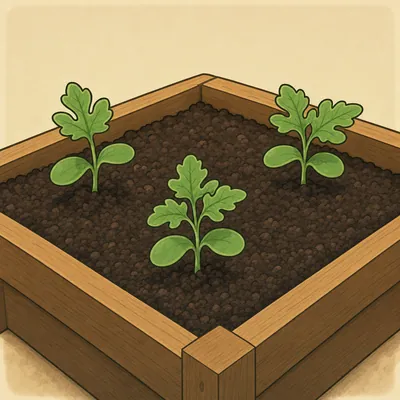
Sow 2 or 3 seeds per hill, 1 inch deep, in warm soil. They come up in 3 to 10 days. Keep the strongest seedling and snip the rest off at soil level so you don't disturb its roots. If you start them indoors, use biodegradable pots, because watermelon roots hate being moved, and keep the seedlings warm and in bright light.
Moving it outside
Harden the seedlings off for about a week (hardening off seedlings) and plant them out when nights stay above 55°F. For watermelon spacing, give compact types 24 to 36 inches and vining types 36 to 48 inches, in raised mounds or rows of rich, well-drained soil. Set each plant at the same depth it grew in the pot and handle the root ball gently. A row cover keeps young plants cozy if the weather turns cool.
Water
Give 1 to 2 inches a week, deeply, at the base of the plants. Keep the soil evenly moist while the vines run and the fruits swell. Ease off once the fruits start to ripen. Less water then concentrates the sweetness and cuts down on cracking.
Mulch
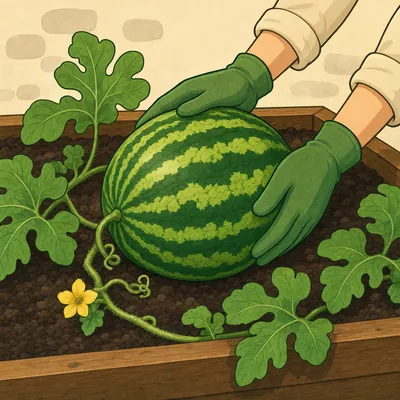
Early in the season, black plastic warms the soil. Once the soil is warm, straw works well. Tuck straw or a board under each fruit to keep it clean and dry.
Feeding
Mix compost into the planting site. Once the vines start to run, side-dress with a balanced fertilizer. After the flowers appear, change to a feed lower in nitrogen and higher in potassium. Too much nitrogen gets you leaves instead of melons.
Keeping it happy
Watermelon needs bees, so don't spray anything while it's in flower. If not much fruit sets, play bee yourself: dab pollen from a male flower onto a female flower (the one with a tiny melon behind it). Our hand-pollinate squash post walks through it, and it works the same way here. For bigger melons, leave just 2 or 3 fruits per vine. Keep the weeds down until the vines cover the ground. Move the bed each year, and skip any spot where cucumbers, squash, pumpkins, or melons grew in the last 2 to 3 years (crop rotation against disease).
Trouble in the bed
Everything to watch for, all in one place:
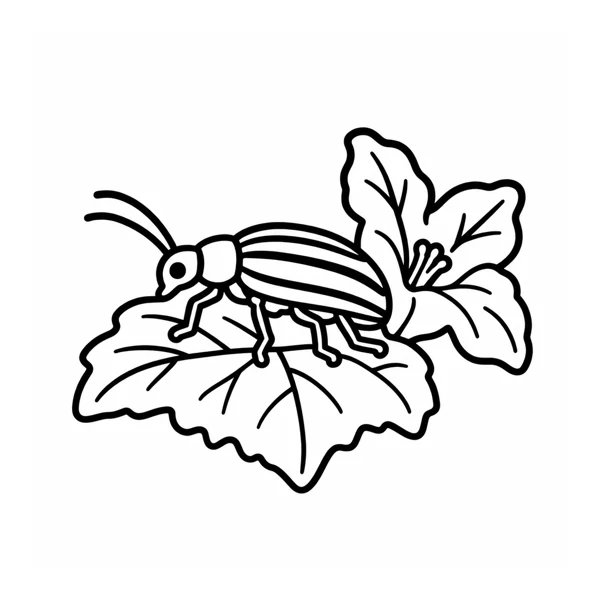
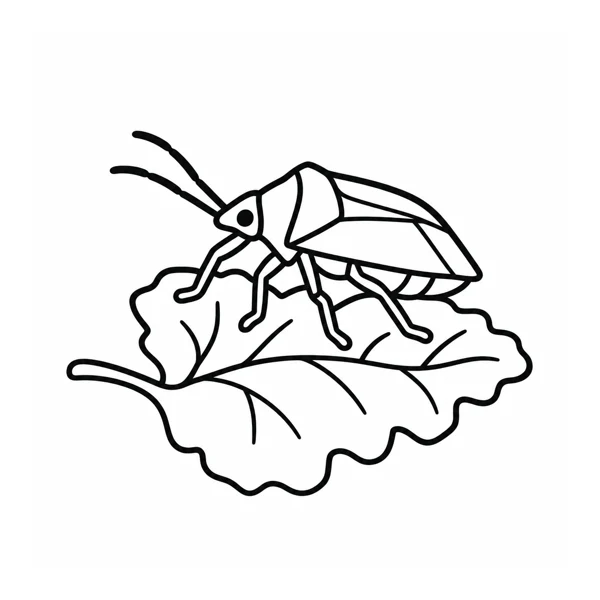
- Cucumber beetles: Striped and spotted beetles chew seedlings, flowers, and sometimes the rind. Unlike cucumbers and muskmelons, watermelon is highly resistant to the bacterial wilt these beetles carry, so the real risk is to young plants. Cover seedlings with row cover until the first flowers open, then take it off for the bees. Hand-pick any beetles you see.
- Aphids: Small clusters on the undersides of leaves, often making them curl. Knock them off with a strong spray of water or use insecticidal soap, and never spray open flowers.
- Powdery mildew: A white, dusty coating on the leaves, usually from midsummer on. Space the plants so air moves between them and water the soil, not the leaves. More in our powdery mildew post.
- Fusarium wilt: A soil fungus. The vines wilt and collapse, often one runner at a time, even when the soil is moist. Grow resistant varieties and rotate beds, because the fungus lasts in the soil for years.
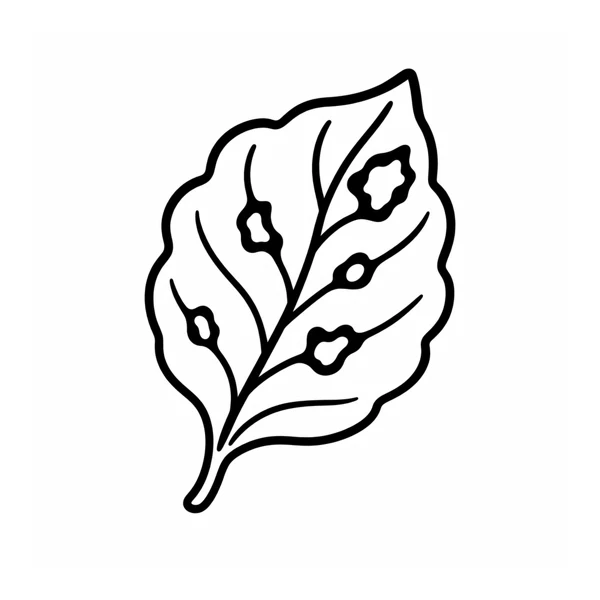
- Gummy stem blight: One of watermelon's worst diseases. Look for brown or black spots on the leaves and cracked stems that ooze a gummy, amber sap. In bad cases the fruit rots too. No watermelon resists it, so clear away old vines at the end of the season, rotate beds, and stay out of the patch while the leaves are wet.
Good neighbors




These pairings come from gardeners' tradition, not research, so take them as friendly suggestions.
Good: Corn, radishes, marigolds, nasturtiums, and beans.
Avoid: Potatoes (tradition again). Separately, there's a sound reason, not folklore, to keep other melon-family crops (cucumbers, squash, pumpkins, melons) out of the same bed year after year: they share the same pests and diseases.
Seeds that grow well in your area in November
Affiliate links — shopping through these helps keep Evening Vines free. Wild Lupine
 Common Milkweed
 PansySeeds
 PhloxSeeds
Varieties worth growing
- Sugar Baby: A small, early, sweet icebox melon, good for short seasons. Seeds
- Golden Midget: A tiny, very early melon. The rind turns yellow when it's ripe, which takes the guesswork out of picking. Seeds
- Yellow Doll: Small and early, with sweet yellow flesh.
- Crimson Sweet: A big striped melon with sweet red flesh. Seeds
- Charleston Gray: A long, pale green melon and a Southern classic.
- Orangeglo: A large melon with bright orange flesh.
- Moon and Stars: An heirloom with a dark green rind speckled with yellow, and red flesh. Seeds
Watermelon seeds to buy
Affiliate links — shopping through these helps keep Evening Vines free.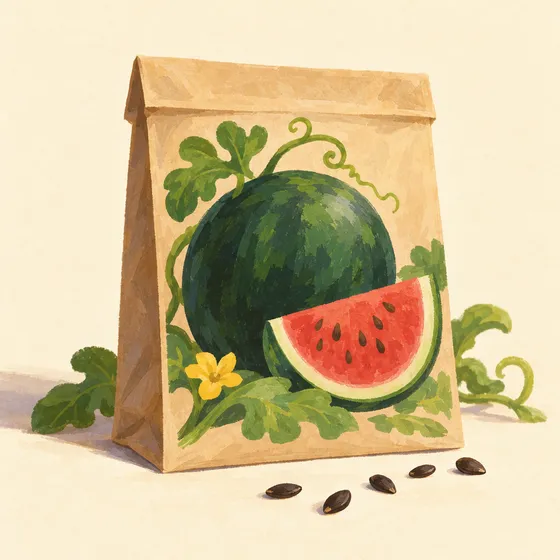 Crimson Sweet
Picking notes
When to pick depends on your zone:
- Zones 3 to 5: Mid August to mid September, before the first fall frost.
- Zones 6 to 8: Late July through September.
- Zones 9 to 11: From June in the warmest areas through August, plus a fall crop from October into December after a July sowing.
To tell a ripe melon, look for three signs together. The curly tendril nearest the fruit stem turns brown and dry. The pale spot where the melon sits on the ground changes from white to creamy yellow. And the rind goes from shiny to dull. Thumping is a fun tradition but not a reliable test. Cut the stem with a sharp knife and leave about an inch on the fruit. Uncut melons keep about 2 weeks at room temperature; once cut, keep them in the fridge. Our tell when melons are ripe post has more.
Saving seed for next year
Watermelon varieties cross with each other, so grow only one kind, or hand-pollinate and bag the flowers. Pick a fully ripe melon with good flavor, scoop out the seeds, rinse off the pulp, and dry them on a plate for 1 to 2 weeks. Kept cool and dry, they last 4 to 5 years. Seed from hybrids won't come true. See saving seeds from your garden.
From garden to table
Watermelon is about 92 percent water and provides vitamins A and C, plus lycopene in red types. Eat it fresh, blended into drinks, in salads with feta and mint, or grilled. The rind can be pickled, and the seeds can be roasted.
Questions from the potting bench
Why do my watermelons stay small? Usually it's one of four things: too little sun, poor pollination, too many fruits on one vine, or uneven watering.
How do I tell when it's ripe? Check for a dried tendril by the stem, a creamy yellow ground spot, and a dull rind. Don't trust the thump on its own.
Can I grow watermelon in a small space? Yes. Choose a compact variety and train the vines up a strong trellis, holding each fruit in a sling.
When should I plant watermelon? Plant it once the soil is at least 70°F, usually 2 to 3 weeks after your last frost. The zone pages linked under When to Sow give the timing for your area.
Grower reports
How did Watermelon do in your garden? Members rate it and say which zone and month they planted, so everyone can see what works near them.
Recent community discussions
No one has talked about Watermelon yet. Be the first.
Seeds to try
Affiliate links — shopping through these helps keep Evening Vines free.Essentials for Growing Watermelon
 Grow Bags
Breathable fabric pots: grow almost anything on a patio, balcony or driveway, and roots never circle.
See it →
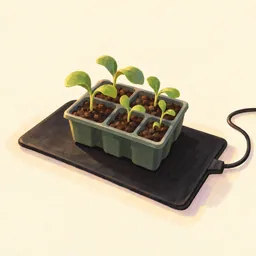 Seedling Heat Mat
Gentle bottom heat so peppers, tomatoes and eggplant sprout in a cool house.
See it →
 Soaker Hose
Waters the roots slowly, not the leaves: less disease, less water, less work.
See it →
 Organic Fertilizer
Slow-release organic plant food for vegetable beds and containers.
See it →
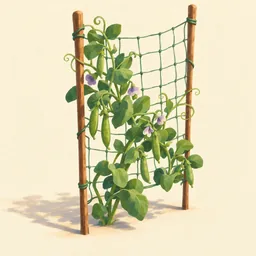 Trellis Netting
Strong netting for peas, beans, cucumbers and melons to climb: more crop in less space.
See it →
 Garden Hand Tools
Trowel, transplanter and cultivator: the three tools you reach for most.
See it →
