
Balsam
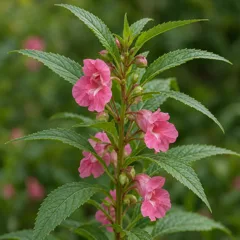
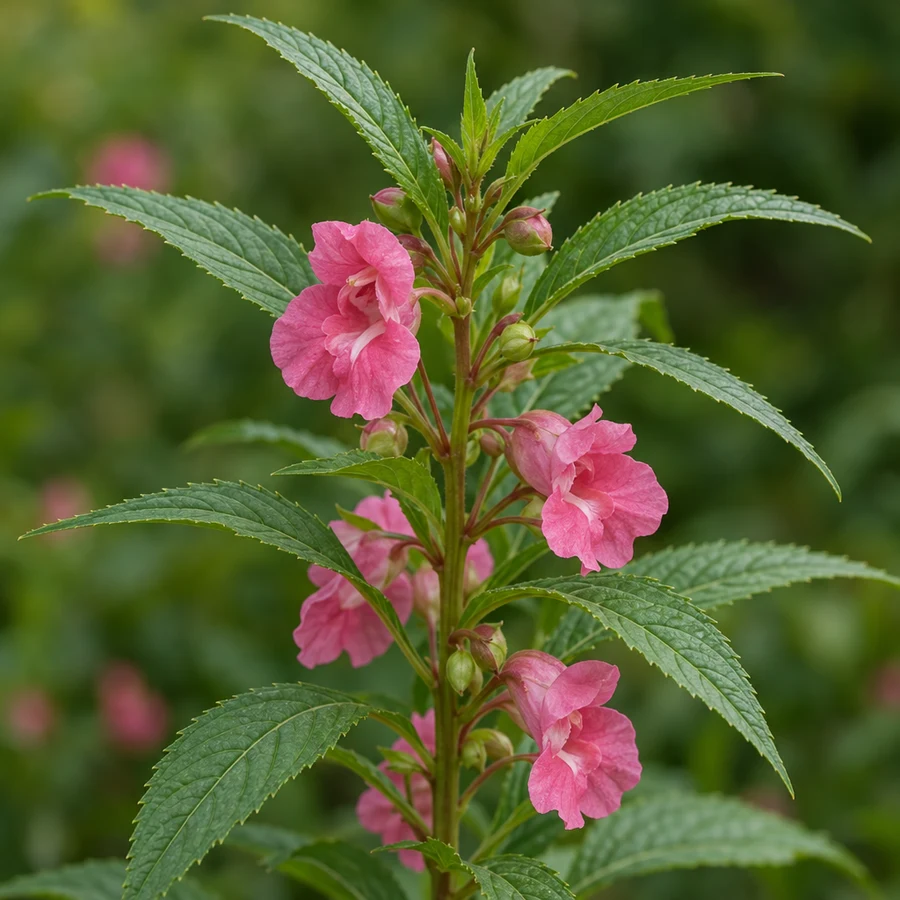
Garden balsam is an old-fashioned annual with upright stems and flowers tucked along the stalk, just above each leaf. The blooms come in pink, red, white, purple, and salmon, and many are double, like little camellias. Dwarf types stay about 8 inches tall, while the tall ones reach 3 feet.
It's a cheerful, easy flower for cottage borders, pots, and the edges of vegetable beds. It likes warmth and steady moisture, and it fills in quickly once the weather settles. Children love it because the ripe seed pods pop open at a touch.
Recent community discussions
No one has talked about Balsam yet. Be the first.
At a glance
| Plant type | Tender annual flower |
| Botanical name | Impatiens balsamina |
| Annual or perennial | Annual |
| Sun | Full sun to part shade (afternoon shade in hot zones) |
| Water | Regular, even moisture |
| Soil | Humus-rich, moist but well-drained |
| Spacing | 12 to 18 inches |
| Planting depth | 1/8 inch, lightly covered |
| Days to germinate | 7 to 14 |
| Days to maturity | About 60 to 70 days to bloom |
| Bloom season | Early summer until frost (into fall and winter in zones 9 to 11) |
| Height | About 8 inches to 3 feet, depending on the variety |
| Best USDA zones | Annual in zones 2 to 11 |
| Soil pH | 6.0 to 7.5 |
Is it balsam weather where you are? See everything to plant this month or read your zone notes.

Spring or early summer. Indoors: start 4–6 weeks before last frost. Outdoors: direct sow after frost. Fall: sow late summer in warm zones.

Germinates in 7–14 days; blooms in 60–70 days.

Zones 2–8, June?October; Zones 9–11, September?December; indoors year-round.

Rich, moisture-retentive silty clay loam, pH 6.0–7.5. Prefers damp, nutrient-rich conditions.
Pests to watch for





Diseases


A little history
Garden balsam comes from India, Sri Lanka and Myanmar. It has long been grown in Asian gardens and was a favorite in Victorian Europe and America. In parts of Asia, the petals were traditionally used to stain fingernails, much like henna. Its other common name, touch-me-not, comes from the way the ripe pods burst and fling their seed.
When to sow in your zone
Spring: Start seed indoors 6 to 8 weeks before the last frost, or sow outdoors 1 to 2 weeks after the last frost, once the soil is warm. Balsam is frost tender and sulks in cold soil. To find your date, look up your last frost on the zones page and count back from last frost.
Late summer: In zones 9 to 11, sow in late summer for fall bloom. Frost kills balsam, so fall sowing doesn't work in colder zones.
Growing it, step by step
The bed
Pick a spot with rich, crumbly soil that holds moisture but never sits wet. Dig in compost before planting. Heavy, soggy ground invites root and stem rot.
Sowing indoors
The seeds sprout best at 70 to 75°F. Cover them with only 1/8 inch of mix and keep it moist but not soggy. Thin or pot up the seedlings once they have two sets of true leaves.
Setting out
Harden off for a week and plant out after the last frost, 12 to 18 inches apart so air can move between plants.
Water and mulch
Balsam wilts quickly when dry. Water deeply once or twice a week, and more often in pots or hot weather. Water at the base. A 2-inch layer of mulch holds moisture and keeps the roots cool.
Feeding
Give a light, balanced organic feed every 4 to 6 weeks. Too much nitrogen gives leaves instead of flowers.
Keeping it happy
Pinch young plants at about 6 inches tall for a bushier shape. Tall types may need a stake. Remove spent flowers and yellow leaves to keep plants tidy. Keep the soil evenly moist in summer, because drought makes flowers and buds drop. Balsam self-sows freely in warm zones.
Trouble in the bed
- Aphids: Knock them off with a strong jet of water or use insecticidal soap.
- Thrips: Look for silvery streaks on leaves and petals. Rinse plants and use insecticidal soap if they build up.
- Powdery mildew: Give plants room so the leaves dry quickly, and pick off the white, dusty leaves. See powdery mildew.
- Impatiens downy mildew: This water mold (Plasmopara obducens) only attacks impatiens and their kin, and garden balsam is one of its hosts. On balsam it mostly shows as yellow spots on the leaves, sometimes with a pale fuzz underneath in cool, damp weather. Pull and bag infected plants, water at the base, and if it shows up, grow other annuals in that bed for a while. See downy mildew.
- Damping off: Use clean trays and fresh mix, and don't overwater seedlings.
- Root and stem rot: Plant in well-drained soil and don't let pots sit in water.
Good neighbors




Good: Marigolds, Zinnias, Petunias, and coleus share balsam's love of warmth and steady moisture, so they make easy bed-mates.
Avoid: Large, thirsty plants that will compete for water.
Seeds that grow well in your area in November
Affiliate links — shopping through these helps keep Evening Vines free. Polka Dot Mix
 Black-Eyed SusanSeeds
 ColumbineSeeds
 Moonbeam
Varieties worth growing
- Camellia Flowered: Fully double blooms that look like small camellias, on plants about 2 feet tall. Seeds
- Tom Thumb: A compact, dwarf type, often under a foot tall, for pots and edges. Seeds
- Peppermint Stick: An heirloom with ruffled double flowers in white, streaked and spotted with bright red.
- Appleblossom: Double blooms in a soft apple blossom pink.
- Topknot Mix: The flowers sit up on top of the plant instead of hiding among the leaves.
Balsam seeds to buy
Affiliate links — shopping through these helps keep Evening Vines free.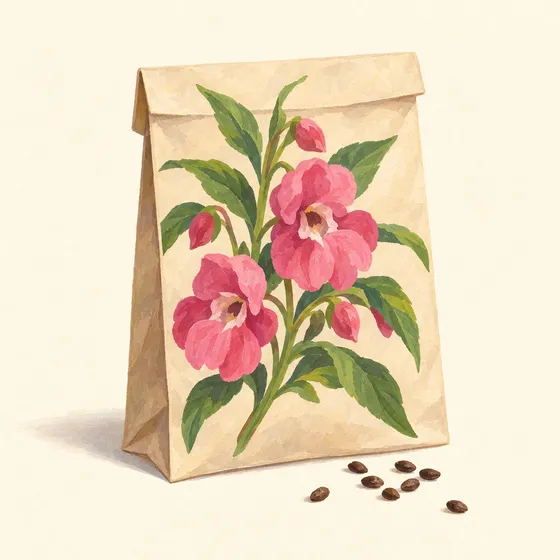 Tom Thumb Mix
Picking notes
Balsam is mostly a garden flower, but it works in short arrangements. Cut stems in the morning once a few of the lower flowers are open. Floating single blooms in a shallow bowl is a pretty way to enjoy them.
Saving seed for next year
When a pod is plump and starting to turn pale, cup it gently in your hand to catch the seed as it bursts, or tie a small mesh bag over it. Dry the seed for a week, then store it in a labeled envelope somewhere cool and dry.
From garden to table
Balsam is grown for beauty, not food. In the garden it fills beds and containers with color, draws bees and butterflies, and is a favorite for children's gardens.
A word of care: the leaves contain calcium oxalate and are mildly toxic if eaten. The risk is low, but teach children to enjoy popping the pods, not tasting the plant. Broken stems and flowers can also leave an orange stain on hands and clothes.
Questions from the potting bench
Is garden balsam the same as impatiens? It's a relative in the same genus, but it grows upright and carries its flowers along the stem.
Why are my buds dropping? Dry soil or heat stress. Water deeply and mulch.
Will it come back each year? It's an annual, but it often self-sows in warm zones.
Is balsam safe around children? Mostly, yes. The leaves are mildly toxic if eaten, so it's a plant for looking at and popping pods, not for nibbling.
Grower reports
How did Balsam do in your garden? Members rate it and say which zone and month they planted, so everyone can see what works near them.
Recent community discussions
No one has talked about Balsam yet. Be the first.
Seeds to try
Affiliate links — shopping through these helps keep Evening Vines free.Essentials for Growing Balsam
 Grow Bags
Breathable fabric pots: grow almost anything on a patio, balcony or driveway, and roots never circle.
See it →
 Pruning Shears
Sharp bypass pruners for harvesting, deadheading and tidying.
See it →
 Seed Starting Tray
Reusable tray with a clear dome to give seeds a warm, humid start indoors.
See it →
 Garden Kneeler
A kneeling pad that flips into a seat: easier on knees and back.
See it →
 Plant Labels
Waterproof markers so you know what's coming up where.
See it →
 Organic Fertilizer
Slow-release organic plant food for vegetable beds and containers.
See it →
