
Sweet William
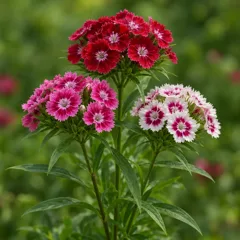
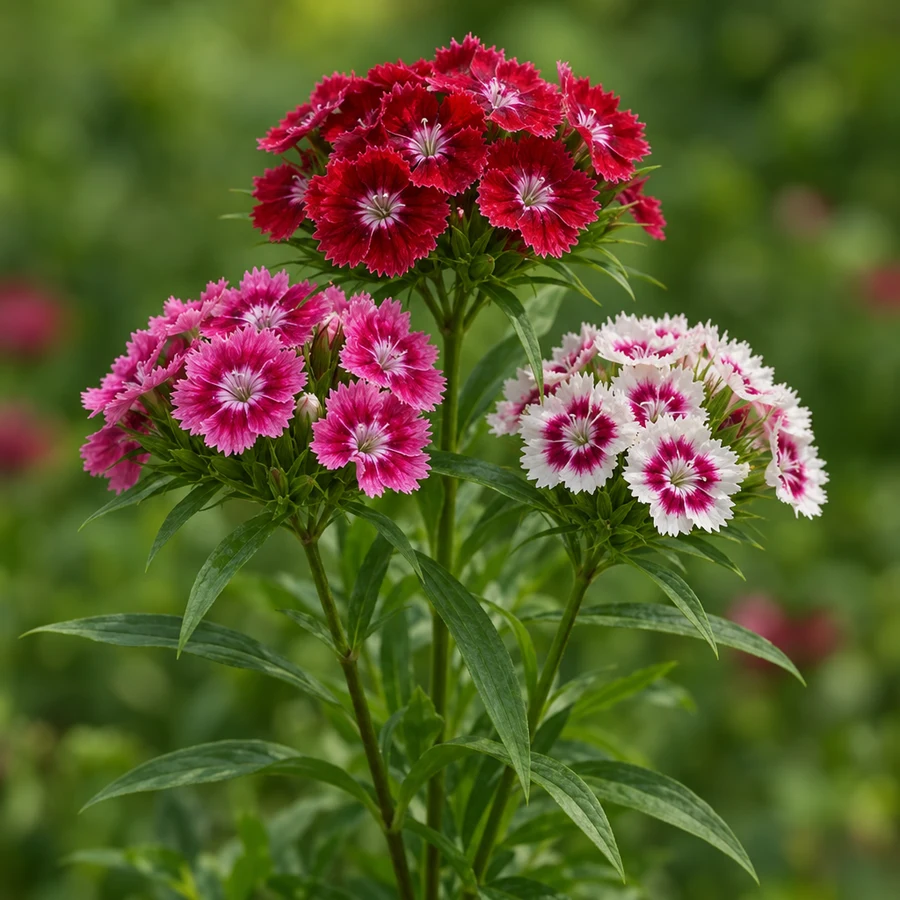
Sweet William is an old cottage garden favorite with dense, rounded heads of small, fringed flowers in red, pink, white, purple, and bicolor patterns. The blooms carry a light, clove-like scent. Plants grow 12 to 24 inches tall and bloom from late spring into early summer.
Think of it as a two-year plant: year one is leaves, year two is flowers. Classic types make a low clump of leaves the first season, bloom the next, then set seed and often fade. They self-sow freely, though, so a patch keeps coming back. A few modern strains are bred to flower in their first summer if you start them early indoors, and some plants hang on as short-lived perennials.
Recent community discussions
No one has talked about Sweet William yet. Be the first.
At a glance
| Plant type | Flower |
| Botanical name | Dianthus barbatus |
| Annual or perennial | Biennial or short-lived perennial |
| Sun | 6 or more hours of full sun; light afternoon shade in hot climates |
| Water | About 1 inch per week; let the top inch dry between drinks |
| Spacing | 6 to 12 inches |
| Planting depth | 1/8 inch (barely covered) |
| Days to germinate | 7 to 21 days |
| Days to maturity | About 12 to 15 months from sowing to first bloom for biennial types; first-year types flower about 4 months after an early indoor start |
| Best USDA zones | 3 to 9 |
| Soil pH | 6.0 to 7.5 |
Is it sweet william weather where you are? See everything to plant this month or read your zone notes.

Start indoors 8–10 weeks before last frost or direct sow outdoors in spring. In Zones 7+, sow in late summer for next spring blooms.

Germinates in 10–14 days; 90–120 days; biennial.

Zones 3–9, May?Aug; in mild zones Apr?July next year.

Moderately fertile chalky loam or sandy clay loam, pH 6.0–7.5. Needs good drainage.
Pests to watch for







A little history
Sweet William grows wild in the mountains of southern and eastern Europe, including the Pyrenees, the Carpathians, and the Balkans. It has been grown in European gardens for centuries and has long been a staple of cottage beds and cut-flower bunches.
When to sow in your zone
Spring, for first-year flowers: Start seed indoors 8 to 10 weeks before your last frost and choose a type bred to bloom the first year (see Varieties). Seed sown straight into the garden in spring usually waits until the following year to flower. Our post on how to count back from last frost helps you pick the date.
Summer, for next year's flowers: This is the classic way. Sow from late spring into midsummer, either in a nursery row or in pots, and set the young plants where they will bloom by late summer or early fall so they can root in before winter.
By zone group:
- Zones 3 to 6: Sow outdoors from late May through July. Plant out by late August, and they flower the following June.
- Zones 7 to 9: Sow in June or July, once the worst heat has passed in the hottest spots. Plant out in September or early October for flowers the next spring.
- Mild-winter gardens in zone 9: Fall-planted nursery transplants settle in well over the cool months and bloom in spring.
This month (November): The summer sowing window has closed for this year. In zones 3 to 7 there is nothing to sow now; just tuck a light mulch around plants you set out earlier once the ground starts to freeze. In milder zones you can still plant nursery transplants for spring color. The next sowing window is late winter indoors for first-year types, then late spring outdoors for the classic biennial crop. To see where sweet william fits with everything else in your area this month, find your zone on our zones page.
Growing it, step by step
From seed
The seed needs light to sprout, so press it onto the surface or cover it very lightly, and keep it at about 60 to 70°F. Keep the mix moist, and seedlings appear in 7 to 21 days. Thin or move them to 6 to 12 inches apart once they have a few true leaves.
Moving it outside
Harden seedlings off for about a week, then plant in full sun in well-drained, neutral to slightly alkaline soil. Set them at the same depth they grew before.
Water
Water regularly through the first season. Established plants prefer a deep soak about once a week and need soil that drains well. Wet feet lead to crown rot.
Mulch
Use a thin layer of mulch to hold moisture, but keep it away from the crowns. In cold zones, add a light winter mulch after the ground starts to freeze.
Feeding
Work in compost at planting time and feed lightly in spring with a balanced fertilizer. Go easy on nitrogen: too much gives you a lot of soft, leafy growth and fewer flowers.
Keeping it happy
Deadhead spent flower heads to stretch out the bloom, or leave a few to self-sow. Stake tall types if they lean. After flowering, cut plants back; self-sown seedlings will step in for the old plants. Divide or replace short-lived perennial plants every 2 to 3 years.
Sweet william is mildly toxic to dogs, cats, and horses if eaten (the ASPCA lists it with carnations), and the sap can irritate skin. Keep pets and grazing animals from nibbling it.
Trouble in the bed
Pests
- Slugs and snails: The main nuisance, especially in shady, damp spots. They chew young leaves. Use traps, barriers, and evening checks.
- Aphids: Sometimes cluster on buds and stems. Rinse them off or use insecticidal soap.
Diseases
- Crown rot: Comes with soggy, poorly drained soil. Plant in fast-draining ground and water at the base, not over the leaves.
- Rust: Orange-brown, powdery spots, mostly on the undersides of leaves. Pick off affected leaves, space plants for good air flow, and keep the foliage dry.
- Fusarium wilt: Plants yellow and wilt, often starting on one side. Pull affected plants and don't replant dianthus in that spot.
- Leaf spots and gray mold: Show up in wet, crowded plantings. Thin plants and water early in the day.
- Curly top virus: Spread by the beet leafhopper, mainly in the West. Leaves curl and plants stunt. There is no cure, so pull infected plants.
Good neighbors








Good: Roses, columbine, peonies, alyssum, and lavender. All like sun and decent drainage, and they bloom around the same time. Avoid: Plants that need constantly wet soil.
Seeds that grow well in your area in November
Affiliate links — shopping through these helps keep Evening Vines free. Rocket Larkspur
 Wild Lupine
 Common Milkweed
 PansySeeds
Varieties worth growing
- Sooty: Very dark, velvety red flowers.
- Indian Carpet: A dwarf mix of bright, bicolor blooms.
- Holborn Glory: A 1920s heirloom about 2 feet tall, with burgundy to crimson flowers, each ringed in white. A lovely cutting flower.
- Wee Willie: Very compact (about 6 inches), good for edging and pots, and quick enough to flower the first summer from an early start.
- First-year strains: Modern types such as the Amazon and Sweet series and Lace Mantle are bred to bloom the first year from an indoor start.
Sweet William seeds to buy
Affiliate links — shopping through these helps keep Evening Vines free.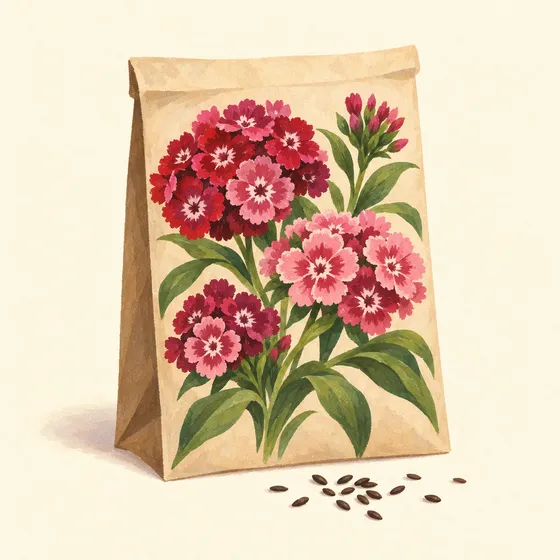 Sweet William
Picking notes
Cut stems for bouquets when about half the flowers in a head have opened. Cut early in the day and put them straight into water. They last a week or longer in a vase.
Saving seed for next year
Let a few flower heads dry on the plant until the seed capsules turn brown and split. Cut the heads and shake the seed into a paper bag. Dry it for a week, then store it somewhere cool, dark, and dry, where it should stay good for about 3 to 4 years. Named varieties may not come true from saved seed, and plants often self-sow anyway. More on this in saving seeds from your garden.
From garden to table
Sweet william is grown for the vase and the border. The scented heads make long-lasting cut flowers, and in the garden they bring in bees and butterflies. Use it in cottage beds, along paths, in a pollinator border, and in pots.
Dianthus petals turn up on some edible-flower lists, with the bitter white base trimmed off. Because the leaves are mildly toxic, we treat sweet william as a flower for looking at and smelling, not a kitchen plant.
Questions from the potting bench
Why didn't my Sweet William bloom in its first year? Most types are biennial and flower in their second year. For first-year blooms, start a first-year strain indoors 8 to 10 weeks before your last frost.
Will it come back every year? Mostly by self-sowing. Leave a few flower heads to drop seed.
Is it pet-safe? Not quite. It's mildly toxic to dogs, cats, and horses if eaten, so keep animals from nibbling it.
Grower reports
How did Sweet William do in your garden? Members rate it and say which zone and month they planted, so everyone can see what works near them.
Recent community discussions
No one has talked about Sweet William yet. Be the first.
Seeds to try
Affiliate links — shopping through these helps keep Evening Vines free.Essentials for Growing Sweet William
 Grow Bags
Breathable fabric pots: grow almost anything on a patio, balcony or driveway, and roots never circle.
See it →
 Pruning Shears
Sharp bypass pruners for harvesting, deadheading and tidying.
See it →
 Seed Starting Tray
Reusable tray with a clear dome to give seeds a warm, humid start indoors.
See it →
 Garden Kneeler
A kneeling pad that flips into a seat: easier on knees and back.
See it →
 Plant Labels
Waterproof markers so you know what's coming up where.
See it →
 Organic Fertilizer
Slow-release organic plant food for vegetable beds and containers.
See it →
