
Basil
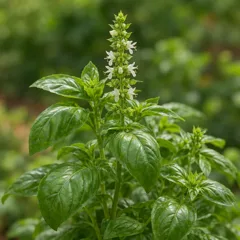
Brush past a basil plant on a warm afternoon and your hands carry the smell for a good while afterward. That scent is the whole point of growing it: soft, glossy leaves for tomatoes, pasta and salads, picked minutes before they're eaten. The plants grow 1 to 2 feet tall and bush out when pinched. There are many types, with green, purple, ruffled or tiny leaves, and flavors of clove, lemon, cinnamon or anise.
Basil loves heat and sun and can't take frost or cold nights. Give it warmth, water and regular picking, and a few plants will keep a kitchen going all summer.
Recent community discussions
No one has talked about Basil yet. Be the first.
At a glance
| Plant type | Tender herb |
| Botanical name | Ocimum basilicum |
| Annual or perennial | Tender annual; lives on for a while only where it never frosts (zones 10 and 11) |
| Sun | Full sun, 6 to 8 hours |
| Water | Regular; keep soil evenly moist |
| Spacing | 10 to 12 inches |
| Planting depth | 1/4 inch |
| Days to germinate | 5 to 10 |
| Days to maturity | About 60 to 75 days from seed to the first full picking |
| Best USDA zones | Any zone, grown as a summer crop |
| Soil pH | 6.0 to 7.5 |
From planting to harvest
Is it basil weather where you are? See everything to plant this month or read your zone notes.

After last frost once soil reaches 70–85°F (21–29°C). Indoors: start 4–6 weeks before last frost. Outdoors: direct sow after frost danger.

Ready in 3–4 weeks; harvestable for months.

Zones 4–6, May?September; Zones 7–10, May?October; Zones 11+, year-round outdoors; indoors year-round if warm and sunny.

Moist, fertile loam, pH 6.0–7.5. Enriched with compost for highest oil content.
Pests to watch for






Diseases

A little history
Basil comes from tropical Asia, including India, and has been grown for thousands of years. Its close relative holy basil (Ocimum tenuiflorum) is sacred in Hindu tradition. Basil spread to the Mediterranean and became a mainstay of Italian cooking. The name is usually traced to the Greek basilikon, meaning "royal."
When to sow in your zone
Spring: Start seed indoors 4 to 6 weeks before your last frost. Sow or plant outdoors 1 to 2 weeks after the last frost, when the soil is at least 60°F (65 to 85°F is best) and nights stay above 50°F. Basil sulks in cold soil, so waiting a week too long is better than a week too early.
Late season: In zones 9 to 11, a late-summer sowing carries into fall. Everywhere else, pot up a plant for a sunny windowsill before the first frost.
Your own dates: Pick your zone on the zones page to see when basil goes in where you live, then count back from your last frost to set your indoor sowing day.
Growing it, step by step
Getting seed going
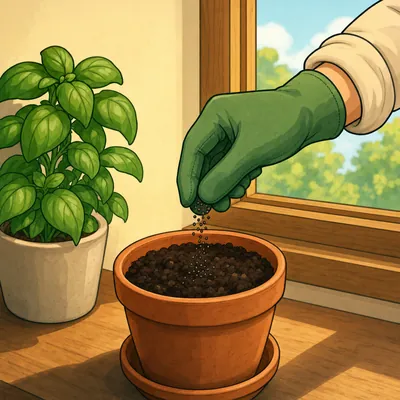
Sow seed 1/4 inch deep somewhere warm, about 70°F, and keep the mix moist. Seedlings appear in about a week. Give them plenty of light so they don't get leggy.
Out into the bed
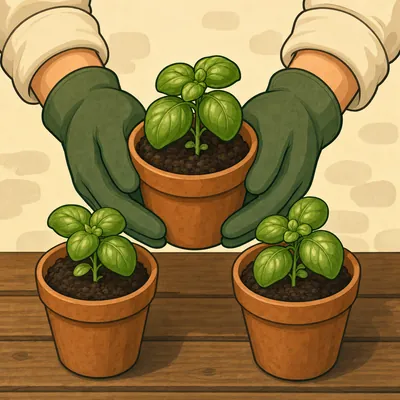
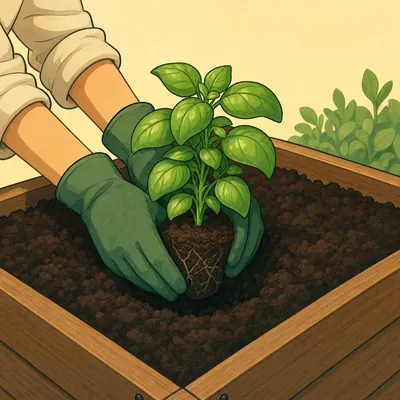
Harden off for several days, then plant out once nights are reliably warm, 10 to 12 inches apart.
A good weekly soak
Water deeply about once a week, and more in heat or in pots. Water at the base in the morning so the leaves dry quickly.
A light blanket of mulch
Mulch lightly once the soil has warmed, keeping it off the stems.
Go easy on the feeding
Add compost at planting and give a light liquid organic feed every few weeks. Heavy feeding gives big, soft leaves with less flavor.
Keeping it happy
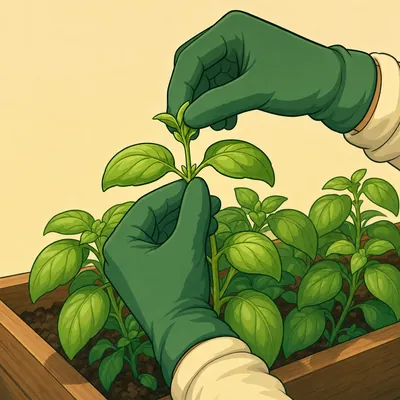
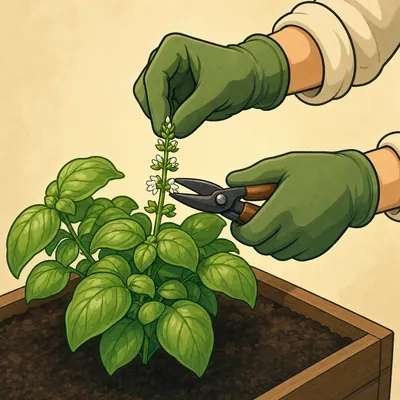
Pinch the tips often, just above a pair of leaves, to make the plant branch. Remove flower buds as they appear, because flowering makes the leaves smaller and can turn them bitter. There's more on this in plant out basil and keep it bushy. Bring pots indoors before frost.
Trouble in the bed
- Aphids: Spray them off with water or use insecticidal soap.
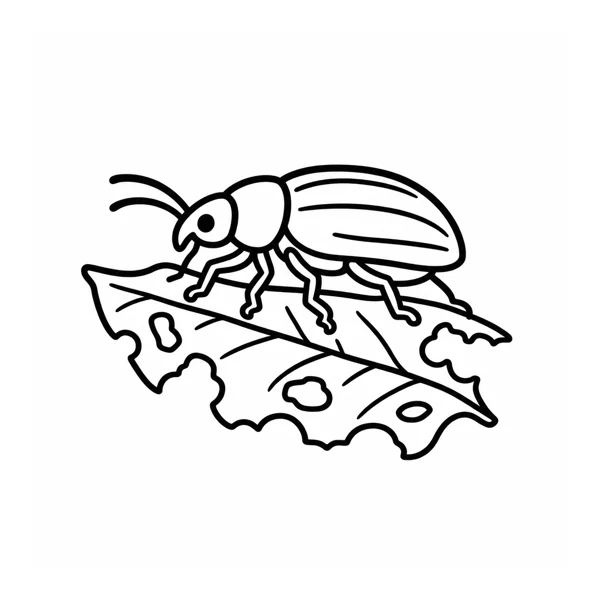
- Japanese beetles: Hand-pick into soapy water.
- Slugs: Hand-pick at dusk or use iron phosphate bait.
- Downy mildew: Space plants widely, water at the base, and choose resistant varieties.
- Fusarium wilt: Buy clean seed and don't replant basil in the same spot.
- Gray mold: Improve airflow and trim damaged leaves.
Good neighbors

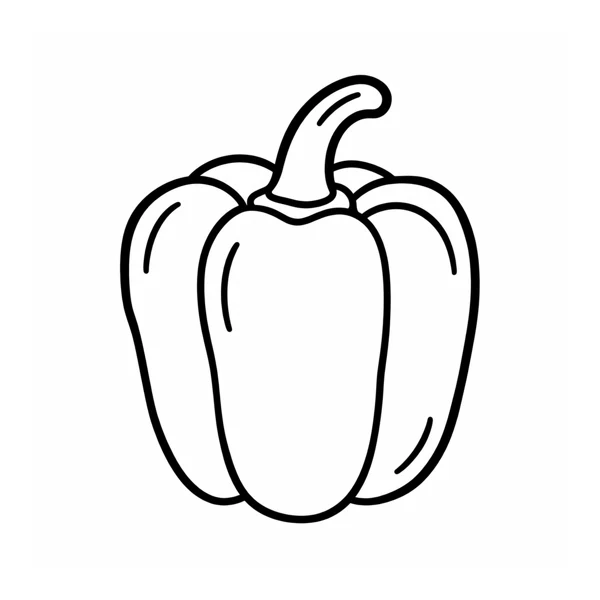
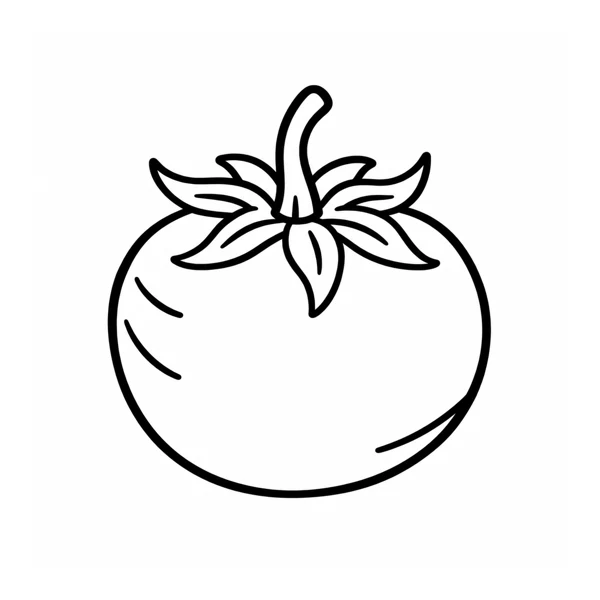




Grows happily beside: Tomatoes, peppers, parsley and marigolds. All of them like the same warm, sunny, evenly watered bed, and basil and tomatoes are as good a pair in the garden as on the plate.
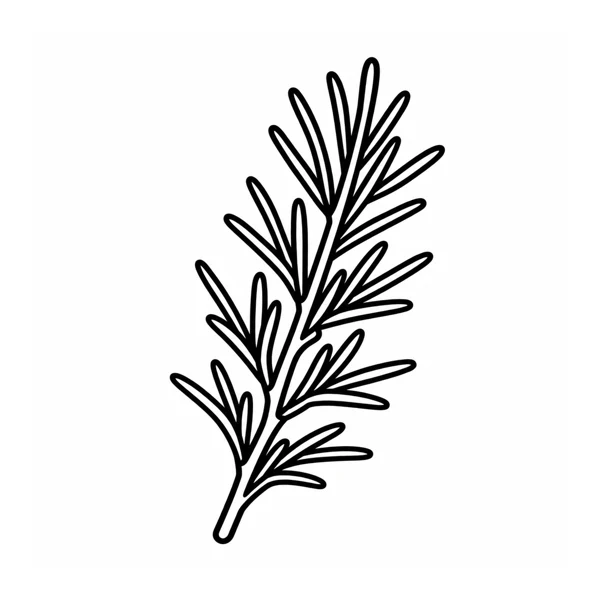
Give these a bed of their own: Rosemary, sage, thyme, oregano and lavender. These Mediterranean herbs want lean soil that dries out between waterings, while basil wants steady moisture. Planted together, one of them ends up too wet or too dry. Grow them in a separate pot or a sharper-drained corner instead.
Seeds that grow well in your area in November
Affiliate links — shopping through these helps keep Evening Vines free. Foxglove Mix
 Rocket Larkspur
 Wild Lupine
 Common Milkweed
Varieties worth growing
- Genovese: The classic Italian pesto basil, with large, flavorful leaves. Seeds
- Thai: Anise-scented, with purple stems. Seeds
- Lemon: Bright and citrusy, good in teas and with fish. Seeds
- Dark Opal: Purple leaves, pretty in the garden and in vinegars.
- Spicy Globe: A tidy mound of tiny leaves, ideal for pots.
- Lettuce Leaf: Very large, crinkled leaves for wraps and salads.
Holy basil (tulsi) is often sold on the same seed rack, but it's a related species, Ocimum tenuiflorum, not a type of sweet basil.
Basil seeds to buy
Affiliate links — shopping through these helps keep Evening Vines free.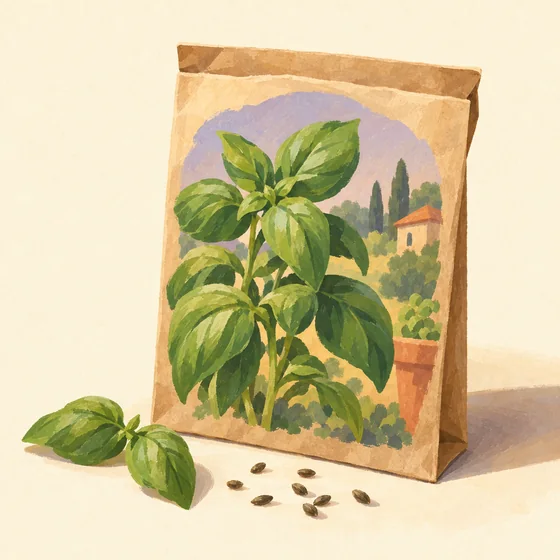 Genovese
Picking notes
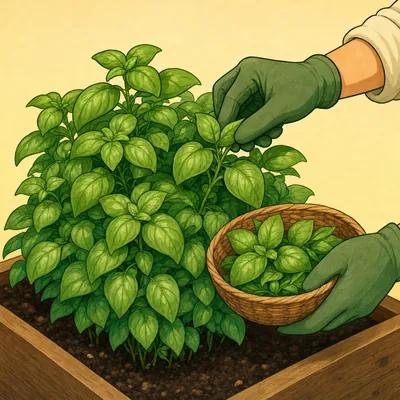
Go out in the cool of the morning, when the leaves are at their most fragrant. For a handful to tear over tonight's tomatoes, snip a stem tip back to just above a pair of leaves. Two new shoots grow from that spot, so every little harvest doubles as a pinch. For a big pesto batch, cut whole stems the same way, but leave at least two thirds of the plant standing so it keeps producing. A young plant is ready for its first snip once it reaches 6 to 8 inches tall. In short-summer zones (3 to 5), where basil rarely goes out before late May or June, that's usually late June or July; warmer zones get there sooner. When frost is on the way, cut the lot. Basil keeps its flavor far better frozen, as pesto or chopped in a little oil, than dried. See freeze your summer harvest.
Saving seed for next year
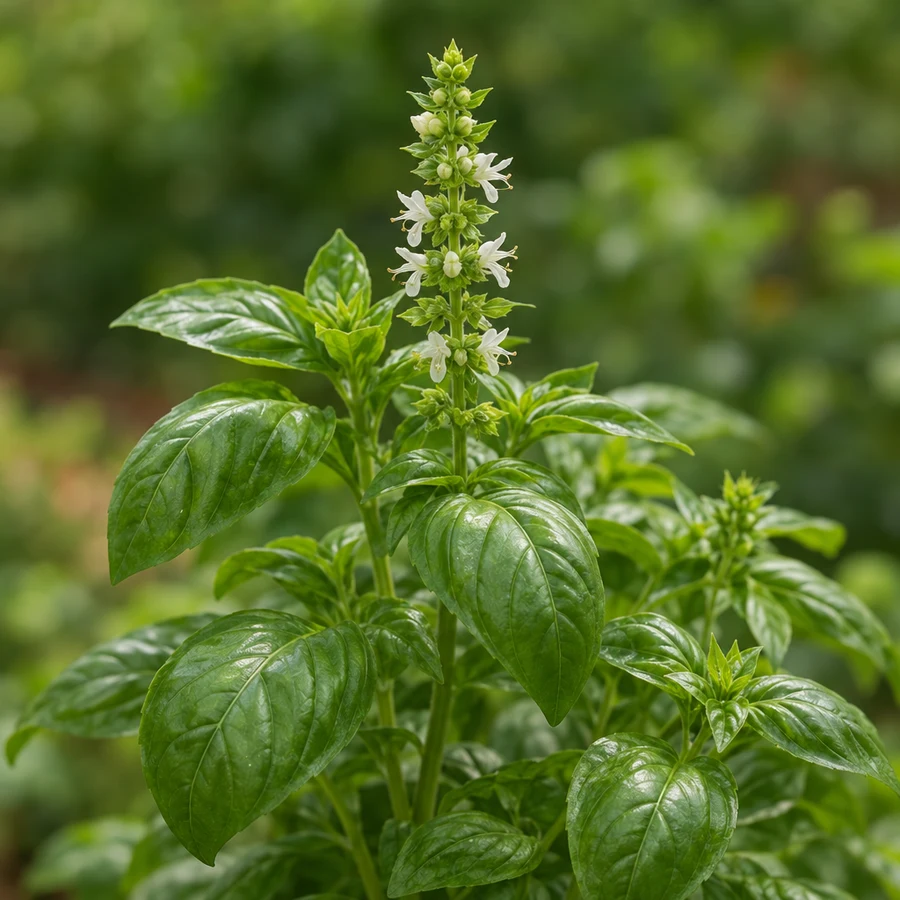
Let a few plants flower. When the spikes turn brown and crisp, cut them and rub the seed out over a bowl. Basil types cross readily through visiting insects, so grow only one type if you want seed that comes true. Store it cool and dry. The basics are in saving seeds from your garden.
From garden to table
Basil is rich in vitamin K. Use it fresh in salads, caprese, sauces and pesto, and add it at the end of cooking to keep the flavor. The flowers are edible too, with a milder taste.
Questions from the potting bench
Why are my basil leaves turning black? Cold. Basil is damaged below about 50°F, so cover the plants or bring pots indoors.
Why has my basil gone bitter? It's flowering or stressed. Pinch off the buds and water consistently.
Can I grow basil indoors? Yes, in a sunny south-facing window or under a grow light. See grow herbs on a windowsill.
Grower reports
How did Basil do in your garden? Members rate it and say which zone and month they planted, so everyone can see what works near them.
Recent community discussions
No one has talked about Basil yet. Be the first.
Seeds to try
Affiliate links — shopping through these helps keep Evening Vines free.Essentials for Growing Basil
 Grow Bags
Breathable fabric pots: grow almost anything on a patio, balcony or driveway, and roots never circle.
See it →
 Seed Starting Tray
Reusable tray with a clear dome to give seeds a warm, humid start indoors.
See it →
 LED Grow Light
Full-spectrum light for sturdy seedlings through short winter days.
See it →
 Pruning Shears
Sharp bypass pruners for harvesting, deadheading and tidying.
See it →
 Watering Can
Long-spout can for gentle watering of seedlings and pots.
See it →
 Organic Fertilizer
Slow-release organic plant food for vegetable beds and containers.
See it →
