
Dill
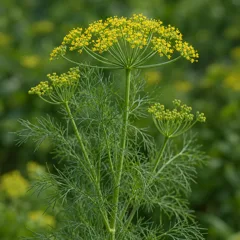
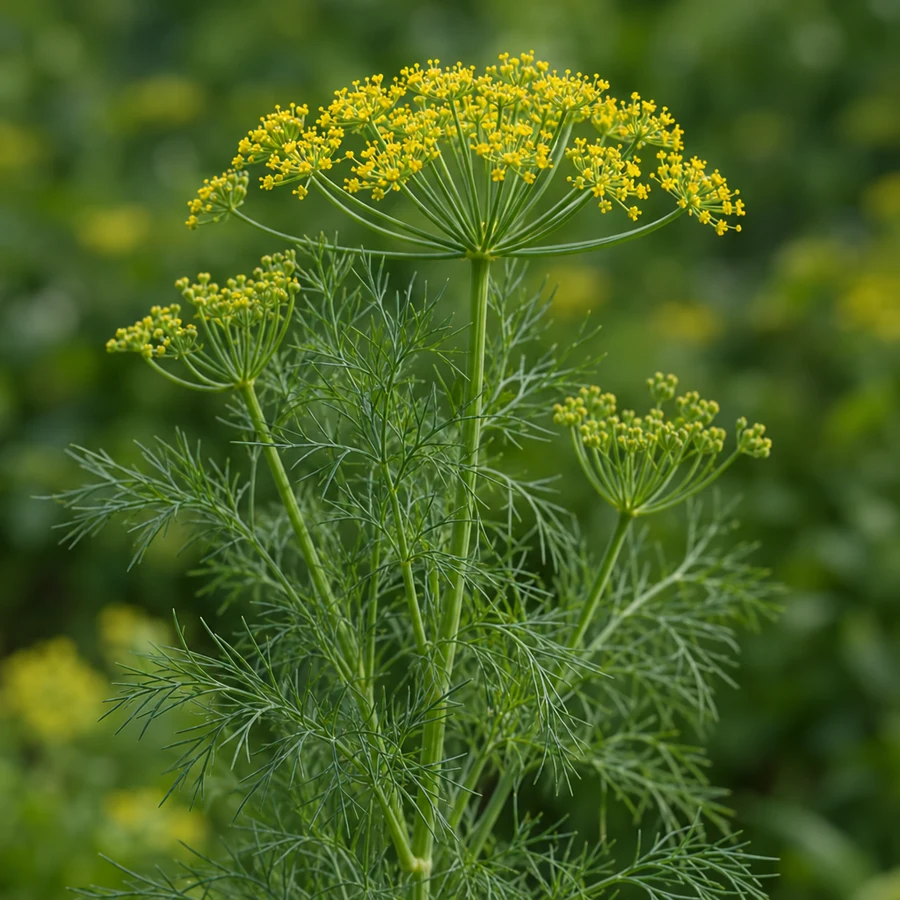
Dill is a feathery, fragrant herb for pickles, fish, potatoes, and salads, and its flat yellow flower heads bring in beneficial insects. Swallowtail caterpillars love it too, so plant extra.
Recent community discussions
No one has talked about Dill yet. Be the first.
At a glance
| Plant type | Herb |
| Botanical name | Anethum graveolens |
| Annual or perennial | Annual |
| Sun | Full sun |
| Water | Moderate |
| Spacing | 10 to 12 inches |
| Planting depth | 1/4 inch |
| Days to germinate | 7 to 21 |
| Days to maturity | About 40 to 60 for leaves; 85 to 100 for seed |
| Best USDA zones | 2 to 11 as a seasonal crop |
| Soil pH | 5.5 to 6.5 |
Is it dill weather where you are? See everything to plant this month or read your zone notes.

Direct sow outdoors 1–2 weeks before last frost. Successive sowings every 2–3 weeks until midsummer for continuous harvest. Does not transplant well.

Germinates in 7–10 days; leaves in 30–40 days; seeds in ~90 days.

Zones 3–10, May?July; in mild zones September?November; indoors year-round.

Light, well-drained sandy loam, pH 5.5–6.5. Prefers slightly acidic soil; avoid heavy clay.
Pests to watch for



Diseases

A little history
Dill probably comes from southwest Asia and the eastern Mediterranean, though botanists don't fully agree on where it first grew wild. It has been in kitchens and medicine chests for a very long time; the ancient Egyptians knew it.
In North America, dill's big moment came in the pickle crock. Immigrants from Central and Eastern Europe brought their habit of packing cucumbers in salt brine with garlic and dill heads, and by the early 1900s the "kosher dill" was a fixture of New York's Lower East Side. That's why so many old seed lists sell dill by the ounce, and why a tall pickling dill like Mammoth Long Island still turns up in so many gardens.
A gardener's note: let a few heads ripen and dill will plant itself. You'll find seedlings next spring wherever the seed fell, which is handy if you like a loose, cottage-style herb patch and a nuisance if you don't.
When to sow in your zone
When to plant dill depends on your winters.
Spring (most zones): Sow outdoors around your last frost date, then sow again every 2 to 3 weeks until midsummer so you always have young leafy plants coming on.
Fall and winter (zones 9 to 11): Here dill is a cool-season crop. Sow in fall and through the winter, and pick from winter into spring. Once the heat arrives it flowers fast, so finish your sowing before late spring.
To see the dill timing for your own area, check the zone pages at /zones/.
Growing it, step by step
From seed
Sow directly where the plants will grow. Sow shallowly, no deeper than 1/4 inch, and keep the surface moist. Seedlings show in 7 to 21 days. When they are about 2 inches tall, thin them to 10 to 12 inches apart. You can start snipping leaves about 40 to 60 days after sowing.
Moving it outside
Avoid it. Dill has a taproot and bolts when moved.
Growing in Pots
If you're wondering how to grow dill in pots, pick a deep container (a foot or so) so the taproot has room, and choose a compact type like Fernleaf. Containers dry out faster than beds, so check them often in summer.
Water
Keep moist until established.
Mulch
Light mulch to keep weeds down.
Feeding
Not needed in decent soil.
Keeping it happy
Tall types may need staking or shelter from wind. Pinch flower heads for more leaves, or let them go for seed.
Trouble in the bed
- Aphids: Spray off with water.
- Swallowtail caterpillars: The striped caterpillars of the black swallowtail butterfly. Move them to a sacrificial plant rather than kill them.
- Powdery mildew: Give airflow.
Good neighbors








Good: Cabbage family, cucumbers, lettuce, and onions.
Avoid: Carrots, which dill can stunt.
Seeds that grow well in your area in November
Affiliate links — shopping through these helps keep Evening Vines free.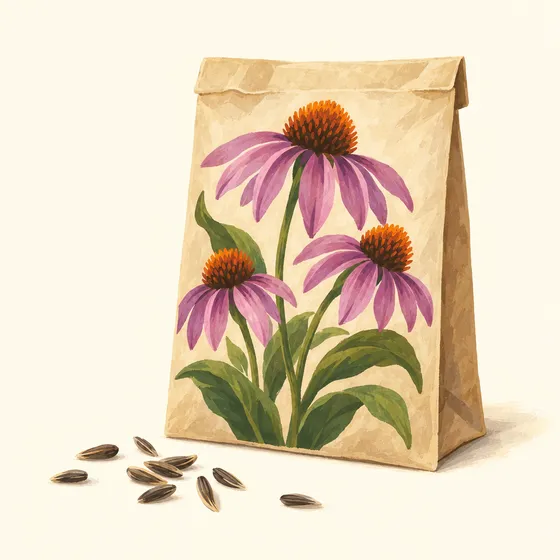 Purple Coneflower
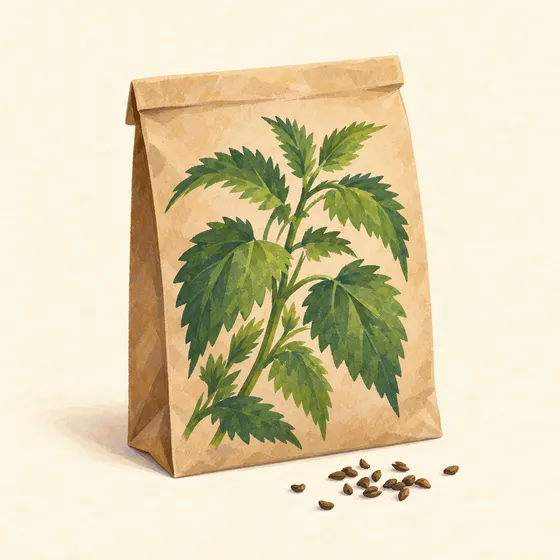 Stinging Nettle
 Smooth Blue Aster
 Polka Dot Mix
Varieties worth growing
- Bouquet: Compact, early, good seed heads. Seeds
- Fernleaf: Dwarf, slow to bolt, great in pots.
- Mammoth Long Island: Tall, for pickling. Seeds
- Dukat: Lots of leaves. Seeds
- Hercules: Slow to bolt. It's a tetraploid (bred with doubled chromosomes), not a hybrid.
- Vierling: Another tetraploid, with strong upright stems; a good pick for cut flowers.
Dill seeds to buy
Affiliate links — shopping through these helps keep Evening Vines free.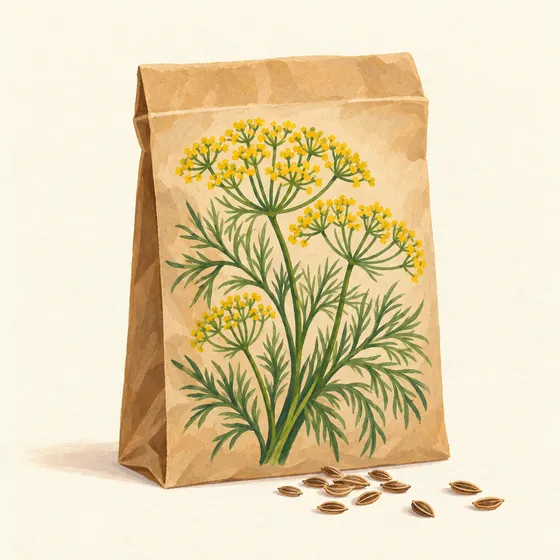 Bouquet
Picking notes
Snip leaves once plants are 8 inches tall. In cooler zones, keep sowing and you can pick leaves well past midsummer. For seed, cut the heads as the seeds turn from green to tan, before they ripen fully and drop. Hang them upside down in a paper bag to finish drying.
Saving seed for next year
Cut seed heads as the seeds turn tan and let them finish drying in a paper bag; ripe seed shatters easily. Dill self-seeds freely if left.
From garden to table
Use leaves in sauces, salads, and fish; use seed heads and seeds for pickling. Leaves freeze well.
Questions from the potting bench
My dill flowered in June. What now? Let it bloom. The flowers feed helpful insects and give you seed later. Sow a fresh row for leaves, and next year sow every 2 to 3 weeks and try a slow-bolting type like Fernleaf or Hercules.
I only have a balcony. Can dill live in a pot? Yes. Use a deep pot, a compact variety, and water more often than you would in the ground.
Will my dill come back next year? Not the same plant; dill is an annual. But if you let a few heads drop their seed, new seedlings usually pop up the next spring.
Big striped caterpillars are eating my dill. Should I worry? They're black swallowtail caterpillars, and they grow into lovely butterflies. Plant a little extra dill so there's enough for both of you.
Grower reports
How did Dill do in your garden? Members rate it and say which zone and month they planted, so everyone can see what works near them.
Recent community discussions
No one has talked about Dill yet. Be the first.
Seeds to try
Affiliate links — shopping through these helps keep Evening Vines free.Essentials for Growing Dill
 Grow Bags
Breathable fabric pots: grow almost anything on a patio, balcony or driveway, and roots never circle.
See it →
 Seed Starting Tray
Reusable tray with a clear dome to give seeds a warm, humid start indoors.
See it →
 LED Grow Light
Full-spectrum light for sturdy seedlings through short winter days.
See it →
 Pruning Shears
Sharp bypass pruners for harvesting, deadheading and tidying.
See it →
 Watering Can
Long-spout can for gentle watering of seedlings and pots.
See it →
 Organic Fertilizer
Slow-release organic plant food for vegetable beds and containers.
See it →
