
Salvia
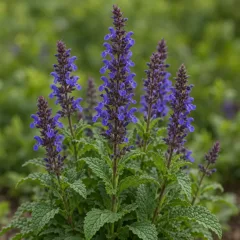
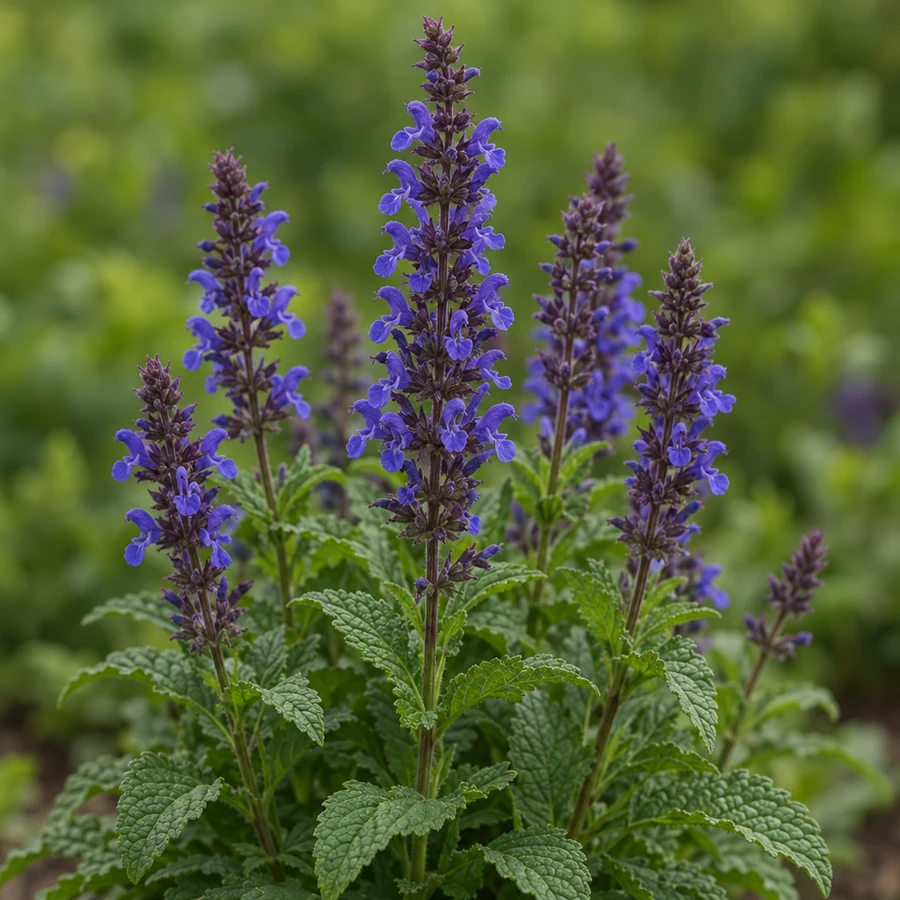
Ornamental salvias send up spikes of violet, blue, red, or pink flowers from early summer into fall, coming back in flushes if you keep cutting them. Bees, butterflies, and hummingbirds visit all season. Most are drought-tolerant once settled, and deer and rabbits seldom bother them. They earn a spot in any pollinator border.
Recent community discussions
No one has talked about Salvia yet. Be the first.
At a glance
| Plant type | Flower |
| Botanical name | Salvia nemorosa (meadow sage) and Salvia × sylvestris (May Night, Blue Hill); also S. farinacea and S. splendens |
| Annual or perennial | Perennial (S. nemorosa, S. × sylvestris); tender types grown as annuals |
| Sun | Full sun |
| Water | Low to moderate |
| Spacing | 12 to 24 inches |
| Planting depth | Surface to 1/8 inch |
| Days to germinate | 7 to 21 days (annual types often 7 to 14 at 70 to 75°F) |
| Days to maturity | Varies by type; seed packets for annual salvias give roughly 70 to 130 days from sowing to bloom |
| Best USDA zones | 4 to 8 (S. nemorosa); annual types anywhere |
| Soil pH | 6.0 to 7.5 |
Is it salvia weather where you are? See everything to plant this month or read your zone notes.

Start indoors 8–10 weeks before last frost, transplant after frost. In warm zones, can direct sow late spring.

Germinates in 10–21 days; blooms in 70–100 days.

Zones 4–11, June?Oct; hardy types (4–8) tolerate cold; tender types (8–11) bloom longer.

Well-drained sandy loam, pH 6.0–7.5. Tolerates drought once established.
Pests to watch for







A little history
Salvia species grow wild across the Americas, Europe, and Asia. Gardeners have bred many into long-blooming border plants.
When to sow in your zone
Spring: Start seeds indoors 8 to 10 weeks before your last frost (count back from your frost date). Plant out after frost danger has passed.
Fall: Plant perennial salvias in early fall in zones 5 to 8 so the roots settle before winter. In frost-free areas, set out tender types in fall for winter bloom.
Right now (November): Salvia only goes in outdoors in frost-free zones (10b to 13). Everywhere else, this is a month for planning: pick your varieties and mark a seed-starting date on the calendar. Find your zone on the zones page.
Growing it, step by step
From seed
Press seeds onto the surface and barely cover them; they like light to sprout. Keep the tray at 70 to 75°F.
Moving it outside
Harden off and plant after frost, 12 to 24 inches apart in full sun.
Water
Water young plants weekly. Established perennials tolerate drought.
Mulch
Add 1 to 2 inches of mulch kept off the crown.
Feeding
A light spring feeding is enough. Rich soil makes plants floppy.
Keeping it happy
Cut spent flower spikes back to prompt a second flush of bloom (more on that in deadhead flowers for more blooms). Shear plants by half in midsummer if they look tired. Trim old stems in late fall or early spring. When an old clump goes bare in the middle or starts flowering less, lift and divide it in spring, or root a few stem cuttings to start fresh plants.
Trouble in the bed
- Aphids: Spray off with water or use insecticidal soap.
- Spider mites: Rinse leaves and avoid heat stress.
- Root rot and powdery mildew: Use well-drained soil and give plants room.
Good neighbors




Good: Coneflowers, yarrow, roses, and ornamental grasses.
Avoid: Wet, shady beds.
Seeds that grow well in your area in November
Affiliate links — shopping through these helps keep Evening Vines free. PhloxSeeds
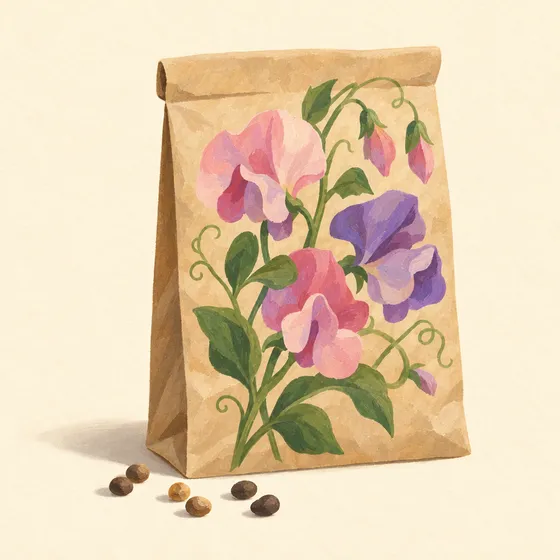 Royal Mix
 Johnny Jump Up
 Organic Cat Grass
Varieties worth growing
- May Night (S. × sylvestris): One of the first to flower, with dense spikes of deep violet-blue.
- Caradonna (S. nemorosa): Violet flowers held on nearly black stems, upright and tidy.
- Blue Hill (S. × sylvestris): A short, bushy plant with true sky-blue flowers.
- Victoria Blue (S. farinacea): An annual with deep blue spikes that hold up well in a vase.
- Hot Lips (S. microphylla): A shrubby type whose flowers can be all red, all white, or split between the two on the same plant.
- Black and Blue (S. guaranitica): Cobalt flowers sitting in dark, almost black cups; a hummingbird magnet.
- Amistad: A tall hybrid with rich purple flowers and dark calyces that keeps going until frost.
- Snow Nymph (S. coccinea): A light, airy annual with small pure white flowers.
- Pineapple Sage (S. elegans): Brush the leaves and they smell of ripe fruit; scarlet flowers arrive late in the season.
Salvia seeds to buy
Affiliate links — shopping through these helps keep Evening Vines free.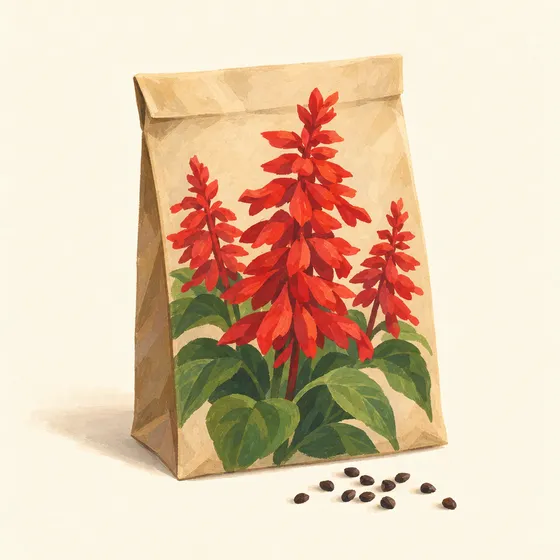 SalviaSeeds
Picking notes
Cut spikes for bouquets when about half the flowers are open. Spikes also dry well.
Saving seed for next year
Let seed heads dry and collect the small seeds. Species and cultivars may cross, so seedlings vary. Division or stem cuttings keep named perennials true.
From garden to table
Ornamental salvias are for display, not the kitchen; culinary sage is a different species (see our Sage page). Use them in borders, pollinator beds, and cut flowers.
Questions from the potting bench
My May Night stopped flowering in July. What now? Cut the faded spikes off down to the leafy base, or shear the whole plant back by about half. Give it a drink and it will push up a fresh round of flowers.
Why are my salvia stems flopping open in the middle? Usually too much food, too much shade, or an old clump. Grow it in lean soil and full sun, skip the extra fertilizer, and divide a tired clump in spring.
Will meadow sage come through a cold winter in zone 4? Yes, it's hardy to zone 4. Wet soil in winter is a bigger danger than cold, so plant it where water drains away quickly.
The deer ate my hostas. Will they leave the salvia alone? Most likely. Deer and rabbits seldom browse salvia, though no plant is completely safe from a hungry deer.
Can I cook with my bedding salvia like kitchen sage? Grow culinary sage for the kitchen instead. See our Sage page.
Grower reports
How did Salvia do in your garden? Members rate it and say which zone and month they planted, so everyone can see what works near them.
Recent community discussions
No one has talked about Salvia yet. Be the first.
Seeds to try
Affiliate links — shopping through these helps keep Evening Vines free.Essentials for Growing Salvia
 Grow Bags
Breathable fabric pots: grow almost anything on a patio, balcony or driveway, and roots never circle.
See it →
 Seed Starting Tray
Reusable tray with a clear dome to give seeds a warm, humid start indoors.
See it →
 LED Grow Light
Full-spectrum light for sturdy seedlings through short winter days.
See it →
 Pruning Shears
Sharp bypass pruners for harvesting, deadheading and tidying.
See it →
 Watering Can
Long-spout can for gentle watering of seedlings and pots.
See it →
 Organic Fertilizer
Slow-release organic plant food for vegetable beds and containers.
See it →
