
Strawflower
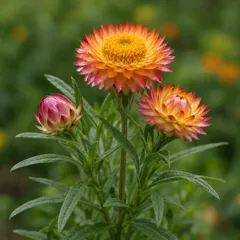
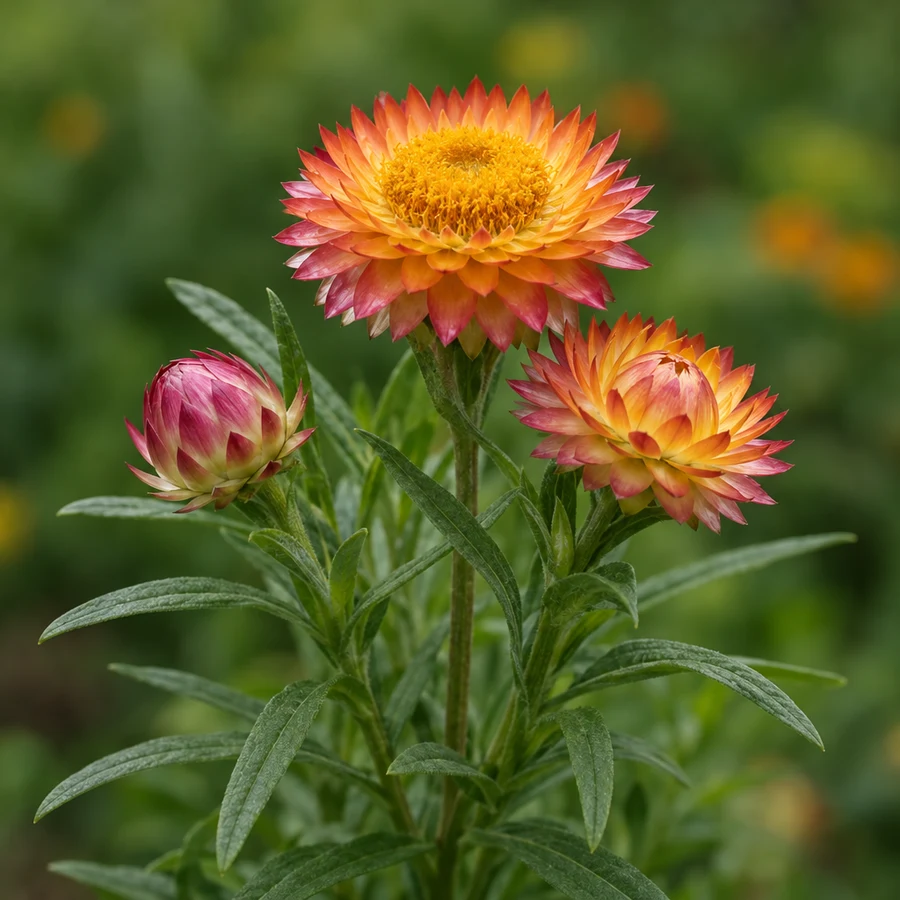
Strawflower, also sold as everlasting daisy, has stiff, papery blooms in red, pink, gold, bronze and white. The papery parts are bracts, not true petals, and that's why they keep their color long after you cut them. Give it heat, sun and soil that drains, and it will flower from midsummer until frost. It's one of the easiest flowers to dry, alongside Gomphrena and Celosia.
Recent community discussions
No one has talked about Strawflower yet. Be the first.
At a glance
| Plant type | Flower (everlasting) |
| Botanical name | Xerochrysum bracteatum |
| Annual or perennial | Short-lived tender perennial, usually grown as an annual |
| Sun | Full sun |
| Water | Low to moderate |
| Spacing | 9 to 12 inches |
| Planting depth | Surface (needs light) |
| Days to germinate | 7 to 14 days |
| Days to maturity | About 75 to 90 days from sowing to bloom |
| Best USDA zones | 8 to 10 as a short-lived perennial; grown as an annual in any zone |
| Soil pH | 6.0 to 7.0 (slightly acidic to neutral) |
Is it strawflower weather where you are? See everything to plant this month or read your zone notes.

Start indoors 6–8 weeks before last frost, transplant after frost. In Zones 8–10, sow outdoors in late spring.

Germinates in 7–14 days; blooms in 70–90 days.

Zones 8–11, June?Oct; in cooler zones (2–7) as annuals; Aug?Nov for late plantings.

Thrives in gravelly or sandy soils with excellent drainage, pH 5.5–7.5. Low fertility preferred.
Pests to watch for




Diseases

A little history
Strawflower comes from Australia. By the late 1700s it was growing in English gardens, and seed growers in Germany later bred the large, bright double forms that most seed packets carry today.
When to sow in your zone
When to plant strawflowers comes down to your last frost date. Find yours on the zones page, then count back from your last frost. Indoors: Start seeds 6 to 8 weeks before the last frost. Plant out once frost danger has passed. Outdoors: In zones 8 to 10, you can also sow straight into the bed in late spring, once the soil has warmed. In November: It's too early to sow in most zones. Add strawflower to your seed list now and start it indoors in late winter.
Growing it, step by step
From seed
Press the seeds onto the surface of the mix and leave them uncovered, because they need light to sprout. Keep them at 70 to 75°F and they should come up in 1 to 2 weeks.
Moving it outside
Harden off the seedlings and plant out after frost. Space plants 9 to 12 inches apart so air can move between them.
Water
Water young plants weekly. Once settled, they handle dry spells well. Water at the base, not over the leaves.
Mulch
Use a thin layer of mulch and keep it off the stems.
Feeding
Little is needed. Rich soil gives you leaves, not blooms.
Keeping it happy
Pinch young plants once for bushier growth. Deadhead faded flowers to keep new ones coming, but cut plenty at the right stage for drying. Stake the tall types. Keep water off the leaves to help prevent gray mold.
Trouble in the bed
- Aphids: Spray them off with water or use insecticidal soap.
- Slugs and snails: Hand-pick in the evening or set traps, especially around young plants.
- Downy mildew: Give plants room, water at the base, and pull out badly affected plants.
- Root rot, stem rot and gray mold: Mostly a wet-soil problem. Plant in well-drained soil and don't crowd them.
Good neighbors




Good: Zinnias, cosmos and ornamental grasses, which like the same sun and dry-ish soil. Avoid: Wet, shady beds.
Seeds that grow well in your area in November
Affiliate links — shopping through these helps keep Evening Vines free. Wild Lupine
 Common Milkweed
 PansySeeds
 PhloxSeeds
Varieties worth growing
- Monstrosum: Large, double blooms in mixed colors.
- Bright Bikini: Compact plants for beds and pots.
- Dreamtime: Compact, mounded plants with big blooms, usually sold as young plants rather than seed.
- King Size: Tall plants with big blooms for cutting.
Picking notes
Cut when 2 or 3 rows of bracts have opened but before the yellow center shows. The heads keep opening as they dry, so a bloom cut fully open ends up flat and shaggy. Cut in the late morning, once the dew has dried. In cooler zones, expect to cut from July until the first frost.
How to dry strawflowers
Decide first what the flowers are for.
- For vases and bunches: Strip the lower leaves and hang the stems upside down in a dark, airy room for about 2 weeks.
- For wreaths and short arrangements: Snip the head off with about an inch of stem, then push a piece of 22-gauge florist wire up through the stem into the head while it's fresh. As the head dries it tightens around the wire. Stand the wires in a jar to dry. Don't wait until they're dry: the heads become too brittle to wire.
Keep dried flowers out of direct sun, which fades the color fastest.
Saving seed for next year
Let a few blooms dry fully on the plant. Pull the fluffy seed heads apart and collect the seeds. Store them cool and dry (see storing leftover seeds). Many named varieties don't come true from seed, so expect a mix. More tips in saving seeds from your garden.
From garden to table
Not edible. Use in dried arrangements, wreaths and crafts. Safety: Strawflower is in the daisy family. If daisy-family plants bother you, wear gloves when you handle it.
Questions from the potting bench
Why do the blooms look closed? The bracts react to moisture in the air. They fold in at night and in damp or rainy weather, then open again when it's dry. Do they come back? In zones 8 to 10 they may live another year, but they're short-lived, so most gardeners sow fresh each spring. Why did my dried heads snap off their stems? Dried strawflower stems are thin and brittle. Wire the heads while they're fresh, as in "How to dry strawflowers" above.
Grower reports
How did Strawflower do in your garden? Members rate it and say which zone and month they planted, so everyone can see what works near them.
Recent community discussions
No one has talked about Strawflower yet. Be the first.
Essentials for Growing Strawflower
 Grow Bags
Breathable fabric pots: grow almost anything on a patio, balcony or driveway, and roots never circle.
See it →
 Pruning Shears
Sharp bypass pruners for harvesting, deadheading and tidying.
See it →
 Seed Starting Tray
Reusable tray with a clear dome to give seeds a warm, humid start indoors.
See it →
 Garden Kneeler
A kneeling pad that flips into a seat: easier on knees and back.
See it →
 Plant Labels
Waterproof markers so you know what's coming up where.
See it →
 Organic Fertilizer
Slow-release organic plant food for vegetable beds and containers.
See it →
